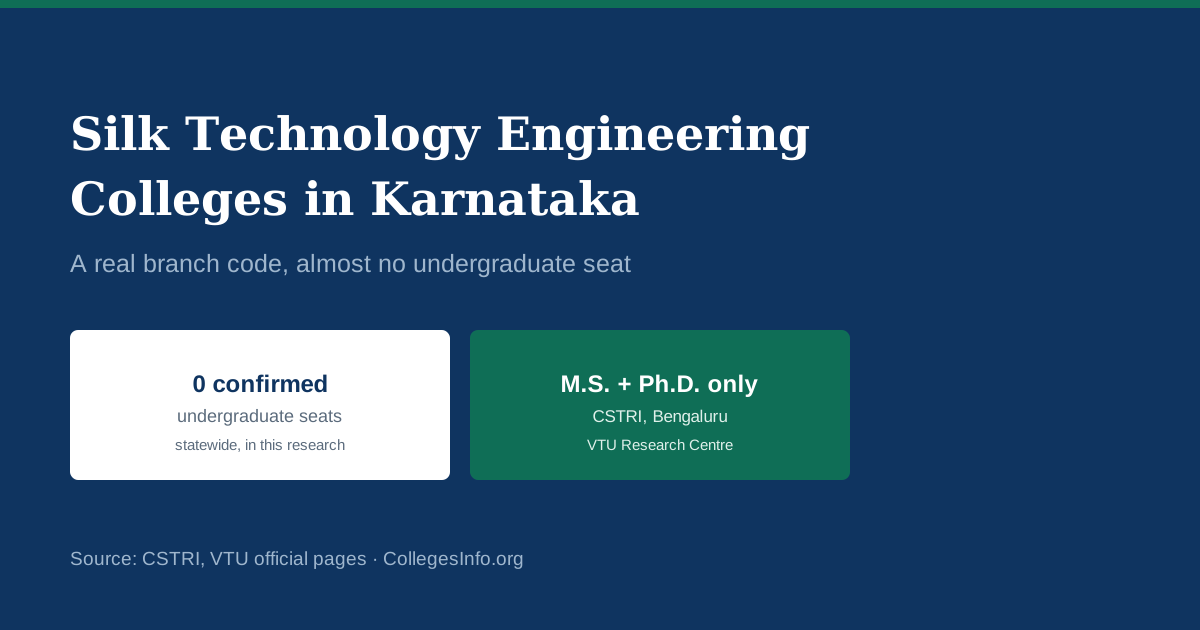
Silk Technology engineering colleges in Karnataka carry a real VTU branch code, ST, but no undergraduate seat could be confirmed anywhere in the state. The one confirmed provider, a VTU-affiliated research centre in Bengaluru, offers only a Master of Science in Engineering and a Ph.D. Karnataka is India's silk capital, and this is the branch that barely has a degree to show for it.
Looking at the bigger picture? Our guide to the best engineering colleges in Karnataka compares KCET tier-wise cutoffs, COMEDK options, and real fee data across Bengaluru, Mangalore, Mysore, and north Karnataka for 2027.
Why Silk Technology Engineering Colleges in Karnataka Are Almost Entirely a Research Story
Open VTU's stream-wise UG programme list and Silk Technology, course code ST, sits inside the Mechanical Engineering stream alongside Textile Technology. The code exists on paper, the way Environmental Engineering's EV code exists on paper inside the Civil stream, or the way certain Electrical and Electronics codes carry thin real-world presence despite official recognition. What does not appear to exist, from any college's own official page checked in this research, is a single VTU-affiliated engineering college running Silk Technology as a KCET-admitted four-year undergraduate branch.
The one confirmed institution teaching this subject at all is the Central Silk Technological Research Institute, known as CSTRI, a Research Centre of the Central Silk Board affiliated with VTU. CSTRI's own page states plainly that it provides for candidates to pursue a Master of Science in Engineering and a Doctor of Philosophy in Silk Technology and Textile Engineering under VTU. Nowhere on that page is an undergraduate degree mentioned. This is a postgraduate and research pathway sitting on top of an undergraduate branch code that, as far as this research could confirm, nobody in Karnataka currently teaches.
3 Reasons This Is Karnataka's Thinnest Confirmed Engineering Branch
1. National portal data shows almost nothing exists anywhere
One large education portal's own filtered count states there are only 2 colleges in the whole of India offering Silk Technology at any level, split one private and one public, with Karnataka named as home to the single top-ranked option nationally. For a country with hundreds of engineering colleges and dozens of niche VTU branch codes, a count of two is not a small number by comparison, it is close to the floor. Karnataka holding the one nationally-referenced option is notable given the state's historic role in silk production, but notable presence in the industry has not translated into notable presence in undergraduate engineering education.
2. The real institution offers research degrees, not a bachelor's seat
CSTRI's own description of its VTU affiliation names only two award types: M.S. (Engg) and Ph.D. Both are research-stage qualifications requiring a prior undergraduate degree, typically in a related engineering or textile discipline, before admission. A twelfth-standard student searching for "silk technology engineering college" and expecting a KCET-admitted first degree will not find one at CSTRI, because the institute's own stated scope does not include one.
3. A completely different agricultural discipline shares the keyword
Sericulture, the science and practice of silkworm rearing for raw silk production, is taught in Karnataka as a Bachelor of Science in Agriculture programme. The University of Agricultural Sciences, Bangalore, states on its own department page that its undergraduate Sericulture programme moved to a dedicated Sericulture College at Chintamani in 1995, and that the parent department continues to run M.Sc. (Agri.) and Ph.D. programmes in Sericulture. This is a real, substantial degree pathway, but it sits inside the agricultural sciences system, admitted differently from engineering, and teaches silkworm biology, rearing and raw silk production rather than the reeling, spinning, weaving and industrial processing focus that sits inside VTU's Silk Technology engineering code. A search for "silk courses in Karnataka" surfaces both, and conflating them sends a candidate toward the wrong admission process entirely.
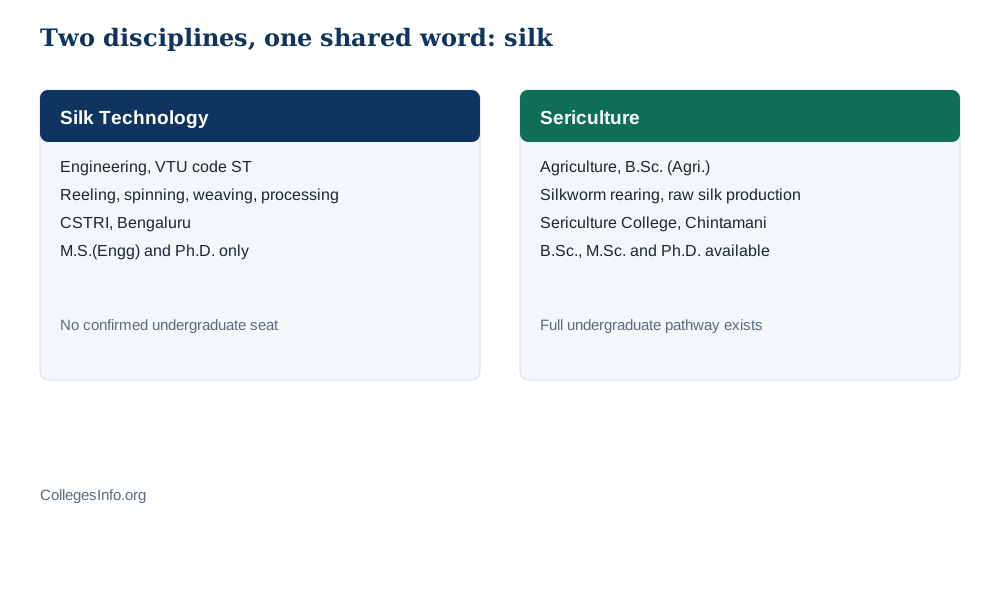
Silk Technology sits inside VTU engineering; Sericulture sits inside agricultural sciences. Different admission systems entirely.
The One Confirmed Institution, From Its Own Official Listing
Central Silk Technological Research Institute, Bengaluru
CSTRI operates under the Central Silk Board, a body under India's Ministry of Textiles, and is stated on its own site to be a pioneer organisation focused on quality improvement, productivity improvement, industry services, enterprise development and market information for the silk sector. Its VTU affiliation permits candidates to pursue an M.S. (Engg) and a Ph.D. in Silk Technology and Textile Engineering, run as a Research Centre arrangement rather than a standard undergraduate teaching department. CSTRI's broader mandate includes upgrading reeling, spinning, weaving and wet-processing machinery, testing cocoons, fibre, yarn and fabric to national and international standards, and providing technical training and consultancy to the silk industry.
This profile matches a pattern this site has now documented across several thin VTU branch codes: a genuine research institution exists and does genuine work, but the undergraduate teaching pipeline that would normally sit beneath it, feeding students into that research capacity, does not exist at meaningful scale. The same shape appeared with Mining Engineering, where a single confirmed undergraduate provider exists statewide, and with Environmental Engineering, where the undergraduate route is almost entirely displaced onto a different affiliating university under a different branch name.
Why Karnataka, Specifically, Should Have More Than This
Karnataka is not a peripheral player in India's silk industry. The Central Silk Board itself maintains its major technological research arm, CSTRI, in Bengaluru, and Karnataka has long been described as India's leading mulberry silk-producing state, with Mysuru silk carrying its own well-known Geographical Indication identity. The state government's own sericulture department and the Central Sericultural Research and Training Institute both maintain a significant physical presence in and around Mysuru specifically because the raw material and traditional industry base sits there, much as the coastal engineering cluster around Mangalore concentrates around its own regional industry base.
That industrial depth makes the near-total absence of an undergraduate engineering pipeline more striking here than it might be in a state with no silk industry at all. The infrastructure, research capacity and industry demand for process engineers, quality control specialists and machinery upgrade expertise all exist. What appears not to exist, at least at the confirmed undergraduate level in this research, is a structured four-year degree training students specifically for that pipeline, as opposed to the general Textile Technology and Mechanical Engineering routes that graduates currently rely on to enter silk-adjacent industrial roles.
Where the Two Silk-Adjacent Systems Actually Sit
Karnataka runs two entirely separate institutional systems that both touch the word "silk," and confusing them costs a candidate an admission cycle. The engineering system runs through VTU and CSTRI, admits through KCET or a related engineering entrance route, and leads toward postgraduate specialisation in reeling, spinning and processing technology. The agricultural system runs through the University of Agricultural Sciences, Bangalore, admits through the state's agricultural entrance process, and leads through its Sericulture College at Chintamani toward silkworm biology, rearing and raw silk production.
| Silk Technology (engineering) | Sericulture (agriculture) | |
|---|---|---|
| Governing system | VTU, via CSTRI's Research Centre affiliation | University of Agricultural Sciences, Bangalore |
| Confirmed degree level | M.S. (Engg) and Ph.D. only | B.Sc. (Agri.), M.Sc. (Agri.), Ph.D. |
| Core subject matter | Reeling, spinning, weaving, wet processing, machinery | Silkworm biology, rearing, raw silk production |
| Where it is taught | CSTRI, Bengaluru | Sericulture College, Chintamani, since 1995 |
| Typical employer | Central Silk Board, processing and reeling enterprises | State sericulture departments, silkworm egg production, silk marketing |
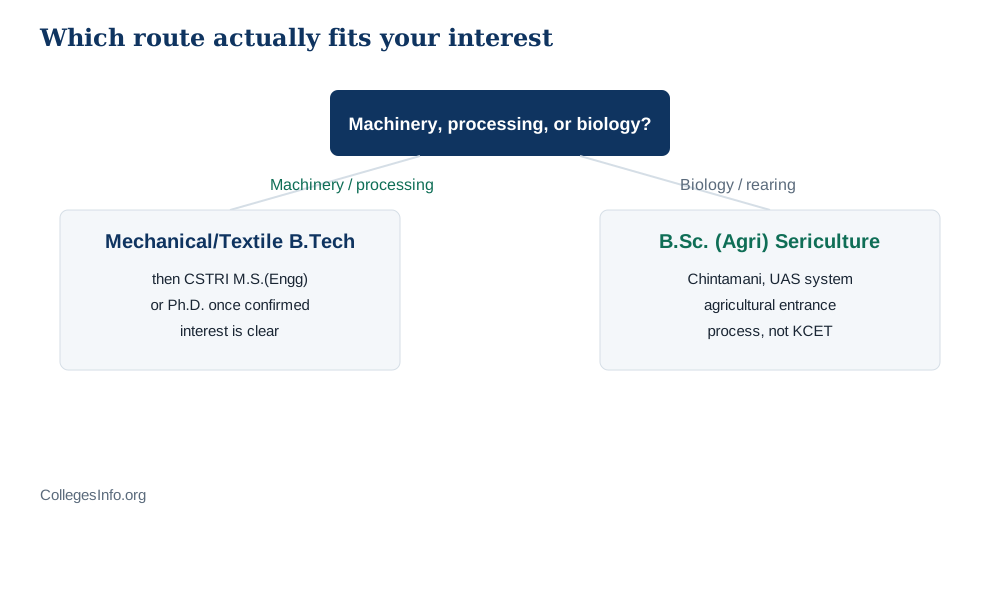
A candidate who wants to know which system actually fits their interest should start from the subject matter row in that table rather than the shared keyword. Interest in machinery, industrial processing and quality engineering points toward the VTU and CSTRI route, the same route governing branch choice for students screening the KCET cutoff landscape more broadly. Interest in biology, farming and rearing points toward the agricultural sciences route through Chintamani. The two rarely overlap in practice despite sharing a search term.
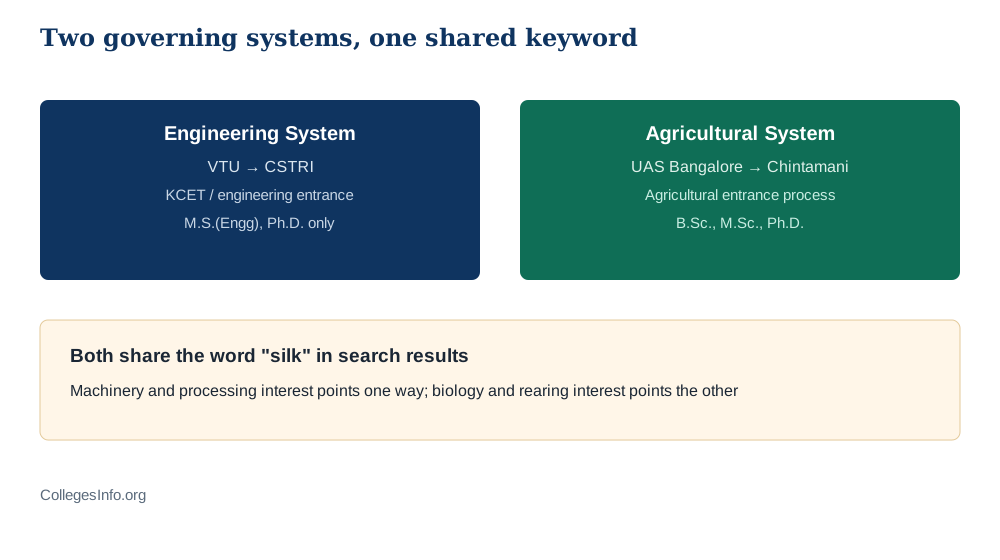
Two governing systems, two admission routes, one shared keyword.
How Silk Technology Compares to Karnataka's Other Thin Mechanical-Stream Codes
| VTU code | Programme name | Confirmed undergraduate presence |
|---|---|---|
| ME | Mechanical Engineering | Wide, dozens of colleges statewide |
| MT | Mechatronics | Thin, 2 confirmed departments |
| TX | Textile Technology | Rare, 1 confirmed department with long history |
| ST | Silk Technology | None confirmed; postgraduate and research only |
Reading down this table, a clear gradient emerges from Karnataka's dominant Mechanical Engineering branch through Mechatronics, then Textile Technology, to Silk Technology sitting at the very bottom with effectively no undergraduate presence at all. VTU lists Silk Technology and Textile Technology as adjacent codes in the same stream, and CSTRI's own postgraduate degree title, Silk Technology and Textile Engineering, treats the two as closely related fields at the research level, even though their undergraduate footprints in the state could not be more different.
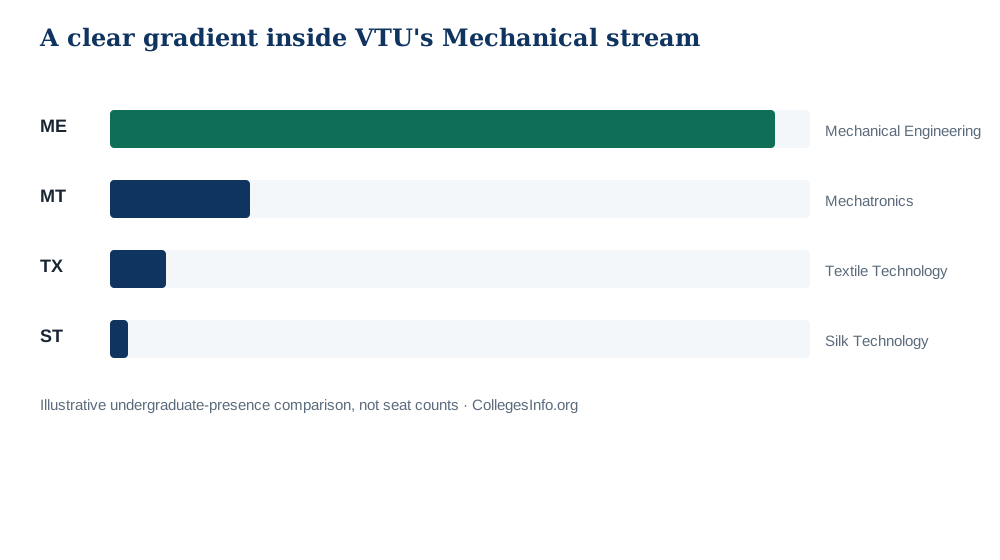
Silk Technology sits at the thin end of a clear gradient inside VTU's Mechanical stream.
What CSTRI's Research Actually Covers
CSTRI's own stated technology and research areas give the clearest picture available of what genuine silk-technology work in Karnataka involves. Its listed focus areas include mulberry silk reeling, vanya silk reeling, post-yarn processing, and machinery development that has produced patented innovations, alongside government schemes such as Silk Samagra aimed at upgrading reeling and processing machinery across the industry. The institute's stated objectives cover quality and productivity improvement in raw silk, spun silk and fabric, machinery standardisation for reeling, spinning, weaving and wet processing, and technical consultancy to industry enterprises.
This is substantive, applied engineering work. It is simply organised as research and industry-support activity under the Central Silk Board rather than as a teaching pipeline with its own undergraduate intake. A student wanting to work in this specific field currently has no direct four-year route confirmed in this research; the practical path runs through a general Mechanical Engineering or Textile Technology undergraduate degree, followed by specialisation at the postgraduate or research level, most plausibly at CSTRI itself given its VTU affiliation and Central Silk Board backing.
Admission Routes for the Confirmed Pathways
Since no undergraduate ST-coded seat could be confirmed, the practical admission planning splits into two stages. The undergraduate stage runs through the same eligibility rules VTU applies across its Mechanical and Textile branches: 10+2 with Physics and Mathematics compulsory, alongside one of Chemistry, Biology, Computer Science or Electronics, with 45% aggregate for general category candidates and 40% for SC, ST and OBC categories, admitted through the current-year KEA counselling portal. This is the same eligibility structure already documented across other specialised VTU branches on this site, including cyber security engineering and biomedical engineering.
The postgraduate stage into CSTRI's M.S. (Engg) and Ph.D. programmes follows the standard route for VTU-affiliated research centres, admitting candidates who already hold a relevant engineering undergraduate degree, typically through Karnataka PGCET, GATE, or direct research-centre admission processes depending on the specific programme and year. CSTRI's Research Centre status, recognised under a body approved by the All India Council for Technical Education, follows the same postgraduate admission logic that governs other VTU-affiliated research centres and departments across the state.
The Practical Route Into This Field Today
Given the confirmed absence of an undergraduate Silk Technology seat, a candidate seriously interested in silk industry engineering work should plan a two-stage path: a Mechanical Engineering or Textile Technology undergraduate degree first, admitted through the standard B.Tech routes available statewide, followed by CSTRI's M.S. (Engg) or Ph.D. in Silk Technology and Textile Engineering once a tested interest in the field is confirmed. This mirrors the same postgraduate-first logic already documented for thin VTU branches elsewhere on this site, where the confirmed undergraduate route was similarly rare and a stronger parent-branch foundation followed by later specialisation proved the more reliable path.
Candidates who want their branch and affiliation checked before applying anywhere can start from our MBA admission assistance page.
A candidate specifically drawn to sericulture, silkworm biology and raw silk production rather than industrial reeling and processing technology should look toward the University of Agricultural Sciences system and its dedicated Sericulture College at Chintamani instead, admitted through the separate agricultural sciences admission process rather than KCET's engineering stream. Confirming which of these two distinct fields actually matches a candidate's interest, engineering process technology versus agricultural silkworm science, is the single most useful step before committing to either route.
Why Karnataka Has Not Built an Undergraduate Pipeline Here
The same structural logic already documented across this site's other thin-branch research applies here, arguably more sharply. A four-year undergraduate degree needs a broad, growing, predictable employer base to justify seat expansion across multiple colleges. Silk industry engineering roles sit inside a specific, geographically concentrated industry, historically centred on the Mysuru region, served by a small number of specialised employers: the Central Silk Board and its research units, state sericulture departments, and a limited set of silk processing and reeling enterprises. That employer base is real, but it is neither large enough nor distributed widely enough across Karnataka to justify multiple colleges each running a dedicated four-year Silk Technology programme competing for the same small pool of specialised roles.
CSTRI's existing model, a single specialised research institute serving the entire state's silk-technology research and industry-support needs, may simply be the more efficient structure for an industry of this scale, with undergraduate feeder talent drawn from broader Mechanical and Textile programmes rather than a dedicated undergraduate silk-technology pipeline. Whether that structure changes as India's silk exports and domestic demand grow is a separate question from what currently exists, and what currently exists, confirmed directly from CSTRI's own page, is research and postgraduate education only.
The Central Silk Board's Wider Footprint in Karnataka
CSTRI sits inside a larger Central Silk Board structure that maintains multiple specialised units in and around the Mysuru region specifically, reflecting the state's historic role as India's leading silk producer. Alongside CSTRI's technology and machinery focus, the Board separately runs research and training institutes concentrated on the biological and agricultural side of silk production, the same territory covered by the Sericulture system rather than the engineering one. This split mirrors, at institutional scale, the exact confusion this article addresses: even within one central government body, silk-related work divides cleanly between engineering process technology and agricultural biological science, run through different units with different mandates.
For a Karnataka student, this means the state offers unusually deep infrastructure across both sides of the silk industry, engineering process research at CSTRI and agricultural silkworm science through the university system, without either side currently running a dedicated undergraduate engineering degree that ties directly back to VTU's ST branch code. A candidate serious about a silk-industry career is better served understanding this full landscape, engineering research capacity on one side, agricultural teaching capacity on the other, than searching for a single college that offers a "Silk Technology" undergraduate degree matching the VTU code exactly, since this research could not confirm one exists. The safer undergraduate strategy remains a strong government engineering college seat in a broader branch, kept open for later specialisation.
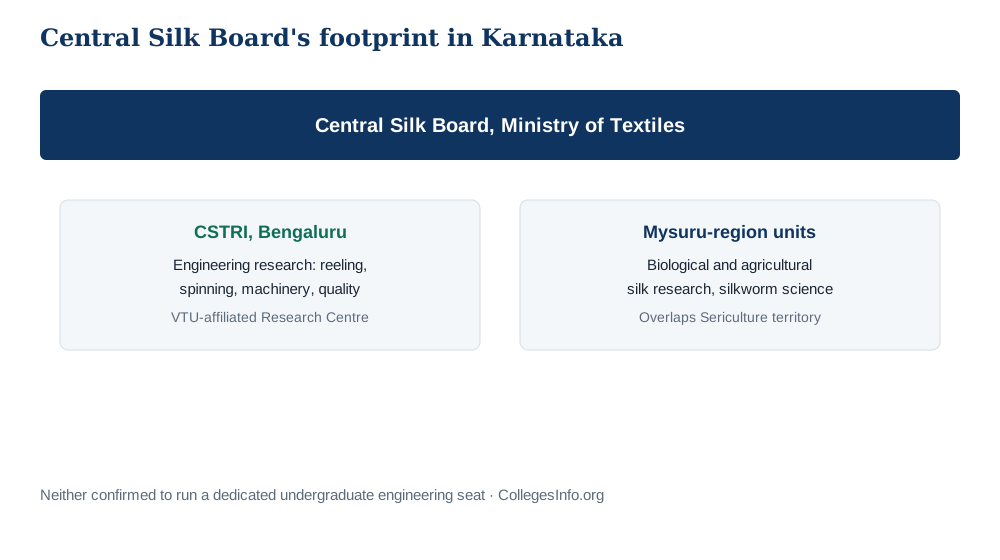
Deep institutional infrastructure on both sides of the industry, but no dedicated undergraduate engineering pipeline confirmed between them.
How to Search for This Field Without Getting Misled
- Do not expect a KCET-admitted undergraduate Silk Technology seat; none could be confirmed from any college's own official page in this research.
- Distinguish Silk Technology, an engineering discipline covering reeling, spinning, weaving and processing, from Sericulture, an agricultural science covering silkworm rearing and raw silk production.
- Treat CSTRI as a postgraduate and research destination reached after an undergraduate degree, not as a first-degree provider.
- If agricultural silk science actually interests you rather than industrial process engineering, look toward the University of Agricultural Sciences system and its Sericulture College at Chintamani instead.
- Where a portal claims an undergraduate Silk Technology college exists, verify directly against that college's own department page before treating the claim as fact.
The same verification applies when comparing engineering and agricultural admission routes, and our admission assistance service page covers that path.
Frequently Asked Questions
Is there an undergraduate Silk Technology engineering degree in Karnataka?
None could be confirmed in this research. VTU's ST branch code exists on paper inside the Mechanical Engineering stream, but the one confirmed provider, CSTRI, offers only postgraduate and research degrees, not a four-year undergraduate programme.
What does CSTRI actually offer?
CSTRI's own page states it provides for candidates to pursue a Master of Science in Engineering, M.S. (Engg), and a Doctor of Philosophy, both in Silk Technology and Textile Engineering, under its VTU affiliation as a Research Centre. Both require a prior undergraduate degree for admission.
Is Silk Technology the same as Sericulture?
No. Silk Technology is an engineering discipline covering reeling, spinning, weaving and industrial silk processing, connected to VTU. Sericulture is an agricultural science covering silkworm rearing and raw silk production, taught as a B.Sc. Agriculture programme through the University of Agricultural Sciences system, including its dedicated Sericulture College at Chintamani.
How many colleges in India offer Silk Technology?
One large education portal's own filtered count states only 2 colleges nationally offer it at any level, split one private and one public, with Karnataka home to the top-ranked national option.
What is the practical route into silk industry engineering work today?
A Mechanical Engineering or Textile Technology undergraduate degree first, followed by specialisation through CSTRI's M.S. (Engg) or Ph.D. programme once a genuine interest in the field is confirmed.
Where is CSTRI located and what does it do?
CSTRI operates in Bengaluru under the Central Silk Board, part of India's Ministry of Textiles. Its own stated mandate covers quality and productivity improvement in raw silk, spun silk and fabric, machinery standardisation for reeling, spinning, weaving and wet processing, and technical consultancy to the silk industry.
Why does Karnataka not have more undergraduate Silk Technology seats given its silk industry?
The employer base for this specific engineering specialisation is small and geographically concentrated, historically centred on the Mysuru region, served by a limited set of specialised employers. This narrow base likely has not generated enough demand for colleges to justify a dedicated four-year undergraduate pipeline, leaving CSTRI's single research-and-postgraduate model as the confirmed structure instead.
This article is for informational purposes only. Consult the college directly before making admission decisions.
About the author
OneCity Technologies Pvt. Ltd began in 2006 publishing an annual print education directory for Karnataka students and parents. As demand grew, OneCity launched an education portal in 2019 to bring that same directory information online, and in 2025 relaunched as CollegesInfo.org, a comprehensive Karnataka college directory covering 1,500+ institutions across engineering, medical, management, arts, commerce, and more. Founder L K Monu Borkala brings 20+ years of business experience and 19 years of work across various education-sector services. CollegesInfo.org's content is built from publicly available KEA, NMC, AICTE, and university data, cross-checked against official sources wherever possible. CollegesInfo.org's admission assistance service helps students secure admission to colleges they are eligible for under that college's actual published criteria. We help you get the best admission to your preferred colleges without hassle.
Need help with admission?
CollegesInfo.org helps students secure admission to colleges they are eligible for under that college's actual published criteria. Chat with us on WhatsApp or explore admission assistance.
Not sure which route actually fits your interest in silk?
We help you get the best admission to your preferred colleges without hassle.