Mechatronics engineering colleges in Karnataka get confused with two different things at once: a diploma carrying the same name at a different institution, and an industry-tied certificate programme that isn't a KCET-admitted degree at all. Real B.Tech Mechatronics seats exist at a small number of VTU colleges, and the confirmed list is shorter than most rankings suggest.
Looking at the bigger picture? Our guide to the best engineering colleges in Karnataka compares KCET tier-wise cutoffs, COMEDK options, and real fee data across Bengaluru, Mangalore, Mysore, and north Karnataka for 2027.
Why Mechatronics Engineering Colleges in Karnataka Are Hard to Pin Down
Open VTU's stream-wise UG programme list and Mechatronics, course code MT, sits inside the Mechanical Engineering stream, alongside Aeronautical, Automation and Robotics, and Robotics and Artificial Intelligence, among others. That crowd of adjacent names is part of the problem. But the sharper confusion here isn't between branch codes. It's between three completely different kinds of programme that all answer to the same search term.
3 Ways "Mechatronics College" Gets Misread
1. Same brand name, different qualification level
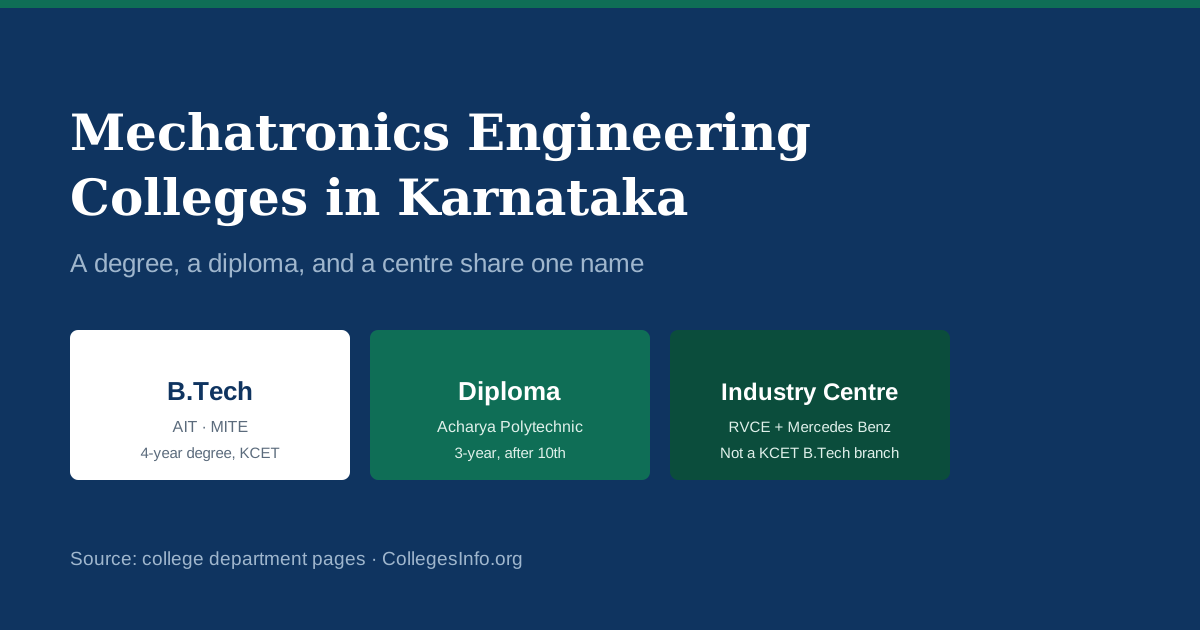
Acharya Institute of Technology, established in 2000, states on its own site that it was the first institution in Karnataka to introduce an undergraduate course in Mechatronics. Acharya Polytechnic, established in 1990, is a separate self-financed polytechnic college, part of the same JMJ Education Society and carrying the same Acharya name, approved by AICTE and the Directorate of Technical Education, Government of Karnataka. Acharya Polytechnic's own course list includes a 3-year Diploma in Mechatronics among its 13 specialisations, admitted after 10th standard, not after PUC. A search for "Acharya Mechatronics" surfaces both, and only one of them is a KCET-admitted B.Tech degree.
2. Named industry centres that aren't degree branches
RV College of Engineering shows up constantly in mechatronics college rankings because of its Centre for Automotive Mechatronics, run jointly with Mercedes Benz, Bosch Rexroth Automation Technologies Labs and the Tata Ready Engineer's programme. A direct Quora answer to the question "does RVCE have a BE mechatronics branch" states plainly that RVCE offers an Advanced Diploma in Automotive Mechatronics through this centre, not a standalone B.Tech branch. RVCE's own site separately lists an Automation and Robotics Digital Manufacturing initiative under its Industrial Engineering and Management department, which is a specialisation area within an existing branch, not a distinct KCET-admitted Mechatronics seat either. A candidate targeting a dedicated Mechatronics degree at RVCE through KCET will not find one, however often the college appears in "top mechatronics colleges" search results.
3. Three near-identical adjacent branch codes
VTU's Mechanical Engineering stream lists Automation and Robotics as a separate code from Mechatronics, and Robotics and Artificial Intelligence as a third, distinct again. All three sit under one stream, all three involve some blend of mechanical systems, electronics and control, and none of them is interchangeable with another at KEA option entry. A candidate who has decided on "mechatronics" and ends up filling in the code for Automation and Robotics, or the reverse, has entered a different seat entirely.
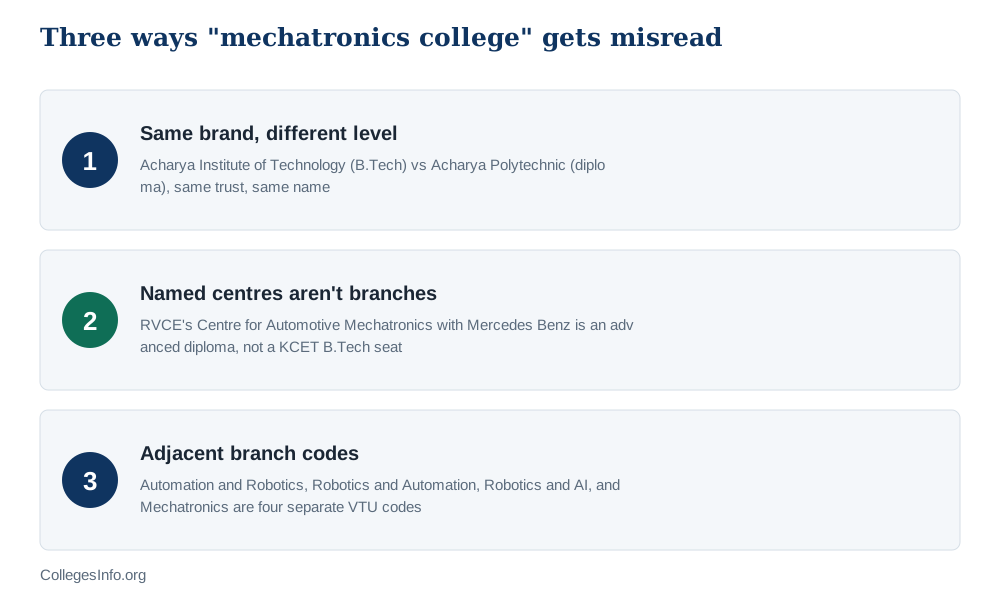
A shared brand name, an industry centre, and adjacent branch codes all answer the same search.
2 Karnataka Colleges Confirmed From Their Own Official Pages
This section is limited to colleges whose own department pages confirm a genuine B.Tech or B.E. Mechatronics Engineering degree, its start, and its current status. Colleges named only through aggregator lists, industry centres or diploma-level programmes carrying the same institutional name are excluded here and addressed separately below.
1. Acharya Institute of Technology, Bangalore
AIT's own department page states it was the first institution in Karnataka to introduce an undergraduate course in Mechatronics, and describes the programme as a comprehensive curriculum merging multiple engineering branches into one cohesive course, with a strong Industry 4.0, robotics and automation focus. Eligibility follows standard VTU norms: 10+2 with Physics and Mathematics plus one of Chemistry, Biology, Computer Science or Electronics. Admission runs through KCET and COMEDK. The programme is a full four-year B.Tech degree, not a diploma or certificate.
2. Mangalore Institute of Technology & Engineering, Moodbidri
MITE's own department page names a current department head, Mohan Kumar Naik, and describes the programme as a blend of mechanical, electrical, electronics, computer science, information technology, control systems and design engineering. The stated curriculum covers engineering design, manufacturing processes, PLC systems, industrial sensors, controllers, hydraulic and pneumatic systems, electric drives and factory production line automation. MITE is an autonomous institute affiliated to VTU and approved by the All India Council for Technical Education, matching the profile already covered in our cyber security branch guide for the same institution's IoT and Cyber Security programme.
How Crowded VTU's Mechanical Stream Has Become
Mechatronics is one of eighteen distinct programmes VTU now lists inside the Mechanical Engineering stream alone. That number is worth sitting with. Aeronautical Engineering, Aerospace Engineering, Agricultural Engineering, Automation and Robotics, Automobile Engineering, Chemical Engineering, Industrial and Production Engineering, Industrial Engineering and Management, Manufacturing Science and Engineering, Marine Engineering, Mechanical and Smart Manufacturing, plain Mechanical Engineering, Mechatronics, Petrochem Engineering, Robotics and Automation, Robotics and Artificial Intelligence, Silk Technology and Textile Technology all sit under one stream, each with its own course code and, at least in theory, its own KEA seat matrix entry.
Four of those eighteen names, Automation and Robotics, Robotics and Automation, Robotics and Artificial Intelligence, and Mechatronics, describe closely overlapping subject matter to anyone outside the university system. A candidate reading branch names off a KCET option-entry screen has no easy way to tell, from the name alone, which of these four is a mature department with real placement history and which is a code that exists on paper at only a handful of colleges. This is the same structural problem already documented in our guides to Robotics and AI Engineering and to Industrial Engineering and Management, both adjacent codes inside the same crowded stream.
| Course code | Programme name, as VTU prints it |
|---|---|
| MT | Mechatronics |
| AM | Automation and Robotics |
| RA | Robotics & Automation |
| RI | Robotics and Artificial Intelligence |
| ME | Mechanical Engineering |
| MM | Mechanical & Smart Manufacturing |
Notice that VTU itself lists both Automation and Robotics under code AM and Robotics and Automation under code RA as separate entries, with the word order simply reversed between the two names. A candidate scanning quickly down an option list could enter one when meaning the other, and KEA's allotment engine has no way of knowing the two names were meant to describe the same thing, because officially they are not the same code at all.
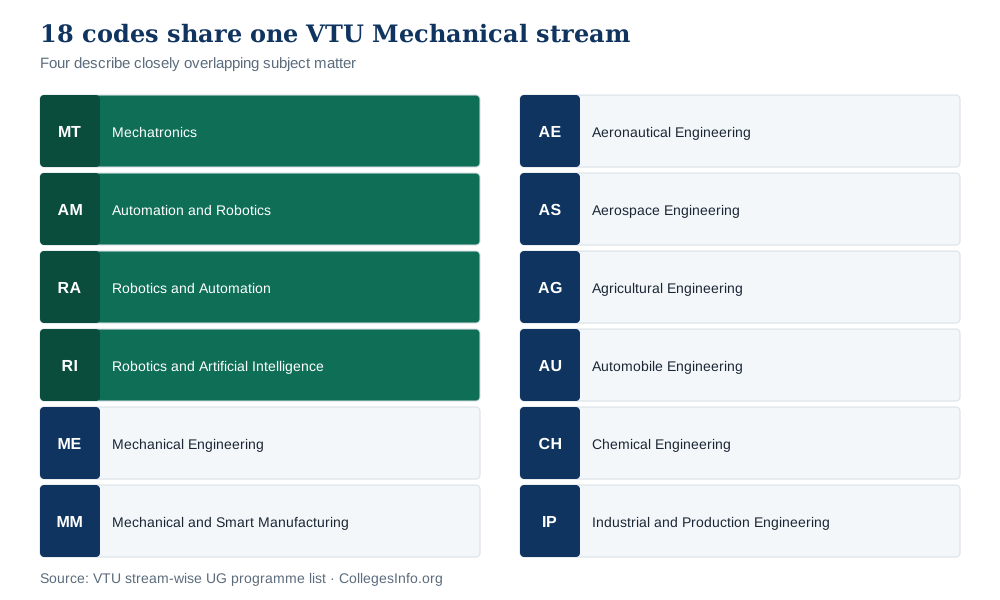
Four of eighteen codes describe overlapping subject matter under different names.
Colleges Named by Aggregators, Not Confirmed as Standalone Degree Branches
Multiple large portals list Acharya Institute of Technology, RV College of Engineering, MS Ramaiah Institute of Technology and Bangalore Institute of Technology among top Mechatronics colleges in Karnataka. Of these, only Acharya Institute of Technology confirms a standalone B.Tech Mechatronics department on its own page in this research. RVCE's own material confirms an industry-tied Advanced Diploma, not a KCET B.Tech branch. MSRIT's own department pages, checked directly, describe Mechatronics only as a research theme within its Mechanical Engineering department rather than a separate admitted branch. Nitte Meenakshi Institute of Technology's own Mechanical Engineering page names Mechatronics among its research areas in the same way, again inside Mechanical Engineering rather than as its own branch code. A candidate should verify directly with any additionally named college whether the seat on offer is a distinct MT-coded branch or a specialisation label inside a broader Mechanical Engineering degree, since the difference changes both the KCET branch code entered and the actual four-year curriculum followed.
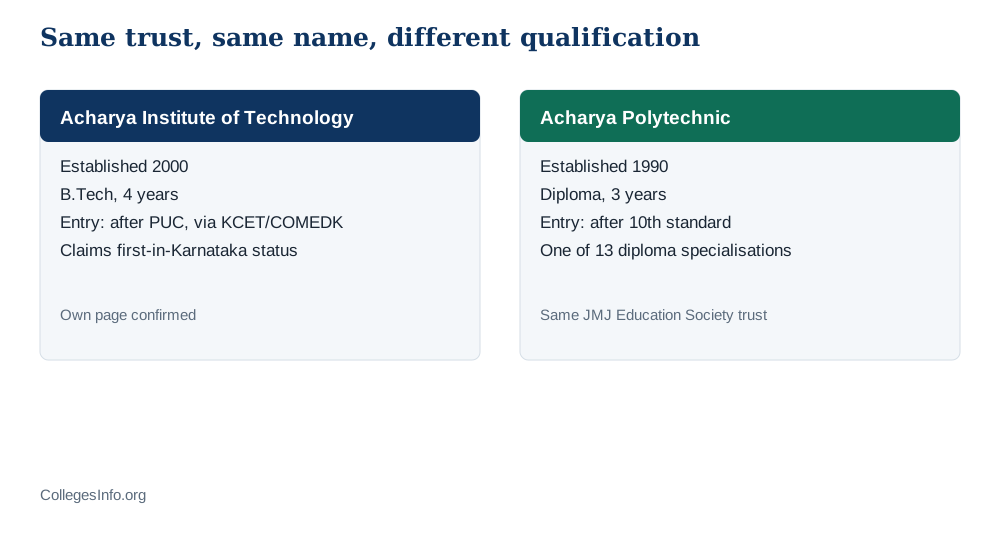
Same trust, same brand name, two different qualification levels.
Diploma, Degree or Industry Centre: What Each Route Actually Gives You
| Route | Example | Entry point | Duration | What you get |
|---|---|---|---|---|
| B.Tech degree | Acharya Institute of Technology, MITE Moodbidri | 10+2, via KCET/COMEDK | 4 years | A recognised engineering degree, MT branch code |
| Polytechnic diploma | Acharya Polytechnic | After 10th standard | 3 years | A diploma, can feed into lateral-entry B.Tech elsewhere |
| Industry-tied advanced diploma | RVCE Centre for Automotive Mechatronics | Varies, not standard KCET admission | Certificate-level | Specialised industry certification, not a B.Tech branch |
| Research theme inside Mechanical Engineering | NMIT, MSRIT | Standard Mechanical Engineering admission | 4 years | A Mechanical Engineering degree with Mechatronics-adjacent electives or research exposure |
Reading this table against a KCET option list matters more than it looks. A candidate who enters the MT code expecting the AIT or MITE curriculum, but lands at a college where "mechatronics" only describes a research theme inside Mechanical Engineering, ends up with a plain Mechanical Engineering degree and a syllabus that never matches what was searched for.
Eligibility and Admission Routes
Both confirmed B.Tech Mechatronics departments admit through the standard Karnataka engineering routes. AIT's own page states eligibility as 10+2 with Physics and Mathematics compulsory alongside Chemistry, Biology, Computer Science or Electronics, with a minimum of 45% aggregate under general VTU norms, admitted through KCET and COMEDK. This matches the eligibility pattern already documented across other specialised VTU branches, including Biomedical and Medical Electronics Engineering and cyber security engineering. MITE, as an autonomous VTU-affiliated institute, follows the same KCET and COMEDK admission structure common to its other specialised branches.
Acharya Polytechnic's diploma route admits after 10th standard rather than PUC, on a different academic calendar and eligibility basis entirely, which is the single clearest marker that separates it from the AIT degree despite the shared institutional name. A student or parent searching only by college brand name, without checking the qualification level, risks applying to the wrong programme at the wrong life stage.
What the Confirmed Departments Actually Teach
MITE's own department page is unusually specific about curriculum content: engineering design, manufacturing processes, programmable logic controllers, industrial sensors and controllers, hydraulic and pneumatic systems, electric drives, and the control and mechanism design of mechanical structures and factory production lines. AIT's own framing emphasises Industry 4.0, modern manufacturing, robotics and automation technologies, alongside industry-certified specialisation courses aligned to recruitment patterns.
Both descriptions point at the same core idea industry sources give for the discipline: Mechanical Engineering focuses on machines, while Mechatronics focuses on smart machines, integrating software and electronics into mechanical systems rather than treating them as separate disciplines. That distinction is real and worth understanding before choosing between a plain Mechanical Engineering seat at a top-ranked college and a Mechatronics seat at a college with a newer, smaller department.
Placements and Where the Industry Actually Sits
Bangalore's automotive and manufacturing-technology cluster is the practical reason this branch has any local relevance at all. RVCE's named partnerships with Mercedes Benz and Bosch Rexroth, even though they sit inside a diploma centre rather than a degree branch, point at real industry demand for mechatronics-adjacent skills in the city. AIT's own page notes access to Industry Certified Specialisation courses targeted at recruitment patterns, which signals the department is actively tracking what local employers hire for rather than teaching a static syllabus.
As with other specialised branches, the branch code on a transcript matters less at hiring time than the specific projects, certifications and internships a graduate can show. An employer hiring for an automation or mechatronics-adjacent role in Bangalore's manufacturing sector is likely to weigh hands-on PLC, sensor and controls experience, of the kind MITE's own page describes, more heavily than which of the adjacent VTU branch codes appears on the degree certificate.
Choosing Between Mechatronics, Automation and Plain Mechanical
Given how many adjacent codes sit inside one stream, a practical way to narrow the choice is by what each confirmed department actually emphasises rather than by name similarity. AIT's own framing leans toward Industry 4.0, robotics and automation technologies layered onto a mechanical core, aimed at graduates who want flexibility across IT, core mechanical and core electronics domains, as the department's own page states directly. MITE's own framing leans more specifically toward industrial automation hardware: PLCs, sensors, hydraulic and pneumatic systems and factory production lines, a narrower and more hands-on industrial-automation focus than AIT's broader multidisciplinary positioning.
A candidate deciding between a Mechatronics seat and a plain Mechanical Engineering seat at a stronger, more established college should weigh institutional depth against specialisation. The B.Tech rankings by NIRF and cutoff and the wider government engineering colleges in Bangalore both represent the safer, broader route: a well-regarded Mechanical Engineering degree keeps every specialisation option, including mechatronics-adjacent electives and postgraduate study, open later. A dedicated Mechatronics seat at a newer department is the narrower, more committed choice, and is worth it primarily when the specific college's own curriculum, like MITE's stated PLC and industrial-automation focus, matches a candidate's actual interest rather than the branch name alone.
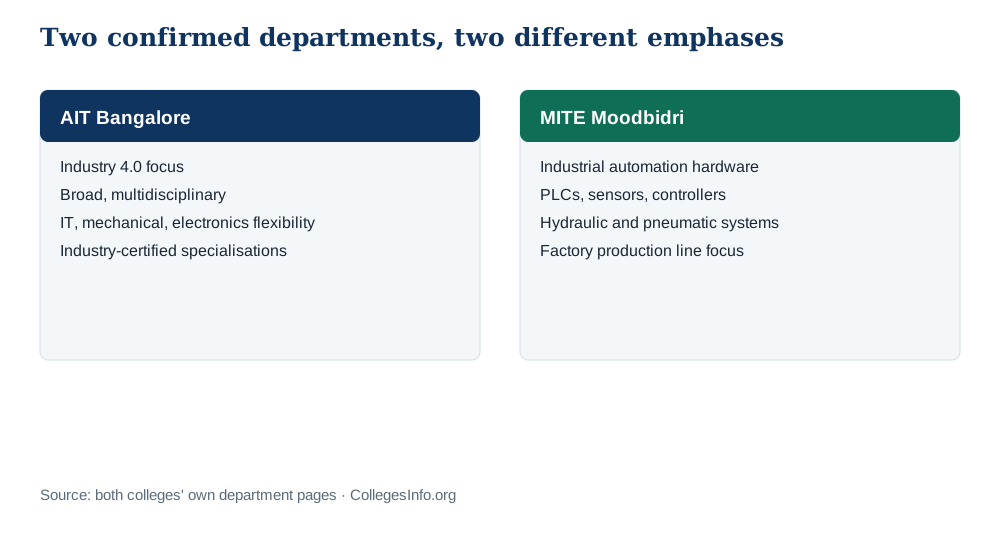
AIT leans toward Industry 4.0 breadth; MITE leans toward industrial-automation hardware depth.
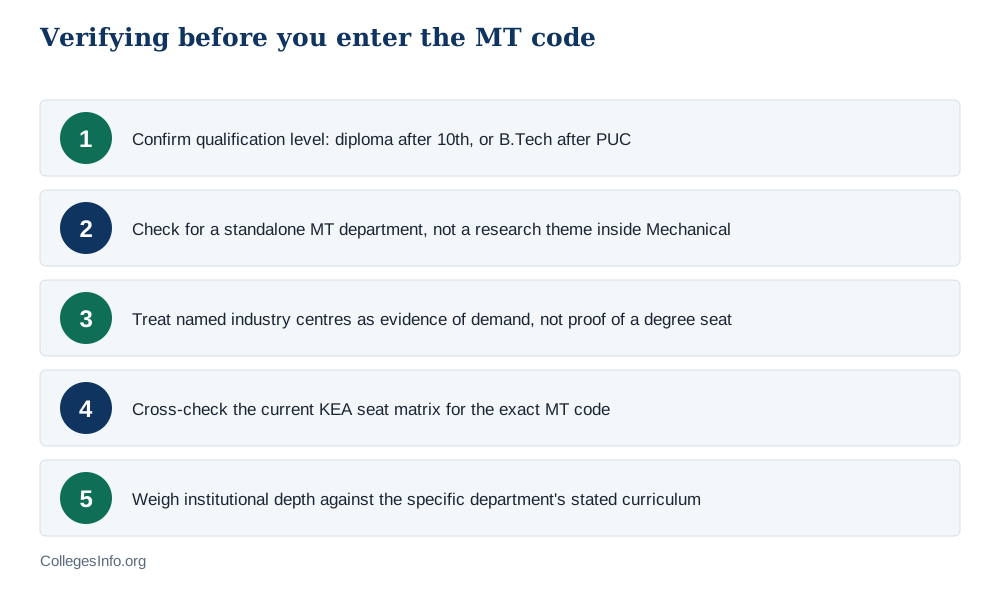
How to Verify Before Locking an Option
- Confirm the qualification level first: diploma after 10th standard, or B.Tech after PUC through KCET or COMEDK. These are not interchangeable and the same institutional brand name can run both.
- Check whether the college's own page describes a standalone Mechatronics department with its own MT branch code, or only lists mechatronics as a research theme inside a broader Mechanical Engineering degree.
- Treat named industry centres, such as RVCE's Automotive Mechatronics centre, as evidence of industry relevance in the city, not as proof that a KCET-admitted degree branch exists at that specific college.
- Cross-check the current-year KEA seat matrix for the exact MT code against your target college rather than assuming based on a portal ranking or a college's industry-centre name recognition.
- Where institutional depth matters more than the branch label, weigh options using the established Bangalore college profiles alongside the specific department's own stated curriculum.
Candidates who want their qualification level and branch eligibility checked before applying anywhere can start from our MBA admission assistance page.
Karnataka's engineering landscape has added and renamed specialised branches quickly across the Mechanical stream in recent years, a pattern already visible in how automobile engineering folded back toward the parent Mechanical branch, and in how instrumentation engineering narrowed to a small set of departments over time. A confirmed Mechatronics seat today is worth checking again at the next admission cycle, since branch offerings at individual colleges do shift year to year.
The same verification applies when comparing lateral-entry or postgraduate routes, and our admission assistance service page covers that path.
Lateral Entry and the Postgraduate Route
Acharya Polytechnic's diploma route is not a dead end for a student who later wants the degree. Diploma holders in relevant engineering fields can pursue lateral entry directly into the second year of a B.Tech programme at colleges offering the equivalent branch, following the standard VTU lateral-entry framework used across other specialised branches, including the diploma and B.Sc routes already documented in our Bangalore college admission profiles. A student who starts at Acharya Polytechnic's Mechatronics diploma is not necessarily locked out of the B.Tech curriculum at AIT or elsewhere; the diploma can function as an entry point rather than a separate, disconnected track.
At postgraduate level, M.Tech admission in mechatronics-adjacent specialisations in Karnataka runs through Karnataka PGCET and GATE, the same routes covering other Mechanical-stream postgraduate seats. A candidate who takes a plain Mechanical Engineering seat at a well-established college and later specialises through an M.Tech in mechatronics, robotics or automation keeps the broadest set of undergraduate options open, then narrows deliberately at the postgraduate stage once genuine interest and aptitude are clearer. This mirrors the same postgraduate-first strategy already laid out for candidates weighing options across other newly specialised branches, where a strong undergraduate foundation followed by a focused postgraduate specialisation reads at least as well to employers as a narrower undergraduate branch label from a newer department.
Frequently Asked Questions
Is Mechatronics Engineering a real B.Tech degree in Karnataka?
Yes, at a limited number of colleges. Acharya Institute of Technology and Mangalore Institute of Technology & Engineering both confirm a standalone B.Tech or B.E. Mechatronics Engineering department, admitted through KCET and COMEDK, on their own official pages.
Does RV College of Engineering offer a B.Tech in Mechatronics?
No. RVCE's own material confirms an Advanced Diploma in Automotive Mechatronics run through its Centre for Automotive Mechatronics with Mercedes Benz, which is an industry-tied certificate programme rather than a KCET-admitted B.Tech branch.
What is the difference between Acharya Institute of Technology and Acharya Polytechnic for Mechatronics?
Acharya Institute of Technology, established 2000, runs a four-year B.Tech Mechatronics degree admitted through KCET and COMEDK after PUC. Acharya Polytechnic, established 1990, is a separate self-financed institution under the same trust that runs a three-year Mechatronics diploma admitted after 10th standard. They are different institutions with different qualification levels sharing the same institutional brand name.
What is the VTU branch code for Mechatronics?
MT, inside the Mechanical Engineering stream, alongside separate adjacent codes for Automation and Robotics and for Robotics and Artificial Intelligence.
What eligibility is required for Mechatronics Engineering in Karnataka?
Standard VTU norms apply at confirmed colleges: 10+2 with Physics and Mathematics compulsory, plus one of Chemistry, Biology, Computer Science or Electronics, with a minimum aggregate around 45%, admitted through KCET or COMEDK.
Do MSRIT and NMIT offer Mechatronics Engineering as a separate branch?
Their own department pages describe Mechatronics as a research theme within their Mechanical Engineering departments rather than as a separate admitted branch with its own KCET code. A candidate wanting a dedicated Mechatronics degree should verify this distinction directly before assuming either offers a standalone seat.
Does the branch code matter for placements after graduation?
Less than the specific coursework and industry exposure a graduate can demonstrate. Employers in Bangalore's automotive and manufacturing sector weigh hands-on experience with PLCs, sensors and control systems more heavily than which adjacent Mechanical-stream branch code appears on the transcript.
This article is for informational purposes only. Consult the college directly before making admission decisions.
About the author
OneCity Technologies Pvt. Ltd began in 2006 publishing an annual print education directory for Karnataka students and parents. As demand grew, OneCity launched an education portal in 2019 to bring that same directory information online, and in 2025 relaunched as CollegesInfo.org, a comprehensive Karnataka college directory covering 1,500+ institutions across engineering, medical, management, arts, commerce, and more. Founder L K Monu Borkala brings 20+ years of business experience and 19 years of work across various education-sector services. CollegesInfo.org's content is built from publicly available KEA, NMC, AICTE, and university data, cross-checked against official sources wherever possible. CollegesInfo.org's admission assistance service helps students secure admission to colleges they are eligible for under that college's actual published criteria. We help you get the best admission to your preferred colleges without hassle.
Need help with admission?
CollegesInfo.org helps students secure admission to colleges they are eligible for under that college's actual published criteria. Chat with us on WhatsApp or explore admission assistance.
Not sure if that seat is a degree, a diploma or a certificate?
We help you get the best admission to your preferred colleges without hassle.