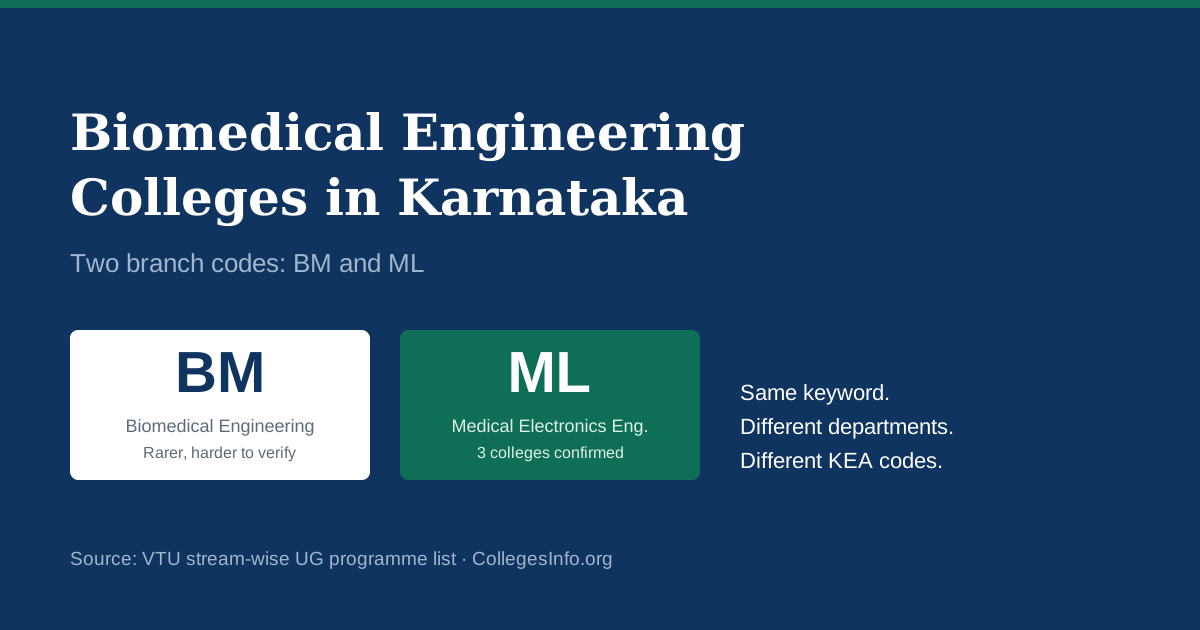
Biomedical engineering colleges in Karnataka sit inside two different VTU branch codes, not one. Biomedical Engineering carries code BM, and Medical Electronics Engineering carries code ML. Both live in the Electrical and Electronics Engineering stream, both point students toward the same medical-device industry, and KEA treats them as entirely separate options.
Looking at the bigger picture? Our guide to the best engineering colleges in Karnataka compares KCET tier-wise cutoffs, COMEDK options, and real fee data across Bengaluru, Mangalore, Mysore, and north Karnataka for 2027.
Why Biomedical Engineering Colleges in Karnataka Sit Under Two Different Branch Codes
Open VTU's stream-wise UG programme list and the Electrical and Electronics Engineering stream shows seven programmes. Two of them point at healthcare technology, under different names and different codes.
| Course code | Programme name, as VTU prints it |
|---|---|
| BM | Biomedical Engineering |
| ML | Medical Electronics Engineering |
| EC | Electronics & Communication Engineering |
| EE | Electrical & Electronics Engineering |
| EI | Electronics & Instrumentation Engineering |
| ET | Electronics & Telecommunication Engg |
| IO | Industrial IoT |
Nobody outside the college system tracks this distinction carefully. A Careers360 forum thread answering a student's KCET rank query lists BMS College of Engineering and MS Ramaiah Institute of Technology under "Medical Electronics" and RV College of Engineering and Siddaganga Institute of Technology under "Biomedical Engineering," in the same answer, without ever noting that these are two different VTU codes rather than two names for one branch. That mix-up sits in front of students at the exact moment they are filling an option-entry form during KCET counselling. BMSCE itself runs a distinct Electronics and Instrumentation department alongside its Medical Electronics one, a distinction covered in more depth in our Bangalore engineering college profiles.
3 Reasons This Confusion Costs Students a Seat
1. Aggregators name colleges for branches they may not run
One widely read forum answer lists RV College of Engineering under Biomedical Engineering. Another Careers360 answer to a direct question, "where is the biomedical engineering in this college," states plainly that RVCE has no biomedical engineering department and points to RVCE's own department list to check. Two answers on the same platform disagree about the same college. Neither is a verified primary source, and a candidate building an option list from either one alone can end up chasing a seat that does not exist in the form they expect.
2. The two codes sit in different departments with different histories
Medical Electronics Engineering and Biomedical Engineering are not run out of the same lineage at most colleges that offer either. A college with a decades-old Medical Electronics department does not automatically also run a Biomedical Engineering programme, and the reverse holds too. Confirming which code a specific college actually runs, from that college's own department page, is the only way to avoid this.
3. Seat intake and closing ranks are set per code, per college
KEA allots against the exact branch code printed in its seat matrix for that admission cycle. A candidate who assumes "biomedical" and "medical electronics" are interchangeable synonyms risks entering the wrong code against the right college, which behaves during allotment exactly like entering no branch at all for that college.
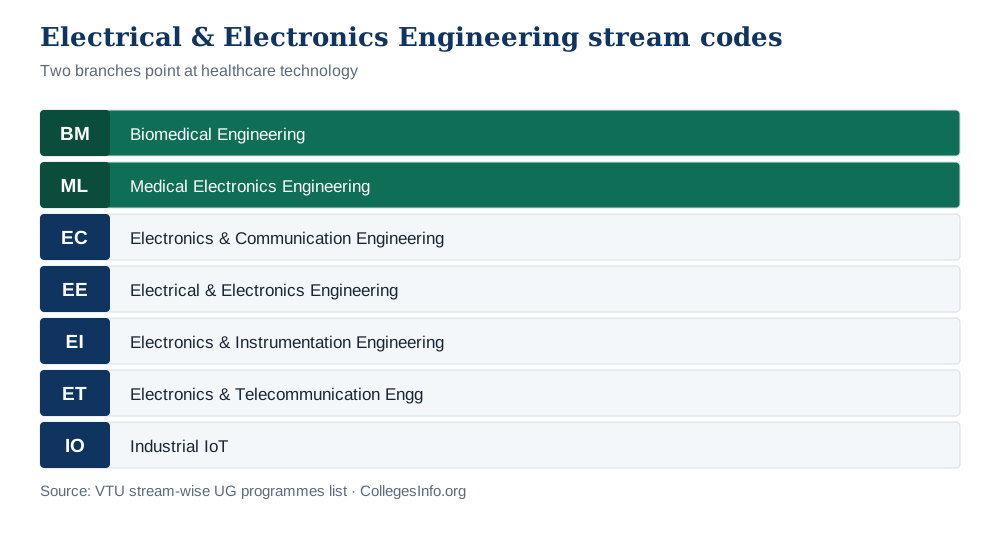
Two codes, two departments, one shared keyword search.
4 Karnataka Colleges Confirmed From Their Own Official Pages
Aggregator listings for both branches disagree with each other often enough that this section is limited strictly to colleges whose own department pages state the programme, its start date and its current status. Colleges named only by forum answers or aggregator tables are left out and flagged at the end rather than presented here as fact.
1. B.M.S. College of Engineering, Bangalore · Medical Electronics Engineering, code ML
BMSCE's own department page states the Department of Medical Electronics Engineering was established in 1992, with undergraduate intake that began at 30 and rose to 60 in 2018. The department is NBA-accredited and runs an M.Tech in Biomedical Signal Processing and Instrumentation established in 2013 with an intake of 18, under approval from the All India Council for Technical Education, which governs intake and accreditation for every branch named in this article. The page names the current Head of Department and describes active collaboration with research institutes including the Indian Institute of Science and Narayana Nethralaya. One aggregator listing tags this programme as discontinued from June 2024, which directly conflicts with BMSCE's own live department page describing 2026-27 admissions activity; the college's own current page is treated as authoritative here, and the conflict is flagged below for anyone cross-checking independently.
2. M.S. Ramaiah Institute of Technology, Bangalore · Medical Electronics Engineering, code ML
MSRIT's own department page states the department started in 1996 and was renamed Medical Electronics Engineering in 2020 by VTU. It is NBA-accredited, was recognised as a VTU Research Centre in 2012, and runs Ph.D and M.Sc by research programmes. The department operates six named laboratories, including a Diagnostic and Therapeutic Equipment Laboratory and a Medical Instrumentation Laboratory, and states its curriculum has been reviewed by industry figures from GE Healthcare, Philips Innovation Centre and Skanray Healthcare.
3. Dr. Ambedkar Institute of Technology, Bangalore · Medical Electronics Engineering, code ML
Dr. AIT's own department page states Medical Electronics was established in 1999 with a sanctioned intake of 30. Its stated focus research areas are biomedical signal processing, IoT in healthcare, medical imaging and the development of medical devices.
4. Acharya Institutes, Bangalore · Bio Medical Engineering, code BM
ACSCE's own department page states the Department of Bio Medical Engineering, affiliated to VTU, was established in 2010 with an intake of 60. This is the clearest verifiably BM-coded, rather than ML-coded, department confirmed directly from a college's own page in this research, which itself says something about how the two codes are distributed across Karnataka: ML-coded Medical Electronics departments with long histories are common in Bangalore's older engineering colleges, while a confirmed, undisputed BM-coded Biomedical Engineering department is comparatively harder to pin down from a college's own page alone.
Colleges Named by Aggregators But Not Independently Confirmed
Several other colleges appear repeatedly across portal listings for one branch or the other: RV College of Engineering, Sir M. Visvesvaraya Institute of Technology, ACS College of Engineering, Rajiv Gandhi Institute of Technology and Siddaganga Institute of Technology Tumkur. Each of these may well run a genuine BM or ML seat. What holds them out of the confirmed list above is that this research could not locate a department page, published by the college itself, stating the programme name, code, start date and current intake in the way BMSCE, MSRIT, Dr. AIT and ACSCE do. RVCE in particular carries directly contradictory claims across different Careers360 answers on the same platform, which is exactly the kind of gap a candidate should close by checking the college's own department listing before adding it to an option list, rather than trusting either forum answer.
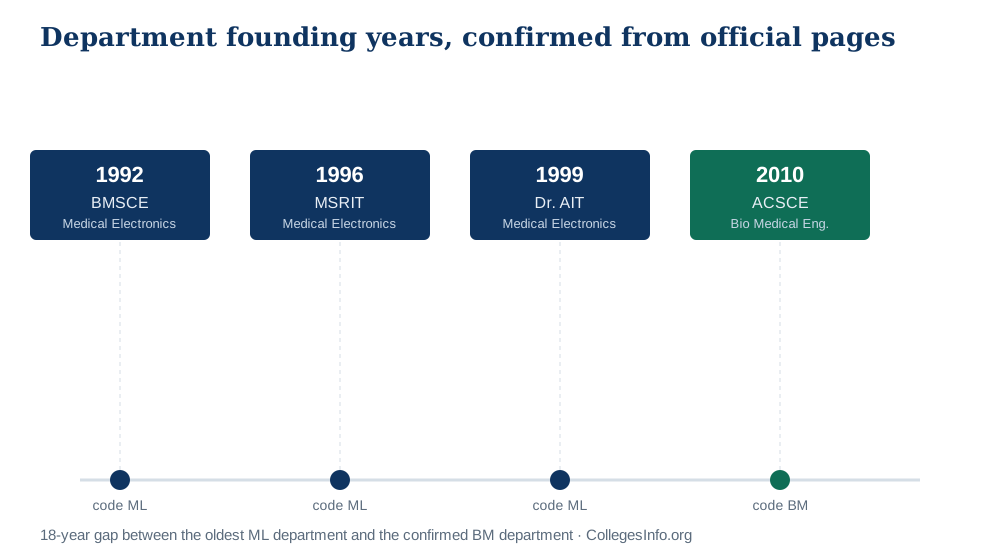
BMSCE pioneered the branch in 1992; three more colleges followed over the next two decades.
What Each Branch Actually Trains Students For
Despite the shared keyword, the two branches read differently in the departments that run them. Medical Electronics Engineering, as described on BMSCE's, MSRIT's and Dr. AIT's own pages, leans toward instrumentation and device electronics: diagnostic and therapeutic equipment, biomedical signal processing, medical imaging systems and biosensors. Biomedical Engineering as a discipline generally sits closer to the interface between engineering and biological systems, drawing more directly on physiology, biomechanics and tissue engineering alongside the electronics core.
In practice at the Karnataka colleges confirmed here, the line blurs. BMSCE's own page states its department has contributed talented biomedical engineers into the industry despite the branch being formally named Medical Electronics Engineering, and its research areas list biomedical signal processing and biomedical image processing alongside biomedical VLSI work. The name on the door and the day-to-day content of the degree are not always perfectly aligned, which is one more reason a candidate should read a college's own department page rather than infer content from the branch name alone.
Eligibility and Admission Routes
All four confirmed colleges admit through the standard Karnataka engineering routes. KCET and COMEDK are the primary state-level paths for both BM and ML seats at VTU-affiliated colleges, with the usual PCM-based eligibility applying: Physics and Mathematics compulsory, alongside Chemistry, Biotechnology, Biology, Computer Science or Electronics as the optional third subject, at 45% aggregate for general category and 40% for SC, ST and OBC categories, matching the pattern already established across VTU's other specialised branches such as cyber security engineering.
Because both branches sit inside NBA-accredited departments at autonomous or affiliated colleges rather than at deemed universities running independent admission tests, the eligibility picture here is more uniform than it is for some other emerging branches. The variable that actually matters is seat count and closing rank per college per year, which KEA publishes at option entry and which no aggregator table should be trusted to substitute for.
| College | Code confirmed | Department established | Confirmed intake | Accreditation stated |
|---|---|---|---|---|
| BMSCE, Bangalore | ML | 1992 | 60 (since 2018) | NBA |
| MSRIT, Bangalore | ML | 1996 (renamed 2020) | Not stated on department page | NBA |
| Dr. AIT, Bangalore | ML | 1999 | 30 | Not stated on department page |
| ACSCE, Bangalore | BM | 2010 | 60 | Not stated on department page |
Reading this table plainly: three of the four verified departments are ML-coded, and the fourth, ACSCE's BM-coded department, is also the newest, founded in 2010 against BMSCE's 1992. That gap of nearly two decades between the oldest ML department and the confirmed BM department in this research is itself a useful data point. A candidate specifically set on the BM code rather than ML should expect fewer long-established options and should verify current intake directly with the college, since ACSCE's own page did not state whether its 2010 intake figure of 60 has since changed.
What Each Department's Own Page Reveals About Career Direction
Department pages describe research areas more candidly than they describe placement statistics, and those descriptions are a better guide to what a four-year degree actually covers than the branch name on its own. Dr. AIT names biomedical signal processing, IoT in healthcare, medical imaging and the development of medical devices as its focus research areas. MSRIT operates named laboratories: a Diagnostic and Therapeutic Equipment Laboratory, a Medical Electronics Laboratory, a Medical Software Laboratory, a Medical Instrumentation Laboratory and a dedicated Texas Instruments Innovation Laboratory. BMSCE's page describes five active research guides working across biomedical signal processing, biomedical image processing, biomedical instrumentation, biosensors and biomedical VLSI, plus a Centre for Innovation in Medical Electronics set up specifically to connect industry, institutions and hospitals around affordable device development.
Read together, these three ML-coded departments describe a curriculum that sits at the intersection of electronics engineering and clinical device design, closer to what an employer would call biomedical instrumentation than to pure electrical engineering. A candidate choosing between an ML seat at one of these three colleges and a BM seat at ACSCE is choosing between institutional depth, expressed as decades of operation, named laboratories and dedicated research centres, against a newer department whose specific current strengths were not detailed on its own page beyond its 2010 founding and 60-seat intake.
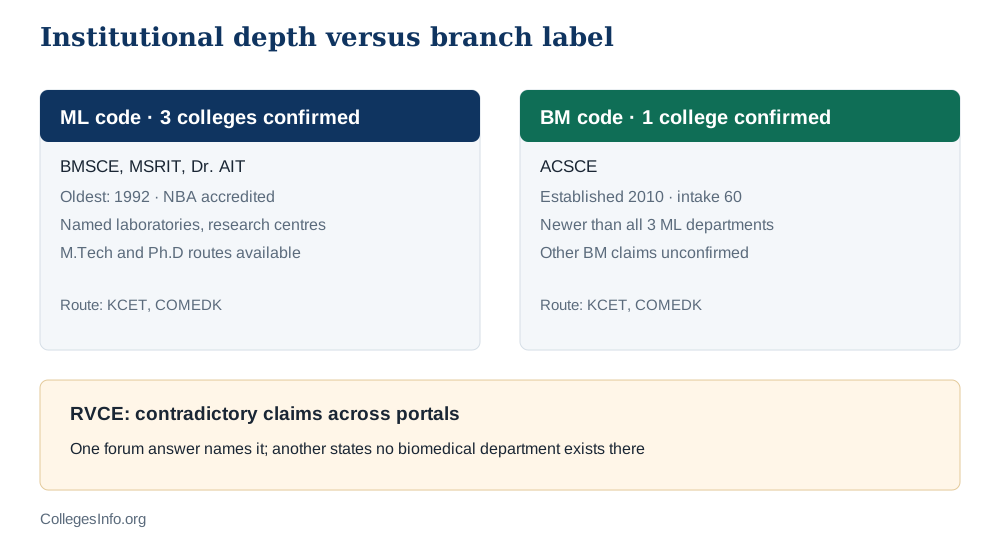
Three ML-coded departments show decades of laboratory investment; the confirmed BM-coded department is newer.
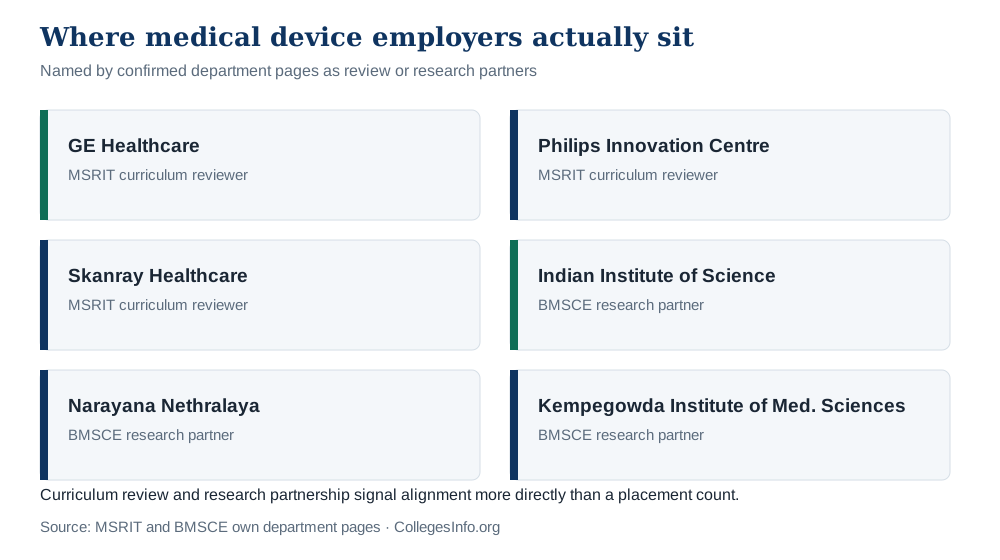
Where the Industry Actually Sits
Bangalore's relevance to this branch comes from a genuine cluster of medical device and health-technology companies headquartered or operating there, a detail every confirmed department page leans on in its own framing. Dr. AIT's page names IoT in healthcare and medical imaging as focus research areas precisely because that industry exists locally to absorb graduates. MSRIT's page names GE Healthcare, Philips Innovation Centre and Skanray Healthcare as reviewers of its own curriculum, which is a stronger signal of industry alignment than a placement statistic, since it means the syllabus itself was shaped by employers rather than only recruited from by them afterward.
This local industry depth is also why the branch code matters less at hiring time than it does at admission time. An employer evaluating a fresh graduate for a medical-device role weighs the specific coursework, projects and internships on the transcript far more than whether the degree certificate reads Biomedical Engineering or Medical Electronics Engineering. The two-code confusion is almost entirely an admission-cycle problem, not a career-long one.
How to Avoid Entering the Wrong Code
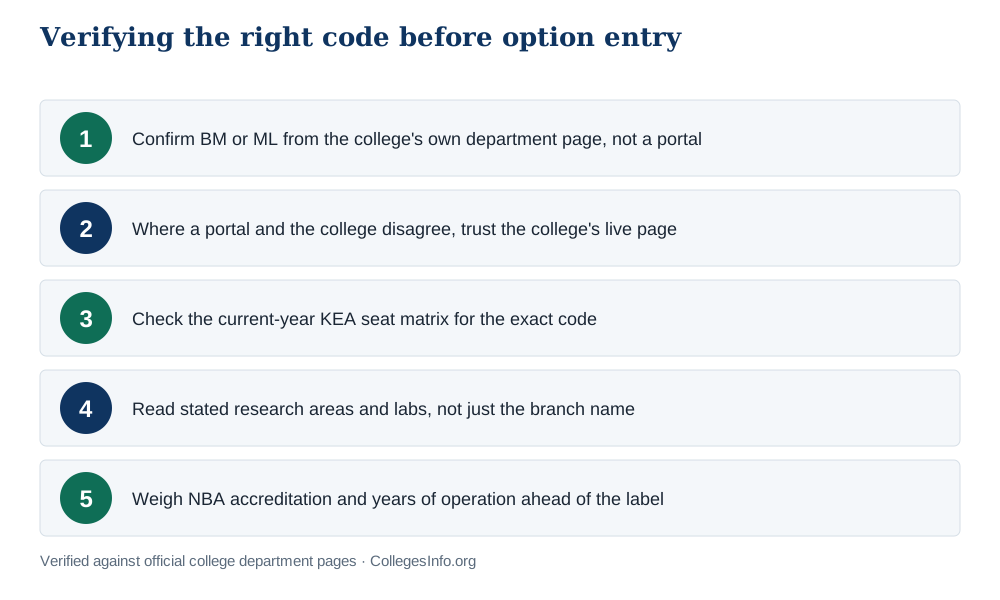
- Confirm from the college's own department page, not an aggregator table, whether the seat you want is coded BM or ML.
- Where a college's page and a portal listing disagree, as with BMSCE's "discontinued" tag against its own live 2026-27 admissions page, treat the college's own current page as the deciding source.
- Check the current-year KEA seat matrix for the exact code printed against your target college rather than assuming based on last year's list or a forum answer, using KEA's official counselling portal as the authoritative source.
- Read the department's stated research areas and laboratories, not just its name, since two colleges under different codes can teach overlapping content.
- Keep institutional depth, such as NBA accreditation and years of operation, ahead of the branch label when comparing options, in the same way it matters more for durability than a single year's KCET cutoff would suggest.
Candidates who would rather have their eligibility across both branch codes checked before locking an option list can start from our MBA admission assistance page.
Candidates weighing this branch against other Electrical and Electronics stream options should also look at how BMSCE's medical electronics work sits alongside its separate Electronics and Instrumentation department, which shares campus infrastructure but runs as a distinct branch entirely. None of these branches replace the breadth of a plain top-ranked engineering college education, and a candidate unsure of the specialisation should weigh institutional strength using resources like the B.Tech rankings by NIRF and cutoff before locking a specific branch code. Karnataka has added and renamed niche engineering branches quickly in the last decade, a pattern also visible in how mining engineering narrowed to a single college and in how automobile engineering gradually folded back toward mechanical, and MSRIT's own 2020 department rename is one more example of the same drift.
The same verification applies at postgraduate level, and our admission assistance service page covers that route.
What This Branch Costs
As with other specialised VTU branches, government-quota fees at these colleges are notified annually by the Karnataka fee regulatory mechanism and are not set independently by the college. Management-quota and COMEDK-quota fees run separately and considerably higher. Third-party listings for this specific branch varied enough between sources checked for this article that no rupee figure is printed here as settled fact; the government engineering colleges in Bangalore remain the reference point for the cheapest verified route into any specialised engineering branch in the state.
All four confirmed colleges here are private, VTU-affiliated institutions rather than government colleges, so government-quota seats at any of them still cost meaningfully more than a purely government-run engineering college, even though the fee itself is state-regulated rather than set at the college's own discretion. A candidate prioritising the lowest possible cost over a specific branch code should compare this against broader options covered in our guide to top engineering colleges in Karnataka, and should treat any specific fee figure quoted by a portal for BM or ML seats as a starting estimate to confirm with the college directly rather than a fixed number.
The Postgraduate and Research Route Through Either Code
Both branches confirmed here connect cleanly to postgraduate study, which matters for a candidate who misses a seat at undergraduate level or who wants to specialise further after a general Electrical and Electronics or Electronics and Communication degree. BMSCE runs its M.Tech in Biomedical Signal Processing and Instrumentation through Karnataka PGCET and GATE, with an intake of 18 seats since 2013. MSRIT's department status as a VTU-recognised Research Centre since 2012 means it also accepts Ph.D and M.Sc by research candidates directly into medical electronics research, a route that does not require having taken the BM or ML code at undergraduate level at all, provided the candidate's first degree is in a related engineering discipline.
This matters most for a candidate who ends up with a seat in a related branch, such as Electronics and Communication at an established college, rather than a dedicated BM or ML seat. The postgraduate research route through a strong ECE or EEE foundation, followed by a specialised M.Tech at a college with a genuine research centre like MSRIT's, is a credible alternative to chasing a scarce undergraduate seat in either code, and it sidesteps the branch-name confusion entirely since PGCET and GATE admissions are evaluated on the specific M.Tech programme applied for, not on an undergraduate branch label.
Industry connections described on these department pages reinforce this. BMSCE's own page names collaborations with Stanford University, Oxford University, Maastricht University, Ohio State University, Texas A&M University, the Indian Institute of Science, Narayana Nethralaya and Kempegowda Institute of Medical Sciences, which is a research-partnership list, not a placement list, and it signals where the department's academic strength actually sits: collaborative research output rather than only undergraduate teaching volume. A candidate weighing a research-oriented career over an immediate industry placement should read a department's stated partnerships as carefully as its intake numbers, in the same way institutional research standing matters across the broader newer specialised engineering branches, not just in this one.
Frequently Asked Questions
Is Biomedical Engineering the same as Medical Electronics Engineering in Karnataka?
No. VTU lists them as two separate course codes, BM for Biomedical Engineering and ML for Medical Electronics Engineering, both inside the Electrical and Electronics Engineering stream. They are distinct departments with separate seat matrices at KEA option entry.
Which Karnataka colleges confirm a Medical Electronics Engineering department on their own site?
B.M.S. College of Engineering, established 1992; M.S. Ramaiah Institute of Technology, started 1996 and renamed in 2020; and Dr. Ambedkar Institute of Technology, established 1999, all state this directly on their own department pages.
Which Karnataka colleges confirm a genuine Biomedical Engineering, BM-coded department?
Acharya Institutes' ACSCE states its Department of Bio Medical Engineering was established in 2010 with an intake of 60 on its own department page. Other colleges named for this branch by aggregators, including RV College of Engineering, carry conflicting claims between different portals and are not confirmed here.
Why does one portal say BMSCE's Medical Electronics programme is discontinued?
One aggregator tags the programme "Discontinued (Jun24)," which conflicts with BMSCE's own department page, current as of this writing, describing active 2026-27 admissions. The college's own live page is treated as the more reliable source here.
What entrance exams admit students to these branches?
KCET and COMEDK are the primary routes at the VTU-affiliated colleges confirmed in this article, with standard PCM eligibility of 45% aggregate for general category and 40% for SC, ST and OBC categories.
Does the branch code matter for placements after graduation?
Less than it matters at admission. Employers in Bangalore's medical device industry weigh coursework, projects and internships more heavily than whether the transcript reads Biomedical Engineering or Medical Electronics Engineering.
How many colleges in Karnataka actually offer this specialisation?
Aggregator counts vary widely and mix undergraduate, postgraduate and even BCA-level listings under the same heading. This article confirms four colleges directly from their own department pages; a complete count requires checking the current-year KEA seat matrix rather than any single portal.
This article is for informational purposes only. Consult the college directly before making admission decisions.
About the author
OneCity Technologies Pvt. Ltd began in 2006 publishing an annual print education directory for Karnataka students and parents. As demand grew, OneCity launched an education portal in 2019 to bring that same directory information online, and in 2025 relaunched as CollegesInfo.org, a comprehensive Karnataka college directory covering 1,500+ institutions across engineering, medical, management, arts, commerce, and more. Founder L K Monu Borkala brings 20+ years of business experience and 19 years of work across various education-sector services. CollegesInfo.org's content is built from publicly available KEA, NMC, AICTE, and university data, cross-checked against official sources wherever possible. CollegesInfo.org's admission assistance service helps students secure admission to colleges they are eligible for under that college's actual published criteria. We help you get the best admission to your preferred colleges without hassle.
Need help with admission?
CollegesInfo.org helps students secure admission to colleges they are eligible for under that college's actual published criteria. Chat with us on WhatsApp or explore admission assistance.
Sorting out BM from ML before your option list?
We help you get the best admission to your preferred colleges without hassle.