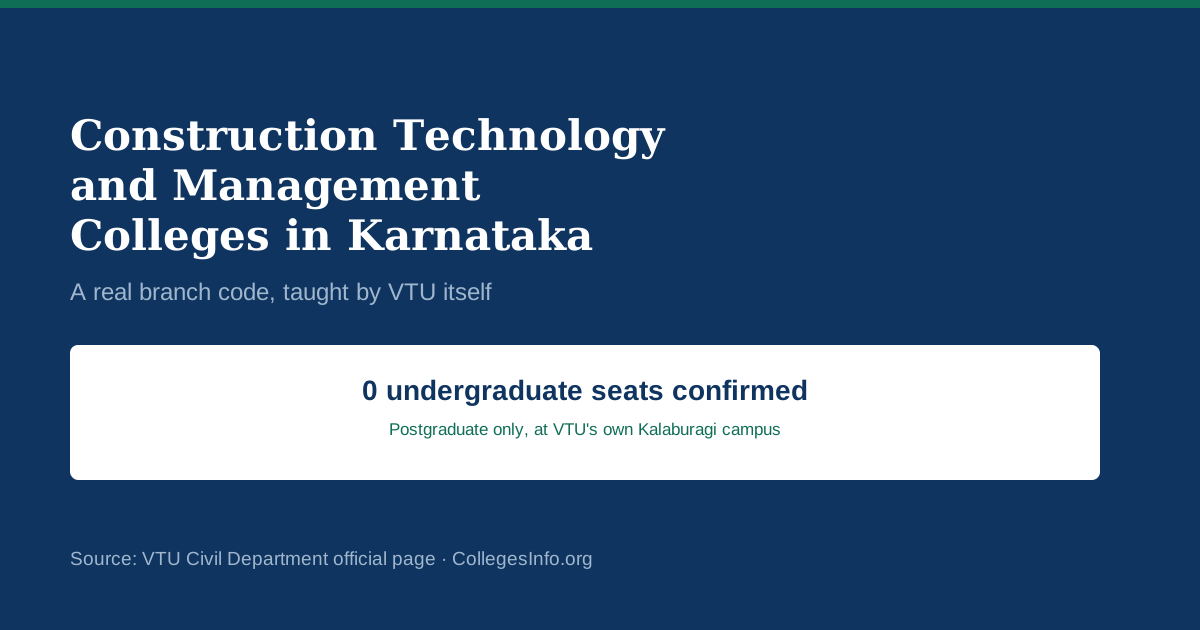
Construction Technology and Management colleges in Karnataka carry a real VTU branch code, CT, but the confirmed teaching route runs through VTU itself, not through any affiliated engineering college. VTU's own Civil Engineering department page names Construction Technology as one of three postgraduate programmes it runs directly at its own constituent campuses, with no undergraduate CT department confirmed anywhere in the state.
Why Construction Technology and Management Colleges in Karnataka Run Through VTU Itself
Open VTU's stream-wise UG programme list and Construction Technology and Management, course code CT, sits inside the Civil Engineering stream alongside plain Civil Engineering, Ceramics and Cement Technology, Environmental Engineering and Mining Engineering. Unlike most VTU branch codes, which are taught across a network of affiliated colleges under VTU's oversight, in the pattern already documented for branches like cyber security engineering and instrumentation engineering, Construction Technology in Karnataka has a different, more centralised story.
VTU's own Civil Department page states directly that the department runs postgraduate programmes at three separate VTU premises: M.Tech in Construction Technology at Kalaburagi, M.Tech in Water and Land Management at Belagavi, and M.Tech in Structural Engineering at Mysuru. This is not a programme delegated out to affiliated colleges scattered across the state, the way most VTU branch codes reach students through a network of independently managed institutions spread across dozens of cities and towns. It is taught directly by VTU's own civil engineering faculty at one of the university's own campuses, and it exists only at the postgraduate level, admitting candidates who already hold a relevant undergraduate degree.
3 Things That Make This Branch Different From Karnataka's Other Thin Codes
1. VTU teaches it directly, rather than delegating to affiliated colleges
Most of the thin VTU branch codes already documented on this site, Environmental Engineering, Silk Technology, Mining Engineering, exist through a single affiliated college or research centre operating under VTU's broader oversight. Construction Technology is structurally different: VTU's own department runs the programme itself, at its own Kalaburagi premises, rather than licensing it out. This is closer to how a national institute might run a specialised centre than how a typical VTU-affiliated branch operates.
2. No confirmed undergraduate department exists anywhere in the state
An older scraped college-course listing circulating online lists a "CT" code against at least one Karnataka engineering college. Checking that specific college's own current official site, along with independent listings from Wikipedia, Careers360 and Shiksha, none of which name Construction Technology among the college's current branches, shows a clear mismatch. The college in question currently runs seven confirmed branches with a combined intake of 664 students, and Construction Technology and Management is not one of them. Stale, undated aggregator data appears to be the source of this specific undergraduate claim, and it should not be treated as confirmed without direct verification against a college's own current page.
3. Private universities run their own separate M.Tech version
Outside VTU's system entirely, several private universities and institutes in Bangalore separately advertise their own M.Tech in Construction Technology programmes, admitting through GATE or PGCET with a minimum 50% aggregate at the undergraduate level. One such programme, published by its offering institute, lists employment areas including Military Engineering Services, independent consultancy, road projects, real estate departments, building services engineering, sustainability consultancy and facilities management, alongside academic and railway project roles. This confirms genuine postgraduate demand for the subject exists across multiple institutions, entirely separate from VTU's own Kalaburagi programme, but again concentrated at the postgraduate stage rather than undergraduate.
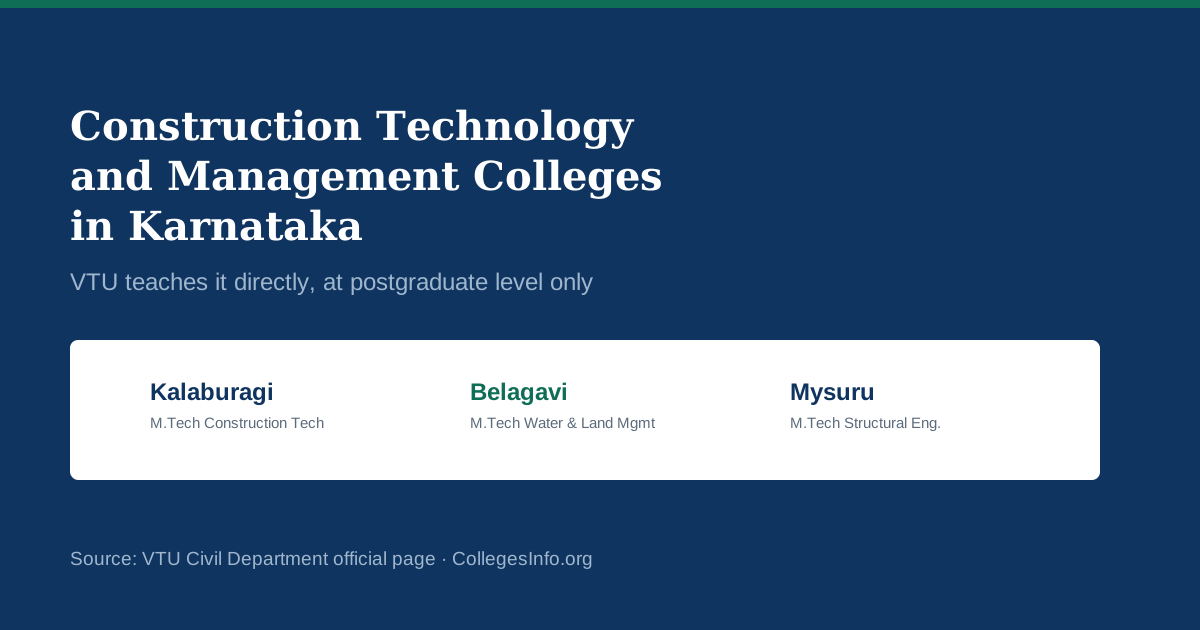
VTU's own campus, plus separate private-university programmes, all at postgraduate level only.
What VTU's Own Kalaburagi Programme Actually Covers
The private-university M.Tech programme referenced above gives the clearest publicly available picture of what Construction Technology curricula generally cover, since VTU's own department page names the programme without expanding on its syllabus in detail. That published curriculum covers construction materials, advanced structural analysis, and the broader technical and managerial skillset needed to run large construction projects, alongside a stated eligibility of a pass in B.E. or B.Tech at 50% aggregate, admitted through GATE or Karnataka PGCET.
This eligibility structure sits apart from the Karnataka engineering norm already documented across other specialised branches on this site, including Silk Technology and Environmental Engineering, in one important way: because Construction Technology exists only as a postgraduate specialisation, there is no separate 45% general-category undergraduate eligibility bar to track. The relevant threshold for every confirmed route into this field is the postgraduate one, and it applies uniformly regardless of whether a candidate's Civil Engineering undergraduate degree came from a government college, a private VTU-affiliated institution, or an autonomous engineering college anywhere in the state.
This uniformity is itself a practical advantage for candidates. Where undergraduate branch eligibility can vary meaningfully between institutions, categories and affiliating bodies, as documented across the biomedical, mechatronics and environmental engineering guides on this site, the postgraduate entry point into Construction Technology follows a single, consistent 50% aggregate rule tied to GATE or PGCET performance rather than to which specific undergraduate college a candidate attended. A strong Civil Engineering result from any recognised institution keeps this postgraduate route open.
Where VTU's Three Directly-Run Postgraduate Centres Sit
| Programme | VTU premises | Level |
|---|---|---|
| M.Tech, Construction Technology | Kalaburagi | Postgraduate |
| M.Tech, Water and Land Management | Belagavi | Postgraduate |
| M.Tech, Structural Engineering | Mysuru | Postgraduate |
Reading this table plainly: VTU has deliberately spread three specialised Civil Engineering postgraduate programmes across three different premises statewide, Kalaburagi in the north, Belagavi in the northwest, and Mysuru in the south, rather than concentrating them all at its main Belagavi campus or delegating them to affiliated colleges. This geographic spread suggests a deliberate decision to place each specialisation near where its relevant regional expertise or industry connections are strongest, though VTU's own page does not state that reasoning explicitly.
Why Bangalore's Construction Boom Has Not Produced an Undergraduate Branch
Bangalore's real estate and infrastructure sector is one of India's largest, driven by continuous residential, commercial and metro-rail construction activity across the city and its outskirts. This scale of activity would, on its face, seem to justify a dedicated undergraduate pipeline feeding construction-technology-specific talent into the industry. Instead, the pattern documented in this research shows the opposite: demand for construction management and technology skills gets absorbed by Civil Engineering graduates who add project management, real estate or facilities-management training afterward, either through the postgraduate route or through separate professional certifications, rather than through a dedicated undergraduate degree competing against plain Civil Engineering for the same applicant pool.
The Bangalore construction and infrastructure sector illustrates this well: employers hiring site engineers, project managers and construction technology specialists in the city routinely recruit from Civil Engineering, not from a separate Construction Technology undergraduate stream, because no such stream exists at meaningful scale to recruit from. This mirrors the employment logic already seen with Mechatronics, where employer demand for skills exists independent of whether a matching undergraduate branch name exists to supply them.
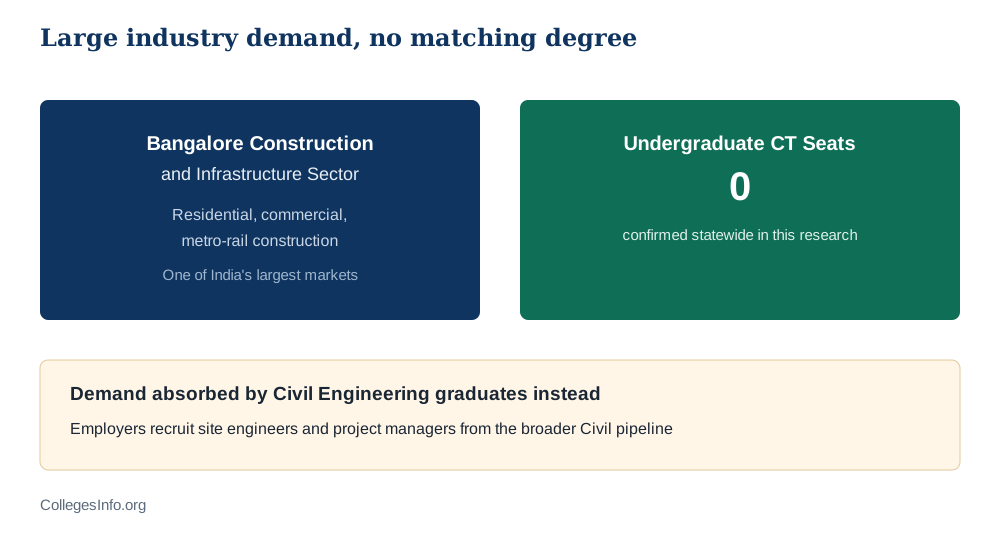
Large, active industry demand has not translated into a matching undergraduate degree pipeline.
Why Karnataka Has Not Built an Undergraduate Pipeline Here
The employment areas listed for graduates of the privately-run M.Tech programme, Military Engineering Services, independent consultancy, road projects, real estate departments, building services engineering, sustainability consultancy, facilities management and railway projects, describe a substantially broad set of career destinations. Yet this breadth has not translated into undergraduate seat expansion the way it has for Computer Science or core Mechanical Engineering.
The likely explanation mirrors the pattern already documented for other thin VTU branches: construction management and technology roles are typically filled by graduates of a broader Civil Engineering undergraduate degree who specialise afterward, once genuine interest in the managerial and technology-focused side of construction, as opposed to structural design, is confirmed. A four-year undergraduate degree specifically in construction technology would compete directly against the much larger, more established plain Civil Engineering pipeline for the same pool of applicants, without an obviously distinct enough career outcome to justify a separate undergraduate branch at scale.
Why VTU Teaches This Subject Itself Rather Than Through Affiliated Colleges
VTU's decision to run Construction Technology, Water and Land Management, and Structural Engineering directly, rather than delegating them to affiliated colleges the way it delegates plain Civil Engineering to over two hundred institutions statewide, is itself informative. A VTU constituent campus programme typically signals that the university considers the subject specialised enough to warrant direct oversight by its own faculty, but not commercially attractive enough for private affiliated colleges to build standalone departments around at scale. This is a different signal from either Mining Engineering's single-provider model or Environmental Engineering's displaced-to-another-university model, and it suggests VTU itself views Construction Technology as a genuine specialisation worth preserving directly, even without broad undergraduate demand to support it.
For a candidate evaluating where postgraduate specialisation carries the most institutional weight, a programme taught directly by VTU's own faculty at its own campus arguably carries a different kind of credibility than one delegated to a private affiliated college, in the same way a flagship government department programme differs from a franchised one. Whether that translates into stronger placement outcomes specifically for Construction Technology graduates is not confirmed in this research, but the structural distinction itself is worth understanding before choosing between VTU's Kalaburagi programme and a private university's separately run M.Tech.
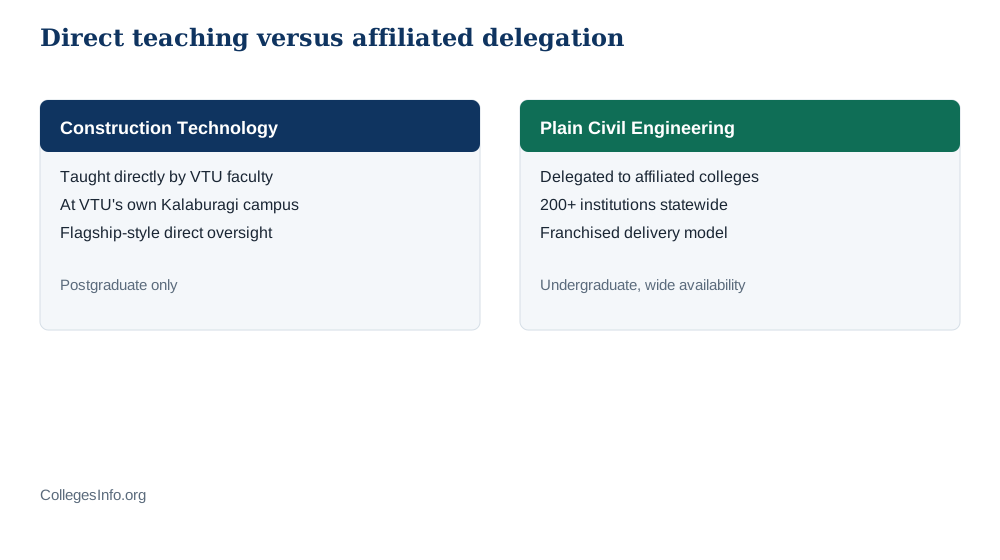
VTU runs three specialised Civil postgraduate programmes itself, rather than delegating them to affiliated colleges.
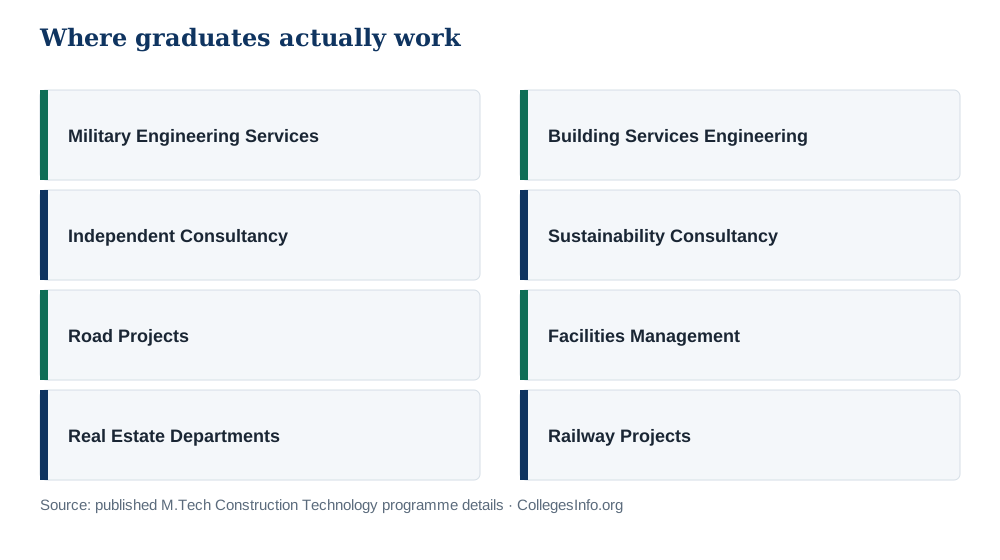
A broad employment base exists, but it has not generated undergraduate seat expansion.
How This Compares to Karnataka's Other Thin Civil-Stream Codes
Construction Technology now joins two other thin Civil-stream branches already documented on this site as a third VTU code documented on this site with no confirmed statewide undergraduate presence, though each arrives at that outcome through a different institutional mechanism. Mining Engineering has exactly one confirmed undergraduate provider statewide. Environmental Engineering's confirmed undergraduate route sits at a completely different affiliating university under a different branch name. Construction Technology's confirmed route is VTU teaching the subject directly, at its own campus, exclusively at postgraduate level.
| Civil-stream code | Confirmed undergraduate route | Mechanism |
|---|---|---|
| MI, Mining Engineering | One confirmed college statewide | Single affiliated provider |
| EV, Environmental Engineering | One confirmed college, different university | Displaced to a non-VTU affiliating body |
| CT, Construction Technology and Management | None confirmed | Taught directly by VTU, postgraduate only |
A candidate scanning KCET option lists for Civil-stream branches should treat any unfamiliar code inside this stream, beyond plain Civil Engineering, as a signal to verify undergraduate presence directly against a specific college's own current page, exactly as this table demonstrates across three distinct outcomes for three distinct codes.
This verification discipline matters more than it might first appear, since Civil Engineering itself remains one of Karnataka's most widely available branches, and its closing ranks across the state's published KCET cutoff data reflect genuine demand at scale. A candidate who mistakenly assumes a niche Civil-stream code carries similar seat availability to plain Civil Engineering risks structuring an entire option list around branches that, as this research shows across three separate codes, simply are not available at undergraduate level anywhere in the state. Cross-referencing any unfamiliar code against the broader statewide engineering college list before finalising an option order remains the safer approach.
The Practical Route Into Construction Technology Work Today
Given the confirmed absence of an undergraduate CT-coded seat, the reliable path for a candidate interested in this specialisation runs through a standard Civil Engineering undergraduate degree, admitted through the current-year KEA counselling portal, followed by specialisation into Construction Technology at the postgraduate stage through GATE or Karnataka PGCET. VTU's own Kalaburagi centre is one option; the several private-university programmes checked in this research offer additional postgraduate routes outside VTU's system entirely.
Candidates who want their branch, level and affiliation checked before applying anywhere can start from our MBA admission assistance page.
This two-stage approach mirrors the same logic already laid out for candidates weighing Biomedical Engineering against Medical Electronics: a strong, broad undergraduate foundation, admitted at scale and widely available across Karnataka, followed by deliberate postgraduate specialisation once genuine interest is confirmed, beats chasing a scarce or non-existent undergraduate seat in a niche branch name.
Verifying Before You Apply
- Do not expect a KCET-admitted undergraduate Construction Technology seat; none could be confirmed from any college's own current official page in this research.
- Treat old or undated aggregator listings naming a specific college for this branch with particular caution, since at least one such listing was directly contradicted by that college's own current course structure.
- Confirm whether a claimed "Construction Technology" programme is run by VTU directly, an affiliated college, or an entirely separate private university, since the admission process and eligibility differ across all three.
- Where postgraduate study is the goal, check both VTU's own Kalaburagi programme and the separate private-university options, since both exist as distinct routes into the same specialisation.
- Prioritise a strong undergraduate Civil Engineering seat over chasing this specific branch name at undergraduate level, since the undergraduate route does not appear to exist in a confirmed form anywhere in the state.
The same verification applies when comparing VTU and private-university postgraduate routes, and our admission assistance service page covers that path.
Choosing Between VTU's Programme and a Private University Route
A candidate who has confirmed a Civil Engineering foundation and genuine interest in construction technology and management now faces a further choice between VTU's own Kalaburagi programme and a private university's separately run M.Tech. Each carries different trade-offs. VTU's Kalaburagi programme benefits from direct oversight by the university's own Civil Engineering faculty and the institutional weight of a flagship rather than delegated programme, but requires relocating to Kalaburagi specifically for the duration of the degree, a consideration for candidates based in Bangalore, Mysuru or the coastal belt.
A private university's Bangalore-based M.Tech Construction Technology programme, by contrast, offers geographic convenience for candidates already based in or near the city, alongside proximity to the same large construction and infrastructure industry driving demand for these skills in the first place. The eligibility bar across both routes remains broadly similar, a B.E. or B.Tech at 50% aggregate admitted through GATE or PGCET, so the decision typically comes down to institutional preference, location, and each specific programme's placement record rather than any difference in entry requirements.
Candidates weighing this decision should also factor in that VTU's own model, teaching the subject directly rather than through affiliation, may carry different long-term implications for programme continuity and curriculum updates compared with a privately-run alternative, since a university teaching its own flagship programme has direct control over faculty appointments and syllabus revision in a way a delegated arrangement does not always guarantee. This is a structural consideration worth weighing alongside the more immediate factors of location and cost.
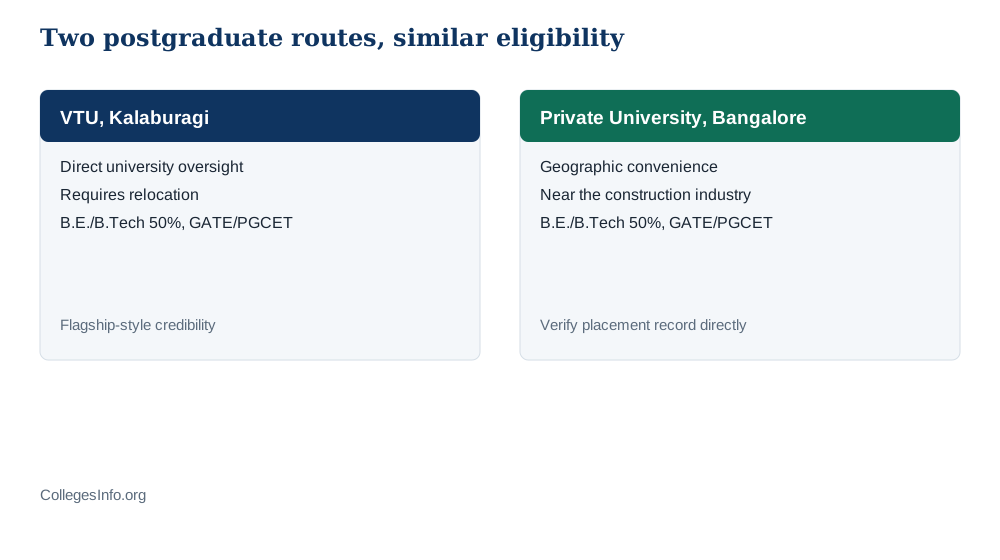
Both routes share similar eligibility; the choice comes down to location, institutional model and placement record.
Frequently Asked Questions
Is there an undergraduate Construction Technology and Management degree in Karnataka?
None could be confirmed in this research. VTU's CT branch code exists on paper inside the Civil Engineering stream, but the only confirmed teaching route is VTU's own postgraduate programme at its Kalaburagi campus.
Who actually teaches Construction Technology in Karnataka?
VTU's own Civil Engineering department teaches an M.Tech in Construction Technology directly at its Kalaburagi premises, alongside separate M.Tech programmes in Water and Land Management at Belagavi and Structural Engineering at Mysuru. Several private universities in Bangalore separately run their own M.Tech Construction Technology programmes outside VTU's system.
What is the VTU branch code for Construction Technology and Management?
CT, inside the Civil Engineering stream, alongside plain Civil Engineering, Ceramics and Cement Technology, Environmental Engineering and Mining Engineering.
What eligibility is required for the postgraduate Construction Technology route?
A pass in B.E. or B.Tech with a minimum 50% aggregate, admitted through GATE or Karnataka PGCET, based on the published eligibility of a private-university M.Tech Construction Technology programme checked in this research.
What careers does Construction Technology and Management lead to?
Published employment areas include Military Engineering Services, independent consultancy, road projects, real estate departments, building services engineering, sustainability consultancy, facilities management and railway projects, based on one institute's own published programme details.
What is the difference between VTU's own Construction Technology programme and a private university's version?
VTU's programme at Kalaburagi is taught directly by the university's own Civil Engineering faculty at its own constituent campus, giving it direct institutional oversight similar to a flagship rather than delegated programme. Private university versions run entirely outside VTU's system, typically offering greater geographic flexibility for candidates based in cities like Bangalore, with broadly similar eligibility requirements across both routes.
Why does Karnataka not have an undergraduate Construction Technology degree given the size of its construction industry?
Construction management and technology roles are typically filled by Civil Engineering graduates who specialise afterward at the postgraduate stage, rather than through a dedicated four-year undergraduate degree, which would otherwise compete directly against the much larger, more established Civil Engineering pipeline for the same pool of applicants.
How does Construction Technology compare to Mining Engineering and Environmental Engineering in terms of undergraduate presence?
All three are Civil-stream VTU codes with no confirmed statewide undergraduate presence, but each arrives there differently. Mining Engineering has one confirmed undergraduate provider. Environmental Engineering's confirmed route sits at a different affiliating university. Construction Technology's confirmed route is VTU teaching the subject itself, exclusively at postgraduate level.
This article is for informational purposes only. Consult the college directly before making admission decisions.
About the author
OneCity Technologies Pvt. Ltd began in 2006 publishing an annual print education directory for Karnataka students and parents. As demand grew, OneCity launched an education portal in 2019 to bring that same directory information online, and in 2025 relaunched as CollegesInfo.org, a comprehensive Karnataka college directory covering 1,500+ institutions across engineering, medical, management, arts, commerce, and more. Founder L K Monu Borkala brings 20+ years of business experience and 19 years of work across various education-sector services. CollegesInfo.org's content is built from publicly available KEA, NMC, AICTE, and university data, cross-checked against official sources wherever possible. CollegesInfo.org's admission assistance service helps students secure admission to colleges they are eligible for under that college's actual published criteria. We help you get the best admission to your preferred colleges without hassle.
Need help with admission?
CollegesInfo.org helps students secure admission to colleges they are eligible for under that college's actual published criteria. Chat with us on WhatsApp or explore admission assistance.
Not sure which Civil Engineering path actually fits your goals?
We help you get the best admission to your preferred colleges without hassle.