Last Updated: September 7, 2026
For a wider comparison, see all BSc Nursing colleges in Karnataka: Nursing Colleges in Karnataka.
Introduction: Why Your Nursing College Choice Matters
The demand for qualified nurses in India is growing across hospitals, clinics, home care and community health centres. For students in Karnataka who want a stable and meaningful healthcare career, choosing the right nursing college is the first big decision. The two main options are government nursing colleges and privately managed institutions, and both come with clear advantages and trade-offs.
Government colleges are usually more affordable and closely linked to large public hospitals, while private colleges often attract students with modern campuses, flexible options and wider course availability. Apart from fees, students must also look closely at infrastructure, clinical exposure, hostel facilities, location, placement support, and accreditation from recognised nursing councils.
Whether you plan to start with a nursing diploma or aim directly for undergraduate or postgraduate degrees in nursing, the type of college you choose will influence your learning environment, skills and confidence at work. This guide will help you compare government nursing colleges and private nursing colleges in a practical, honest way so you can align your choice with your academic record, financial capacity and long-term goals in the healthcare field. This private vs government nursing colleges comparison is meant to help you see the real differences clearly so you can decide with confidence.
Understanding Government Nursing Colleges
Government nursing colleges are institutions funded and managed by the central or state government, usually attached to district hospitals, teaching hospitals or medical colleges. In Karnataka, these colleges follow rules set by the nursing councils and health universities, which means the syllabus, exam pattern and clinical postings are standard and strictly monitored.
Admission to most government nursing colleges is merit based. Students are selected through entrance exams, board exam percentages or state level counselling. Because seats are limited and fees are low, competition is intense, especially in popular cities like Bangalore, Mysore, Mangalore and Dharwad.
The biggest advantages of government nursing colleges are affordability and exposure. Tuition fees are much lower compared to private nursing colleges, and students usually get hands on training in busy government hospitals where patient flow is very high. This helps them build confidence, handle real life cases and meet doctors from different departments. Degrees and diplomas from these colleges are widely recognised in India and abroad.
At the same time, students must be prepared for a few limitations. Seats are few, hostels may be basic, and some colleges have older buildings and equipment. Administrative processes can be slow, and students may have to adjust to larger class sizes and strict rules on attendance, postings and examinations. Yet many students still prefer them for solid foundations.
Understanding Private Nursing Colleges
Private nursing colleges are usually managed by trusts, education groups or charitable organisations and follow university and council guidelines for their academic structure. Many of these institutions are located in or near major cities and are attached to multi-speciality hospitals or have tie-ups with reputed private healthcare networks.
Admissions in private nursing colleges are generally more flexible. While merit is still significant, students often get options through management quota or additional counselling rounds. This can be helpful for students who narrowly miss government cut-offs but still want a serious nursing education. Private colleges also tend to offer a wider range of programs, from nursing diploma courses to specialised degrees in nursing at undergraduate and postgraduate levels.
In simple terms, students and parents start searching online for the Best 10 Nursing Colleges in Mangalore, Best Nursing Colleges in Bangalore, Nursing Colleges in Dharwad when they want colleges that combine good infrastructure, hostel facilities and placement support.
The key strengths of private nursing colleges are modern classrooms, updated labs, simulation centres and often better hostel comfort. However, fees are significantly higher, and the quality can vary a lot between institutions. That is why it is essential to check accreditation, hospital tie-ups, faculty experience and genuine student feedback and meet current students before confirming admission in any private nursing college.
Cost Comparison: Government vs Private Colleges
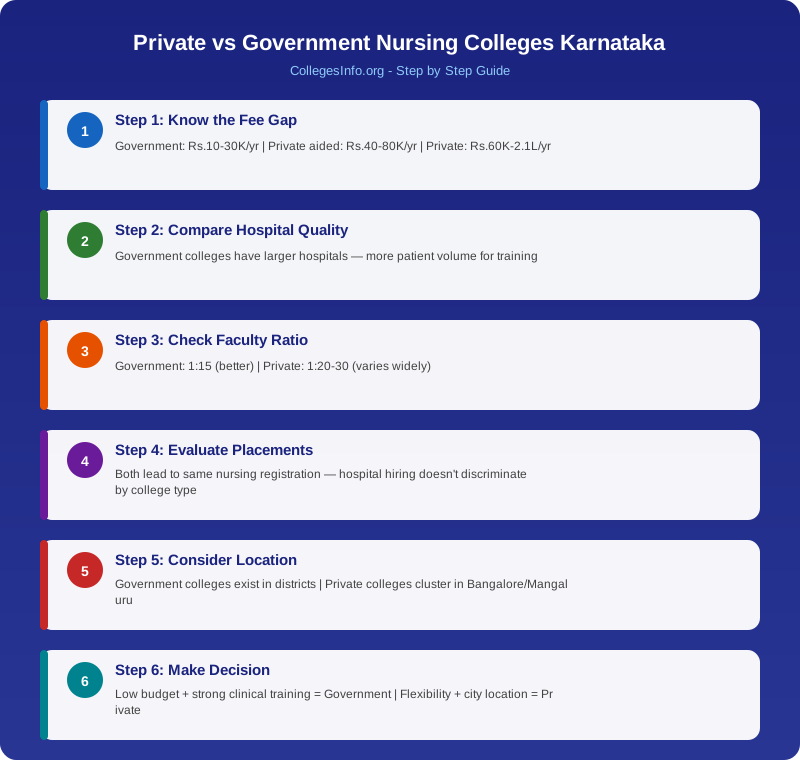
For most families, cost is the first big difference between government nursing colleges and private nursing institutions. Government colleges usually charge much lower tuition fees because they are funded by the state or central government. Annual fees for a nursing diploma or basic degrees in nursing are often manageable for middle-income and rural families, especially when combined with scholarships or fee concessions.
In private nursing colleges, the overall cost is higher. Students need to budget for tuition fees, lab fees, uniform costs, examination charges and separate hostel and mess fees. Some colleges also collect transport and extra training charges for clinical postings in partner hospitals. However, a few reputed private colleges offer merit scholarships, instalment plans or education loan guidance.
When comparing options, students should ask for a clear written fee break up and confirm what is included in the package. It is wise to compare three or four colleges in the same city and calculate the total cost for the full course duration instead of focusing only on the first year.
Clinical Training and Practical Exposure
Strong clinical training hospitals and teaching centres attached to a college are at the heart of any nursing education program. Whether you choose a government nursing college or a private nursing college, the real test of learning happens in wards, ICUs, operation theatres and community health centres. Hospital tie-ups directly affect how many cases you see, the departments you rotate through and the confidence you build while handling patients.
Students in government nursing colleges are usually posted to large districts or teaching hospitals where patient flow is high. This means you may see more critical cases, emergency situations and real-time decision-making by doctors and senior nurses. It can be challenging, but it gives solid exposure to common and complex medical conditions.
Private nursing colleges often send students to partner multi-speciality hospitals or their own group hospitals. Facilities may be more modern, with better equipment and organised departments. Internships, night duties and supervised clinical rotations in these hospitals help students practise procedures, improve communication with patients and better prepare, step by step, for registered nursing roles in India and abroad.
Career Opportunities After Graduation
After completing a nursing diploma or degree in nursing, graduates from both government and private colleges can build stable careers in different healthcare settings. Many government nursing colleges have strong placement links with district hospitals and primary health centres, while reputed private nursing colleges often connect students with multi-speciality and corporate hospitals.
Freshers usually start as staff nurses or registered nursing trainees in wards, ICUs, operation theatres, maternity units or community health projects. With experience and additional certifications, they can move into critical care, dialysis units, oncology, mental health, nursing education or hospital administration. These healthcare career pathways are open to students from both types of colleges, provided they focus on practical skills and patient communication.
In simple terms, career opportunities after degrees in nursing depend more on skills and attitude than on whether the college is private or government. For students aiming for international careers, clearing the required licensing exams and English tests is essential. Strong clinical exposure, accurate documentation and updated knowledge from accredited nursing institutes make it easier to compete for overseas roles and long term growth.
How to Choose the Right Nursing College
When comparing nursing colleges, start by checking whether the institution is recognised by the Indian Nursing Council and the respective state nursing council. Proper approval protects your degree and future registration as a nurse. Next, visit the campus, if possible, or attend a virtual counselling session to understand the infrastructure, nursing labs, library support, and the overall learning environment.
Talk to current students or recent alumni about faculty support, clinical postings and workload balance. Ask for hospital tie-up details in writing, especially if you are considering private nursing colleges. Review placement records - where do students actually get jobs, and in what roles? Finally, match the course type, such as nursing diploma or degree, with your long-term goals, including plans for higher studies or registered nursing opportunities abroad. The right college is the one that fits your budget, values and career direction. Choose with clarity, not just pressure.
Conclusion
Choosing between private and government nursing colleges is not a simple yes or no decision. It depends on your family budget, your board marks, and how far you are ready to travel or stay in a hostel. Government colleges offer lower fees and strong exposure in busy public hospitals, while private colleges usually provide better infrastructure, flexible admissions and more course options.
Students looking at Nursing Colleges in Mysore, Bangalore, Mangalore or Dharwad should carefully compare accreditation, hospital tie-ups, hostel safety and real placement support before paying any fees. A thoughtful choice now can shape a confident and secure nursing career for many years.
Explore verified admission guidelines, accreditation requirements, and course structures offered by recognised nursing education institutions across different regions to make an informed academic decision aligned with your career goals in healthcare services.
Explore top nursing colleges and make the right choice for your career at CollegesInfo!
Private vs Government Nursing Colleges – Comparison
| Parameter | Government College | Private College |
|---|---|---|
| Annual Fee | Rs 15,000 - 50,000 | Rs 80,000 - 3,00,000 |
| Total 4-Year Cost | Rs 60,000 - 2,00,000 | Rs 3,20,000 - 12,00,000 |
| NEET Score Required (GM) | 300+ | 150-250 |
| Faculty Quality | Generally experienced | Varies widely |
| Clinical Training | Govt hospital exposure (high patient volume) | Private hospital (lower volume, better infrastructure) |
| Placement Support | Minimal (students find own jobs) | Active placement cell |
| Starting Salary | Rs 3-4.5 LPA | Rs 2.5-4 LPA |
| Hostel | Affordable (Rs 20K-40K/year) | Expensive (Rs 60K-1.5L/year) |
Frequently Asked Questions
Is government nursing college better than private?
For clinical training, government colleges are better – they are attached to government hospitals with much higher patient volumes. Private colleges often have better infrastructure and placement support. If you can get into a government college, it is almost always the better choice due to lower fees and stronger clinical exposure.
What is the fee difference between govt and private nursing colleges in Karnataka?
Government nursing colleges charge Rs 15,000-50,000 per year. Private colleges charge Rs 80,000-3,00,000 per year. Over 4 years, you save Rs 3-10 lakhs by choosing a government college.
Do private nursing colleges have better placements?
Private colleges often have more active placement cells. However, the nursing job market in Karnataka is strong enough that graduates from both government and private colleges find employment within 3-6 months. The degree matters more than the college for nursing.
Need help with admission?
CollegesInfo.org helps students secure admission to colleges they are eligible for under that college's actual published criteria. Chat with us on WhatsApp or explore admission assistance.
About This Guide
This article is written and maintained by L K Monu Borkala, founder of CollegesInfo.org and OneCity Technologies Pvt Ltd. L K Monu Borkala has been publishing Karnataka education directories since 2006 and covering college admissions data since 2019 through CollegesInfo.org – from KCET counselling to NEET seat selection to MBA programme choices. CollegesInfo.org was built to give Karnataka families the same honest, data-backed guidance that was previously only available through expensive consultants or personal connections.
Information on this page is compiled from official sources including KEA (Karnataka Examinations Authority), RGUHS, VTU, NMC, PCI, INC, and direct feedback from students and families who have gone through the admission process. If you find anything outdated or incorrect, WhatsApp us at +91 6363 330 233 and we will update it.
Need personalised advice for your specific situation – rank, category, budget, or career goal? Our counselling is free. WhatsApp us directly and we will respond within 24 hours.