Last Updated: September 7, 2026
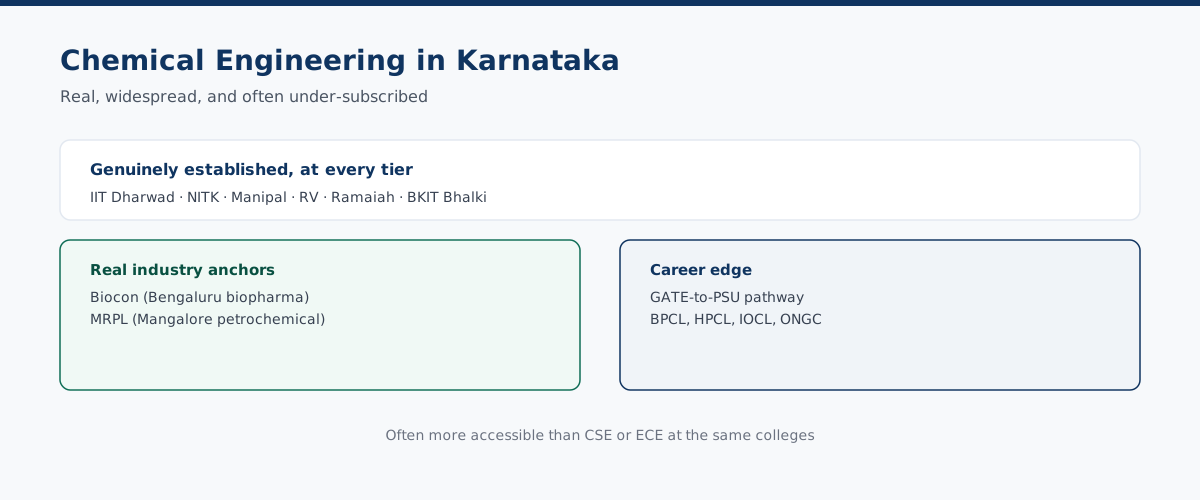
Chemical Engineering breaks the pattern set by automobile and mining engineering in this series – it's a real, long-established, widely offered branch across Karnataka, not a phantom name copied across aggregator lists. IIT Dharwad, NITK Surathkal, Manipal Institute of Technology, RV College of Engineering, Ramaiah Institute of Technology, and BKIT Bhalki all run real Chemical Engineering departments with real seats and real admission routes. What makes this branch worth a dedicated look isn't whether it exists – it clearly does – but a detail most applicants never hear: at several colleges, Chemical Engineering carries meaningfully lower student demand than CSE, ECE, or even Mechanical Engineering, making it one of the more accessible core-branch seats available to a moderate KCET rank. This piece covers the real tiers, the real Karnataka industry behind it, and a career pathway – GATE-to-PSU recruitment – that's unusually strong for this specific branch.
Looking at the bigger picture? Our guide to the best engineering colleges in Karnataka compares KCET tier-wise cutoffs, COMEDK options, and real fee data across Bengaluru, Mangalore, Mysore, and north Karnataka for 2027.
Chemical Engineering in Karnataka – Quick Facts
| Branch status | real and widespread – unlike automobile or mining engineering |
|---|---|
| Premier tier | IIT Dharwad (JEE Advanced) – Chemical & Biochemical Engineering |
| NIT/deemed-university tier | NITK Surathkal, Manipal Institute of Technology (JEE Main) |
| KCET-accessible tier | RV College of Engineering, Ramaiah Institute of Technology, BKIT Bhalki, Canara Engineering College, among others |
| Notable pattern | Often lower student demand than CSE/ECE – more accessible ranks at many colleges for this specific branch |
| Key Karnataka industry anchors | Biocon Limited (Bengaluru biopharma), MRPL (Mangalore petrochemical refinery), 200+ pharma/biotech companies in Bengaluru |
| Distinct career pathway | GATE-to-PSU recruitment – BPCL, HPCL, IOCL, ONGC hire Chemical Engineering graduates directly |
The Three Tiers – and Where Chemical Engineering Actually Sits
Chemical Engineering in Karnataka runs across the same three admission tiers as most other core branches, and understanding which tier fits your entrance exam route matters more than agonising over which specific college's name sounds strongest. At the top, IIT Dharwad offers Chemical & Biochemical Engineering through JEE Advanced, with published data showing closing ranks in the roughly 12,000-15,000 range for recent cycles and a total programme fee figure around Rs 11.4 lakh – competitive numbers reflecting the IIT brand's continued pull even at a relatively young campus. One tier below, NITK Surathkal and Manipal Institute of Technology both list Chemical Engineering among their core branches, accessible through JEE Main rather than KCET – a distinction that matters enormously for Karnataka students who might otherwise assume every Karnataka-based technical institute takes the state's own entrance exam.
For students working within the KCET/COMEDK system specifically, RV College of Engineering and Ramaiah Institute of Technology both list Chemical Engineering explicitly among their B.E. offerings, at 60 and 30 seats respectively – established departments at two of Bangalore's most recognised private engineering colleges. Further from Bangalore, BKIT Bhalki in Bidar district is worth particular attention: its own admission materials rank Chemical Engineering among its most accessible branches specifically due to lower demand, with 2024 KCET cutoff data for the college overall ranging from roughly 42,967 to 2,72,468 across branches – a spread wide enough that Chemical Engineering specifically likely sits toward the more accessible end of that range, though the exact branch-specific cutoff should be checked directly for the current year.
Why Chemical Engineering Is Often More Accessible Than You'd Expect
This is the detail this piece exists to surface. Chemical Engineering is not a newer or lesser-regarded branch than Mechanical, Civil or Electrical Engineering – it's one of the traditional four core engineering disciplines, taught with the same rigour and academic depth everywhere it's offered. But student demand hasn't kept pace with CSE and ECE's dominance in recent years, and several colleges' own published cutoff patterns and admission counselling reflect this directly. BKIT Bhalki's explicit framing of Chemical Engineering as "most accessible – lower demand branch" isn't a marketing angle; it's an honest reflection of where applicant interest has shifted. For a student who wants a strong, employable core-engineering degree but doesn't have the KCET rank for CSE or ECE at their target college, Chemical Engineering at the same institution frequently opens a door that a demand-driven cutoff would otherwise close.
This matters most at colleges where multiple branches are offered side by side under the same institutional quality and faculty standards – RV College of Engineering and Ramaiah Institute of Technology both fall into this category, where a Chemical Engineering seat carries the same institutional brand, campus, placement cell access, and faculty quality as the college's more competitive branches, simply at a more reachable cutoff.
The Real Industry Behind This Branch
Karnataka's Chemical Engineering graduates aren't training for a hypothetical industry – the state hosts two large, verifiable anchors. Biocon Limited, headquartered in Bengaluru's Electronic City, is India's largest biopharmaceutical company, founded in 1978 by Kiran Mazumdar-Shaw, reporting revenue of approximately Rs 16,470 crore in 2025 with over 16,000 employees across biosimilars, novel biologics, and generic formulations, alongside its research services subsidiary Syngene International. Biocon anchors a wider Bengaluru pharmaceutical and biotechnology cluster reported at over 200 companies across industrial zones including Peenya, Electronic City, and Bommasandra, including names like Cipla, Strides Pharma, Micro Labs, and Himalaya Wellness – a substantial local employment base for Chemical Engineering graduates specialising toward biochemical, pharmaceutical, and process industries.
On the coast, Mangalore Refinery and Petrochemicals Limited (MRPL) anchors Karnataka's petrochemical sector directly – Chemical Engineering is the core feeder branch for MRPL's process and refinery operations, distinct from the tangential "instrumentation engineer" employment context covered elsewhere on this site. Chemical Engineering graduates from Mangalore-region colleges, and from Bangalore colleges willing to relocate, find genuine, substantial employment in this refinery and petrochemical processing environment.
The GATE-to-PSU Pathway – Unusually Strong for This Branch
One genuine career differentiator sets Chemical Engineering apart from most other core branches: a well-established, high-value GATE-to-PSU recruitment pipeline, run through the official GATE examination portal. Chemical Engineering carries one of the highest GATE score demands among engineering disciplines specifically because major national public sector oil and gas companies – Bharat Petroleum Corporation Limited (BPCL), Hindustan Petroleum Corporation Limited (HPCL), Indian Oil Corporation Limited (IOCL), and Oil and Natural Gas Corporation (ONGC) – actively recruit GATE-qualified Chemical Engineering graduates directly into stable, well-compensated PSU roles. This pathway rewards students who plan for it early: taking GATE preparation seriously from as early as the second or third year of the degree, rather than treating it as an afterthought after campus placements, meaningfully improves the odds of landing one of these PSU positions, which typically offer both strong starting compensation and long-term career stability that few private-sector core-engineering roles can match.
What the Chemical Engineering Curriculum Actually Covers
A B.E./B.Tech in Chemical Engineering builds on a distinct set of core subjects that separate it clearly from Mechanical or Civil Engineering, despite occasional overlap in foundational thermodynamics and fluid mechanics coursework. Core areas typically include chemical process design and simulation (often using industry-standard software like Aspen Plus), heat and mass transfer, reaction engineering, process control and instrumentation, and industrial safety and hazard management – a practical emphasis given how safety-critical chemical and process industries are, consistent with AICTE-mandated curriculum standards for the branch. Later years bring in specialised electives that vary by college and student interest: petrochemical processing for students targeting refinery-sector careers, biochemical and pharmaceutical engineering for students aiming at Bengaluru's biotech cluster, polymer technology, food technology, and increasingly, green and sustainable chemistry as environmental regulation tightens across Indian process industries. This elective flexibility means two Chemical Engineering graduates from the same college can emerge with different specialisations depending on which electives and projects they pursued – students should treat this choice deliberately rather than passively, based on which industry (pharma, petrochemical, or general process engineering) they're actually aiming toward.
Major final-year projects and internships matter more for Chemical Engineering than for some other branches, precisely because the elective specialisation determines which industry segment a graduate is best positioned for. A student aiming at Biocon or the wider Bengaluru biotech cluster benefits from biochemical/pharmaceutical-focused projects and internships; a student aiming at MRPL or the petrochemical sector benefits from process design and petrochemical-specific coursework and internships. Treating this as an afterthought, rather than a deliberate specialisation choice made early in the degree, is one of the more common ways students get less out of Chemical Engineering than the degree can actually offer them.
Scholarships and Fee Support
At IIT Dharwad's fee levels, the standard IIT fee-waiver framework applies for SC/ST students and income-based concessions for economically weaker categories, processed automatically through the JEE Advanced/JoSAA admission system rather than a separate application. For NITK and Manipal, similar centrally-funded and institute-specific fee support frameworks apply respectively. For KCET-accessible colleges like RV College of Engineering, Ramaiah Institute of Technology, and BKIT Bhalki, the Karnataka State Scholarship Portal (SSP) remains the primary channel for post-matric scholarships, offering substantial fee reimbursement for SC/ST students and graded support for OBC and minority categories – apply in the opening weeks of the academic year with certificates ready. Education loans through the Vidya Lakshmi portal are routinely available across all these fee levels at nationalised banks, with strong institutional reputation generally easing loan approval regardless of tier.
Admission Routes at a Glance
| Target | Route | Notes |
|---|---|---|
| IIT Dharwad, Chemical & Biochemical Engineering | JEE Advanced (via JEE Main qualification) | ~12,000-15,000 closing rank range in recent cycles; ~Rs 11.4 lakh total fee – verify current year |
| NITK Surathkal, Manipal Institute of Technology | JEE Main → JoSAA/CSAB or Manipal's own entrance | KCET not accepted at either institute |
| RV College of Engineering, Ramaiah Institute of Technology | KCET, COMEDK, management quota | 60 and 30 seats respectively; generally more accessible cutoffs than CSE/ECE at the same colleges |
| BKIT Bhalki and similar accessible-tier colleges | KCET, COMEDK | Explicitly positioned as a lower-demand, more accessible branch – verify current-year branch-specific cutoff |
Documents and Application Process
- Determine your route first: JEE Advanced for IIT Dharwad, JEE Main for NITK/Manipal, or KCET/COMEDK for the state's private and aided colleges – these are entirely separate application and counselling systems.
- Shortlist colleges within your realistic rank/score range, specifically checking each college's own Chemical Engineering seat count and recent cutoff data rather than assuming it mirrors the college's CSE or ECE cutoffs.
- During counselling, list Chemical Engineering explicitly among your branch preferences at each shortlisted college, in genuine priority order.
- Documents needed: Class 10 and 12 marks cards, the relevant entrance scorecard (JEE Advanced, JEE Main, or KCET/COMEDK), transfer and conduct certificates, migration certificate for non-Karnataka boards, category and income certificates for reservation or scholarship claims, Aadhaar, and photographs.
Career Math
Chemical Engineering graduates in Karnataka split across distinct career paths depending on specialisation and ambition. Those targeting Bengaluru's pharmaceutical and biotech cluster, anchored by Biocon and its 200-plus company ecosystem, typically enter process engineering, quality assurance, or production roles, with entry-level compensation in the pharmaceutical sector broadly reported in the Rs 2.5-4.5 lakh per annum range depending on role and company size, rising meaningfully with experience and specialisation into R&D or regulatory affairs. Those targeting Mangalore's petrochemical sector via MRPL and related companies enter refinery and process operations roles, typically with core-engineering-sector compensation bands broadly comparable to other core-branch process industry roles. Graduates who commit early to GATE preparation and successfully clear it open access to the PSU pathway through BPCL, HPCL, IOCL and ONGC, generally offering the strongest combination of starting compensation and long-term stability among the branch's career options – though this route demands genuine, sustained preparation rather than a last-minute attempt.
A fourth, less-discussed path deserves mention: Chemical Engineering graduates with strong analytical and quantitative training are also reasonably positioned for a pivot into process analytics, supply chain optimisation, or even data-science-adjacent roles in manufacturing and process industries, given the discipline's heavy grounding in mathematical modelling and systems thinking. This isn't the primary career track the degree trains for, but it's a genuine option worth knowing exists for graduates whose interests shift during their degree, offering more flexibility than some students initially assume a "core" branch provides.
Mistakes Applicants Keep Making
- Assuming Chemical Engineering is a weaker or less legitimate branch simply because it's less talked-about than CSE or ECE – it's an equally old, equally rigorous core engineering discipline with its own genuine, substantial industry base in Karnataka. Dismissing it on reputation alone means overlooking a strong option.
- Overlooking the branch entirely when a target college's CSE/ECE cutoff is out of reach, rather than checking whether that same college's Chemical Engineering seat is accessible at their rank – often a stronger option than dropping to a weaker college altogether just to chase a specific branch name.
- Assuming NITK or Manipal are KCET-accessible because they're located in Karnataka – both require JEE Main, not KCET, a distinction that catches out students repeatedly across multiple branches on this site, not just Chemical Engineering.
- Treating GATE preparation as something to start only after final placements disappoint, rather than beginning genuine preparation from the second or third year, which is when it meaningfully improves PSU recruitment odds. Students who start late often find themselves competing against peers who've had two extra years of preparation.
- Confusing Biocon's biopharma-cluster career path with MRPL's petrochemical-refinery path as if they're interchangeable – they represent different specialisations, geographies and skill emphases within the same base degree, and choosing electives without a clear sense of which path you're aiming for wastes the flexibility the degree offers.
- Picking Chemical Engineering purely because a seat is accessible, without genuine interest in process engineering, chemistry-heavy coursework, or industrial safety principles – a branch this technically demanding rewards genuine engagement, and a student who chose it only for the accessible cutoff may struggle more than one who chose it deliberately.
How We Help
Tell us your entrance exam route (JEE Advanced, JEE Main, or KCET/COMEDK) and your interest – pharmaceutical/biotech, petrochemical, or the GATE-to-PSU pathway – and we'll return a realistic shortlist checked against our database of every active Karnataka college, including honest cutoff-accessibility notes for Chemical Engineering specifically rather than assuming it mirrors CSE or ECE. We help you get the best admission to your preferred colleges without hassle.
Need help with admission?
Chemical Engineering in Karnataka – FAQs
Is Chemical Engineering a real, widely available branch in Karnataka?
Yes, and widely – offered at IIT Dharwad, NITK Surathkal, Manipal Institute of Technology, and numerous KCET-accessible colleges including RV College of Engineering, Ramaiah Institute of Technology, and BKIT Bhalki.
Why is it described as an accessible branch at some colleges?
Student demand for it is lower than CSE or ECE at many colleges. BKIT Bhalki's own materials explicitly call it "most accessible – lower demand branch," meaning moderate KCET ranks can often secure a seat where CSE/ECE would be out of reach.
What's the real industry behind Chemical Engineering in Karnataka?
Biocon Limited, India's largest biopharmaceutical company (Bengaluru, founded 1978, ~Rs 16,470 crore revenue), and MRPL, a major Mangalore petrochemical refinery – plus 200+ pharma/biotech companies across Bengaluru.
What makes Chemical Engineering's career path distinct?
A strong GATE-to-PSU pathway – BPCL, HPCL, IOCL and ONGC hire GATE-qualified Chemical Engineering graduates directly, a recruitment channel unusually strong for this branch specifically.
Should I choose IIT Dharwad, NITK, or a KCET college?
Depends on your entrance route: JEE Advanced for IIT Dharwad, JEE Main for NITK/Manipal, KCET/COMEDK for RV, Ramaiah, BKIT and similar colleges – generally at more accessible ranks for this branch than CSE/ECE.
Does CollegesInfo charge for admission guidance?
Our admission assistance service helps students secure admission to colleges they're eligible for under that college's actual published criteria. WhatsApp us and we'll explain how we work before anything else.