Last Updated: August 26, 2026
For a wider comparison, see all BSc Nursing colleges in Karnataka: Nursing Colleges in Karnataka.
Last Updated: September 11, 2026
Introduction – Choosing Between BSc Nursing and Diploma in Nursing
Choosing a career in nursing after 12th Science is a big decision, especially when you keep hearing about both BSc Nursing and diploma options. With hospitals, clinics and home-care services growing across India and abroad, the demand for qualified nurses is rising steadily, but the qualification you choose now will shape your roles, salary and future study options.
A BSc Nursing course is a full bachelors of science in nursing, a degree program with deeper academics, wider clinical exposure and a clear pathway to higher studies. A nursing diploma or nursing diploma course is usually shorter, more skill-focused and helps you enter the job market faster, but with some limits on growth until you upgrade.
Many students and parents get confused while comparing bsc nursing with different diploma routes, because brochures often highlight only seats and fees, not long-term career flexibility.
In this guide on collegesinfo.org, the aim is simple - help you make a practical, career-focused decision. We will explain what each option offers, how it shapes higher education opportunities, government and private job roles, international prospects and promotion scope, so you can choose the nursing path that truly fits your goals and budget.
1. Understanding BSc Nursing
BSc Nursing is a four-year professional degree that prepares you to work as a registered nurse in hospitals, clinics, community health centres and international healthcare systems. It is a full bachelors of science in nursing, recognised by national nursing councils and universities, which means your learning covers theory and structured clinical practice. (See the full BSc Nursing course page for subject-wise details.)
To join a BSc Nursing course, you usually need 10+2 with Physics, Chemistry and Biology, a minimum aggregate (fixed by the college or state) and fitness as per medical norms. Admissions may be based on entrance exams, merit lists or counselling, depending on the state and institution. Mangalore applicants specifically should also check our nursing entrance exam guide for Mangalore colleges.
During the course, you study subjects like anatomy, physiology, pharmacology, medical-surgical nursing, child health, mental health, community health and nursing research. Along with classroom teaching, you spend many hours in hospital postings, ward duties and community visits, where you learn real patient care, documentation and teamwork.
After completing BSc Nursing, you can go for higher education such as MSc Nursing, Nurse Practitioner programs, hospital administration, public health, teaching and research. You also become eligible over time for teaching posts, advanced clinical roles and leadership positions in reputed hospitals. In the long term, degree holders usually have better chances for senior roles like nurse educator, nursing superintendent, clinical specialist or management positions, in India and abroad.
2. Understanding Diploma in Nursing
A diploma in nursing is a shorter, job-oriented nursing qualification that focuses mainly on hands-on patient care and clinical skills. When people talk about a nursing diploma or nursing diploma course, they usually mean programs like GNM (General Nursing and Midwifery) or similar state-approved courses that prepare you to work in hospitals and health centres.
Most diploma in nursing programs run for 2–3 years. The common eligibility is 10+2, often with a science or health-related background, and a minimum percentage set by the institution or council. Some states and colleges also conduct entrance tests or interviews to check basic aptitude and communication skills.
Compared to a degree, the nursing diploma course places more weight on ward work, bedside care, basic procedures, injections, wound care, maternity support and community visits. You learn under the supervision of senior nurses and doctors and become comfortable with routine hospital protocols.
After completing a diploma in nursing, you can work as a staff nurse, ward nurse, community health nurse, nursing assistant or bedside care provider in hospitals, clinics, nursing homes and home-care agencies. With experience, many diploma nurses later choose to bridge into degree programs such as BSc Nursing (Post Basic), which helps them access higher studies, promotions and better international opportunities.
3. Key Differences Between BSc Nursing and Diploma in Nursing
A lot of confusion comes because BSc Nursing and a diploma in nursing sound similar in daily use, but on paper, they are quite different. This summary table gives a quick side-by-side view:
|
Feature |
BSc Nursing |
Diploma in Nursing |
|
Qualification Level |
Degree Program |
Diploma Program |
|
Duration |
4 Years |
2–3 Years |
|
Career Growth |
Higher promotion opportunities |
Limited initial growth |
|
Higher Education |
Eligible for MSc Nursing and specialization |
Must upgrade to degree for higher studies |
|
Salary Potential |
Generally higher |
Entry-level salary comparatively lower |
|
Global Recognition |
Higher international acceptance |
Limited international scope |
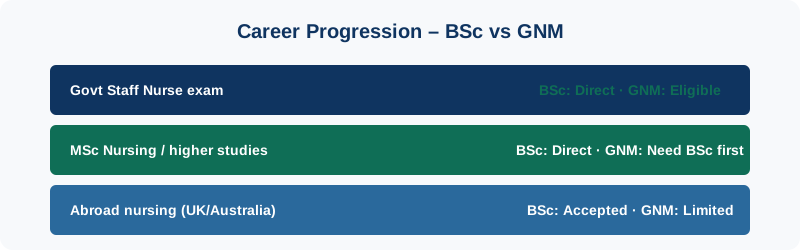
The qualification level is the main factor that shapes long-term career growth. A degree-level bsc nursing helps you move into senior clinical roles, teaching, management and research because most higher posts clearly mention “BSc Nursing” or “degree in nursing” in their eligibility. With a diploma, you may start working earlier, but for promotions and higher education you usually have to complete a bridge or degree program later.
In hospitals, degree nurses are often preferred for ICU, specialty units, educator roles, nursing in-charge and supervisory posts, while diploma nurses commonly begin with routine ward duties and bedside care. In government recruitment and abroad, many posts specifically ask for BSc Nursing, and diploma holders must first upgrade. So, both are valid, but the degree gives you wider doors over the long run.
4. Career Opportunities After Each Course
Both BSc Nursing and a diploma in nursing lead to patient-facing jobs, but the type of roles and growth curve differ. After a BSc Nursing degree, you can work as a staff nurse, ICU nurse, operation theatre nurse, emergency nurse or ward in-charge in multispeciality hospitals. Because your training covers research, management and community health, you may also be considered for educator roles, clinic coordinators and public health projects.
Diploma-qualified nurses usually begin as staff nurses or bedside care nurses in general wards, maternity units, smaller hospitals and nursing homes. Their nursing diploma course gives them strong hands-on skills, so they are quickly absorbed into hospital services, home-care agencies and small clinics.
In community health nursing, both BSc and diploma nurses can work in primary health centres, outreach programs and vaccination drives. However, BSc Nursing graduates often get preference for community health officer or supervisor posts.
For government jobs and international healthcare sectors, eligibility rules matter. Many hospitals and overseas recruiters clearly mention BSc Nursing as the preferred qualification for permanent, specialist or leadership posts. Diploma nurses can still apply to staff nurse vacancies, but often need to upgrade to a degree for higher designations.
5. Which Course Is Better for Your Career Goals?
There is no one-size-fits-all answer - the right choice depends on what you want your nursing career to look like in the next 5–10 years. If you see yourself in leadership roles, specialist units, teaching, research or working abroad, BSc Nursing is usually the stronger option. The degree gives you a wider academic base, easier entry into MSc Nursing and other postgraduate programs, and better eligibility for senior hospital and government posts.
If your first priority is to start earning quickly or support your family, a nursing diploma can be a practical starting point. The course is shorter, fees are often lower, and hospitals regularly recruit diploma nurses for entry-level positions. Later, you can bridge to a degree while working.
Budget and time also matter. A four-year degree means a longer commitment before full-time work, while a 2–3 year diploma gets you into the workforce earlier. Think in terms of long-term vs short-term planning - do you want faster entry now with an upgrade later, or are you ready to invest more time upfront for broader, long-term opportunities?
6. Nursing Education Opportunities Across Karnataka
Karnataka has become one of the most preferred states for nursing education because students get a mix of strong academics, hospitals and clinical exposure. Mangalore, Bangalore, Mysuru, Hubballi and Dharwad attract students from across India for both BSc Nursing and diploma in nursing programs approved by state and national councils.
Many students start their search with phrases like “Best 10 Nursing Colleges in Mangalore,” “Best Nursing Colleges in Bangalore,” and “Nursing Colleges in Dharwad” because each city offers a slightly different experience. Coastal cities like Mangalore provide exposure to multi speciality hospitals and community health centres, while Bengaluru offers corporate hospitals, advanced critical care units and more internship options.
Dharwad and surrounding regions are known for quieter campuses, affordable living costs and good teaching faculty, which appeals to students who want a focused study environment. When you compare colleges across Karnataka on collegesinfo.org, look at hospital tie ups, hostel facilities, faculty strength and internship support, not just fees and location.
Conclusion
Choosing between a nursing diploma and a bachelors of science in nursing really comes down to your long term career plan, how many years you can invest in study and what your family can comfortably afford. If you dream of higher studies, specialist units, leadership roles or working abroad, a BSc Nursing degree usually gives you a wider platform and smoother access to MSc Nursing and advanced roles.
If you need to start earning sooner, a diploma in nursing can be a sensible first step, with the option to upgrade to a degree later while working.
While shortlisting colleges, do not look at fees and location alone. Exploring recognised Nursing Colleges in Mysore and other major cities, and comparing their facilities, internships, hospital tie ups and specialisation options will help you make a more confident decision.
Before you lock your choice, take some time to compare accredited nursing institutions approved by national regulatory bodies. Look carefully at each college’s curriculum structure, hospital training facilities, faculty experience, hostel and safety, and placement or internship support. Use this information to match the program type (BSc Nursing or diploma) with your long term goals, so your admission decision supports a strong and stable nursing career.
Frequently Asked Questions
Is BSc Nursing better than GNM diploma?
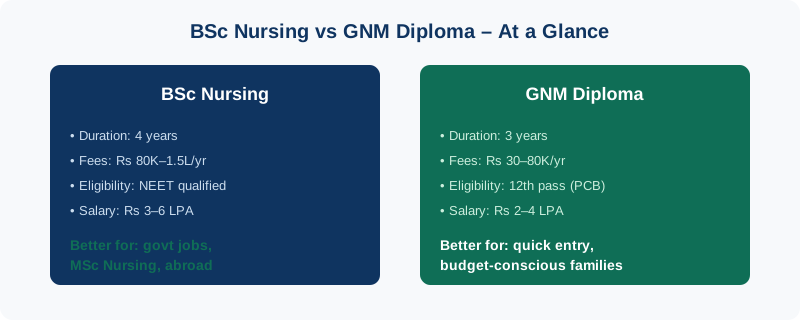
BSc Nursing is a 4-year degree that offers better career growth, higher salary, and eligibility for MSc Nursing and teaching positions. GNM is a 3-year diploma that gets you working sooner but with limited growth. If you can invest the extra year and fees, BSc Nursing is the better long-term choice.
What is the salary difference between BSc Nursing and GNM?
BSc Nursing graduates start at Rs 3-4.5 LPA. GNM diploma holders start at Rs 2-3 LPA. The gap widens with experience – BSc Nursing opens paths to ICU specialist, nursing superintendent, and teaching roles that GNM does not.
Can GNM nurses become BSc Nursing?
Yes, GNM nurses can pursue Post Basic BSc Nursing – a 2-year program that upgrades the diploma to a degree. This is a popular option for working nurses. See our Karnataka Nursing Admission Guide for details.
Is NEET required for GNM in Karnataka?
No, NEET is not required for GNM admission in Karnataka. GNM admission is through KSDNEB counselling based on PUC marks. BSc Nursing requires NEET.
Need help with admission?
CollegesInfo.org helps students secure admission to colleges they are eligible for under that college's actual published criteria. Chat with us on WhatsApp or explore admission assistance.
About This Guide
This article is written and maintained by L K Monu Borkala, founder of CollegesInfo.org and OneCity Technologies Pvt Ltd. L K Monu Borkala has been publishing Karnataka education directories since 2006 and covering college admissions data since 2019 through CollegesInfo.org – from KCET counselling to NEET seat selection to MBA programme choices. CollegesInfo.org was built to give Karnataka families the same honest, data-backed guidance that was previously only available through expensive consultants or personal connections.
Information on this page is compiled from official sources including KEA (Karnataka Examinations Authority), RGUHS, VTU, NMC, PCI, INC, and direct feedback from students and families who have gone through the admission process. If you find anything outdated or incorrect, WhatsApp us at +91 6363 330 233 and we will update it.
Need personalised advice for your specific situation – rank, category, budget, or career goal? Our counselling is free. WhatsApp us directly and we will respond within 24 hours.