Interior Design in Karnataka is concentrated overwhelmingly in Bengaluru, with 50+ institutions offering the course across three different formats – a 3-year BSc, a 4-year BDes, and shorter B.Voc or diploma routes. Admission varies by format: BSc programmes at Bangalore University-affiliated colleges typically admit on Class 12 merit, while BDes programmes at design-focused institutes often require NATA, UCEED, or a college-specific aptitude test.
| Course | Interior Design (BSc / BDes / B.Voc) |
|---|---|
| Duration | BSc: 3 years. BDes: 4 years. B.Voc/Diploma: 6 months-2 years |
| Regulatory Body | No single regulator; individual colleges hold UGC/AICTE/NAAC recognition |
| Affiliating Bodies (Karnataka) | Bangalore University, Bengaluru North University, or private/deemed university status |
| Eligibility | 10+2 (any stream), 50-60% aggregate |
| Entrance Exam | Varies – NATA, UCEED, college-specific test (e.g., Pearl Academy's PAF), or direct merit |
| Annual Fee Range | ₹40,000 (short diploma) to ₹12 lakh (premium BDes institutes) |
| Entry-Level Salary Range | ₹1.8-6 lakh/year, averaging around ₹3 lakh |
| Colleges in Karnataka | 50+ institutions, almost entirely in Bengaluru |
🎯 Use the Free KCET Rank Predictor – Enter your rank and category to instantly see which design colleges you can get in 2026. No login required. Try KCET Predictor →
What Interior Designers Actually Do
Interior designers plan and execute functional, aesthetically considered indoor spaces – residential homes, commercial offices, retail stores, and hospitality venues – balancing client brief, structural constraints, building codes, and budget. The curriculum spans design fundamentals, colour and lighting theory, space planning, construction materials, CAD software (AutoCAD, SketchUp, 3ds Max), estimation and costing, and increasingly, sustainable design practice. It's a practical, client-facing discipline, distinct from fine arts or architecture alone, sitting at the intersection of creative design and real-world construction and budget constraints.
BSc vs BDes vs B.Voc: The Real Difference
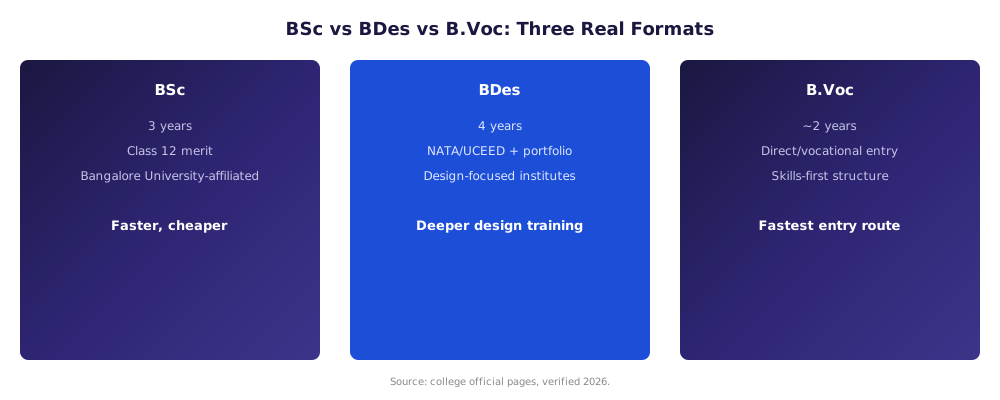
This is where most confusion starts, and it's worth resolving upfront. BSc Interior Design is a 3-year degree, commonly offered through Bangalore University-affiliated colleges, admitting on Class 12 merit without a design-specific entrance exam. BDes (Bachelor of Design) in Interior Design or Interior Architectural Design is a 4-year programme at design-focused institutes like Pearl Academy, typically requiring NATA, UCEED, or the institute's own aptitude test alongside a portfolio and interview. B.Voc Interior Design is a shorter, more vocationally-structured route, often 2 years, emphasising direct industry skills over broader design theory. None is objectively superior – a BDes generally signals deeper design-specific training and a stronger portfolio-building process, while a BSc is faster, cheaper, and sufficient for many practising designer roles, particularly if you supplement it with strong software skills and internships.
Karnataka Colleges Offering Interior Design
Bengaluru hosts the overwhelming majority of Karnataka's interior design colleges – estimates from education directories put the number at 50+ institutions, spanning government-affiliated BSc programmes, private BDes institutes, and shorter vocational routes. Bangalore University itself offers BSc Interior Design and Decoration through affiliated colleges, including Smt. VHD Central Institute of Home Science, with a syllabus explicitly covering CAD, ergonomics, and construction materials from early semesters. IIFT Bangalore, NAAC-accredited and named India Today's No. 1 Best Emerging College in Karnataka for 2024, runs a Bangalore University-affiliated BSc with a six-semester structure covering the full range from design fundamentals through a final project and mandatory internship. Jain University offers the widest range of formats under one roof – BSc Interior Design, BSc Interior Design Honours, B.Voc Interior Design, and an MSc for postgraduate study. Pearl Academy and Srishti Manipal Institute of Art, Design and Technology represent the premium BDes end, with entrance-test-based admission and notably higher fees reflecting more intensive studio infrastructure. Mount Carmel College's Interior Design Management programme specifically emphasises the client-handling and project-coordination side of the field, useful if you're drawn to the business rather than purely creative side.
Eligibility for Interior Design Courses
- 10+2 (PUC/CBSE/ISC or equivalent) from any stream – this field is open regardless of your Class 12 subject combination
- Minimum 50-60% aggregate, varying by college and specific programme
- BDes programmes typically also require a portfolio submission and/or interview alongside the entrance exam score
Admission Process – Varies by Format
Unlike KCET-governed engineering or medical admissions, Karnataka's interior design landscape has no single centralised process. BSc programmes at Bangalore University-affiliated colleges generally admit on Class 12 merit directly. BDes programmes at design-focused institutes commonly require NATA (the same aptitude test used for architecture admissions) or UCEED, IIT Bombay's national design entrance exam, alongside the institute's own portfolio review and interview. Several institutes – Pearl Academy, JD Institute, Vogue Institute, NICC – run their own specific entrance tests instead of or alongside these national exams. Confirm your specific shortlisted college's exact process directly, since this varies more here than for most other courses on this site.
Fee Structure
Fees span an unusually wide range for this specific field. Short online or 6-month diploma courses start around ₹40,000-60,000. One-year and PG diplomas commonly sit near ₹95,000-1.15 lakh. Most private undergraduate BSc or BDes programmes fall in the ₹1.3-6 lakh per year range, while premium design-focused institutes like Srishti Manipal can reach ₹12 lakh per year, reflecting more intensive studio and software infrastructure. Bangalore University-affiliated BSc programmes at government-linked colleges generally sit toward the lower end of this range. Given this spread, compare total programme cost against actual studio hours, software training, and internship structure – not brand name alone.
Why This Field Has Genuine, Growing Demand in Bengaluru Specifically
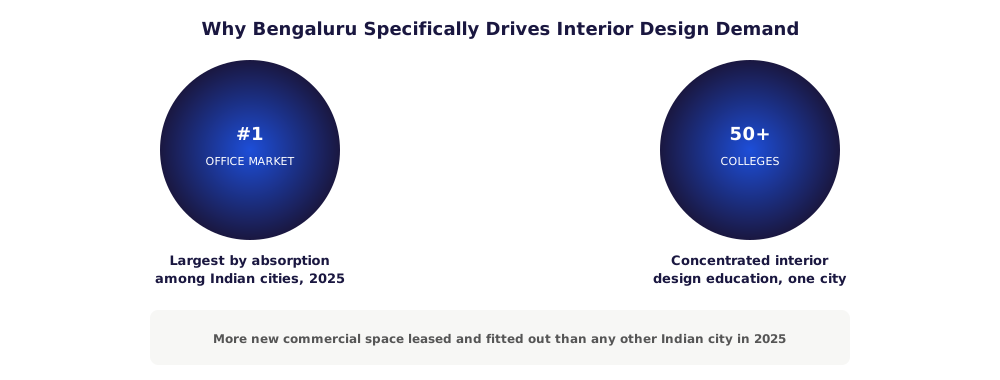
Bengaluru's real estate and commercial construction boom is a genuine, quantifiable demand driver for interior designers specifically, not a generic "creative field" claim. Recent office-market data cited in industry coverage places Bengaluru as the largest office market by absorption among Indian cities in 2025 – meaning more new commercial space being leased and fitted out than in any other Indian city that year. This translates directly into sustained demand for workplace fit-out designers, alongside the city's ongoing residential and hospitality construction activity. Few other Indian cities combine this scale of commercial construction with a comparable concentration of interior design colleges, giving Bengaluru-based graduates a stronger local placement pipeline than the same degree would offer elsewhere.
Specialisations Within Interior Design
The field splits into distinct focus areas worth understanding before choosing a college's specific strengths. Residential design covers homes and apartments, the most common entry-level specialisation. Commercial and workplace design covers offices, retail stores, and co-working spaces – the specific specialisation most directly tied to Bengaluru's office-market boom. Hospitality design covers hotels and restaurants. Furniture and product design focuses on custom furniture creation rather than full-space planning. Some institutes, including those noted in industry coverage, now market specific coursework as "AI-integrated," reflecting growing use of AI-assisted visualisation tools in professional practice – worth asking about directly if staying current with software trends matters to your college choice.
Career Scope and Salary – An Honest Range
Reported interior designer salaries in India range roughly ₹1.8-6 lakh per year, averaging around ₹3 lakh, with meaningful variation by specific employer type, city, and specialisation. Entry-level roles at design studios or under a senior designer typically start toward the lower end of this range. Designers who move into commercial or hospitality-specific work, or who build a strong portfolio and eventually go independent, can move meaningfully higher over time. Career destinations include design studios, architecture firms, real estate developers' in-house design teams, furniture and decor brands, and independent freelance practice once you've built a sufficient portfolio and client network.
Who This Course Suits
- Students interested in the practical, client-facing side of design – not just aesthetics, but budget, building codes, and space planning constraints
- Those comfortable learning and applying CAD and 3D visualisation software as a core professional skill, not an optional add-on
- Students specifically drawn to Bengaluru's active commercial and residential construction market
- Anyone weighing this against architecture specifically – interior design is a shorter, more space-and-finish-focused alternative to a full architecture degree
If you're still exploring options broadly rather than having settled on interior design specifically, our full courses directory covers the wider range of undergraduate paths available in Karnataka.
Interior Design vs Architecture: Choosing the Right Fit
A common point of comparison: should you pursue Interior Design or a full Architecture degree instead? Architecture is a longer degree covering the full building design process from the ground up, including load-bearing structure and civic approval processes – see our Architecture Colleges in Karnataka guide for that route specifically. Interior Design focuses more narrowly on the finished space – layout, finishes, furniture, and lighting within an already-designed structure. If you're drawn to the full building design and engineering process, Architecture is the more direct route; if your interest is specifically in how finished spaces look, function, and feel, Interior Design is typically the faster, more directly aligned degree.
NEP 2020 and Interior Design in Karnataka
Some Karnataka colleges have begun restructuring their BSc Interior Design programmes under the National Education Policy 2020's four-year undergraduate framework, offering multiple exit points and a stronger emphasis on skill-based electives like specific software certifications. This remains less standardised for design-specific degrees compared to general science or arts programmes, so confirm directly with your shortlisted college whether this structure has been implemented and what the specific exit-point options look like.
Women in Karnataka's Interior Design Programmes
Interior design programmes in Karnataka, including at long-established institutions like Mount Carmel College, have historically seen strong representation of women students, consistent with broader patterns in Indian design education. Most colleges report a roughly balanced or women-majority cohort in recent years, worth knowing if campus community composition factors into your college decision.
Comparing Interior Design Against Related Creative Fields
If you're still weighing this against other creative and design paths in Karnataka, our guides to Fashion Design and Fashion Technology cover the closest adjacent design fields, sharing a similar creative-plus-technical structure before diverging into different career destinations – apparel and textiles rather than physical space.
Funding Your Interior Design Education
If you're SC, ST, OBC, or minority-category, our SSP scholarship guide covers Karnataka's post-matric scholarship system. Given how widely fees vary between Bangalore University-affiliated BSc programmes and premium private BDes institutes, comparing total programme cost against actual studio and software infrastructure is worth the extra research time before committing.
A Quick Verification Checklist Before You Choose a College
Given how much format and fee variation exists across Karnataka's interior design colleges, verify these specifics directly: which specific format (BSc, BDes, B.Voc) the college offers and whether it matches your career goals and budget; current UGC/AICTE/NAAC or university affiliation status; actual studio hours and software training included, not just listed as course names; and genuine placement or internship partnerships with named design studios or firms, rather than a general "industry-ready" marketing claim.
Frequently Asked Questions
Is NATA required for Interior Design admission in Karnataka?
It depends on the specific programme – BDes programmes at design-focused institutes often accept or require NATA or UCEED, while BSc programmes at Bangalore University-affiliated colleges typically admit on Class 12 merit without requiring it.
What's the difference between BSc and BDes in Interior Design?
BSc is a 3-year degree usually admitting on merit, common at Bangalore University-affiliated colleges. BDes is a 4-year programme at design-focused institutes, typically requiring an entrance exam, portfolio, and interview, with generally higher fees.
What is the fee range for Interior Design courses in Karnataka?
Roughly ₹40,000 for short diplomas up to ₹12 lakh per year at premium BDes institutes, with most private undergraduate programmes falling in the ₹1.3-6 lakh per year range.
What is the realistic starting salary for an interior designer in Karnataka?
Reported figures range roughly ₹1.8-6 lakh per year, averaging around ₹3 lakh, varying by specific employer, specialisation, and city.
Can I study Interior Design after any Class 12 stream?
Yes – eligibility is open regardless of your Class 12 subject combination, unlike science-stream-restricted courses.
Is Bengaluru specifically a good place to study Interior Design?
Yes, given the city's position as India's largest office market by absorption in 2025 per industry data, alongside its residential and hospitality construction activity – this translates into a stronger local placement pipeline than most other Indian cities offer for this specific field.
Should I choose Interior Design or Architecture?
It depends on your interest level in the full building design and engineering process versus finished-space layout, furniture, and lighting specifically – Architecture is the longer, structurally deeper route, while Interior Design is faster and more narrowly focused on how a completed space looks and functions.
Are there postgraduate options after a BSc or BDes in Interior Design?
Yes – several Karnataka institutions, including Jain University, offer an MSc or MDes in Interior Design for students wanting to specialise further or move into teaching and research within the field.
Information on this page is compiled from publicly available UGC, university, and college-specific sources, cross-checked across multiple sources given genuine variation in fees and admission process. Always confirm current details directly with your shortlisted college. Published by L K Monu Borkala, founder of OneCity Technologies – publishing Karnataka education directories since 2006.
Last Updated: September 7, 2026
Need help with admission?