OneCity Academy runs a three-month digital marketing course in Rajajinagar, Bengaluru, for Rs 29,500. OneCity Academy provides resume help, portfolio review and interview practice. It does not guarantee a job. This guide also includes the complete digital marketing syllabus – every module the field covers, beyond just the ones taught in three months – so you can evaluate this course, or any other, with the full picture.
An Agency That Teaches, Not a Training Company
Most digital marketing institutes in Bengaluru are training businesses. Their product is the course. Their trainers teach for a living, and many have not managed a client budget or defended a campaign's performance to a paying business in years, if ever.
OneCity Technologies Pvt Ltd, a Bangalore digital marketing agency, has run client-facing digital marketing since 2017, after starting in 2006 as a print directory and Yellow Pages publisher. The academy came after both. That order matters more than it sounds, because it changes what gets taught. When the same team that runs live campaigns writes the syllabus, the syllabus reflects what actually breaks in practice: budgets that overspend by Thursday, landing pages that rank but do not convert, a client who wants leads and does not care which channel produces them.
The trade-off is honest to state. A dedicated training institute has polished courseware, larger batches, and a bigger marketing budget. OneCity Academy has practitioners whose primary job is client work. If you want a highly produced classroom experience, other institutes do that better. Students weighing a full MBA in marketing against a shorter practical route should read that comparison first, since the two serve different goals. If you want to be taught by people who were fixing a real campaign that morning, this is the difference.
Why Rajajinagar and West Bengaluru
Bengaluru's digital marketing training market clusters heavily in the south and east – Koramangala, HSR Layout, BTM Layout, Indiranagar, Electronic City. Search for a course in Rajajinagar and a pattern emerges quickly: several large institutes advertise a Rajajinagar presence while their actual campus sits elsewhere. Digital Academy 360's own Rajajinagar page states its experiential centre is in JP Nagar. Skillfloor describes covering Rajajinagar, Malleshwaram and Vijayanagar through its online format from a Kudlu Gate base.
That is not a criticism of those institutes. It reflects where the large-institute training market decided to concentrate its physical campuses. But it leaves a genuine gap for anyone living in West Bengaluru, because the commute is the hidden cost of a course. Rajajinagar to HSR Layout in evening traffic is not a twenty-minute trip. Over three months of classes, that commute decides whether you finish.
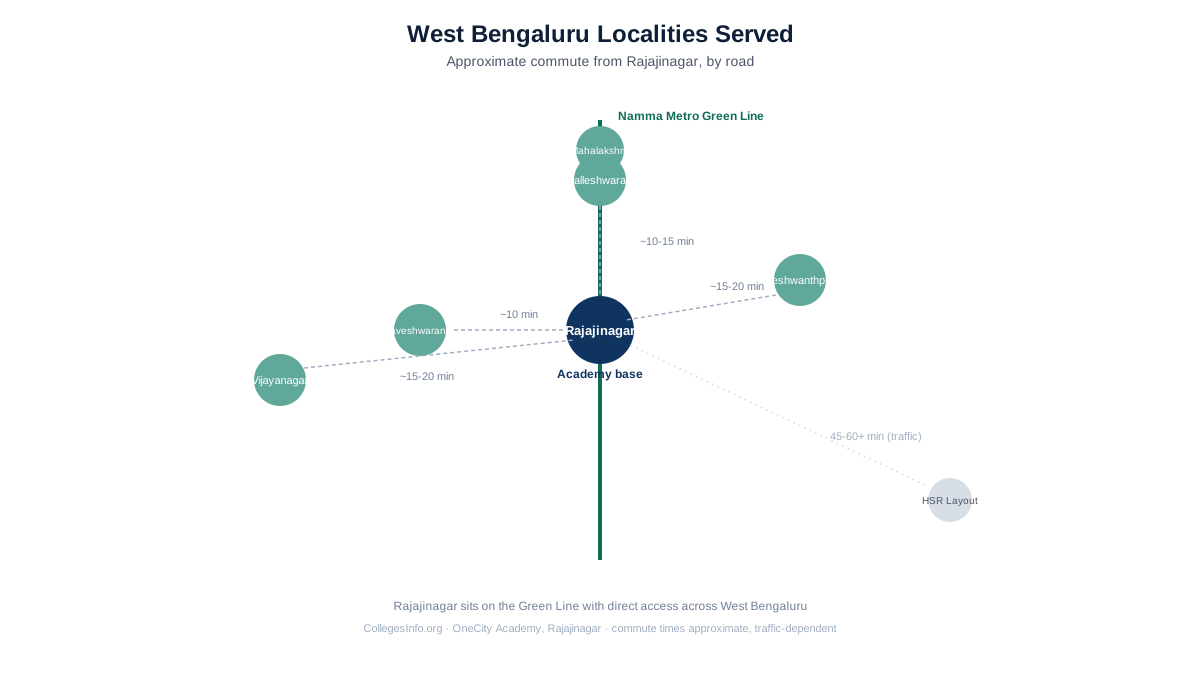
West Bengaluru has something else worth naming. Rajajinagar, Basaveshwaranagar, Vijayanagar, Malleshwaram, Yeshwanthpur and Mahalakshmi Layout carry an unusually high density of small and medium businesses – family firms, clinics, retailers, manufacturers and traders. These are exactly the businesses that need digital marketing and often cannot afford a large agency. For a student, that means live practice material is within walking distance, and the first freelance client is frequently a business the student's family already knows.
Where OneCity Academy Sits on Fees – National and City-Wide Institutes
| Institute | Programme | Fee | Duration |
|---|---|---|---|
| Digital Academy 360 | Leadership in Digital Marketing, AI and Entrepreneurship | Rs 3,89,000 | 9 months |
| Digital Vidya | 44-module AI-Driven Digital Marketing Programme | Rs 1,50,000–2,00,000 approx. | 6–11 months |
| MyCaptain | Digital Marketing Pro | Rs 1,50,000 | 20 weeks |
| Simplilearn | PG Program in Digital Marketing | Rs 1,01,999 | 8 months |
| Henry Harvin | Digital Marketing Course (7 certifications, capstone) | Rs 40,000–80,000 approx. | 3–6 months |
| Streamlyn Academy | Advanced Digital Marketing | Rs 78,648 | 6 months |
| ExcelR | Digital Marketing Course | Rs 54,999 classroom | 6 months |
| Digital Monk | Digital Marketing Course | Rs 49,000 plus GST | Varies |
| OneCity Academy | Digital Marketing | Rs 29,500 | 3 months + 2-month internship |
Fees above are as published by each institute at the time of writing and change without notice, and several (Digital Vidya, Henry Harvin) publish ranges rather than fixed prices depending on module selection. Confirm current pricing directly with any institute before deciding.
A lower fee is not automatically better value, and it would be dishonest to present it that way. What a Rs 3,89,000 nine-month programme buys is scale: larger cohorts, dedicated career services teams, brand recognition on a CV, and – in Digital Vidya's case – a 44-module curriculum that goes noticeably deeper into specialist areas than a three-month course can. What Rs 29,500 over three months buys is a shorter path to employability at a cost most families in West Bengaluru can actually finance without a loan. Those are different products for different situations.
The Institutes Actually Operating in Rajajinagar and West Bengaluru
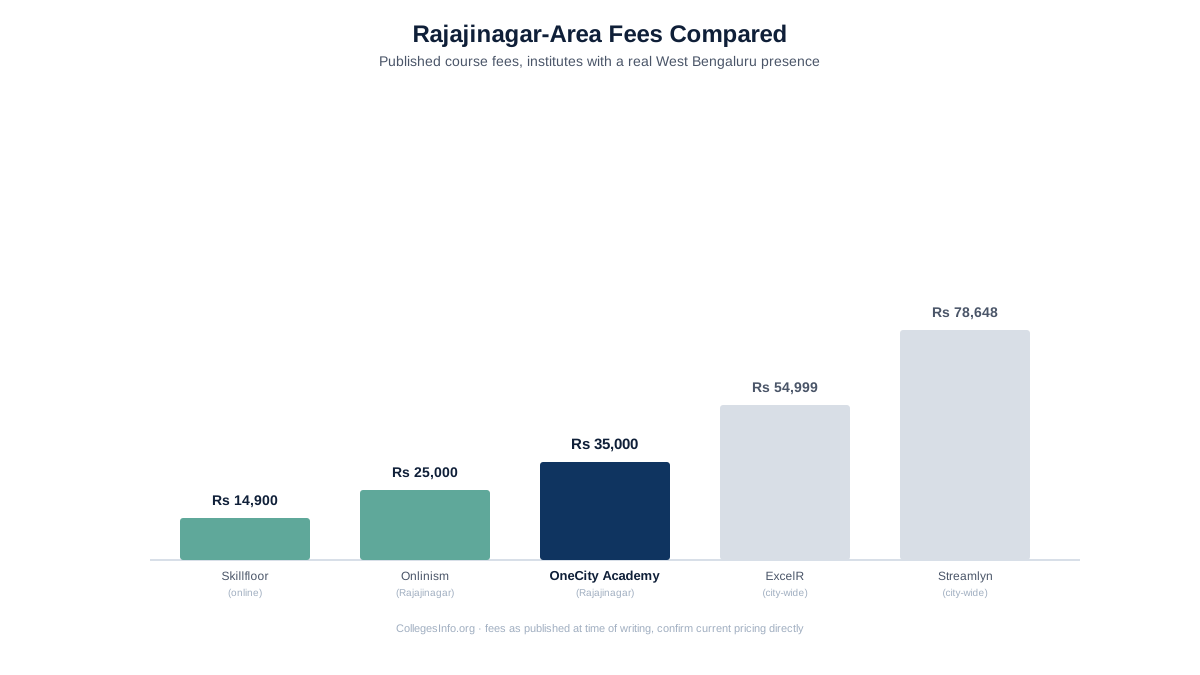
The table above is the wrong comparison for anyone deciding purely on location, because none of those institutes have a real classroom in West Bengaluru. This is the comparison that matters if commute is your deciding factor – the institutes with an actual physical or otherwise local presence in Rajajinagar, Malleshwaram, Vijayanagar or Basavanagudi.
| Institute | Location | Fee (published) | What they emphasise |
|---|---|---|---|
| Onlinism Academy | Rajajinagar (near KLE Society's S Nijalingappa College) | Rs 25,000 | Established 2011, small batches of 8–10 students, real-time projects |
| CADD Nest | Rajajinagar and Basavanagudi (two branches) | Not published, described as “affordable” | Beginner-to-professional, placement support, serves Rajajinagar/Malleshwaram/Vijayanagar/Yeshwanthpur students |
| Besant Technologies | Rajajinagar branch | Not published, discounts advertised up to 30% | Weekday and weekend batches, flexible timing |
| Digital Kora | Malleshwaram and Vijayanagar branches (Marathahalli main centre) | Not published | Daily 1-hour class plus 4 hours of live-project practice, claims graduates reach “3-year-experience equivalent” competence |
| Skillfloor | Online, physical base at Kudlu Gate | Rs 14,900 | NASSCOM-accredited certification, serves West Bengaluru learners via live online batches rather than a local campus |
| OneCity Academy | Rajajinagar (OneCity's own office) | Rs 29,500 | Live client accounts through an active agency, not a training-only business |
Reading this table matters more than reading the fee column alone. Onlinism has been running in Rajajinagar since 2011 – over a decade of local presence – and its Rs 25,000 fee undercuts OneCity Academy directly. Skillfloor's Rs 14,900 online course is the cheapest option on this page by a wide margin, though it is an online-format course with a NASSCOM-badge certification rather than a physical West Bengaluru classroom. Digital Kora's claim of daily live-project practice across two locality-specific branches is a genuine structural difference worth asking about directly if hands-on volume matters to you.
What none of these institutes are is an operating digital marketing agency running the course as a side initiative from its own client work. That is the actual, specific difference OneCity Academy is offering against this local set – not a lower fee, since it is not the cheapest option here, but instructors who are managing live agency accounts the same weeks they teach, and career support drawn from an existing agency's client relationships rather than a training company's job-board partnerships. Whether that difference is worth roughly Rs 5,000–15,000 more than the cheaper local options is a judgement only you can make, and this article is not going to pretend the answer is obvious.
The Three-Month Structure
Three months is deliberately short. Six and nine month programmes exist because they can, not always because the content requires it. The working assumption here is that a motivated student with consistent practice can reach hireable competence in twelve weeks, provided the curriculum cuts anything that does not contribute to that.
Month One: Foundations and Search
The first month establishes how digital marketing actually generates revenue, then goes deep on search, because search remains where most measurable intent lives.
- How businesses actually make money online, and where marketing fits
- Website structure, hosting, WordPress fundamentals, landing page anatomy
- Keyword research using real search data, not guesswork
- On-page SEO: titles, meta descriptions, headings, internal linking, schema markup
- Technical SEO: crawling, indexing, site speed, mobile usability, Core Web Vitals
- Local SEO and Google Business Profile, which is what most West Bengaluru businesses need first
- Google Analytics 4 and Google Search Console, read properly rather than glanced at
Month Two: Paid Media and Social
The second month covers paid channels, where mistakes cost real money and where employers most need people who have handled a live budget.
- Google Ads: search campaigns, keyword match types, quality score, bid strategies
- Campaign structure, ad groups, negative keywords, search term analysis
- Google Display, YouTube advertising, remarketing audiences
- Meta Ads: campaign objectives, audience building, creative testing, pixel setup
- Conversion tracking across platforms, and why attribution disagrees between them
- Budget management, pacing, and diagnosing a campaign that is spending without converting
- Organic social strategy, content calendars, and what actually drives reach in 2026
Month Three: Content, Analytics and Live Work
The third month is where the course either produces a portfolio or does not. Students work on live accounts under supervision.
- Content strategy, brief writing, and using AI tools without producing content that reads like AI
- Email marketing, automation flows, list segmentation
- Reporting: building a client dashboard, presenting performance, defending a recommendation
- Conversion rate optimisation and structured testing
- Live campaign work on real accounts through OneCity's client base
- Freelance and agency job realities: pricing work, scoping, client communication
- Final assessment and portfolio review
The Complete Digital Marketing Syllabus, Explained
A prospective student comparing OneCity Academy against a 44-module programme like Digital Vidya's, or a 6-month course elsewhere, needs to see the full field, not just the three-month slice. What follows is every major module the digital marketing discipline currently covers, drawn from how leading institutes structure their curricula in 2026. Each module notes whether OneCity Academy's three-month course teaches it hands-on, touches it briefly, or leaves it out by design – because a syllabus that claims to cover everything in twelve weeks is not being honest with you, and this one does not make that claim.
1. Digital Marketing Fundamentals and Strategy
The starting point for every serious course: how digital channels fit together, how a marketing funnel actually moves a stranger to a paying customer, and how to read a business model well enough to know which channel deserves budget first. Covered in full in OneCity Academy, week one.
2. Search Engine Optimisation (SEO)
On-page SEO (titles, meta descriptions, header structure, internal linking, schema markup), technical SEO (crawling, indexing, Core Web Vitals, mobile-first indexing, site architecture), off-page SEO (backlink building, digital PR, guest content), and local SEO (Google Business Profile, local citations, review management). Covered in full in OneCity Academy, weeks 3–4, applied directly to a website students build in week one.
3. Search Engine Marketing / Pay-Per-Click (PPC)
Google Ads across Search, Display, Shopping and YouTube; campaign structure, keyword match types, Quality Score, bidding strategies, negative keyword discipline, and conversion tracking through Google Tag Manager. Covered in full in OneCity Academy, weeks 7–8, with hands-on campaign setup.
4. Social Media Marketing – Organic
Platform-specific strategy for Instagram, Facebook, LinkedIn, YouTube and short-form video platforms; content calendars, community management, and organic reach mechanics on each platform. Covered in OneCity Academy, weeks 9–10, alongside paid social.
5. Social Media Marketing – Paid
Meta Ads Manager (campaign objectives, custom and lookalike audiences, pixel and Conversions API setup, creative testing), LinkedIn Campaign Manager for B2B, and platform-specific ad formats. Covered in OneCity Academy, weeks 9–10.
6. Content Marketing and Copywriting
Content strategy, editorial calendars, brief writing, SEO copywriting, landing page copy, and – as of the 2026 curriculum standard across most institutes – using AI writing tools as a drafting assistant without producing content that reads as AI-generated. Covered in OneCity Academy, month three.
7. Email Marketing and Marketing Automation
List building and segmentation, automated drip sequences, transactional versus promotional email, and platform basics on tools like Mailchimp or Zoho Campaigns. Enterprise-level marketing automation platform administration (full HubSpot or Marketo implementation, lead scoring architecture) is a specialist track most three-month courses, including this one, do not attempt. Covered at a working level in OneCity Academy, month three. Enterprise automation architecture is not covered.
8. Web Analytics
Google Analytics 4 event-based tracking, Google Search Console, goal and conversion setup, funnel analysis, and – critically – the practical skill of diagnosing why a metric moved, not just reading a dashboard. Covered in OneCity Academy, weeks 5–6.
9. Affiliate Marketing
Affiliate network structures, commission models, tracking links, and building an affiliate programme from the merchant side versus running affiliate campaigns from the publisher side. This is a specialist niche most Bengaluru institutes, including OneCity Academy, cover conceptually rather than as a dedicated hands-on module, since affiliate marketing is typically learned inside a specific niche rather than as a general employability skill.
10. Influencer Marketing
Identifying and vetting influencers, negotiating rates, campaign briefs, and measuring influencer ROI beyond vanity metrics like follower count. Increasingly overlaps with social media marketing modules at most institutes. Touched on briefly within OneCity Academy's social media module, not a standalone deep-dive.
11. E-commerce Marketing
Amazon Ads (Sponsored Products, Sponsored Brands), Flipkart Ads, marketplace SEO and listing optimisation, and the specific analytics of a product catalogue business. This is a growing specialisation as more West Bengaluru retailers move onto marketplaces, and OneCity Academy touches this within live client work where relevant clients exist in a given cohort, but does not run it as a scheduled module for every batch.
12. Video Marketing and YouTube SEO
YouTube channel strategy, video SEO (titles, descriptions, thumbnails, watch-time optimisation), and short-form video for Reels and YouTube Shorts. Covered as part of the organic social module in OneCity Academy; dedicated YouTube-Ads buying is covered under paid media in month two.
13. Mobile Marketing and App Store Optimisation (ASO)
Optimising app store listings, mobile-specific ad formats, and app install campaign strategy. A specialist track relevant mainly to students targeting app-based startups specifically. Not covered as a dedicated module in OneCity Academy's three-month course.
14. WhatsApp Business Marketing
A distinctly India-relevant module: WhatsApp Business API, catalogue setup, broadcast lists, and automated customer service flows – highly relevant to the small and family-run businesses concentrated across West Bengaluru. Touched on within the live client work module where a cohort's practice businesses use WhatsApp for customer communication, which is common in this market.
15. Branding and Brand Strategy Fundamentals
Brand positioning, voice and tone guidelines, visual identity basics, and the difference between a brand campaign and a performance campaign. Full brand strategy at MBA depth (market research methodology, brand architecture for a multinational) is explicitly out of scope for a three-month practical course. Covered at an introductory, applied level within the content marketing module.
16. AI in Marketing and Prompt Engineering
As of the 2026 curriculum standard set by institutes like Digital Vidya (which added six dedicated AI modules to its 44-module programme this year), AI tool fluency is now treated as a baseline skill rather than an optional extra. This covers using generative AI tools for research, ad copy variants, and content drafting; AI-assisted SEO content workflows; and understanding how AI is changing ad platform bidding and targeting under the hood. Covered throughout OneCity Academy's content and campaign modules as an integrated skill, consistent with how the discipline is now taught industry-wide, rather than as a single isolated module.
17. Conversion Rate Optimisation (CRO)
A/B testing methodology, landing page structure for conversion, form optimisation, and reading user behaviour data to identify friction points. Covered in OneCity Academy, month three, applied to live client landing pages.
18. Marketing Automation Platforms (Enterprise Level)
Full implementation and administration of platforms like HubSpot, Marketo or Zoho CRM at an enterprise level – lead scoring models, multi-touch attribution setup, and sales-marketing handoff automation. This is a clearly separate, deeper specialisation that most three-month practical courses do not attempt, OneCity Academy included. Students wanting this specifically should look at a dedicated marketing automation certification after building foundational skills.
19. Career, Freelance and Client Management Skills
Pricing freelance work, scoping a project, client communication, presenting results, and the specific realities of agency versus in-house versus freelance career paths. Most institutes treat this as an afterthought or skip it entirely. This is a deliberate, dedicated focus of OneCity Academy's third month specifically, because West Bengaluru's dense small-business environment makes freelancing an unusually realistic and immediate path for graduates of this particular course.
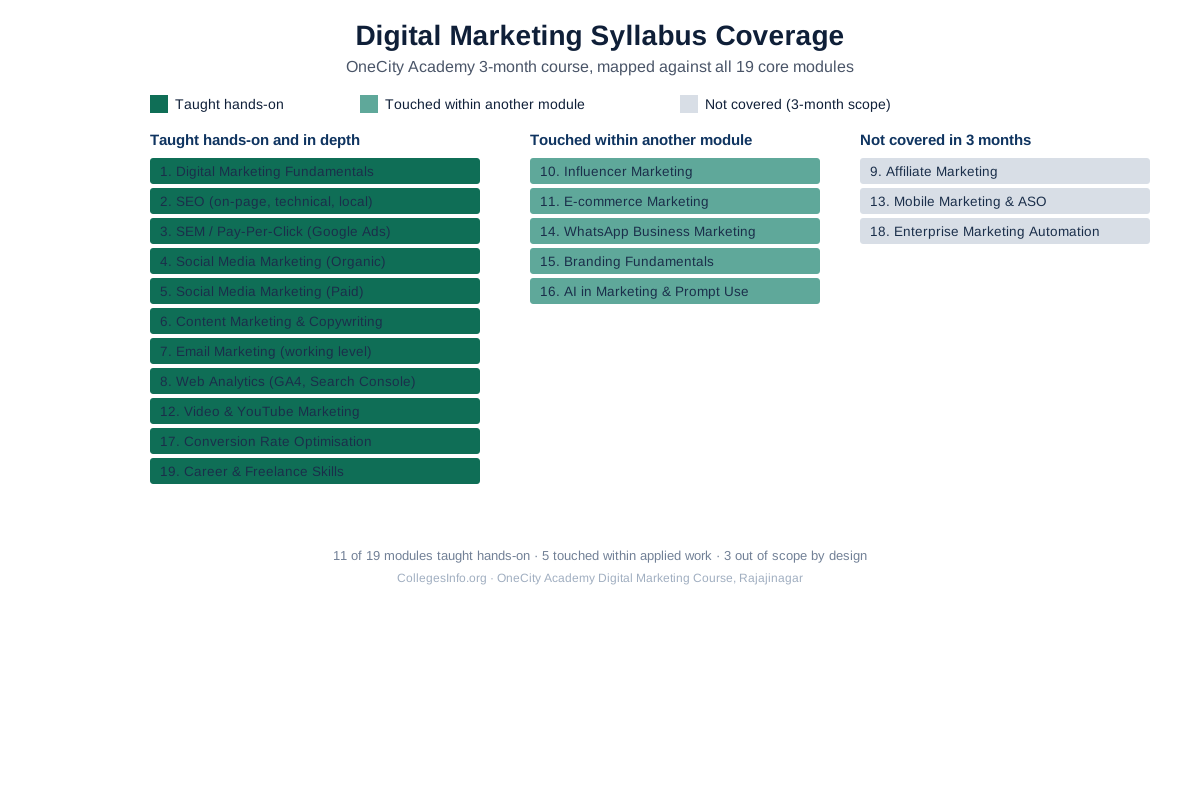
This nineteen-module map is close to what a fully comprehensive, 6-to-9-month programme like Digital Vidya's or Digital Academy 360's would attempt to cover in full depth. OneCity Academy teaches modules 1 through 8, 12, 17 and 19 hands-on and in depth; touches modules 4 (paid social specifically), 10, 14, 15 and 16 within the applied structure of other modules; and does not attempt 9, 11, 13 and 18 as dedicated content within the three-month format. If your priority is genuine breadth across all nineteen areas rather than depth on the core employability skills, a longer programme is the honest answer, and this article would rather tell you that plainly than pad a syllabus to look complete.
The Twelve Weeks in Detail
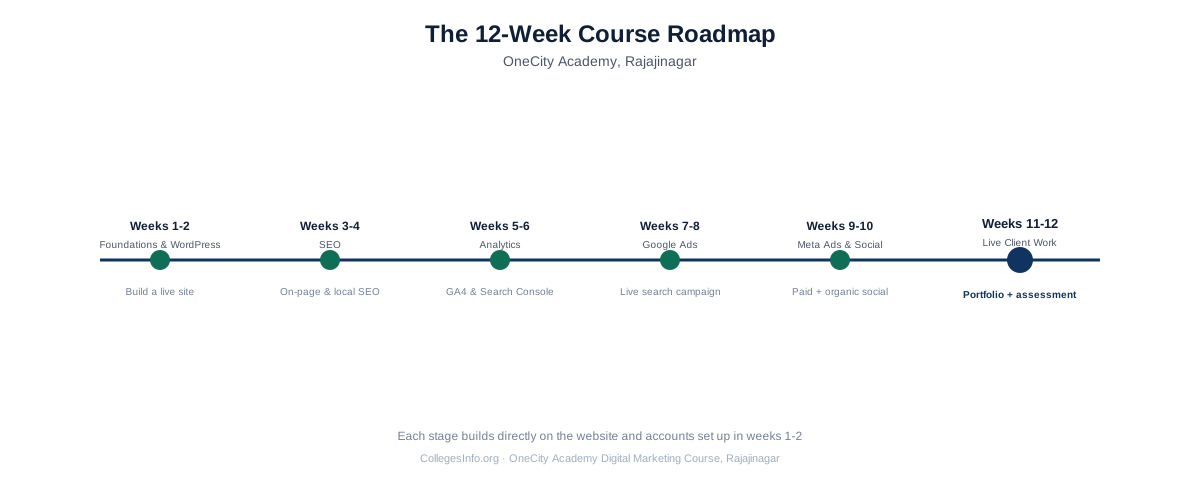
The month-by-month structure above is the shape of the course. Broken into weeks, it looks like this.
Weeks 1 to 2: How Digital Marketing Actually Works
The first two weeks strip away the assumption that digital marketing means posting on Instagram. Students map how a real business generates online revenue, from first click to paid customer, and build a working website using WordPress so every later module has something real to apply to. By the end of week two, every student has a live site they control.
Weeks 3 to 4: Search Engine Optimisation
Keyword research using actual search volume data, not intuition. On-page SEO applied directly to the website built in weeks 1 and 2. Technical SEO basics: what crawling and indexing actually mean, why a fast site outranks a slow one, and how to read Core Web Vitals without treating them as a mystery. Local SEO and Google Business Profile get dedicated time here, since this is what most West Bengaluru small businesses need before anything else.
Weeks 5 to 6: Reading the Numbers
Google Analytics 4 and Google Search Console, taught as tools you interrogate rather than dashboards you glance at. Students learn to answer specific questions from data: where traffic is actually coming from, which pages lose visitors and why, whether a campaign is working or merely spending. This module exists because most self-taught marketers can install analytics but cannot read it under pressure in an interview.
Weeks 7 to 8: Google Ads
Search campaign structure, keyword match types, quality score, and the negative keyword discipline that separates a controlled budget from a leaking one. Students set up and run a real search campaign, using a small live budget wherever a suitable practice account is available, and learn to diagnose the specific failure pattern of a campaign that spends without converting.

Weeks 9 to 10: Meta Ads and Paid Social
Campaign objectives, audience building from first principles, pixel setup and conversion tracking, and creative testing discipline. This module also covers organic social strategy and content calendars, since most students will manage both paid and organic social for the same client rather than one or the other.
Weeks 11 to 12: Live Client Work and Portfolio
The final two weeks put students on real accounts through OneCity's client base, working under supervision on genuine campaigns rather than practice scenarios. Reporting, dashboard building, and presenting performance to a client are covered here, since defending a number out loud is a different skill from producing it. The course closes with the final assessment and a structured portfolio review, since a portfolio nobody has checked for coherence is not much use in an interview.

Tools and Platforms Covered
Course completion should mean comfort with the actual software a digital marketing job requires on day one, not just the theory behind it.
| Category | Tools |
|---|---|
| Analytics and tracking | Google Analytics 4, Google Search Console, Google Tag Manager |
| Paid advertising | Google Ads, Meta Ads Manager, YouTube Ads |
| SEO research | Keyword research tools, site audit tools, rank tracking, the same discipline OneCity applies to its own client SEO work |
| Website and content | WordPress, basic on-page editing, landing page structure |
| Design and creative | Canva, basic ad creative sizing and formats across Meta and Google Display specs |
| Email and automation | Email marketing platforms (Mailchimp/Zoho Campaigns class tools), list segmentation, basic automation flows |
| Business messaging | WhatsApp Business, catalogue and broadcast basics, relevant to the small-business client base most students practise on |
| AI-assisted workflow | ChatGPT, Claude and comparable tools for research, drafting and campaign ideation, used as an assistant rather than a replacement for judgement |
| Reporting | Building a client-facing dashboard and presenting it clearly |
Every tool here is one a working digital marketer touches regularly in Bengaluru's job market. None are included because they look impressive on a syllabus PDF.
Career Support, Stated Precisely
OneCity Academy provides resume help, portfolio review and interview practice. It does not guarantee a job.
That sentence is worth reading carefully, because placement claims in this industry are frequently vague on purpose. Three things it means in practice.
It is support, not a promise of a job. Every student receives the same resume help, portfolio review and interview practice. What employers respond to is demonstrated work: a portfolio of live work, a campaign you can explain, and results you can defend, which is what the internship is built to produce.
The support comes from an agency with an existing client network, not a training company promising access to a job board. OneCity has worked with businesses across Bengaluru since its 2017 shift into digital marketing, and those relationships are where introductions can come from, though hiring is always the employer's decision.
It is not a guarantee that any student will be placed, and any institute telling you otherwise is describing something it cannot control.
Who Teaches
Two practitioners lead the programme.
L K Monu Borkala is the founder of OneCity Technologies Pvt Ltd, with 20+ years of business experience and 8 years running digital marketing campaigns for clients. He also founded CollegesInfo.org, a Karnataka education directory covering 1,500+ institutions, which is itself a working case study in SEO, content strategy and lead generation at scale.
Last Updated: August 26, 2026
Nanditha brings 4 years of digital marketing experience and handles day-to-day campaign management and student mentoring through the practical modules.
Neither is a full-time trainer, which is the point. Both are working on client accounts during the same weeks they teach.
About OneCity Technologies
OneCity Technologies Pvt Ltd was founded on 17 December 2006 in Mangaluru, initially publishing print directories and Yellow Pages listings, and was incorporated as a private limited company in November 2009. The company moved into SEO, web design, social media and PPC in 2017, working with businesses across Bengaluru, Mangaluru and Mysuru since. It now runs offices in all three cities. The same team also runs OneCity Academy, a Bangalore digital marketing agency, and CollegesInfo.org.
The academy is a newer initiative from the same company, built specifically because the team kept encountering the same gap in candidates applying for marketing roles: strong on theory, thin on demonstrated, defensible work.
That history is why the third month of this course exists in its current form. A training company designing a course from first principles might reasonably build a longer, more theoretical programme. An agency designing a course from its own hiring experience builds one around the specific gap it keeps seeing in interviews, which is exactly what this course is structured to close.
Digital Marketing Career Outcomes in Bengaluru, Role by Role
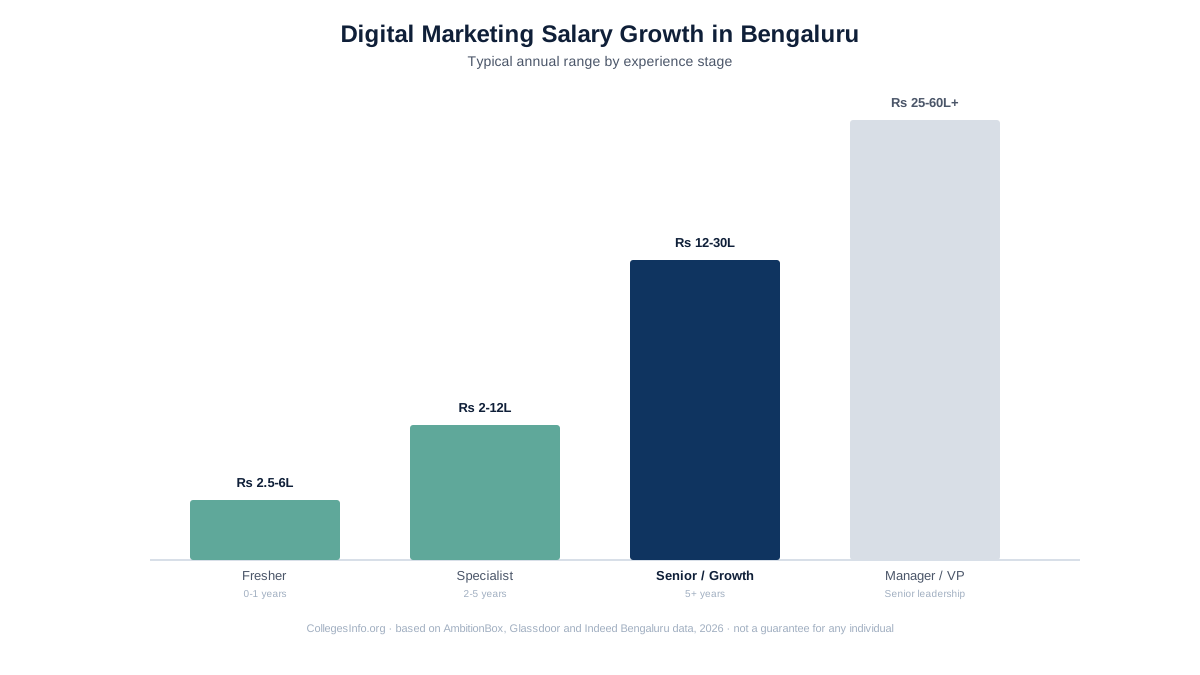
Salary figures for this field vary by source more than most, and anyone quoting a single confident number is usually rounding for effect. What multiple independent sources agree on, across AmbitionBox, Glassdoor, Indeed and industry salary guides published through 2026, is a set of consistent bands by role and experience rather than one figure for the whole field.
Fresher (0–1 years). A digital marketing fresher in a generalist Digital Marketing Executive role typically earns Rs 2.5 lakh to 6 lakh annually across India, with Bengaluru freshers earning 15 to 25% more than Tier-2 cities on comparable roles, according to AmbitionBox data covering over 39,800 salary reports as of May 2026. Capable freshers with a strong portfolio at funded startups in Bengaluru specifically can reach Rs 6 to 8 lakh, though the more typical range at SME and agency roles, which is where most first jobs actually happen, sits closer to Rs 20,000 to 30,000 a month.
Role-wise bands at the specialist and mid-level (roughly years 2–5):
| Role | Typical range |
|---|---|
| SEO Specialist | Rs 2–8 LPA entry to mid, up to Rs 10–25 LPA at senior level |
| PPC / Performance Marketing Specialist | Rs 2–12 LPA, scaling with analytics and optimisation skill |
| Social Media Manager | Rs 2–10 LPA |
| Content and Email Marketing | Rs 2–10 LPA, rising with content strategy leadership |
| Digital Analytics / Growth roles | Rs 12–30 LPA, among the highest-paying specialist tracks |
| CRM / Marketing Automation Specialist | Rs 14–22 LPA at senior level (7+ years) |
Senior and leadership level. A Digital Marketing Manager in Bengaluru earns Rs 13.2 to 14.6 lakh on average, the highest of any Indian city for this specific role, per AmbitionBox data. At the top end, senior leaders cross into Rs 25 to 50 lakh, and VP Marketing or CMO roles at large SaaS or e-commerce companies in Bengaluru range from Rs 30 to 60 lakh-plus with performance bonuses or ESOPs.
Freelance. Freelance digital marketers in India report earnings between Rs 20,000 and Rs 2 lakh-plus per month, depending on niche, client portfolio and specialisation – a wide range that reflects how much freelance income depends on the specific work a marketer can show, rather than a credential.
The specialisation premium. One consistent theme across 2026 salary guides is that AI-search-era specialists – professionals working in Answer Engine Optimisation, Generative Engine Optimisation, and AI-assisted performance marketing – are commanding a 30 to 40% premium over generalist digital marketers at every experience level. This is a distinctly new dynamic in the field, distinct from the traditional SEO-versus-PPC specialisation debate, and it is the reason OneCity Academy integrates AI tool fluency throughout its modules rather than treating it as an optional add-on.
None of this is a guarantee attached to finishing this course, or any course. It describes the market a graduate enters, not a promise about where any individual student lands. Indeed's Bengaluru salary data and Glassdoor's broader dataset, drawn from over 500 reported Bengaluru salaries, both point to the same pattern: portfolio and demonstrated skill move a candidate through these bands faster than certification names do, which is the entire premise behind structuring this course's third month around live accounts.
Agency, In-House, Startup or Freelance: Which Career Track Fits
Digital marketing graduates from any institute – this one included – tend to assume there is a single career path: get hired, get promoted. In practice there are four clearly different tracks, and they suit different temperaments, not just different skill levels.
Agency work means managing multiple client accounts simultaneously, usually three to eight at the junior level, each with its own login, its own reporting cadence and its own personality of client. The pace is faster and the variety is higher – a junior executive at a Bengaluru agency might run SEO for a clinic on Monday and Meta Ads for a retail brand on Tuesday. What agency work demands is context-switching tolerance and comfort presenting to people who are not your direct manager. It is also, generally, the fastest way to build a broad portfolio quickly, because account turnover exposes you to more industries in a year than an in-house role typically does.
In-house roles, inside a single company's marketing team, trade breadth for depth. An in-house performance marketer at a Bengaluru D2C startup will know that one brand's customer base, funnel and seasonality intimately, often more intimately than an agency ever could for any single client. In-house roles typically pay slightly better at the mid-career stage and offer more stability, but a first in-house role gives a narrower portfolio than a first agency role, which matters if you are trying to build a broad case for your next job move within a year or two.
Startup marketing roles, particularly at seed or Series A companies, blur agency and in-house. A "Growth Marketing Associate" at a five-person startup often runs SEO, paid ads, email and social simultaneously, with a founder as the only reviewer. This suits students who want ownership fast and are comfortable with ambiguity, but the learning is uneven – without a senior marketer to correct mistakes, bad habits can set in unchecked. It is a reasonable second role after some agency or in-house grounding, less reliably a strong first role.
Freelancing, the track this course explicitly prepares students for alongside employment, is the least structured and the most dependent on the pricing and client-management skills covered in month three. West Bengaluru's density of small, family-run businesses makes freelancing a realistic first income stream here in a way it is not in every part of Bengaluru, because the first client is often findable through a family or neighbourhood connection rather than a cold pitch. The trade-off is income unpredictability in the first six to twelve months, which is why most graduates who freelance early also keep applying for a part-time or junior full-time role in parallel rather than treating freelancing as an immediate full replacement for employment.
None of these tracks is objectively better. A student who knows they want fast variety and don't mind client-facing pressure should target agencies first. A student who wants to go deep on one brand's numbers should target in-house or startup roles. A student in West Bengaluru specifically, with family or neighbourhood business connections already in hand, has a freelancing option most students elsewhere do not have quite as readily available.
Interview Questions Junior Digital Marketers Actually Face in Bengaluru
The mistakes section above describes the gaps that trip up self-taught candidates. This section is the flip side – the actual questions Bengaluru employers tend to ask junior digital marketing candidates, compiled from common patterns across agency and startup hiring in the city. A student who has actually done live client work, as this course's third month is built around, should be able to answer these from real experience rather than memorised theory.
- "Walk me through a campaign you ran, from setup to result." Interviewers want the decision trail, not just the outcome – why you chose that targeting, what you changed mid-campaign, and why.
- "A client's Google Ads spend jumped 40% overnight with no conversion increase. What do you check first?" This tests diagnostic instinct, not memorised steps – the honest answer involves checking for a broad-match keyword pulling in irrelevant search terms, a bidding strategy change, or a landing page issue, in that rough order.
- "How would you explain a drop in organic traffic to a non-technical client?" Tests both SEO knowledge and the communication skill of translating a Search Console graph into plain language a business owner without a marketing background can act on.
- "What's the difference between reach and impressions, and when does that difference actually matter?" A basic definitional question that filters out candidates who have memorised terms without understanding when the distinction changes a decision.
- "If I gave you Rs 20,000 a month for a local business, how would you split it across channels?" This is a budget-allocation question specific to the smaller-business reality most Bengaluru agencies and West Bengaluru freelance clients actually operate in, rather than an enterprise-scale hypothetical.
- "Show me a dashboard or report you built. What would you cut if the client only had two minutes?" Tests whether a candidate can prioritise signal over noise in reporting, a skill self-taught marketers frequently lack because they have never had to defend a report to an impatient client.
- "How do you use AI tools in your workflow, and where do you not trust them?" An increasingly standard 2026-era question, testing whether a candidate treats AI as a starting draft requiring judgement, or as an unreviewed output.
Students who can answer these with a specific account, campaign or client in mind – rather than a general description of what the concept means – are the students an interviewer remembers. That is the entire logic behind building this course's assessment around live client work rather than a written test.
Free and Low-Cost Certifications Worth Adding After This Course
A three-month course, from any institute, is a foundation, not a finish line. Several useful certifications are free or low-cost and worth pursuing in the months after completing a foundational course like this one, layered on top of the live-work portfolio rather than instead of it.
Google Ads Certification (free, via Google Skillshop) validates specific competence in Search, Display or Shopping campaign management and is the single most commonly checked credential in Bengaluru PPC job listings, precisely because it is free and therefore has no excuse for a serious candidate to skip it.
Google Analytics Certification (GAIQ) (free) does the same for analytics specifically, and pairs directly with the GA4 skills covered in this course's weeks 5–6.
Meta Blueprint Certification (paid, moderate cost) covers Meta Ads Manager at a depth beyond what any three-month practical course can fit into two weeks, and is worth pursuing specifically for students who find paid social is their strongest interest area after the course.
HubSpot Academy's free certifications in Content Marketing, Email Marketing and Inbound Marketing are well-regarded, free, and cover exactly the kind of enterprise-adjacent marketing automation concepts flagged as out of scope for this course's three-month format – a natural next step for a graduate who wants that specific specialisation.
None of these replace the portfolio built during a practical course's live client work. Employers in this field consistently rate demonstrated campaign results above certification logos in interviews, as covered in the career outcomes section above. But a certification costs a few hours and, in most of these cases, no money, and stacking two or three of them onto a live-work portfolio is a low-effort way to strengthen a CV in the months immediately after finishing.
Mistakes That Cost Self-Taught Marketers Interviews
A meaningful share of applicants to junior digital marketing roles in Bengaluru have taught themselves from YouTube and free courses, and many arrive at interviews with real gaps that a structured course, taught by people who actually interview and hire for client work, is built to close.
The most common gap is an inability to explain why a decision was made, not just what was done. A self-taught candidate can often describe running a Google Ads campaign. Far fewer can explain why they chose exact match over phrase match for a specific keyword, or why they excluded a particular audience segment. Interviewers in this field probe for reasoning, not vocabulary, and reasoning only develops through supervised practice on accounts where a wrong call has a visible consequence.
A second common gap is analytics fluency that stops at installing the tracking code. Many self-taught candidates can confirm Google Analytics is set up correctly but cannot answer a follow-up question about what a sudden drop in a specific metric might indicate, because they have never had to diagnose a real anomaly under time pressure.
A third gap, specific to freelancing rather than employment, is pricing and scoping. Self-taught freelancers frequently underprice their first few projects badly enough to make the work unsustainable, because nobody taught them how an agency actually structures a quote. West Bengaluru's dense small business environment makes freelancing a realistic early path for this course's graduates, which is why pricing and client communication get dedicated time in the third month rather than being assumed as common sense.
Who This Course Suits
| You are | Is this a fit |
|---|---|
| A graduate in any stream looking for a first job in marketing | Yes. See career options after 12th for the wider landscape |
| Working in sales, support or admin and wanting to switch | Yes, three months is manageable alongside a job depending on batch timing |
| Running a family business in West Bengaluru | Yes, particularly the local SEO, WhatsApp Business and paid media modules |
| A freelancer wanting to add paid media to existing skills | Yes, though you may find month one basic |
| Wanting fully comprehensive coverage across all 19 syllabus modules above | No. A 6–9 month programme like Digital Vidya's or Digital Academy 360's covers more breadth |
| Wanting a university degree qualification | No. See our MBA and BBA college guide for degree options |
| Looking for a guaranteed job regardless of performance | OneCity Academy does not guarantee a job. Every student gets resume help, portfolio review and interview practice. |
Certification and What It Is Worth
Students receive a OneCity Academy certificate on completion. It is worth being direct about what a certificate from any private institute is and is not.
No private certificate carries the weight of a recognised degree, and employers in digital marketing know this. What they hire on is demonstrated work: campaigns you have run, results you can show, an account you can log into and explain. The certificate documents that you completed structured training. The portfolio gets you the interview.
That is why the third month is built around live client work rather than simulated exercises. A student finishing this course should be able to open a real Google Ads account in an interview and walk through decisions they made and why.
What This Course Does Not Cover
An honest course description states its limits as clearly as its content, and most institutes in this market do not.
This is not a coding course. Students will use WordPress and standard marketing tools, not build custom software. If you want web development skills specifically, a different programme is the right choice.
It does not cover marketing theory at MBA depth. Brand strategy, market research methodology and organisational marketing structure belong in a business degree, not a three-month practical course. What this course teaches is execution: running campaigns, reading results, and defending decisions, not designing a five-year brand strategy for a multinational.
As the complete syllabus section above makes clear, four specialist areas – dedicated affiliate marketing programmes, app store optimisation, enterprise marketing automation platform administration, and marketplace-specific e-commerce advertising at depth – are not taught as standalone modules in three months. They are either touched on within other modules or left for a student to pursue afterward through a specialist course once foundational skills are in place.
It is not a guaranteed path to a specific salary or company. Career outcomes depend on the individual student's portfolio quality, interview performance and the state of the hiring market at the time they finish, none of which any institute controls regardless of what its marketing claims.
Three months is short by design, and short means focused. Anything that does not directly build employable, demonstrable skill within that window has been deliberately left out, and this section exists so a prospective student can decide for themselves whether that focus matches what they actually need.
Digital Marketing Terms Worth Knowing Before You Enrol Anywhere
A short glossary, since course brochures across this entire market throw around terms as if every reader already knows them. These are the terms that come up constantly across the nineteen-module syllabus above, defined plainly.
- Quality Score – Google Ads' 1–10 rating of how relevant your ad, keyword and landing page are to a searcher, which directly affects how much you pay per click. A low Quality Score means paying more for the same ad position.
- Core Web Vitals – Google's three technical page-speed and stability metrics (loading speed, interactivity, visual stability) that factor into how a page ranks, independent of its content quality.
- Attribution – the method by which a marketer decides which channel gets credit for a conversion when a customer touched multiple channels (an Instagram ad, then a Google search, then a direct visit) before buying. Different platforms attribute the same conversion differently, which is why Google Ads and Meta Ads reports rarely agree on total conversions.
- Lookalike Audience – a Meta Ads targeting feature that finds new users who resemble an existing customer list, used to expand reach without starting targeting from zero.
- Pixel / Conversions API – tracking code (Pixel) and a server-side alternative (Conversions API) that tell Meta which website actions came from which ad, essential for measuring whether a campaign actually drove a sale rather than just a click.
- Domain Authority / similar third-party scores – a third-party estimate (not a Google metric) of how likely a website is to rank, useful as a rough signal in SEO research but frequently over-relied upon by self-taught marketers as if it were an official Google score.
- CAC and LTV – Customer Acquisition Cost and Customer Lifetime Value, the two numbers that ultimately decide whether a marketing channel is actually profitable, not just active.
- UTM parameters – short tags added to a URL that tell Google Analytics exactly which campaign, source and medium sent a visitor, the basic mechanism behind almost all accurate cross-channel reporting.
- Answer Engine Optimisation (AEO) and Generative Engine Optimisation (GEO) – the emerging discipline of optimising content to be surfaced or cited by AI chat assistants and AI-generated search summaries, distinct from traditional SEO's focus on ranking in a list of blue links. This is the specialisation commanding the salary premium noted in the career outcomes section above.
None of these terms require memorising in isolation. They matter because a candidate who can use them correctly in context, in an interview, signals real working knowledge in a way that reciting a definition does not.
Choosing Between Institutes: A Practical Framework
Every institute listed in the fee comparison tables above will tell you it is the right choice. A more useful approach is to ask five specific questions of any course you are considering, including this one.
Who is actually teaching, and what did they do this week outside the classroom? A trainer who has not touched a live campaign in years teaches theory well but struggles with the specific, current problems a real account throws up. Ask directly, before enrolling, what client or campaign work the instructor is currently doing.
What exactly happens in the final month? Course descriptions are often vaguest exactly where they should be most specific, in describing what students actually produce. If an institute cannot describe a concrete deliverable, portfolio piece or live account outcome from its final weeks, that is worth noticing.
What does the placement claim actually mean, in writing? A round number like eighty or ninety percent placement means very little without knowing the denominator, the definition of placement, and whether it is conditional on anything. Ask any institute, including this one, to state its placement terms in a single clear sentence, and be cautious of any that cannot.
Does the fee match the format? A three-month practical course charging enterprise prices, or a nine-month theory-heavy course charging entry-level fees, both deserve a second look. Match the investment to what you are actually receiving in instructor time, live account access and support.
How much of the full syllabus does this specific course actually teach, versus mention? Use the nineteen-module breakdown above as a checklist. A course claiming to cover everything in eight weeks either has extremely long days or is padding its marketing material. A course that tells you plainly which modules it goes deep on and which it leaves out, as this one does, is giving you the information you actually need to decide.
West Bengaluru, Locality by Locality

Rajajinagar
The academy's base, and also home to Onlinism Academy, a Rajajinagar-based digital marketing institute operating since 2011 at a Rs 25,000 fee point. Rajajinagar sits on the Namma Metro Green Line, giving direct access to students commuting from across the city, beyond just West Bengaluru. It is one of Bengaluru's older, established residential and commercial areas, with a dense mix of retail, small manufacturing and service businesses that provide realistic practice material for local SEO and Google Business Profile work specifically. CADD Nest and Besant Technologies also run Rajajinagar branches, making this locality the most competitive single pocket for digital marketing training in West Bengaluru.
Malleshwaram
A short, direct connection to Rajajinagar makes this one of the most convenient localities for evening batches. Digital Kora runs a Malleshwaram branch specifically, claiming students reach “3-year-experience equivalent” competence through daily live-project practice. Malleshwaram's mix of established retail, education institutions and residential density means students here often have ready access to small business owners willing to serve as practice clients for the third-month live work module.
Basaveshwaranagar
Immediately adjacent to Rajajinagar with direct road access, and home to a second CADD Nest branch alongside its Rajajinagar location. The area's density of small and medium businesses, several family-run across multiple generations, means students frequently find their first practice or freelance client within the neighbourhood itself, without needing to search further afield.
Vijayanagar
Bordering Basaveshwaranagar with good road connectivity to Rajajinagar, and served by Digital Kora's second West Bengaluru branch. Vijayanagar's mix of residential and commercial development mirrors the broader West Bengaluru pattern: real businesses that need digital marketing and often cannot justify a large agency retainer, which is exactly the gap this course prepares students to fill, either as employees or as early freelancers.
Yeshwanthpur
Connected via both metro and road, Yeshwanthpur's industrial and commercial belt is one of the strongest sources of B2B and manufacturing-adjacent business in West Bengaluru. Students interested in B2B digital marketing specifically, a less crowded specialisation than consumer-facing social media work, find useful practice exposure here.
Mahalakshmi Layout
A short distance north along the same metro corridor as Rajajinagar and Malleshwaram. Predominantly residential with a growing local commercial base, making it well suited to students balancing the course with other commitments who need a manageable, predictable commute.
Serving West Bengaluru
The Rajajinagar location is chosen for access across West Bengaluru. Malleshwaram, Basaveshwaranagar, Vijayanagar, Yeshwanthpur and Mahalakshmi Layout are all within a short commute, and Rajajinagar sits on the Namma Metro Green Line, which matters for anyone travelling from further out.
Students who already have a BCA or are choosing between BCA colleges in Bangalore and a shorter practical route often add this course after their degree rather than instead of it. For students in Malleshwaram, the connection is direct and the commute short enough to attend evening batches without losing a full evening to traffic. Basaveshwaranagar and Vijayanagar sit adjacent to Rajajinagar with direct road access. Yeshwanthpur connects via metro and road, and its industrial and commercial belt is one of the strongest sources of local business clients for practice work. Mahalakshmi Layout is a short distance north, well served by the same metro corridor.
This geographic focus is deliberate. A student who spends ninety minutes each way reaching a class in South Bengaluru will miss sessions, and missed sessions are the most common reason people do not complete a course they have paid for. It is also why the locality-specific institutes named above – Onlinism, CADD Nest, Besant, Digital Kora – exist at all: West Bengaluru's business density supports genuine local training demand, and this course is designed for the same market.
Course Details
| Course | Digital Marketing |
| Duration | 3 months + 2-month internship |
| Fee | Rs 29,500 |
| Location | Rajajinagar, Bengaluru |
| Provider | OneCity Academy, a OneCity Technologies Pvt Ltd initiative |
| Certification | OneCity Academy certificate |
| Placement | Career support: resume help, portfolio review and interview practice. No job guarantee. |
| Status | Launching, enrolment open for the first batch |
Also at OneCity Academy: Advanced AI-Based SEO Course
OneCity Academy also runs an Advanced AI-Based SEO course: 2 months of classroom training plus a 3-month internship, at Rs 55,000 (original fee Rs 99,500). It covers technical SEO, keyword research, on-page optimisation, GEO and AEO for AI search engines, structured data and AI-search measurement. It suits people who want an SEO career specifically, while the Digital Marketing course above is broader across design, SEO, PPC, social media and email. To compare SEO training across the city, see SEO course options in Bangalore.
Before You Enrol
A short, honest checklist, since a Rs 29,500 decision deserves more than enthusiasm.
- Confirm current batch dates, timings and seat availability directly, since course schedules shift between cohorts.
- Ask to see a sample of the live client work format before committing, if that matters to your decision.
- Confirm the current fee, GST, batch dates and instalment options in writing before paying the fee.
- Compare the nineteen-module syllabus breakdown above against what any institute you are considering actually teaches hands-on, not just mentions in a brochure.
- If you are financing the course through savings or family support, be honest with yourself about whether three months of consistent attendance is realistic alongside your other commitments.
- Compare this course against at least one other option using the framework above, including the local Rajajinagar-area institutes, rather than deciding on convenience or price alone.
We would rather a student make an informed decision and enrol confidently than enrol quickly and struggle to complete.
Questions About the OneCity Academy Digital Marketing Course
1. Does OneCity Academy guarantee a job after the course?
No. OneCity Academy provides resume help, portfolio review and interview practice to every student, and the internship gives you real project work employers can check. It does not guarantee a job, and no institute can.
2. Is Rs 29,500 the total cost?
Rs 29,500 is the offer fee for the three-month classroom programme plus the two-month internship that follows (original fee Rs 49,500). Confirm current terms, any applicable taxes and instalment options directly before enrolling.
3. Do I need a marketing background to join?
No. The first month starts from how businesses make money online and builds up. Graduates from any stream, and people switching from unrelated jobs, are the primary audience. Basic computer literacy and comfort with English are the practical requirements.
4. Is this a degree or a diploma?
Neither. It is a professional certification course. If you need a recognised university qualification, a BBA, MBA or a university-affiliated programme is the right route, and this course is not a substitute for one.
5. Will I work on real client accounts?
Yes, in the third month under supervision, and through the two-month internship that follows. OneCity Technologies runs live client campaigns, and the practical modules are built around that work rather than simulated exercises.
6. Does the course cover affiliate marketing, influencer marketing or e-commerce advertising?
Partially. Influencer marketing is touched on within the social media module, and affiliate marketing and marketplace advertising (Amazon Ads, Flipkart Ads) are covered within live client work only where a given cohort's practice clients need them, not as dedicated scheduled modules. See the complete syllabus breakdown above for exactly which of the nineteen core digital marketing modules this course teaches hands-on versus touches briefly.
7. Does the syllabus include AI tools and prompt engineering?
Yes, integrated throughout the content, SEO and campaign modules rather than taught as one isolated session, which reflects how AI tool use is now embedded across the discipline rather than treated as a separate specialisation.
8. How is this different from a larger institute charging three times as much, or a cheaper local institute like Onlinism or Skillfloor?
Larger institutes like Digital Academy 360 or Digital Vidya offer scale, a substantially broader syllabus across all nineteen modules, and stronger brand recognition. Cheaper local options like Onlinism (Rs 25,000, Rajajinagar) or Skillfloor (Rs 14,900, online) offer a lower entry cost. OneCity Academy's specific position is instruction from practitioners currently running client campaigns at an active agency, a West Bengaluru location, live account access through that agency's existing client base, and a fee between the cheapest and most expensive local options. Which of these matters most depends on what you need.
9. Does the course prepare me for freelancing rather than a job?
Both routes are covered. The third month includes pricing work, scoping projects and client communication, which are the parts of freelancing that most self-taught marketers get wrong. West Bengaluru's small business density makes it a practical place to start freelancing.
10. When does the first batch start?
OneCity Academy is launching and enrolment is open for the first batch. Contact us for current batch dates, timings and seat availability.
11. What happens if I miss classes due to work or illness?
Confirm the current make-up class and attendance policy directly, since this varies by batch size and format. A short, focused three-month course has less slack for missed sessions than a longer programme, which is worth factoring into your decision if your schedule is unpredictable.
12. Can I pay in instalments?
Confirm current instalment options directly before enrolling. Payment terms are set at the time of enrolment and are not part of the course curriculum itself.
13. Is there an entrance test or interview before joining?
Confirm the current enrolment process directly. Courses at this level typically do not require a formal entrance test, though a short conversation to confirm fit is common practice across the industry.
14. What happens after the course ends?
OneCity Academy provides resume help, portfolio review and interview practice. It does not guarantee a job. You leave with your internship portfolio and interview preparation, which is what you take to employers.
After the Course: What a Realistic First Year Looks Like
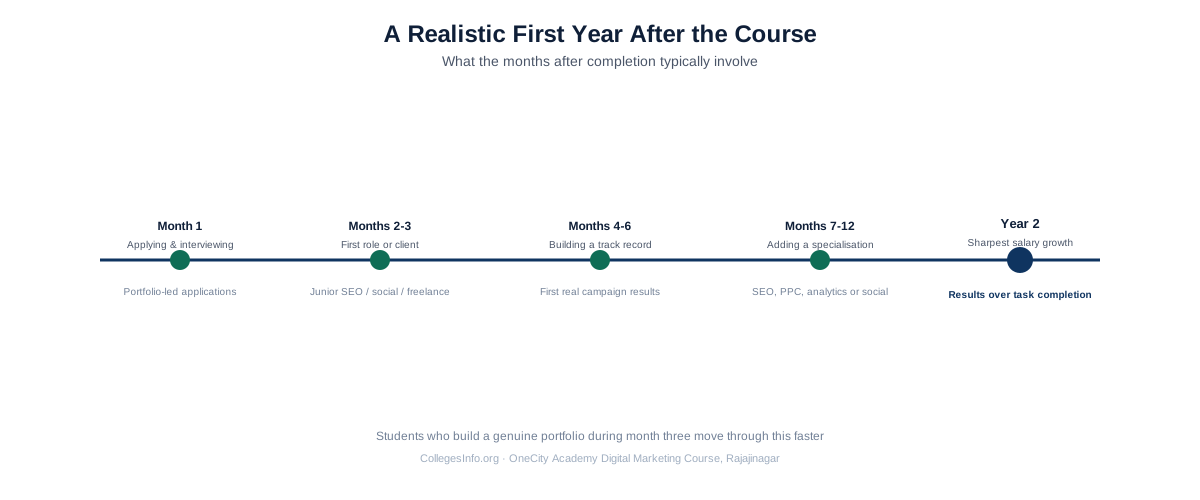
Finishing a digital marketing course is a starting point, not an outcome, and it is worth being direct about what the months immediately afterward typically involve, for students from any institute, this one included.
The first few weeks after completion usually involve applying to junior roles, freelance projects, or both simultaneously. A completed portfolio from live client work, built during the course rather than assembled afterward from scratch, shortens this period considerably, since interviews move faster when there is something concrete to discuss immediately.
The first job or client project rarely matches long-term goals exactly. A junior SEO role at a small agency, a social media coordinator position, or a first freelance retainer with a local West Bengaluru business are all realistic, common starting points, and none of them represent a ceiling. The role-wise salary data above shows the sharpest growth happening around the two-to-three-year mark, once a professional can point to results rather than task completion and can credibly claim a specialisation rather than staying a generalist, which means the first year matters most for what it lets someone build toward, not for the number on the first paycheque.
Students who treat the third month's live client work seriously, building a genuine, presentable portfolio rather than a checklist of completed modules, consistently move through this first-year period faster than those who treat the course as complete once the certificate is issued. The certificate documents attendance and assessment. The portfolio does the actual work in an interview.
Enquire About the Next Batch
OneCity Academy, Rajajinagar, Bengaluru, a OneCity Technologies Pvt Ltd office and training centre. OneCity Technologies has served Karnataka businesses since 2006, running digital marketing specifically since 2017.
Call or WhatsApp Nanditha at +91 91485 73135 or +91 91485 73135, or email sales@onecity.co.in, for current batch dates, timings and seat availability. For other admission guidance, our counselling desk can help.
This article is for informational purposes only. Confirm current fees, syllabus and batch details directly with the institute before enrolling.
Need help with admission?
CollegesInfo.org helps students secure admission to colleges they are eligible for under that college's actual published criteria. Chat with us on WhatsApp or explore admission assistance.