Last Updated: September 7, 2026
Choosing what to do after Class 12 is one of the biggest decisions for students and families in India. Whether you are from Science, Commerce, or Arts, you are probably hearing many opinions about the best career options after 12th, the best courses after 12th, which exams to write, and what salary you might get in the future. It is easy to feel confused and stressed.
Most students are not short of options, they are short of clarity. Should you choose engineering, medicine, law, design, commerce, or a skill based course like digital marketing or UI UX? Should you prepare only for government exams or also look at jobs in private companies or abroad? A clear, honest picture of courses, entrance exams, fees, salary range, and long term scope can make this choice much easier.
This guide from CollegesInfo is designed to help you and your parents understand the big picture before you decide. We will walk through stream wise options in Science, Commerce, and Arts, professional and skill based courses, exams in India, exams for abroad studies after 12th, and how to choose a path that fits your strengths instead of just following the crowd.
Factors to Consider Before Choosing Courses After 12th
Before you jump into any course, take one step back and think about how this decision will affect the next 5 to 10 years of your life. There are many courses after 12th, but not every option is right for you. A simple decision framework can save you from switching courses later or feeling stuck.
Interest vs Career Scope
First, check what you enjoy studying. Do you like solving sums, understanding human body systems, reading about business, or working with people and stories? At the same time, see the job demand in that field. The best courses after 12th usually have a balance of interest and scope. Only interest with zero opportunities or only scope with zero interest, both can become frustrating in the long run.
Skills & Aptitude Assessment
Ask yourself:
-
Am I good at numbers, logic, writing, or design?
-
Do I enjoy practical work or theory more?
You can take simple aptitude tests, talk to teachers, and observe where you naturally perform well.
Salary Expectations vs Long-Term Growth
Many students only ask, “Which course gives the highest salary?” A better question is, “What will this field look like after 5–10 years?” Some careers start with modest pay but grow very well with experience (for example, CA, data science, or legal practice). Others may give early salary but limited growth.
Entrance Exams & Eligibility
Check carefully:
-
Do you need to clear NEET, JEE, CLAT, NIFT, NATA, or other exams?
-
What is the minimum percentage and subject requirement?
Missing eligibility rules can close doors later.
Study in India vs Abroad
Think if you want to study fully in India or keep an option for abroad. If you are open to foreign universities, plan early for exams like SAT, IELTS, or other exams for abroad studies after 12th.
This thinking framework helps you compare options calmly instead of choosing in a rush.
Best Career Options After 12th Science (PCM / PCB)
Career Options After 12th Science (PCM)
If you have taken Physics, Chemistry and Maths, you have some of the widest choices in front of you. Most families first think of engineering, but PCM can also lead you to data science, architecture, defence services and aviation. When you compare options, look at the nature of work, entrance exams and long term demand, not just starting salary.
Engineering
BTech and BE are still among the most popular courses after 12th for PCM students. You can choose from branches like Computer Science, IT, Electronics, Mechanical, Civil, AI & ML and more. Good engineering colleges focus on projects, internships and coding skills, not only theory. The main entrance exam for engineering after 12th is JEE Main, followed by JEE Advanced for IITs. Most states also conduct CETs and private university tests.
Architecture
If you enjoy design, drawings and structures, BArch can be one of the best career options after 12th for creative PCM students. Architects work on buildings, interiors, urban planning and sustainable spaces. Admission is usually through NATA or JEE Paper 2 plus board marks.
Data Science & AI
Students who like maths, logic and computers can move into BSc or BTech in Data Science, AI, Machine Learning or related fields. These are fast growing areas with demand in IT, finance, e commerce and startups, and they are becoming some of the best courses after 12th PCM for future ready careers.
Defence & NDA
With PCM, you can appear for NDA after 12th to join the Army, Navy or Air Force as an officer. This route offers discipline, respect and stable growth for those ready for a rigorous lifestyle, physical fitness tests and service to the nation.
Commercial Pilot
Students who dream of flying can explore commercial pilot training after the right medical fitness checks. This path is costlier but can lead to high earning aviation careers with airlines, charter services or cargo operations.
Quick comparison for PCM routes
|
Course |
Duration |
Approx. Starting Salary (per year) |
Main Entrance Exam |
|
BTech / BE |
4 years |
₹3–7 lakh |
JEE Main, JEE Advanced, State CET |
|
BArch |
5 years |
₹3–6 lakh |
NATA, JEE Paper 2 |
|
BSc Data Science / AI |
3–4 years |
₹4–8 lakh |
Institute / university tests |
|
NDA (officer) |
Training |
₹8–12 lakh + allowances |
NDA exam |
|
Pilot training |
18–24 mo |
₹10–20 lakh+ |
Institute tests, DGCA clearances |
While comparing these paths, be honest about your budget, readiness for tough entrance exams and whether you prefer technical desk work, creative design or uniformed service.
Also read: entrance exam after 12th
Career Options After 12th Science (PCB)
With Physics, Chemistry and Biology, you can move into medicine, dentistry, Ayurveda, pharmacy, biotech, nursing and many allied health careers. Here, patience and a genuine interest in helping people are as important as marks.
MBBS is the first choice for many PCB students who want to become doctors. It is a long and demanding journey but offers strong respect and stable income, especially after PG specialisation. BDS focuses on dentistry and oral health, while BAMS combines modern science with traditional Ayurvedic practice. All three mainly admit through NEET UG, and cut offs are higher for government medical colleges compared to private colleges.
Pharmacy
If you are curious about medicines, formulations and drug safety, BPharm or Pharm D can be excellent options. Pharmacists work in hospitals, research, quality control, pharma companies and even clinical trials. These courses are available in both government and private colleges, with admission through state entrance exams or college level tests and sometimes direct merit based counselling.
Biotechnology
Biotech is suitable for students who enjoy lab work, genetics and research. You can pursue BSc or BTech in Biotechnology and later work in pharma R&D, agriculture, food technology, environmental labs and more. The field is growing with applications in vaccines, diagnostic kits, industrial enzymes and sustainable materials.
Nursing & Paramedical
BSc Nursing, BSc Anaesthesia Technology, OT Technology, Radiology, MLT and other paramedical courses are in high demand across government and private hospitals. These careers are patient facing and offer stable jobs in India and abroad, especially with experience and further specialisation like MSc Nursing or advanced diplomas.
Nutrition & Allied Health
Courses in Nutrition, Dietetics, Physiotherapy, Occupational Therapy and Public Health allow you to work in hospitals, clinics, wellness centres, NGOs and sports setups. They are good for students who like counselling, lifestyle change and preventive health rather than only emergency care.
Government vs Private Scope
Government colleges usually offer lower fees and strong clinical exposure but are harder to get due to high NEET cut offs and limited seats. Private colleges have higher fees, so you must check approvals, hospital tie ups and placement support carefully before joining. In many PCB careers, salaries rise steadily after a few years of experience rather than immediately after graduation.
When you compare PCB options, think about how many years you are ready to study, whether you are comfortable with night duties, and how closely you want to work with patients. Many nursing and paramedical professionals from India later move to the UK, Europe or Gulf countries after clearing licensing exams, which can significantly increase earnings. For medicine and allied health, your commitment to continuous learning and empathy for patients matters as much as your board and entrance exam scores.
Best Career Options After 12th Commerce
Commerce students today have far more opportunities than just “BCom and a bank job”. If you understand money, business, law and markets, you can build a strong career in India or abroad. The best career options after 12th Commerce usually combine a solid qualification with practical skills and good communication.
Below are some of the best courses after 12th Commerce, along with how the salary and scope usually grow over time.
Chartered Accountant (CA)
CA is one of the most respected and challenging careers for Commerce students. Chartered Accountants work with companies, banks, startups and even government bodies on taxation, audits, financial reporting and compliance.
-
Course route: CA Foundation → CA Intermediate → Articleship → CA Final
-
Who it suits: Students strong in accounts, maths logic, and ready for disciplined self study
-
Entry salary: Around ₹6–9 lakh per year in good firms
-
After 5+ years: Senior roles in corporates, consulting or own practice with significantly higher income
CA is a professional course, so your success depends more on clearing each level with good depth rather than just your college name.
Company Secretary (CS)
A Company Secretary handles legal, regulatory and secretarial compliance of companies. CS professionals work closely with directors on board meetings, ROC filings, corporate governance and mergers.
-
Course route: CSEET → Executive → Professional
-
Who it suits: Students who are detail oriented and interested in law, regulations and company structures
-
Entry salary: Usually ₹4–6 lakh per year
-
After 5+ years: Roles like Compliance Officer, Company Secretary in listed or large private companies
Many students pursue CA and CS together in a planned way, but this needs good time management.
BCom + MBA
A common and flexible path is doing BCom (General, Finance, Accounts, Banking, Insurance or Analytics) followed by an MBA. This combination opens doors in finance, marketing, HR, operations, consulting and even startups.
-
Who it suits: Students who like business subjects but are not fully sure of a single profession yet
-
Entry salary after BCom: ₹2.5–4 lakh per year in junior roles
-
Entry salary after MBA (good college): ₹6–12 lakh per year depending on institute and specialisation
The real key here is the quality of your MBA college. Preparing early for CAT, MAT, CMAT or state entrance exams during your degree can make a big difference.
Economics & Finance
If you enjoy understanding markets, policies and numbers, you can look at BA Economics, BSc Economics or specialised BCom / BBA in Finance.
Possible careers include:
-
Financial analyst in banks, NBFCs and investment firms
-
Research roles in think tanks and policy organisations
-
Risk, treasury and corporate finance roles in companies
Students who later do masters or certifications like CFA, FRM or MSc Finance often see strong salary growth, especially in metro cities and global firms.
Digital Marketing & Business Analytics
With the growth of online businesses, digital marketing and analytics have become some of the most active career options after 12th Commerce. You can pair a BCom or BBA with certifications or diplomas in:
-
SEO, social media marketing, performance marketing
-
Web analytics, Google Analytics, marketing data analysis
Early salaries may start around ₹3–5 lakh per year, but skills grow quickly if you work on real projects and tools. Many professionals also freelance or start small agencies once they gain experience.
Professional vs Degree Based Careers
Commerce offers both professional routes (CA, CS, CMA, CFA) and degree based paths (BCom, BBA, Economics, Finance).
-
Professional courses: Harder exams, more focused syllabus, but strong depth and identity in the job market.
-
Degree courses: Wider subjects, campus life, flexibility to explore, and later specialisation through MBA, law or certifications.
A simple way to choose is:
-
If you enjoy deep mastery in one field like accounts or law and can handle tough exams, a professional course may suit you.
-
If you want a broader business base and time to explore, a good BCom or BBA with clear add on skills can be a very practical route.
For Commerce students, the real advantage comes when you mix strong conceptual knowledge with software tools, communication skills and internships. That is what makes you job ready and sets you apart in interviews.
Best Career Options After 12th Arts / Humanities
Arts is often treated as a “backup stream”, but that idea is outdated. With the right course and skills, Arts students can build careers in law, media, design, psychology, governance and international organisations. Many of the best career options after 12th today are open to Arts students who are curious, good with language, and interested in people and society.
Law (BA LLB)
If you enjoy debating, reading about rights and rules, and following news, law is a powerful option. A 5 year integrated BA LLB after 12th can lead to careers in litigation, corporate law firms, legal consulting, policy work and in house roles for companies. Admissions are usually through CLAT, state law entrance tests or university level exams.
Journalism & Mass Communication
Students who like writing, storytelling and digital media can explore BA in Journalism, Mass Communication or Media Studies. Careers include reporting, content creation, social media, PR and digital strategy roles in media houses, startups and brands.
Design & Fine Arts
Courses in Fashion Design, Communication Design, Interior Design, Animation or Fine Arts are suitable for students with strong creative skills. Many colleges hold design entrance tests and portfolio rounds. The work can be demanding but offers good income for those who build a strong portfolio and industry network.
Psychology & Social Work
Psychology, counselling and social work are growing areas in schools, hospitals, NGOs, CSR departments and private practice. These fields suit students who are patient listeners and want to work closely with people and communities.
Civil Services Preparation
Many Arts students also prepare for UPSC and state civil services alongside their degree, using subjects like Political Science, History, Economics or Sociology as a base. While not everyone clears these exams, the preparation builds strong analytical and writing skills useful in many other careers.
The old belief that Arts students cannot earn well is slowly breaking. With specialisation and skills, Arts can be both meaningful and well paying.
Professional & Skill-Based Courses After 12th
Along with traditional degrees, many students now choose professional and skill based courses after 12th that focus on practical learning and faster entry into the job market. These are useful for students who prefer hands on work, creativity, or digital skills instead of only theory.
Digital Marketing
Covers SEO, social media, Google Ads, content and email marketing. Good for Commerce and Arts students who like branding, writing, or analytics. You can work with agencies, startups, companies or as a freelancer from anywhere.
UI/UX Design
Focuses on how apps and websites look and feel. If you enjoy design, psychology and technology together, UI UX can be a strong career. A portfolio of projects matters more than marks alone.
Animation & VFX
Suited for students who love drawing, movies, gaming and visual storytelling. Training institutes offer diplomas that can lead to roles in studios, advertising and media companies.
Hotel Management & Event Management
Both suit students who like people facing roles, planning, and operations. Jobs are available in hotels, resorts, corporates and wedding or corporate event companies. Growth is linked to communication skills and attitude.
Foreign Languages
Learning languages like German, French, Japanese or Spanish adds value in MNCs, tourism, translation and study abroad plans.
These skill based paths often offer:
-
Campus placements for full time roles
-
Freelancing or small business opportunities once you gain experience
They work best when you are clear about your interest and ready to build a strong portfolio or practical experience, not just a certificate.
Entrance Exams After 12th
Entrance exams act like gateways to many of the best career options after 12th. Some tests decide your college and branch in India, while others are required for admission to universities abroad. Planning these early reduces last minute panic and helps you focus your Class 11–12 studies in the right direction.
Entrance Exam for Engineering After 12th (~175 words)
For most engineering aspirants, the main entrance exam for engineering after 12th is JEE Main. Your JEE Main score is used by NITs, many central institutes, and also as a basic filter by several private universities. A high rank in JEE Main also makes you eligible to write JEE Advanced for admission to the IITs.
Apart from JEE, almost every state conducts its own CET or engineering entrance for local colleges. Examples include KCET in Karnataka, MHT CET in Maharashtra and similar exams in other states. Many private universities have their own entrance tests as well.
When you choose the best courses after 12th in engineering, remember:
-
Focus on strong basics in Physics, Chemistry and Maths during Class 11–12
-
Solve previous year papers regularly to understand the level of questions
-
Keep track of eligibility rules like minimum percentage and subject combinations
Even if you are unsure about engineering, writing at least one major exam (like JEE Main or a state CET) keeps your options open for counselling later.
Exams for Abroad Studies After 12th (~200 words)
If you are considering a bachelor’s degree in countries like the USA, Canada, UK or Australia, you will usually need a mix of academic marks, language tests and sometimes aptitude tests. These are commonly known as exams for abroad studies after 12th.
For many US universities, students write aptitude tests like SAT or ACT. These test maths, reasoning and English skills and are often taken in Class 11 or early Class 12 so that you have time to improve your score if needed.
Language proficiency tests are equally important:
-
IELTS or TOEFL for English-speaking countries
-
Duolingo English Test is accepted by many universities as a flexible online option.
Some ambitious students also write AP (Advanced Placement) Exams to show college-level strength in subjects like Calculus, Physics or Economics.
For UK, Canada and Australia, focus is usually on your Class 12 marks plus IELTS/TOEFL scores and university specific requirements.
If you are serious about studying abroad, start planning at least 12–18 months in advance: shortlist countries, check entry requirements on official university websites, and align your board exam preparation with any additional tests you plan to take.
Career Options After 12th with High Salary Potential
Many students and parents search only for “high salary courses”, but income depends on three things together: the field you choose, the college or training quality, and how seriously you grow your skills. Still, some paths do offer stronger earning potential over time if you are ready to work hard and keep learning.
Careers that often lead to higher salaries in India include:
-
MBBS + Specialisation (Doctor)
-
Engineering in CS / IT / AI / Data Science
-
CA, CFA and core finance roles
-
Law from reputed colleges, especially corporate law
-
Management roles after a good MBA
-
Global tech and analytics careers after studying in top colleges in India or abroad
India vs Abroad
In India, starting salaries may look modest, especially outside metro cities. But with 3–7 years of experience, many professionals in medicine, IT, law, finance and management cross into strong income brackets.
Abroad, earning potential is often higher in countries like the USA, UK, Canada and some European nations, but:
-
Cost of education and living is also much higher
-
You may need extra licensing exams (for doctors, nurses, allied health, etc.)
-
Visas and work rules can change
Reality check: starting salary vs growth
Instead of only asking “Which course gives the highest starting salary?”, it helps to ask:
-
Will this field still be in demand after 10 years?
-
Can I grow into leadership, consulting or specialised roles?
-
Am I ready to keep upgrading my skills?
The best career options after 12th are those where your interest, aptitude and long term earning potential meet, not just the first salary slip.
How to Choose the Best Career After 12th
With so many choices and opinions, it helps to follow a simple, practical process instead of deciding in one emotional moment. Here is a step-by-step way to choose from the best career options after 12th without feeling lost.
Step 1: Identify your strengths
Write down 5 things you naturally do well - numbers, writing, drawing, explaining, organising, caring for people, etc. Ask parents, teachers or friends what they think you are good at. This gives you a more honest picture than just marks.
Step 2: Shortlist 6–8 possible courses
From this guide, pick courses after 12th that match your strengths in Science, Commerce, Arts or skill-based options. Don’t fix on just one yet. Create a list with course name, stream and basic idea of work.
Step 3: Check entrance exams and eligibility
For each course, note:
-
Required subjects and minimum percentage
-
Entrance exams (JEE, NEET, CLAT, CUET, SAT, IELTS, etc.)
-
Whether you are ready for that level of preparation
This step prevents future shocks where you realise you are not eligible.
Step 4: Compare salary and future scope
For each shortlisted option, look at:
-
Starting salary range
-
Growth after 5–10 years
-
Scope in India vs abroad
Choose paths where both interest and future demand are reasonably strong.
Step 5: Talk to real people
Whenever possible, speak to seniors or professionals already working in that field. Their daily experience will tell you more than social media.
Step 6: Take guided help
Use counselling sessions, school mentors or platforms like CollegesInfo to fine tune your options and make a final, informed choice with your family.
FAQs – People Also Ask
Q1. What are the best career options after 12th?
The best career options after 12th are those that match your strengths and have good future scope. For Science students, popular choices include engineering, MBBS, pharmacy, biotechnology, nursing, data science and architecture. Commerce students often choose CA, CS, BCom + MBA, finance and digital marketing. Arts students can do law, journalism, design, psychology, social work or prepare for civil services. The “best” option is the one where you can see yourself working happily for many years.
Q2. Which course after 12th has the highest salary?
In the long run, high salaries are commonly seen in medicine (MBBS with specialisation), CS/IT/AI engineering, core finance roles (CA, CFA), corporate law and management positions after a good MBA. But your college quality, skills and experience matter more than just the course name.
Q3. Is studying abroad after 12th worth it?
Studying abroad can be worth it if you get into a recognised university, have a clear plan for scholarships or funding, and are ready to work hard in a different education system. You should compare total cost, visa rules, part time work options and possible salaries before deciding.
Q4. What entrance exam is required for engineering after 12th?
The main entrance exams are JEE Main and JEE Advanced for top national institutes, plus state CETs and private university exams. Some institutes also accept scores from a common test like CUET.
Q5. Can Arts students get high-paying jobs?
Yes. Arts students with the right skills can earn well in law, media, design, psychology, management, UPSC-based roles and international careers.
Q6. Which professional course is best after 12th?
Popular professional options include CA, CS, CMA, law, nursing, pharmacy, architecture, design, digital marketing and UI/UX. The “best” one is the course that fits your aptitude, budget and long term goals.
Frequently Asked Questions
What are the highest paying career options after 12th in 2027?
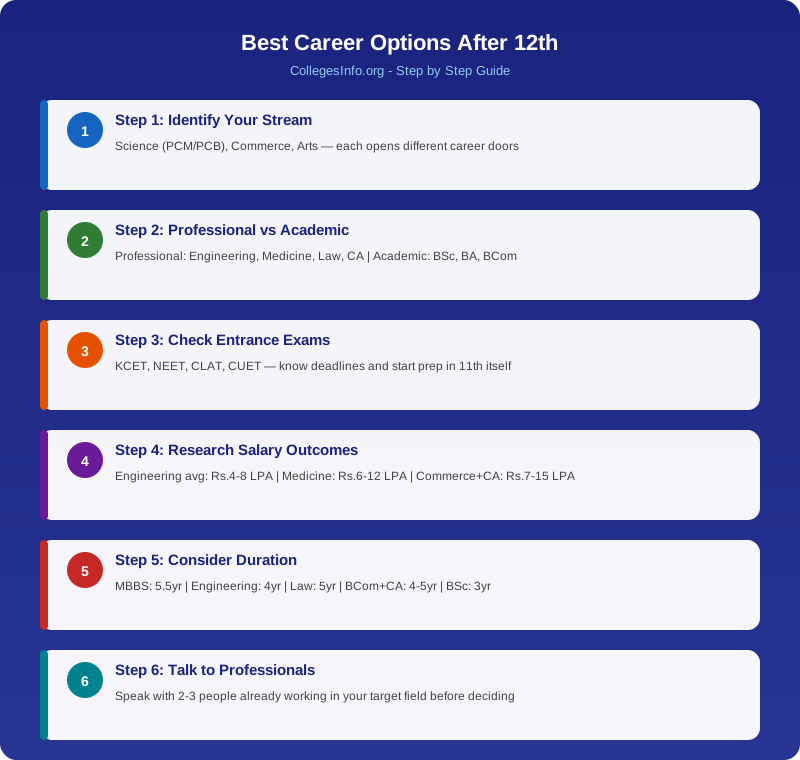
Highest paying paths: B.Tech CSE (Rs 6-40 LPA), MBBS+MD (Rs 15-50 LPA), CA (Rs 7-15 LPA), BBA+MBA from top institute (Rs 8-20 LPA), and B.Des UX/UI (Rs 6-15 LPA). Engineering CSE and Medicine have the highest ceilings.
Which stream has best career options – Science, Commerce or Arts?
Science offers the widest career options including engineering, medicine, pure sciences and IT. Commerce leads to CA, finance and business careers. Arts opens doors to civil services, law, journalism and social sciences. Choose based on interest, not just salary.
Is diploma or degree better after 12th?
Degree (3-4 years) offers better long-term career prospects and higher salaries. Diploma (2-3 years) offers quicker job entry and lower cost. For technical fields, diploma + lateral entry to degree is a cost-effective path.
Need help with admission?
CollegesInfo.org helps students secure admission to colleges they are eligible for under that college's actual published criteria. Chat with us on WhatsApp or explore admission assistance.
About This Guide
This article is written and maintained by L K Monu Borkala, founder of CollegesInfo.org and OneCity Technologies Pvt Ltd. L K Monu Borkala has been publishing Karnataka education directories since 2006 and covering college admissions data since 2019 through CollegesInfo.org – from KCET counselling to NEET seat selection to MBA programme choices. CollegesInfo.org was built to give Karnataka families the same honest, data-backed guidance that was previously only available through expensive consultants or personal connections.
Information on this page is compiled from official sources including KEA (Karnataka Examinations Authority), RGUHS, VTU, NMC, PCI, INC, and direct feedback from students and families who have gone through the admission process. If you find anything outdated or incorrect, WhatsApp us at +91 6363 330 233 and we will update it.
Need personalised advice for your specific situation – rank, category, budget, or career goal? Our counselling is free. WhatsApp us directly and we will respond within 24 hours.
Official Sources: Information on this page is sourced from University Grants Commission (UGC) and All India Council for Technical Education (AICTE), the primary regulatory bodies governing this subject in India.