Karnataka has 44 BDS colleges affiliated to RGUHS, making it one of India's top dental education destinations. BDS is a 5-year programme (4 years plus a mandatory 1-year rotating internship) leading to a dental surgeon career, and admission runs entirely through NEET UG – there's no separate KCET route for dental, unlike engineering or agriculture.
Last Updated: August 26, 2026
🎯 Use the Free NEET Rank Predictor – Enter your NEET score and category to instantly see which dental colleges you can realistically get. No login required. Try NEET Predictor →
Top BDS Dental Colleges in Karnataka 2027
| College | City | Affiliation | Seats | Govt Fee/Yr | Mgmt Fee/Yr |
|---|---|---|---|---|---|
| Manipal College of Dental Sciences | Manipal | MAHE (Deemed) | 100 | ₹1,60,000 | ₹6,50,000 |
| Manipal College of Dental Sciences | Mangaluru | MAHE (Deemed) | 100 | ₹1,60,000 | ₹6,50,000 |
| JSS Dental College and Hospital | Mysuru | JSSAHER (Deemed) | 100 | ₹1,10,000 | ₹4,00,000 |
| Father Muller Dental College | Mangaluru | RGUHS | 100 | ₹1,20,000 | ₹4,50,000 |
| Dayananda Sagar College of Dental Sciences | Bengaluru | RGUHS | 100 | ₹1,20,000 | ₹4,80,000 |
| Oxford Dental College | Bengaluru | RGUHS | 100 | ₹1,00,000 | ₹4,20,000 |
| SDM College of Dental Sciences | Dharwad | RGUHS | 100 | ₹80,000 | ₹3,80,000 |
| Bapuji Dental College and Hospital | Davangere | RGUHS | 100 | ₹85,000 | ₹4,00,000 |
| KLE VK Institute of Dental Sciences | Belagavi | KLE DU (Deemed) | 100 | ₹90,000 | ₹4,20,000 |
| Vydehi Institute of Dental Sciences | Bengaluru | RGUHS | 100 | ₹1,10,000 | ₹4,50,000 |
| A.J. Institute of Dental Sciences | Mangaluru | RGUHS | 100 | ₹1,00,000 | ₹4,30,000 |
| Yenepoya Dental College | Mangaluru | Yenepoya DU (Deemed) | 100 | ₹1,20,000 | ₹5,00,000 |
| Government Dental College and Research Institute | Bengaluru | RGUHS (Government) | 60 | ₹25,000–40,000 | No management quota |
NEET Cutoff for BDS Karnataka 2024-25
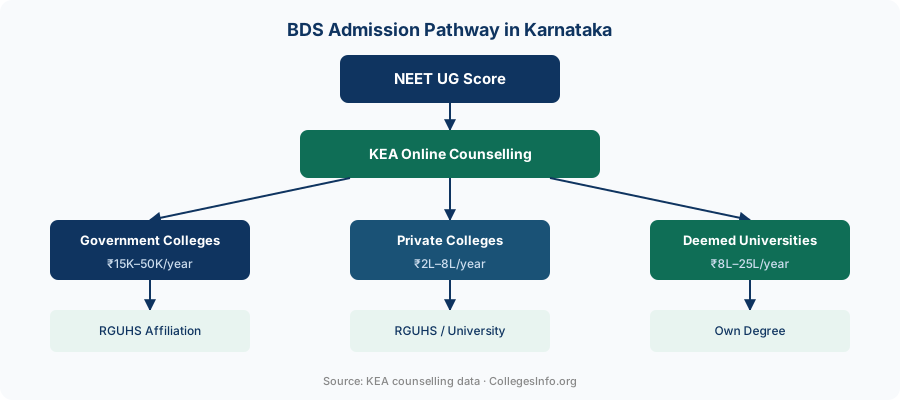
BDS admission process from NEET score to college allotment through KEA
| Category | NEET Marks (approx) | Approx Rank |
|---|---|---|
| General (GM) | 450–520 | 50,000–1,20,000 |
| OBC | 380–440 | 1,20,000–2,50,000 |
| SC | 320–380 | 2,50,000–4,50,000 |
| ST | 280–340 | 4,50,000–6,00,000 |
| Management Quota | 200–300 | Varies significantly by college |
These are approximate, recent-trend figures for government-quota seats specifically – deemed university seats (Manipal, JSS, KLE, Yenepoya) run separate, generally higher cutoffs for their own quota seats. Always verify current-year figures against official RGUHS/KEA data before finalising your choices.
BDS Fees in Karnataka – By College Type
| Type | Annual Fees Range | Total 5-Year Cost |
|---|---|---|
| Government BDS (RGUHS) | ₹25,000–40,000 | ₹1.25–2 lakh |
| Government-quota seats at RGUHS private colleges | ₹50,000–1,20,000 | ₹2.5–6 lakh |
| Management quota at RGUHS private colleges | ₹3,00,000–6,00,000 | ₹15–30 lakh |
| Deemed university BDS (management quota) | ₹6,00,000–12,00,000 | ₹30–60 lakh |
| MCODS Manipal (MAHE) management quota | ₹8,00,000–12,00,000 | ₹40–60 lakh |
BDS Admission Process in Karnataka 2027
All BDS admissions in Karnataka require a valid NEET UG score – there's no alternative entrance route. After NEET results, two parallel counselling processes run simultaneously, and registering for both is important:
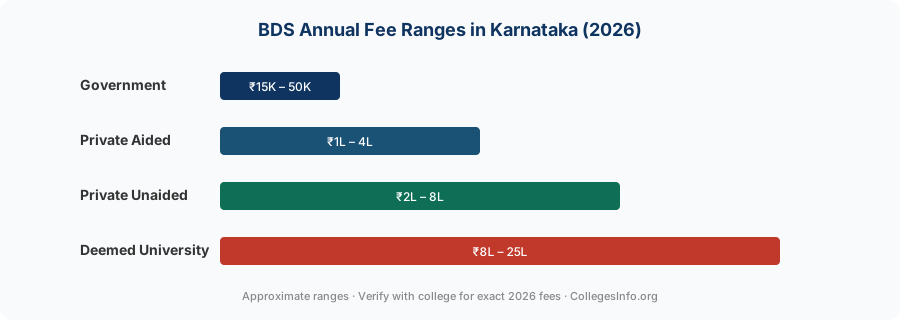
Annual BDS fee ranges by college type in Karnataka for 2026
- Appear for NEET UG (conducted by NTA, typically in May)
- Register for KEA Karnataka state counselling – covers state-quota seats at RGUHS-affiliated colleges, including government college seats
- Separately register for AACCC counselling – the All India Association for Christian Colleges counselling process handles NRI quota and certain deemed-university seats that don't come through KEA. Missing this registration means losing access to that entire quota category, regardless of your NEET rank.
- Document verification at your assigned KEA centre
- Choice filling – rank dental colleges in your genuine order of preference
- Seat allotment based on your NEET rank, category, and choice order
- Fee payment and reporting to your allotted college by the deadline
The KEA BDS counselling schedule generally mirrors KEA's MBBS counselling timeline, typically starting a couple of months after NEET results. The National Medical Commission's Dental Council structure now sits under NMC oversight following recent regulatory changes – verify current approval status for any specific college directly with RGUHS or NMC before finalising your decision, since accreditation status can change between academic years.
Detailed College Profiles – Top Dental Colleges in Karnataka
1. Manipal College of Dental Sciences, Manipal
Manipal's dental wing has been producing some of India's finest dentists since 1965. It's one of the few dental colleges in the country with dedicated research labs for biomaterials, digital dentistry, and implantology. The 200-chair dental hospital sees over 400 patients daily – students get unmatched chairside experience from the third year. The college runs a separate CAD/CAM lab for prosthodontics that most colleges don't have.
Key details: Deemed university, 100 BDS seats. Government quota fee ₹1,60,000/year – management quota ₹6,50,000/year. MDS programmes in all 9 specialities available in-house. Placement rate for BDS graduates runs around 80% – top recruiters include Clove Dental, Apollo White Dental, and other corporate dental chains. Many graduates pursue MDS at Manipal itself.
2. JSS Dental College and Hospital, Mysuru
JSS Mysuru is consistently among the top-ranked dental colleges nationally by NIRF. The college's strongest suit is its community dentistry programme – students participate in rural dental camps across Chamundi Hill villages, gaining real-world experience that's hard to find elsewhere. The attached JSS Dental Hospital is a 300-chair facility with separate departments for each speciality.
Key details: JSSAHER (deemed university), 100 BDS seats. Government quota ₹1,10,000/year. Strong MDS programmes – the orthodontics and oral surgery departments are especially well-regarded. Mysuru's affordable living costs make this a good value option compared to Bengaluru colleges.
3. SDM College of Dental Sciences, Dharwad
SDM Dharwad is North Karnataka's premier dental institution. The college has one of the best oral pathology museums in the state – a genuine educational asset. Clinical training starts early, and the 200-chair hospital handles complex cases from across the region. The faculty is strong in conservative dentistry and endodontics, with several nationally published researchers teaching here.
Key details: RGUHS affiliated, 100 BDS seats. Government quota ₹80,000/year – one of the most affordable quality dental colleges in Karnataka. Management quota ₹3,80,000/year. MDS available in 7 specialities. Strong North Karnataka alumni network – many successful private practitioners in the Hubballi-Dharwad-Belagavi region studied here.
4. Dayananda Sagar College of Dental Sciences, Bengaluru
DSU Dental is popular among Bengaluru students who want quality education without leaving the city. The college is part of the larger Dayananda Sagar campus in Kumaraswamy Layout – students benefit from shared infrastructure including a modern library, sports facilities, and cafeteria. The dental hospital handles 200+ patients daily and has recently upgraded its digital imaging equipment.
Key details: RGUHS affiliated, 100 BDS seats. Government quota ₹1,20,000/year – management ₹4,80,000/year. The college's location in South Bengaluru means easy access to major hospitals for rotations. Placements are steady – roughly 60–70% of graduates find positions within three months of completing internship.
5. Bapuji Dental College and Hospital, Davangere
Bapuji is one of the oldest private dental colleges in Karnataka, established in 1982. The college has a well-established 250-chair hospital and separate clinics for each department. What makes Bapuji stand out is its affordability – Davangere's lower cost of living combined with reasonable fees makes the total 5-year BDS cost significantly cheaper than comparable Bengaluru options.
Key details: RGUHS affiliated, 100 BDS seats. Government quota ₹85,000/year – management ₹4,00,000/year. MDS available in 6 specialities. The college runs community dental programmes in nearby rural areas. Many graduates go on to open successful private practices in tier-2 Karnataka cities.
6. Government Dental College and Research Institute, Bengaluru
The only fully government-funded dental college in Karnataka, GDC Bengaluru offers the cheapest BDS education in the state. Admission runs purely through NEET and KEA counselling – no management quota exists here at all. The college is attached to Victoria Hospital and Vanivilas Hospital, giving students access to a large patient pool that private colleges can't match. The trade-off: infrastructure is older compared to newer private colleges.
Key details: Government college, 60 BDS seats. Annual fee approximately ₹25,000–40,000. Admission only through NEET and KEA counselling – extremely competitive given the low seat count and near-zero fees. Faculty is experienced, though the student-to-chair ratio can be challenging at peak hours. Graduates from GDC Bengaluru carry a strong reputation in the dental community, and many go on to clear MDS entrance exams.
Career After BDS
BDS graduates in Karnataka typically follow one of four broad paths, and it's worth thinking through which fits your goals before you're deep into your final year:
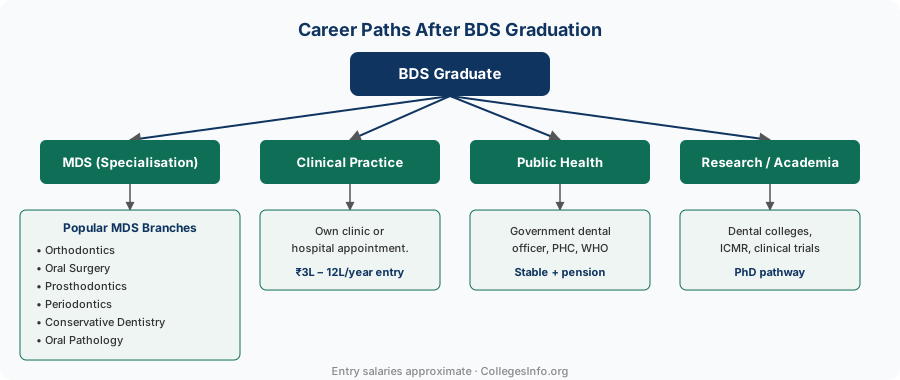
- Private practice: The most common route – setting up or joining a clinic after internship (or after MDS specialisation). Earnings vary enormously by location and experience, from roughly ₹50,000 to ₹3,00,000+ per month once established, though the first 2-3 years typically involve building a patient base rather than immediate high income.
- Government dentist posts: Through KPSC recruitment, with salaries typically in the ₹55,000–75,000/month range plus government benefits. Check kpsc.kar.nic.in for current notifications.
- Corporate dental chains: Clove Dental, Sabka Dentist, Apollo White Dental, and similar chains are expanding across Karnataka, typically offering ₹5–8 LPA for BDS graduates with structured career progression.
- MDS specialisation: Nine recognised specialities – Orthodontics, Oral Surgery, Periodontics, Prosthodontics, Pedodontics, Conservative Dentistry, Oral Medicine, Public Health Dentistry, and Oral Pathology. NEET MDS is the entrance exam, and a specialisation changes your earning trajectory and practice options compared to a general BDS.
A smaller but real path worth mentioning: dentists who pursue practice abroad (UK, Australia, Canada) typically need to clear that country's own licensing exam on top of their BDS – this is a multi-year process, not a quick transition, and worth researching specifically rather than assuming your Indian BDS transfers automatically.
Funding Your BDS Education
Given how wide the fee range runs – from roughly ₹25,000/year at the government college to ₹12 lakh/year at deemed universities – financial planning deserves real attention alongside your college shortlist. If you're SC, ST, OBC, or minority-category, our SSP scholarship guide covers Karnataka's state scholarship system, which explicitly covers dental and other medical-adjacent post-matric courses. If a private or deemed-university seat is your realistic option and the fee gap is substantial, our education loan guide – while written with engineering examples, covers bank comparison principles that apply equally to dental education financing.
Comparing Dental Against Other NEET-Based Options
If you're still weighing BDS against other NEET-based streams rather than having fully committed, it's worth comparing realistic outcomes rather than defaulting to whichever option your current score happens to qualify for. Our complete NEET cutoff guide for Karnataka medical colleges covers MBBS cutoffs across the same score range this guide covers for dental, and our private MBBS colleges guide covers the medical-side fee comparison in similar depth. If your result has just come in and you're still mapping out your full range of options across streams, our complete action plan for after your NEET result is a useful starting point before narrowing down to dental specifically.
Planning for MDS Early
If postgraduate specialisation is likely part of your plan rather than a distant maybe, it's worth thinking about this well before your final BDS year. NEET MDS is competitive, and colleges with strong existing programmes in your target speciality – visible through the details in the profiles above – offer a real head start if you're able to pursue MDS at the same institution, since faculty familiarity and existing clinical exposure in that specific department both compound in your favour. Building research exposure, seeking out mentorship from faculty in your area of interest, and getting comfortable with the clinical skills specific to your target speciality during your BDS years, rather than treating those years as pure preparation for a separate later exam, tends to produce meaningfully stronger MDS outcomes than starting that focus only after graduating.
Government, Private, and Deemed University – Which Fits Your Situation?
The three broad categories of dental college in Karnataka each suit a different situation, and it's worth being honest with yourself about which applies rather than defaulting to whichever name sounds most prestigious. The single government college (GDC Bengaluru) offers by far the lowest cost but has only 60 seats total and is correspondingly the most competitive – realistically requiring a strong NEET score well above the general private-college government-quota range. RGUHS-affiliated private colleges (SDM Dharwad, Bapuji Davangere, Dayananda Sagar, Oxford, and similar) offer a reasonable middle ground: government-quota seats at these colleges run considerably higher than the single government college but still well below deemed-university fees, while management-quota seats provide a real option if your NEET score doesn't clear the government-quota cutoff and you or your family can manage the higher fee. Deemed universities (Manipal, JSS, KLE, Yenepoya) sit at the top of both the fee range and, generally, the infrastructure and research-exposure range – excellent facilities and strong placement networks, but management-quota fees that run into several tens of lakhs across the five-year programme, which is a serious financial commitment that deserves careful family discussion before you commit to it.
What to Actually Check Before Choosing a Specific College
Beyond the fee and cutoff tables above, a few practical factors are worth confirming directly with any college you're seriously considering, since they vary meaningfully even among colleges that look similar on paper:
- Patient volume at the attached hospital – more patients means more hands-on clinical exposure by your third and fourth years, which matters enormously for your actual competence by graduation.
- Which MDS specialities the college offers in-house – if you already have a specialisation in mind, a college with a strong existing programme in that specific area gives you a real advantage if you plan to pursue MDS at the same institution.
- Hostel and safety infrastructure, particularly for outstation and international students, given how many of Karnataka's dental colleges draw students from across India and abroad.
- Recent NAAC or NBA accreditation status specifically, rather than assuming a college's reputation from several years ago still reflects its current standing.
Frequently Asked Questions
How many dental colleges are in Bangalore?
Bengaluru has approximately 18–20 dental colleges, the highest concentration in Karnataka, including Dayananda Sagar, Oxford Dental College, Vydehi, and the Government Dental College and Research Institute.
What NEET score is needed for Manipal Dental?
Government quota typically needs a NEET score in the 480–520+ range for General category. Management quota seats are accessible at meaningfully lower scores, generally in the 250–350 range, though at substantially higher fees.
Is BDS worth it in 2027?
For students interested in dentistry, yes – cosmetic dentistry and corporate dental chains are growing steadily in India, and BDS graduates can build a profitable practice within roughly 5 years of graduating, particularly with an MDS specialisation. It's a meaningfully longer path to strong earnings than some other professional degrees, so it suits students prepared for that timeline rather than seeking immediate high income.
What's the difference between KEA counselling and AACCC for BDS?
KEA handles Karnataka state-quota seats at RGUHS-affiliated colleges, including government college seats. AACCC separately handles NRI quota and certain deemed-university seats. You need to register for both if you want access to both quota categories – registering for only one means losing access to the other entirely, regardless of your NEET rank.
Can I get a BDS seat with a NEET score below 300?
Government-quota seats become very difficult below roughly 300–320 marks, but management-quota seats at private and deemed-university colleges are accessible at lower scores, generally down to the 200–250 range, at correspondingly higher fees. Check current-year cutoffs for your specific target colleges rather than assuming a fixed threshold.
What is DCI's role in BDS colleges now?
The Dental Council of India's regulatory functions now sit under the National Medical Commission's oversight structure following recent reforms. Verify a college's current approval status directly through NMC or RGUHS rather than assuming older DCI-era approval information is still current.
Need help figuring out which dental colleges are realistic for your NEET score and category? WhatsApp +91 6363 330 233 and we'll help you build a realistic shortlist. We help you get the best admission to your preferred colleges without hassle.
Information on this page is compiled from official sources including RGUHS, NMC, and KEA, alongside direct feedback from students and families who've gone through the admission process. If you find anything outdated or incorrect, WhatsApp us and we'll update it. Published by L K Monu Borkala, founder of OneCity Technologies – publishing Karnataka education directories since 2006.
Official Sources: Information on this page is cross-checked against the National Medical Commission (NMC) and Rajiv Gandhi University of Health Sciences (RGUHS), the primary regulatory bodies governing dental education in Karnataka.
Need help with admission?
CollegesInfo.org helps students secure admission to colleges they are eligible for under that college's actual published criteria. Chat with us on WhatsApp or explore admission assistance.
About the author
OneCity Technologies Pvt. Ltd began in 2006 publishing an annual print education directory for Karnataka students and parents. As demand grew, OneCity launched an education portal in 2019 to bring that same directory information online, and in 2025 relaunched as CollegesInfo.org, a comprehensive Karnataka college directory covering 1,500+ institutions across engineering, medical, management, arts, commerce, and more. Founder L K Monu Borkala brings 20+ years of business experience and 19 years of work across various education-sector services. CollegesInfo.org's content is built from publicly available KEA, NMC, AICTE, and university data, cross-checked against official sources wherever possible. CollegesInfo.org's admission assistance service helps students secure admission to colleges they are eligible for under that college's actual published criteria. We help you get the best admission to your preferred colleges without hassle.