Quick Facts: Fashion Design Colleges in Karnataka
| Duration | 4 years (B.Des) at most institutions; some 3-year BSc Fashion Design options exist |
|---|---|
| Flagship government institute | NIFT Bangalore (campus established 1997, NIFT nationally founded 1986, statutory since 2006) |
| Entrance routes | NIFT Entrance Exam (GAT + CAT + Situation Test) for NIFT; SMEAT, Pearl DAT, MET, or college-specific tests for private institutes |
| Typical fees | NIFT: roughly Rs 6-14 lakh total for the full B.Des programme; private institutes often under Rs 10 lakh total, varying widely |
| Where it's concentrated | Overwhelmingly Bengaluru, with a smaller spread of options in Manipal, Udupi, and the Dakshina Kannada coastal belt |
If you're researching fashion design in Karnataka, the honest starting point is this: Bengaluru is where the real depth is. NIFT Bangalore anchors the government side, a genuine cluster of well-known private institutes (Pearl Academy, Srishti Manipal, JD Institute, Nitte's NSFTID) cover the private side, and a handful of options exist outside the city if relocating to Bengaluru isn't practical for you.
What Fashion Design Actually Covers
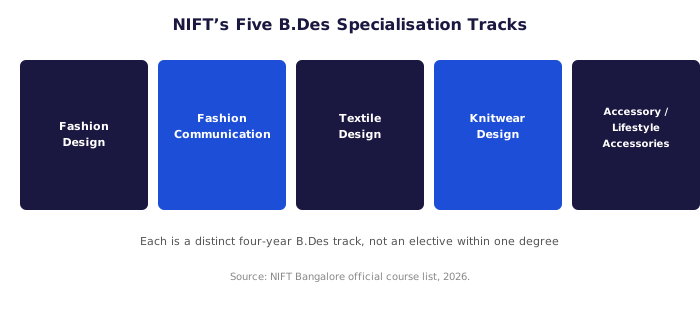
Fashion design coursework spans garment construction and pattern-making, textile and material science, design illustration and rendering, fashion history and trend forecasting, and increasingly, digital fashion tools and sustainable design practices. Depending on the specific programme, you might specialise further into Fashion Communication (styling, editorial, brand storytelling), Accessory Design, Knitwear Design, or Textile Design rather than general apparel design alone – these specialisations matter more at NIFT specifically, where they're offered as distinct four-year B.Des tracks rather than electives within a single fashion design degree.
NIFT Bangalore: The Government Anchor
NIFT Bangalore's campus was established in 1997, three years before NIFT itself became a statutory, degree-granting institute under an act of the Indian Parliament in 2006. NIFT nationally was founded in 1986 in Delhi in collaboration with the Fashion Institute of Technology, New York, and now runs 19 campuses across India, with Varanasi the most recent addition in 2024. NIFT Bangalore offers B.Des programmes in Fashion Design, Textile Design, Knitwear Design, Fashion Communication, and Fashion & Lifestyle Accessories, plus a B.F.Tech in Apparel Production and postgraduate options including Master of Fashion Management (MFM) and M.Des. Current admission notices, circulars, and campus updates are published directly on NIFT Bengaluru's own official campus page, worth checking before you finalise application timelines.
Architecture is a useful comparison point if you're weighing creative-aptitude fields against each other: like fashion design, architecture admissions in Karnataka run through a dedicated aptitude test (NATA) rather than KCET or NEET, so both fields share a similar portfolio-and-aptitude-driven admissions logic even though the career destinations differ substantially.
Admission runs through the NIFT Entrance Exam – a General Ability Test (GAT) and Creative Ability Test (CAT), followed by a Situation Test and personal interview for shortlisted candidates. This is a competitive, multi-stage process: recent B.Des cutoffs at NIFT Bangalore have ranged from a rank of around 135 for the most competitive specialisation (Fashion Communication) to around 900 for less competitive ones (Accessory Design) in the General category, so which specific specialisation you're targeting matters as much as your overall preparation.
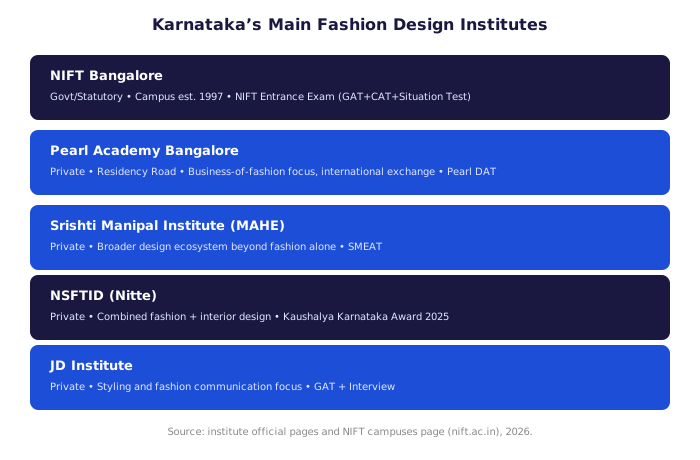
Comparing Your Main Options
| Institute | Type | Entrance route | Notable strength |
|---|---|---|---|
| NIFT Bangalore | Government (autonomous, statutory) | NIFT Entrance Exam (GAT+CAT+Situation Test) | Strongest industry pipeline, national brand recognition, NIRF-ranked |
| Pearl Academy Bangalore | Private | Pearl DAT | Business-of-fashion focus, international exchange options |
| Srishti Manipal Institute of Art, Design and Technology | Private (MAHE) | SMEAT | Broader design ecosystem beyond fashion alone |
| Nitte School of Fashion Technology & Interior Design (NSFTID) | Private (Nitte group) | College-specific | Combined fashion and interior design specialisation, strong skills-competition track record |
| JD Institute | Private | GAT + interview | Styling and fashion communication focus, active runway show culture |
A quick word on how to actually compare these: NIFT gives you the strongest national brand and industry pipeline, but it's also the most competitive to get into. Private institutes like Pearl Academy and Srishti Manipal offer a different pedagogical approach – more emphasis on business, portfolio-building, and international exposure – which suits some students better even where a NIFT seat is available. Don't default to NIFT purely on reputation without considering whether a private institute's specific teaching style and specialisation options fit your actual interests better.
Beyond Bangalore: Real Options If You Don't Want the City
While Bengaluru has by far the widest concentration of fashion design options, a smaller but genuine set of choices exists elsewhere in Karnataka. Manipal Academy of Higher Education (MAHE) and MSAP Manipal offer B.Des programmes in Fashion Design at the Manipal campus. Udupi College of Professional Studies offers a BSc Fashion Design option. In the Dakshina Kannada coastal belt, Alva's College in Moodubidire and Yenepoya University in Mangaluru both list fashion programmes. These options tend to mean lower living costs and a quieter campus environment than Bengaluru, though you should ask directly about industry tie-ups, visiting faculty, and internship support in Bangalore or Mumbai if strong industry exposure matters to your decision, since a smaller-city campus won't have Bengaluru's built-in proximity to fashion brands and retail headquarters.
What Studying Fashion Design Actually Looks Like
Expect a studio-heavy four years: garment construction and pattern-making labs, design studios for sketching and rendering, and increasingly, digital design software training alongside traditional hand-drafting skills. Portfolio development is central throughout the programme, not just a final-year add-on – most serious fashion design programmes, NIFT included, expect you to be building toward a strong final portfolio of original collections, tech packs, and presentation work from your very first year. Industry exposure varies by institute: NIFT and Pearl Academy both emphasise structured industry visits and internships, while a college outside Bengaluru may require more of your own initiative to seek out internship opportunities in the city during breaks.
If you're deciding between fashion design and the closely related applied science degrees covered elsewhere on this site – Food Technology, Genetics, or Environmental Science – the distinction is simple: fashion design is a creative, portfolio-driven discipline assessed through studio work and design aptitude, not through a science-stream entrance exam or lab-based curriculum – a different admissions process and daily academic experience from any of the BSc-track degrees.
Funding Your Degree
NIFT offers its own scholarship schemes for meritorious students based on entrance exam performance and family income criteria – the "SARTHAK" financial assistance scheme is one specific example, with income ceiling thresholds that determine eligibility. If you're an SC, ST, OBC, or minority-category student, Karnataka's State Scholarship Portal (SSP) – covered in our SSP scholarship guide – is also worth checking for design and creative-field eligibility, alongside any institute-specific scholarships private colleges may offer.
Career Paths and Realistic Salary Ranges
Fashion design graduates in Karnataka move into fashion design roles at apparel and retail brands, fashion styling and editorial work, textile and accessory design, fashion communication and brand marketing roles, merchandising and buying positions, and increasingly, fashion-tech and e-commerce roles given Bengaluru's strength as a tech and e-commerce hub. NIFT Bangalore's own placement data shows recruiters including Titan, Flipkart, Amazon, Louis Vuitton, Tommy Hilfiger, and FabIndia, with average packages reported around Rs 7-8 lakh per year and highest packages around Rs 12 lakh in recent placement cycles.
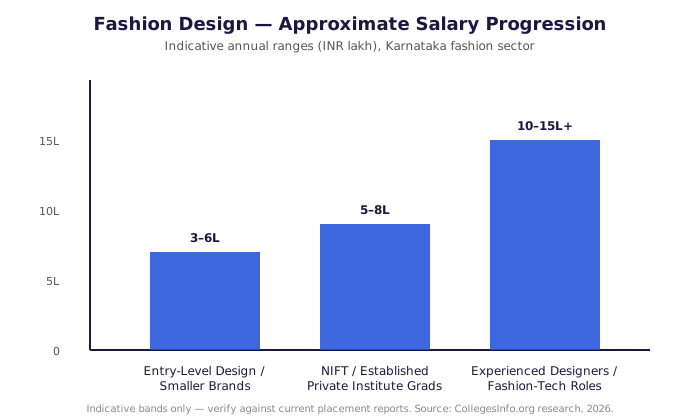
Salary ranges vary considerably by institute, specialisation, and employer, so treat these as approximate bands: entry-level design or merchandising roles at smaller brands or private institutes' graduates typically start around Rs 3-6 lakh per year, NIFT graduates and those from well-regarded private institutes often start somewhat higher, in the Rs 5-8 lakh range on average, and experienced designers, brand leads, or those who move into fashion-tech and e-commerce roles can move into the Rs 10-15+ lakh range over time. These figures should be cross-checked against current placement reports for the specific institute you're considering, since fashion industry compensation varies significantly by brand tier and role.
NIFT vs Private Institutes: Making the Actual Decision
If you can compete for a NIFT seat – and the entrance exam is demanding enough that this isn't guaranteed regardless of interest level – NIFT's national brand recognition and structured industry pipeline make it the strongest single option in Karnataka for fashion design specifically. But a NIFT seat isn't accessible to everyone, and it isn't automatically the right fit either: if you're more drawn to the business and international-exposure angle Pearl Academy emphasises, or you want to combine fashion with interior design the way NSFTID structures its programmes, a well-regarded private institute can be a better fit than forcing a NIFT application purely for the brand name. Be honest with yourself about which specific specialisation and teaching style actually interests you before ranking institutes by reputation alone.
Government Support Behind India's Fashion and Textile Sector
It's worth knowing that fashion and textile education in India sits within an active government policy push right now, which shapes career opportunities for graduates. The Ministry of Textiles, which oversees NIFT directly, has also driven the PM MITRA (Mega Integrated Textile Region and Apparel) scheme, aimed at building integrated textile manufacturing parks across India – including one of the seven approved sites at Kalaburagi, Karnataka – a push that's expanding demand for trained design, production, and merchandising professionals across the textile and apparel value chain, not just at the design-studio end of the industry. NIFT's own involvement in projects like developing India-specific body-size charts and its collaboration with the Indian Army on camouflage uniform design shows the institute's reach extends well beyond conventional runway fashion into technical textiles, defence applications, and standards-setting work – broader career territory than "fashion design" might suggest at first glance.
NEP 2020 and Design Education
Under the National Education Policy 2020's four-year undergraduate framework, several Karnataka design institutes have moved toward multidisciplinary structures with multiple exit points, similar to other degree programmes across the state. For fashion design specifically, the four-year structure typically concentrates a final capstone or graduation collection project in the last year – your culminating portfolio piece, often showcased at an end-of-year fashion show that doubles as an industry showcase and networking opportunity. If you're comparing institutes, ask specifically how their final-year graduation show and portfolio requirements are structured, since this is one of the most career-relevant parts of the entire programme.
Who Should Actually Choose Fashion Design
This path suits students with genuine design aptitude and creative drive who also want a career with visible, tangible creative output – a finished garment, a styled shoot, a brand campaign – rather than purely analytical or lab-based work. It's a demanding, portfolio-driven field: expect your work to be critiqued regularly, expect long studio hours during peak project periods, and expect that raw creative talent alone isn't enough without discipline in construction technique, deadlines, and increasingly, digital design tools. If you're drawn to fashion but more interested in the business, buying, or merchandising side than hands-on design work, it's worth researching Fashion Communication or Apparel Merchandising tracks specifically rather than assuming a general Fashion Design B.Des is automatically the right specialisation. If it's the broader creative-and-service industry that appeals to you rather than fashion specifically, hotel management is worth researching too, as a related but distinct vocational path with its own separate entrance exam (NCHMCT JEE).
Campus Life and Gender Representation
Fashion design programmes in Karnataka, and NIFT Bangalore specifically, tend to see strong representation of women students, consistent with broader patterns in Indian design education. NIFT Bangalore provides hostel accommodation only to girl students according to the institute's own admissions information – male students should confirm accommodation arrangements directly with the institute if hostel housing is a factor in your decision. Private institutes vary in their own hostel and accommodation offerings, so check directly with each specific college rather than assuming NIFT's policy applies elsewhere.
Before You Enrol: A Quick Verification Checklist
Given how much variation exists between NIFT and Karnataka's various private fashion institutes, verify these specifics directly before committing: the exact specialisation track (Fashion Design versus Fashion Communication versus Textile Design versus Accessory Design) and its specific cutoff or entrance requirements for the year you're applying, since these vary considerably even within the same institute; current total fees including any hidden costs like material and studio fees, which can add up substantially in a studio-heavy discipline like this one; the institute's actual placement data for your specific specialisation rather than an institute-wide average, since design specialisations can have very different placement outcomes; and whether the institute's industry tie-ups and internship support extend into Bengaluru's fashion and retail scene if you're not already based in the city. None of this should be assumed from marketing material alone – ask current students or recent graduates directly if you can.
Understanding NIFT's Specific Specialisations
Because NIFT structures its B.Des offerings as distinct four-year tracks rather than electives within one broad fashion design degree, it's worth understanding what each specialisation actually leads toward before you rank your preferences on the entrance exam application. Fashion Design is the broadest, most traditional track, covering apparel design and construction across categories. Fashion Communication leans toward styling, editorial work, brand storytelling, and visual merchandising – a strong fit if you're more drawn to the creative-direction and media side of fashion than hands-on garment construction. Textile Design focuses on fabric development, print and pattern design, and material innovation – relevant if you're interested in the raw-material end of the industry rather than finished garments. Knitwear Design specialises specifically in knitted fabric and garment construction, a distinct technical skill set from woven-fabric apparel design. Accessory Design and Fashion & Lifestyle Accessories cover bags, footwear, jewellery, and related product categories rather than clothing itself. Each of these leads toward meaningfully different career destinations, so research the actual day-to-day coursework and career outcomes for your specific specialisation of interest rather than choosing based on overall institute reputation alone.
Karnataka's Fashion Design Landscape in the National Picture
Bengaluru's position within India's fashion education landscape is strong but not unique – NIFT campuses exist in 19 cities across India, and other major hubs like Delhi, Mumbai, and Chennai have their own comparable ecosystems of both NIFT campuses and private design institutes. What makes Bengaluru distinctive within that broader national picture is its overlap with India's technology and e-commerce industry specifically – fashion-tech, online retail, and digital fashion roles are a larger and more accessible career path for Bengaluru-based fashion graduates than in most other Indian cities, simply because of the concentration of e-commerce and tech companies already headquartered there. If a career blending fashion and technology specifically interests you – as opposed to traditional runway or garment-manufacturing careers – Bengaluru's ecosystem gives you a genuine structural advantage over most other Indian fashion education hubs.
Karnataka's Textile Heritage: A Genuine Local Advantage
One thing worth knowing if you're studying fashion or textile design in Karnataka specifically: the state has a genuine, centuries-deep textile heritage that gives local design education real cultural and material context most other regions can't offer as directly. Mysore silk, produced under the Karnataka Silk Industries Corporation (a Government of Karnataka enterprise) and protected as a Geographical Indication product, is one of India's most recognised silk traditions, and students interested in textile design or sustainable, craft-linked fashion have genuine access to this heritage industry in a way that's harder to replicate studying fashion in a city without a comparable textile tradition. Beyond silk, Karnataka's broader handloom and craft ecosystem – relevant to students drawn to sustainable and craft-led design specifically, as mentioned earlier regarding options outside Bengaluru – gives the state's fashion design education a distinctive regional grounding alongside Bengaluru's more contemporary fashion-tech and retail industry strengths.
Frequently Asked Questions
What entrance exam is required for NIFT Bangalore?
The NIFT Entrance Exam, comprising a General Ability Test (GAT) and Creative Ability Test (CAT), followed by a Situation Test and personal interview for shortlisted candidates for B.Des programmes.
Is NIFT Bangalore a government college?
Yes, NIFT Bangalore is part of the National Institute of Fashion Technology network, an autonomous statutory institute under the Ministry of Textiles, Government of India.
What's the difference between B.Des and B.F.Tech at NIFT?
B.Des programmes (Fashion Design, Textile Design, Knitwear Design, Fashion Communication, Accessory Design) focus on design and creative development, while B.F.Tech (Apparel Production) focuses on the technical and production side of garment manufacturing.
Can I study fashion design outside Bengaluru in Karnataka?
Yes, though options are more limited – Manipal Academy of Higher Education, Udupi College of Professional Studies, and colleges in the Dakshina Kannada coastal belt like Alva's College and Yenepoya University all offer fashion-related programmes.
Do private fashion design institutes in Karnataka offer good placements?
Several do – Pearl Academy reports strong placement outcomes and international exposure opportunities, and other established private institutes maintain genuine industry connections, though placement strength varies by institute and it's worth checking current, verifiable placement data directly rather than relying on marketing claims alone.
Is a portfolio required for admission to fashion design programmes?
Portfolio assessment is part of the selection process at several institutes, particularly private ones like Srishti Manipal, alongside entrance test performance and interviews – building design work before you apply is useful preparation regardless of which specific institute you're targeting.
Which NIFT Bangalore specialisation has the best career prospects?
It depends on your interests rather than one objectively "best" track – Fashion Communication tends to be the most competitive to get into (reflecting strong demand), while Accessory Design and Textile Design lead toward more specialised, often less saturated career niches. Research actual placement outcomes for your specific specialisation of interest.
Can I switch from fashion design to a business or management career later?
Yes, reasonably well – many fashion design graduates move into merchandising, buying, brand management, or fashion-tech roles that draw on design understanding without requiring hands-on design work, and NIFT's own Master of Fashion Management (MFM) postgraduate programme exists specifically to support this transition.
Last Updated: September 7, 2026
Need help with admission?