BSc Forensic Science is a 3-year undergraduate degree that trains students to apply scientific methods – DNA profiling, toxicology, ballistics, digital forensics, and questioned-document examination – to criminal investigations and legal proceedings. Admission in Karnataka is a mix of direct merit on Class 12 marks and college-specific entrance tests; NEET is not required, and Biology at the Class 12 level, while common, isn't universally mandatory.
| Course | BSc Forensic Science |
|---|---|
| Duration | 3 years (some colleges offer a 4-year Honours variant) |
| Regulatory Body | No single central regulator; individual colleges hold UGC/AICTE/NAAC recognition |
| Affiliating Bodies (Karnataka) | Bangalore University, Bangalore City University, or private/deemed university status |
| Eligibility | 10+2 (PCB, or PCM for some digital-forensics tracks), 50-55% aggregate |
| Entrance Exam | Varies by college – direct merit, or a college-specific test like Jain's JET. NEET not required. |
| Annual Fee Range | ₹60,000 (government-affiliated) to ₹3 lakh (deemed universities) |
| Entry-Level Salary Range | ₹3-6 lakh/year in private sector; government forensic roles follow pay-scale norms |
| Colleges in Karnataka | 15-20+ institutions, concentrated in Bengaluru |
🎯 Use the Free KCET Rank Predictor – Enter your rank and category to instantly see which science colleges you can get in 2026. No login required. Try KCET Predictor →
What Forensic Scientists Actually Do
Forensic scientists apply chemistry, biology, physics, and increasingly digital forensics to interpret evidence for the criminal justice system – DNA and serology analysis, toxicology screening, fingerprint and questioned-document examination, ballistics, and cybercrime and digital-evidence recovery. The degree is multi-disciplinary: expect coursework spanning criminology, forensic chemistry, forensic pathology, forensic psychology, and forensic odontology alongside core science subjects. It's evidence-focused, lab-heavy work that sits at the intersection of science and law, distinct from a general BSc or a law degree alone.
Karnataka Colleges Offering BSc Forensic Science
Bengaluru hosts the overwhelming majority of Karnataka's BSc Forensic Science options, spanning deemed universities with dedicated forensic labs and Bangalore University-affiliated colleges with more modest fee structures. Jain University runs one of the more established programmes, with DNA analysis, toxicology, and digital forensics labs and admission through its own JET entrance test. Kristu Jayanti College and Christ University both offer the degree with simulation-based practical modules. Dayananda Sagar University runs a research-oriented track with a dedicated cybercrime investigation unit and institutional ties to NIMHANS. Mount Carmel College, a long-established women's college affiliated to Bangalore University, and St. Joseph's College, also Bangalore University-affiliated, both offer more affordable routes into the same core qualification. Outside Bengaluru, JSS Academy of Higher Education and Research in Mysuru is a genuine option if you'd prefer studying outside the capital.
Eligibility for BSc Forensic Science
- 10+2 (PUC/CBSE/ISC or equivalent board) with Physics, Chemistry, and Biology as core subjects at most colleges
- Minimum 50-55% aggregate, varying by college and category
- Some colleges accept Mathematics in place of Biology specifically for digital-forensics-oriented tracks – confirm this directly with your shortlisted college, since it isn't universal
- NEET is not required for this course
Admission Process – Varies by College
Unlike NEET-governed medical courses, BSc Forensic Science admission in Karnataka follows no single statewide process. Most Bangalore University and Bangalore City University-affiliated colleges admit on Class 12 merit directly. Deemed universities more often run their own entrance test – Jain University's JET is the most commonly cited example among Karnataka options. A few colleges layer a group discussion or personal interview on top of merit or entrance-test shortlisting specifically for forensic science, given the field's investigative and communication demands. Always confirm your specific shortlisted college's current process directly rather than assuming one route applies statewide.
Fee Structure
Fees vary substantially by institution type. Bangalore University-affiliated government and aided colleges run considerably cheaper, often in the ₹60,000-1 lakh range for the full three years. Deemed universities with dedicated forensic labs – Jain, Christ, Dayananda Sagar, MS Ramaiah University of Applied Sciences – typically charge ₹1-3 lakh for the programme, reflecting investment in DNA, toxicology, and digital forensics lab infrastructure. Given this spread, compare total three-year cost rather than a single headline figure, and weigh it against the specific lab facilities and industry tie-ups each college actually offers.
Why This Field Has Genuine, Growing Demand
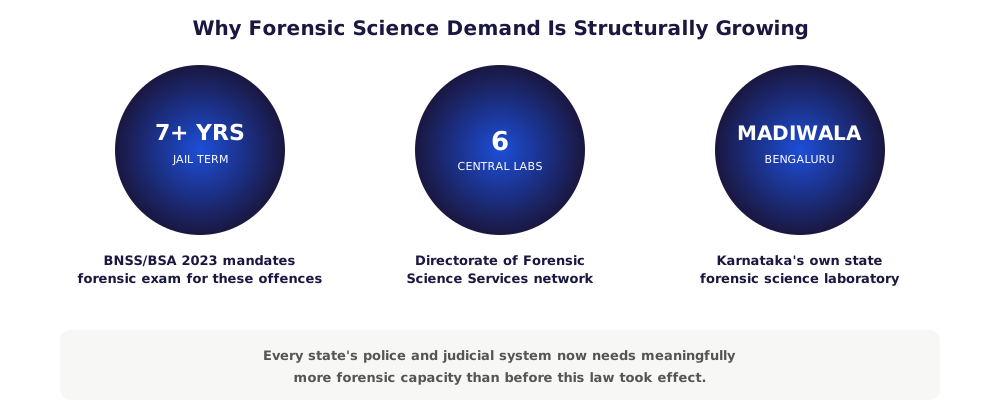
India's new criminal law framework – the Bharatiya Nagarik Suraksha Sanhita (BNSS) and Bharatiya Sakshya Adhiniyam (BSA), both in force since 2023 – now mandates forensic examination for offences punishable by seven or more years of imprisonment. This is a structural, legally-mandated demand driver, not a passing trend: every state's police and judicial system now needs meaningfully more forensic capacity than before this law took effect. Karnataka's own state forensic infrastructure, including the Karnataka FSL at Madiwala, Bengaluru, sits within this same expanding demand picture, alongside the central government's own network of Forensic Science Laboratories under the Directorate of Forensic Science Services, Ministry of Home Affairs. The National Crime Records Bureau, which tracks crime data nationally, publishes annual statistics that consistently show the sheer scale of cases requiring forensic input across Indian states.
Course Structure Across the Programme
Early semesters build foundational science – chemistry, biology, and physics with an introduction to criminology and the legal system's evidentiary requirements. Middle semesters move into the core forensic disciplines: forensic biology and serology, forensic chemistry and toxicology, and an introduction to digital forensics. Later semesters and lab-based practicals shift toward hands-on evidence-handling work – mock crime scene analysis, fingerprint and questioned-document examination, and increasingly, digital evidence recovery techniques. Several colleges, including Dayananda Sagar and Garden City University, specifically build dedicated mock crime scene or cybercrime labs into this later-stage practical training.
Specialisations Within Forensic Science
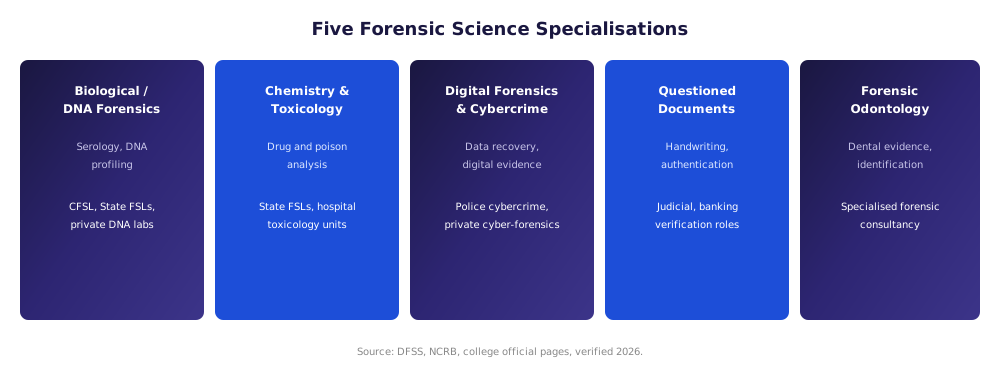
The field splits into distinct focus areas worth knowing before you commit to a specific college's strengths. Biological and DNA forensics covers serology, DNA profiling, and forensic biology – the backbone of most criminal evidence work. Forensic chemistry and toxicology covers drug and poison analysis. Digital forensics and cybercrime investigation, a fast-growing track given rising cybercrime case volumes, covers data recovery and digital evidence handling. Questioned document examination and forensic odontology are narrower, more specialised tracks relevant to specific investigative contexts. Ask any shortlisted college directly which of these it emphasises with dedicated lab infrastructure, rather than assuming uniform depth across all tracks.
Career Scope and Salary – An Honest Range
Career destinations split broadly into government and private sector. Government roles include the Central Forensic Science Laboratories (CFSL) under the Directorate of Forensic Science Services, State Forensic Science Laboratories, the CBI, NIA, Intelligence Bureau, Narcotics Control Bureau, and the Income Tax Department's investigation wing, alongside Karnataka-specific bodies like Karnataka FSL and the state police's Cyber Crime Wing. Private sector destinations include forensic and fraud-investigation practices at firms like Deloitte, KPMG, EY, and PwC, alongside private forensic labs and hospital medico-legal departments.
Salary reporting varies considerably by sector and specific role, so treat any single figure cautiously. Entry-level private-sector roles are commonly reported around ₹3-6 lakh per year, with specialised digital-forensics or corporate fraud-investigation roles at consulting firms often commanding more. Government forensic roles follow standard public-sector pay scales rather than open-market salary bands, and generally require clearing a separate recruitment exam beyond the base degree.
Who This Course Suits
- Students interested in the intersection of science and criminal justice, not just science broadly
- Those comfortable with detail-heavy, evidence-focused lab work over patient-facing or purely theoretical study
- Students specifically drawn to the growing digital forensics and cybercrime investigation space
- Anyone weighing a field with a genuine, legally-mandated demand driver behind it, given the BNSS/BSA 2023 reforms
Funding Your Forensic Science Education
If you're SC, ST, OBC, or minority-category, our SSP scholarship guide covers Karnataka's post-matric scholarship system. Given how much fees vary between Bangalore University-affiliated colleges and deemed universities with dedicated forensic labs, comparing total three-year cost against actual lab infrastructure – not just brand reputation – is worth the extra research time.
Postgraduate Options After BSc Forensic Science
Most students aiming for specialised or senior forensic roles pursue an MSc in Forensic Science afterward – several of the same Karnataka colleges offering the BSc also run the postgraduate route, allowing you to deepen expertise in a specific track (DNA analysis, digital forensics, forensic toxicology) rather than the broader undergraduate foundation. An MSc matters more here than in many science fields, since several senior government and private-sector forensic roles specifically prefer or require postgraduate specialisation. If academic research or forensic consultancy interests you longer-term, a PhD is a further option after the MSc, though this remains a smaller path compared to direct entry into government or private-sector forensic roles.
A Quick Verification Checklist Before You Choose a College
Given how much lab infrastructure and specialisation focus varies between Karnataka's forensic science colleges, verify these specifics directly: which specific lab facilities (DNA, toxicology, digital forensics, mock crime scene) the college maintains rather than lists generically, whether the college has documented tie-ups with law enforcement agencies or forensic labs for internships, current UGC/AICTE/NAAC accreditation status, and actual placement data with named recruiting employers or government departments rather than a general claim. If you're weighing this against a related lab-science degree, our guides to BSc Microbiology and BSc Environmental Science cover adjacent options with a similar foundational science structure.
Which Specialisation Should You Actually Pick?
If you already know which direction interests you, it's worth choosing a college based on that specific strength rather than general reputation alone. If courtroom-relevant biological evidence work appeals to you – DNA profiling, serology, forensic biology – prioritise colleges with documented DNA lab infrastructure and law-enforcement tie-ups, since this remains the most common, highest-volume forensic work across Indian criminal cases. If you're drawn specifically to the growing cybercrime and digital evidence space, Dayananda Sagar and Acharya's specific cybercrime-investigation infrastructure and industry partnerships are worth prioritising over a college offering only a generic digital-forensics module. If toxicology or chemical analysis interests you more, check for dedicated chemistry-forensics lab depth specifically, since this varies considerably even among colleges that list "forensic chemistry" as a subject.
Women in Karnataka's Forensic Science Programmes
Forensic science programmes in Karnataka, including at women's colleges like Mount Carmel College specifically, have seen meaningfully increased enrolment from women students over the past decade, reflecting broader patterns across India's forensic and law-enforcement-adjacent science fields. Several government forensic laboratories and private forensic practices report growing representation of women in both entry-level and senior forensic roles, worth knowing if this factors into your college or career decision.
Internships and Practical Exposure: What to Actually Look For
Given forensic science is fundamentally an applied, evidence-handling discipline, genuine internship access matters more here than for many purely theoretical science degrees. Colleges with documented tie-ups to Karnataka FSL, local police cybercrime wings, or private forensic consultancies give students realistic case exposure beyond classroom simulation. When comparing colleges, ask specifically whether internship placements are structured and guaranteed as part of the curriculum, or left to individual student initiative – this varies considerably and affects how job-ready you'll be at graduation.
If you're exploring science-adjacent, evidence- or diagnostics-focused careers more broadly, it's worth knowing forensic science sits alongside a wider cluster of technical, lab-based degrees in Karnataka.
Comparing Forensic Science Against Karnataka's Allied Health Cluster
Our guides to Operation Theatre Technology, Anesthesia Technology, Cardiac Care Technology, and Perfusion Technology all share a similar hands-on, technical-specialist structure, though each leads toward a different career destination – healthcare delivery rather than criminal justice specifically.
NEP 2020 and BSc Forensic Science in Karnataka
Several Karnataka colleges have restructured their BSc Forensic Science programmes under the National Education Policy 2020's four-year undergraduate framework, offering multiple exit points (certificate after one year, diploma after two years, full degree after three, and an Honours degree with a research component after a fourth year). This is worth knowing if you want to keep options open, or if a research-focused Honours track specifically interests you before committing to a full postgraduate MSc. Confirm with your shortlisted college whether this structure has been implemented and what the specific exit-point options look like, since timing and depth vary by institution.
Specialisation Comparison at a Glance
| Specialisation | Core Focus | Typical Career Destination |
|---|---|---|
| Biological/DNA Forensics | Serology, DNA profiling | CFSL, State FSLs, private DNA labs |
| Forensic Chemistry & Toxicology | Drug and poison analysis | State FSLs, hospital toxicology units |
| Digital Forensics & Cybercrime | Data recovery, digital evidence | Police cybercrime wings, private cyber-forensics firms |
| Questioned Document Examination | Handwriting, document authentication | Judicial and banking-sector verification roles |
| Forensic Odontology | Dental evidence, identification | Specialised forensic consultancy, limited but distinct roles |
Studying Forensic Science Abroad: A Brief Note
A smaller number of Karnataka students consider forensic science postgraduate study abroad, particularly in the UK, Australia, or the US, given these countries' longer-established forensic science academic infrastructure. This typically requires a separate application process, English-language testing, and substantially higher costs than an Indian MSc, and is a much smaller pathway compared to staying within India's growing domestic forensic infrastructure. If this is on your radar, research your target country's specific forensic science accreditation and licensing requirements early, since practicing forensic science professionally abroad involves additional country-specific certification beyond the degree itself.
Frequently Asked Questions
Is NEET required for BSc Forensic Science in Karnataka?
No. BSc Forensic Science admission runs through direct merit on Class 12 marks or a college-specific entrance test, depending on the institution – NEET does not apply to this course.
Do I need Biology in Class 12 for BSc Forensic Science?
Most colleges require Physics, Chemistry, and Biology (PCB), though some accept Mathematics in place of Biology for digital-forensics-oriented tracks specifically. Confirm this directly with your shortlisted college.
What is the fee range for BSc Forensic Science in Karnataka?
Roughly ₹60,000 for the full three years at Bangalore University-affiliated government and aided colleges, up to ₹3 lakh at deemed universities with dedicated forensic labs like Jain, Christ, and Dayananda Sagar.
What government jobs can I get after BSc Forensic Science?
Roles at Central and State Forensic Science Laboratories, the CBI, NIA, Intelligence Bureau, Narcotics Control Bureau, and Karnataka-specific bodies like Karnataka FSL, though most government forensic roles require clearing a separate recruitment exam beyond the base degree.
Is digital forensics a genuine specialisation within this degree?
Yes, and it's a growing track given rising cybercrime case volumes – several Karnataka colleges, including Dayananda Sagar and Acharya, specifically emphasise cybercrime investigation and digital evidence recovery within their forensic science programmes.
How does the new BNSS/BSA criminal law framework affect demand for forensic scientists?
The Bharatiya Nagarik Suraksha Sanhita and Bharatiya Sakshya Adhiniyam, in force since 2023, mandate forensic examination for offences punishable by seven or more years of imprisonment – a genuine, legally-mandated increase in forensic caseload nationwide, including Karnataka.
Information on this page is compiled from publicly available UGC, college-specific, and Ministry of Home Affairs sources, cross-checked across multiple sources given genuine variation in fees and admission process. Always confirm current details directly with your shortlisted college. Published by L K Monu Borkala, founder of OneCity Technologies – publishing Karnataka education directories since 2006.
Last Updated: September 7, 2026
Need help with admission?