An MBA (Master of Business Administration) is a 2-year postgraduate degree with 15+ specializations — Finance, Marketing, HR, Operations, IT, Business Analytics, and more. Full-time MBA fees in India range from ₹2 lakh at government colleges to ₹26 lakh at IIM Bangalore. Graduates from top programmes earn ₹8–35 LPA depending on specialization and college tier.
What an MBA Actually Covers — And Who Should Consider It
Over 4 lakh students write MBA entrance exams in India every year. The degree itself is a two-year, UGC-recognized postgraduate programme that trains graduates to manage business operations, lead teams, and make data-backed decisions across industries.
The first year covers core subjects common to all students: financial accounting, managerial economics, organizational behaviour, marketing fundamentals, and quantitative methods. The second year shifts to specialization electives in your chosen domain.
Eligibility keeps the barrier low. You need a bachelor's degree in any stream (BCom, BSc, BA, BBA, BTech) and a valid score in at least one national entrance exam: CAT, XAT, MAT, CMAT, or KMAT for Karnataka colleges. Commerce graduates exploring commerce career pathways in Karnataka often find the MBA a natural next step after completing their BCom. Students exploring career options after 12th should note that direct MBA entry requires completing a degree first, though NEP 2020 now permits integrated 5-year BBA+MBA programmes that let students enter the management stream straight from Class 12.
Three groups benefit most. Career switchers moving from engineering or science into business roles. Mid-career professionals stuck without a management credential. And entrepreneurs wanting structured exposure to finance, marketing, and operations before scaling a venture. If you hold a BSc, our guide on career options after BSc breaks down where an MBA fits against other postgraduate paths.
10 MBA Specializations That Drive Most Hiring in India
Students searching for MBA all courses and specializations will find that these ten drive the most hiring across Indian B-schools. This list of MBA courses includes fresher salary bands, top recruiters, and the strongest colleges for each track.
1. Finance
Finance covers investment banking, corporate finance, financial planning, and risk management. Fresher salary: ₹8–15 LPA at Tier 1 colleges, ₹4–8 LPA at Tier 2 and Tier 3 schools. Goldman Sachs, JP Morgan, ICICI Bank, and HDFC are among the top recruiters. IIM Ahmedabad, IIM Calcutta, and XLRI Jamshedpur are the strongest programmes for this track.
2. Marketing
Focuses on brand management, digital marketing, consumer behaviour, and sales strategy. Fresher salary ranges from ₹6–12 LPA. HUL, Procter & Gamble, Nestlé, and Amazon recruit heavily from marketing batches. IIM Bangalore, SPJIMR Mumbai, and IIM Calcutta produce the highest number of marketing placements. Students exploring MBA career options and salary growth will find Marketing among the most versatile choices.
3. Human Resource Management
HR management covers talent acquisition, compensation design, learning and development, and employee relations. Freshers earn ₹5–10 LPA. XLRI Jamshedpur is the gold standard for HR in India, followed by TISS Mumbai and IIM Ranchi. If people-oriented work appeals to you more than spreadsheets, this is the track.
4. Operations and Supply Chain
Covers manufacturing optimisation, logistics, procurement, and quality management. Salary: ₹7–14 LPA at top schools. NITIE (now rebranded as IIM Mumbai) and IIM Calcutta lead the rankings for operations placements.
5. Information Technology
Bridges business and technology: IT strategy, ERP implementation, digital transformation, and tech consulting. Fresher salary: ₹8–15 LPA. SCIT Pune, IMT Ghaziabad, and IIM Lucknow are strong picks.
6. Business Analytics
The fastest-growing MBA specialization in India. Business Analytics covers data-driven decision making, machine learning applications, and predictive modelling for business problems. Salary: ₹8–18 LPA. ISB Hyderabad, IIM Calcutta, and Great Lakes Chennai have dedicated analytics programmes with strong recruiter pipelines.
7. International Business
Focuses on cross-border trade, foreign exchange management, global strategy, and export-import regulations. Salary: ₹6–12 LPA. IIFT Delhi is purpose-built for this specialization, and IIM Indore has a strong international business track record.
8. Entrepreneurship
Covers venture building, fundraising mechanics, lean startup methodology, and business model design. Growing rapidly since the Startup India push. IIM Bangalore's NSRCEL incubator and ISB's DLabs make them the top two picks for aspiring founders.
9. Healthcare Management
Covers hospital administration, pharma management, health policy, and medical device commercialisation. Salary: ₹6–12 LPA. IIHMR Jaipur, TISS Mumbai, and Symbiosis Pune are the strongest programmes.
10. Strategy and Consulting
The highest-paying MBA track overall. Consulting firms recruit heavily from top-10 B-schools. Salary at Tier 1: ₹12–40 LPA. McKinsey, BCG, and Bain hire almost exclusively from IIMs, ISB, XLRI, and FMS Delhi. If you're browsing MBA colleges in Bangalore or across Karnataka, note that consulting recruiters tend to visit only the highest-ranked campuses.
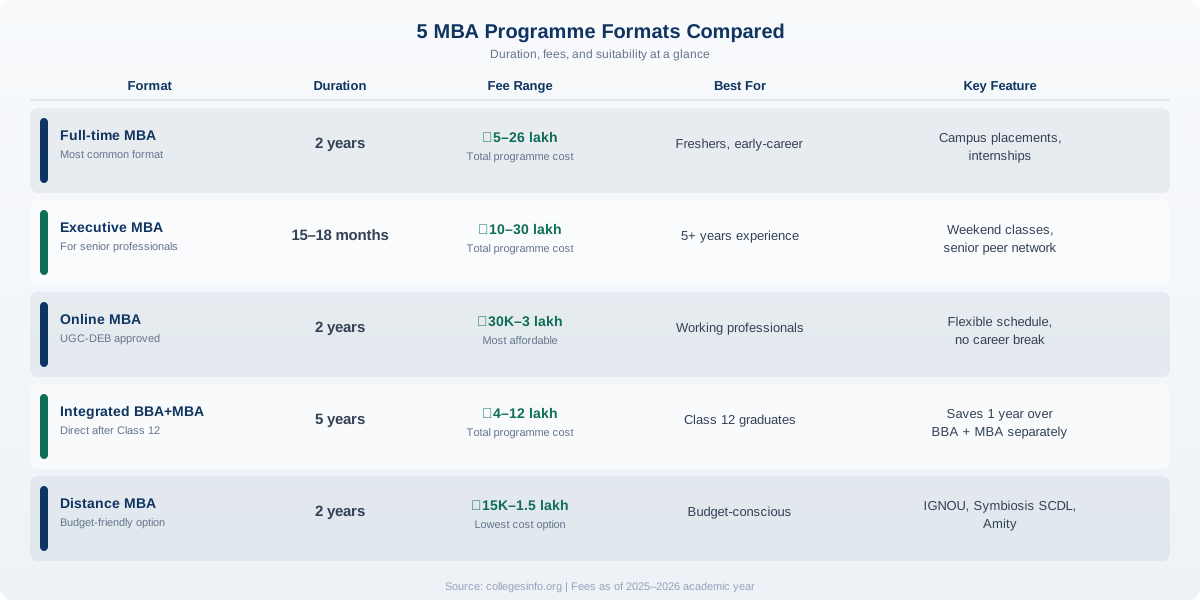
5 MBA Programme Formats — Full-Time, Executive, Online, Integrated, Distance
MBA specialization courses in India come in five formats. Your work experience, budget, and time availability determine which one fits. Students weighing undergraduate options can check our guide on courses available after 12th commerce.
| Format | Duration | Fee Range | Best For | Key Feature |
|---|---|---|---|---|
| Full-time MBA | 2 years | ₹5–26 lakh | Freshers and early-career | Campus placements, internships |
| Executive MBA program | 15–18 months | ₹10–30 lakh | Professionals with 5+ years experience | Weekend classes, senior peer network |
| Online MBA | 2 years | ₹30,000–₹3 lakh | Working professionals | UGC-DEB approved, flexible schedule |
| BBA MBA integrated course | 5 years (after 12th) | ₹4–12 lakh total | Class 12 graduates | Saves 1 year over BBA + MBA separately |
| Distance MBA | 2 years | ₹15,000–₹1.5 lakh | Budget-conscious learners | IGNOU, Symbiosis SCDL, Amity |
One year MBA programs do exist in India, primarily at ISB Hyderabad and a handful of international schools, but they require 2+ years of work experience and carry fees above ₹35 lakh. For most applicants, the two-year MBA year course structure remains the default path, with the first year covering compulsory subjects and the second dedicated to specialization electives and a summer internship.
The integrated BBA programme followed by an MBA is worth considering if you're clear about a management career from Class 12. Several BBA colleges in Bangalore now offer this combined route under NEP 2020 provisions. For working professionals in Karnataka, correspondence courses at Bangalore University include distance MBA options at significantly lower fees than full-time programmes.
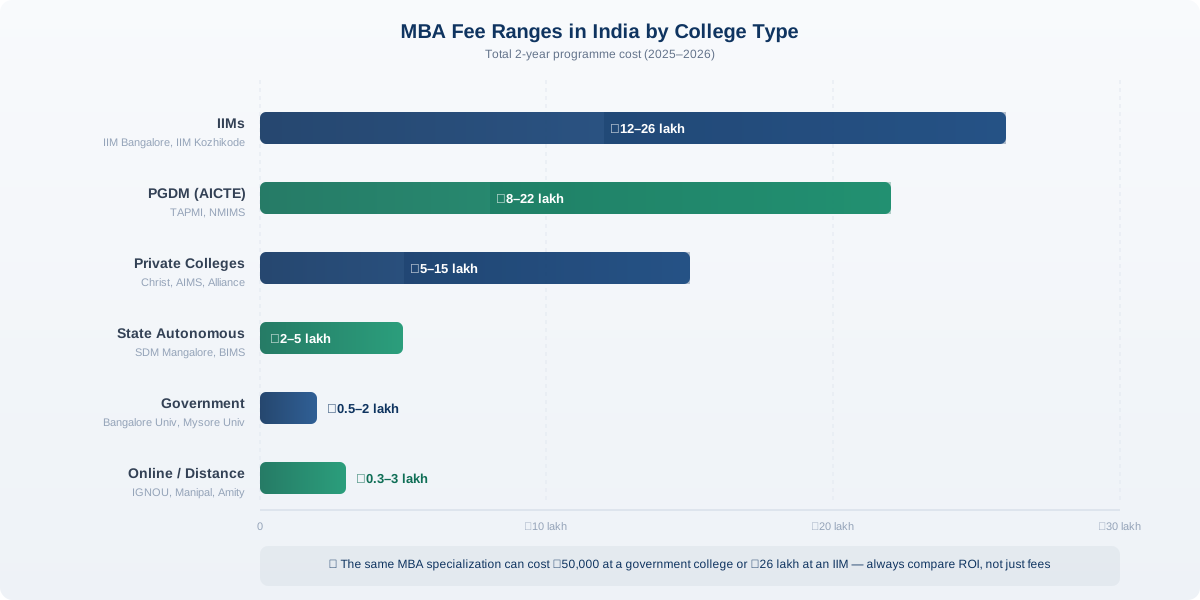
MBA Fees — Government vs Private vs IIM
Fees are the single biggest variable in MBA planning. The same specialization can cost ₹50,000 or ₹26 lakh depending on the institution. This breakdown compares fee bands across college categories, focusing on Karnataka and national benchmarks. For a deeper look at cost vs. placement returns, see our MBA ROI comparison for Bangalore colleges.
| College Category | Total Fee (2 years) | Examples |
|---|---|---|
| Government colleges | ₹50,000–₹2 lakh | Bangalore University, Mysore University |
| State autonomous | ₹2–5 lakh | SDM Mangalore, BIMS Mysuru |
| Private colleges | ₹5–15 lakh | Christ University, AIMS Bangalore, Alliance University |
| PGDM institutes (AICTE-approved) | ₹8–22 lakh | TAPMI Manipal, NMIMS Mumbai |
| IIMs | ₹12–26 lakh | IIM Bangalore (₹26.3 lakh), IIM Kozhikode |
| Online / Distance | ₹30,000–₹3 lakh | IGNOU, Manipal Online, Amity Online |
Students exploring an MBA free course option should know that fully free MBA programmes do not exist at accredited Indian colleges. However, several top institutions offer need-based fee waivers covering 50–100% of tuition. IIM Ahmedabad, IIM Bangalore, and XLRI all have scholarship pools for economically disadvantaged students. Platforms like Coursera and NPTEL also offer MBA-adjacent certificate courses at no cost, though these carry no UGC degree recognition. Verify any distance or online MBA's accreditation through the UGC Distance Education Bureau before enrolling.
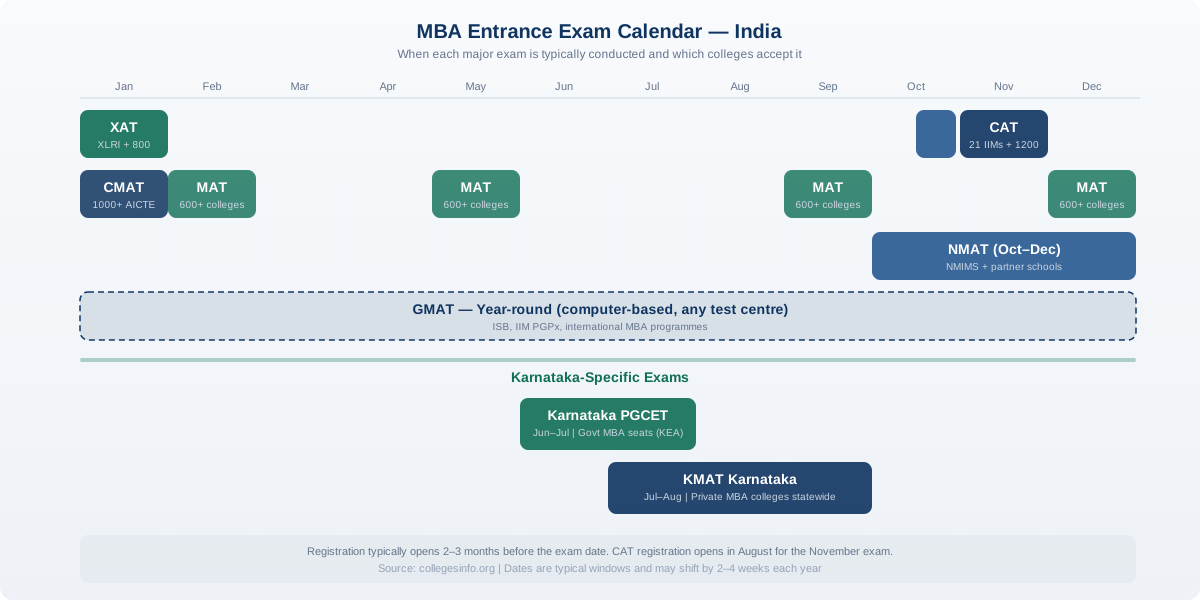
MBA Entrance Exams — Which One Opens Which Door
Every MBA admission in India routes through at least one entrance exam score. The exam you write determines which colleges you can apply to.
CAT (Common Admission Test) is the gateway to all 21 IIMs and over 1,200 other colleges. Conducted in November every year by one of the IIMs on rotation, it tests verbal ability, data interpretation, logical reasoning, and quantitative aptitude. A 99+ percentile opens the top IIMs; a 90+ percentile gets you into strong Tier 2 schools.
XAT is conducted by XLRI Jamshedpur every January and accepted by 800+ colleges, including SPJIMR, IMT, and TAPMI. MAT, run by AIMA, is conducted quarterly and accepted at 600+ mid-tier colleges across India. CMAT, a national-level test by NTA held in January, opens doors to 1,000+ AICTE-approved PGDM programmes.
For Karnataka-specific admissions: Karnataka PGCET is conducted by KEA and is mandatory for government MBA seats in the state. KMAT Karnataka, conducted by the Karnataka Private Post Graduate Colleges Association, covers private MBA colleges statewide. Both exams are relevant if you're comparing management colleges across Karnataka.
NMAT covers NMIMS and its partner schools. GMAT is required for international MBA applications and accepted by ISB, IIM PGPx programmes, and a growing number of Indian business schools with global exchange ties.
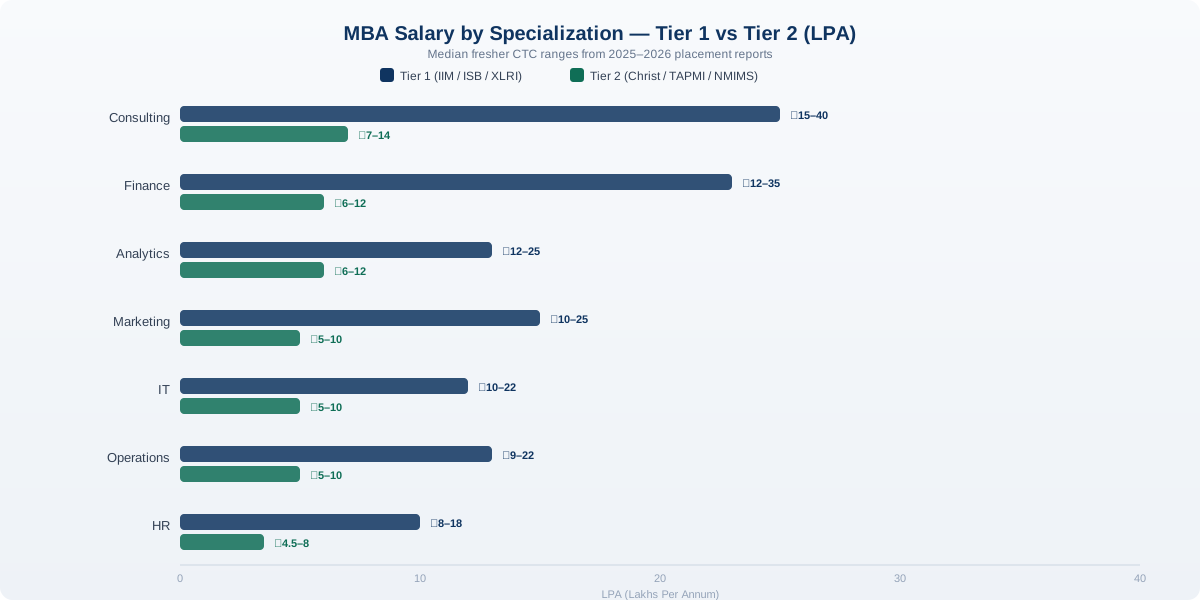
MBA Salary Reality — By Specialization and College Tier
Salary outcomes depend on two factors in roughly equal measure: your specialization and your college's placement track record. The table below maps median fresher CTC by specialization across three college tiers, drawn from 2025–2026 placement reports at NIRF-ranked institutions.
| Specialization | Tier 1 (IIM / ISB / XLRI) | Tier 2 (Christ / TAPMI / NMIMS) | Tier 3 (Regional) |
|---|---|---|---|
| Finance | ₹12–35 LPA | ₹6–12 LPA | ₹3.5–6 LPA |
| Marketing | ₹10–25 LPA | ₹5–10 LPA | ₹3–5.5 LPA |
| HR | ₹8–18 LPA | ₹4.5–8 LPA | ₹3–5 LPA |
| Operations | ₹9–22 LPA | ₹5–10 LPA | ₹3–5.5 LPA |
| Analytics | ₹12–25 LPA | ₹6–12 LPA | ₹4–7 LPA |
| IT | ₹10–22 LPA | ₹5–10 LPA | ₹3.5–6 LPA |
| Consulting | ₹15–40 LPA | ₹7–14 LPA | Rare |
The college matters as much as the specialization. An HR graduate from XLRI earns more than a finance graduate from a Tier 3 school. Before committing to a specialization, study the placement data of the specific college you're targeting. If you're evaluating MBA and BBA colleges in Karnataka, compare median salaries rather than highest packages, which are often outliers driven by a single offer.
How to Choose Your MBA Specialization — A Decision Framework
Picking the right MBA specialization is not about chasing the highest-paying field. It is about finding the intersection of four factors.
1. Prior Work Experience and Domain Interest
If you've spent three years in IT, an MBA in Business Analytics or IT Management builds on what you already know. Commerce graduates, particularly those who studied undergraduate specializations and career paths across different streams, often gravitate toward Finance or Marketing specializations. Switching to HR or Finance is possible but harder to sell to recruiters without relevant pre-MBA exposure.
2. Aptitude for Numbers vs People vs Systems
Finance and Analytics reward quantitative comfort. HR and Marketing reward communication and behavioural insight. Operations rewards process thinking.
3. Target Industry and Role
Work backwards from where you want to land. Consulting firms want Strategy or Finance. Pharma companies want Healthcare Management. FMCG companies want Marketing. Match the specialization to the industry, not the other way around.
4. ROI Check
Compare the total fee at your target college against the median salary for your chosen specialization at that college's tier. A ₹20-lakh MBA that leads to ₹8 LPA salaries takes nearly three years just to break even on tuition alone. A ₹3-lakh MBA from a government college leading to ₹5 LPA salaries pays for itself within the first year. Students who've completed their degree and are considering further study can also check our guide on courses worth pursuing after a BSc to compare MBA against other master's programmes.
Frequently Asked Questions About MBA Specializations
Which MBA specialization has the highest salary?
Strategy and Consulting commands the highest packages at Tier 1 colleges: ₹15–40 LPA median. Finance (₹12–35 LPA) and Business Analytics (₹12–25 LPA) follow at Tier 1. The gap between specializations narrows at Tier 2 and Tier 3 colleges.
Can I switch specializations after first year?
Most colleges allow switching before the second year begins, subject to seat availability and minimum CGPA. IIMs and ISB use credit-based elective systems that effectively let you pivot without a formal switch.
Is MBA in Finance harder than MBA in Marketing?
Finance has a heavier quantitative load: financial modelling, derivatives pricing, and statistical analysis. Marketing relies more on qualitative reasoning and creative strategy. The difficulty depends on your comfort with numbers versus communication-led problem solving.
What is the difference between MBA and PGDM?
MBA is a degree awarded by universities recognised by UGC. PGDM (Post Graduate Diploma in Management) is awarded by autonomous institutions approved by AICTE. Curriculum, placements, and industry recognition are equivalent. IIMs themselves award a PGDM, not an MBA. The distinction matters primarily for government job eligibility, where some posts specify an MBA degree rather than a PGDM diploma.
Is an online MBA as valuable as a full-time MBA?
For placements through campus recruitment, no. Top recruiters visit only full-time MBA campuses. But for career progression within your current company, an online MBA from a UGC-DEB approved institution carries the same degree recognition. Working professionals who cannot take a two-year career break benefit most from online formats.
Do I need work experience for an MBA?
No Indian MBA programme mandates work experience, but it helps. IIM selection committees assign 15–25% weight to work experience in admission scoring. Executive MBA programmes require minimum 5 years. A strong entrance exam score and academic record can offset limited experience at most colleges.
Which MBA specialization is best for freshers?
Marketing and HR are the most accessible because recruiters in these domains value communication skills and learning agility over prior domain expertise. Finance suits freshers with strong quantitative aptitude (CA or CFA background helps). Analytics works well with a statistics, engineering, or computer science background.
Need help choosing the right MBA college in Karnataka?
CollegesInfo.org's admission assistance team can help you find the right MBA programme based on your entrance scores, budget, and career goals. Chat with us on WhatsApp — we help you get the best admission to your preferred colleges without hassle.
This article is for informational purposes only. Consult the college directly before making admission decisions.