Journalism and Mass Communication in Karnataka spans BA (3-year UG) and MA (2-year PG) routes, open to any Class 12 stream at the undergraduate level and any bachelor's degree at postgraduate level. Bengaluru concentrates the overwhelming majority of Karnataka's 180+ institutes, admitting through a mix of direct merit, CUET, PGCET, and college-specific entrance tests.
| Course | Journalism & Mass Communication (BA / MA) |
|---|---|
| Duration | BA: 3 years. MA: 2 years (4 semesters) |
| Regulatory Body | No single central regulator; individual colleges hold UGC/AICTE/NAAC recognition |
| Affiliating Bodies (Karnataka) | Bangalore University, or private/deemed university status |
| Eligibility | BA: 10+2 any stream, 50% aggregate. MA: bachelor's degree any discipline, 50% aggregate |
| Entrance Exam | Varies – CUET, PGCET, college-specific tests, or direct merit |
| Annual Fee Range | ₹9,520/year (Bangalore University MA) to ₹7.5 lakh (premium private institutes) |
| Entry-Level Salary Range | ₹2.5-6 lakh/year, varying substantially by specific media sector |
| Colleges in Karnataka | 180+ institutes, overwhelmingly concentrated in Bengaluru |
🎯 Use the Free KCET Rank Predictor – Enter your rank and category to instantly see which arts and media colleges you can get in 2026. No login required. Try KCET Predictor →
What Journalism & Mass Communication Actually Covers
The curriculum spans reporting and writing, media law and ethics, broadcasting, media planning and strategy, and research methods, alongside increasingly, digital and social media practice. It's broader than just "journalism" in the traditional print-and-broadcast sense – most programmes now cover public relations, corporate communication, advertising, and digital content creation as core tracks, not electives, reflecting how the media employment landscape has actually shifted.
Bengaluru's Genuine Media Industry Presence
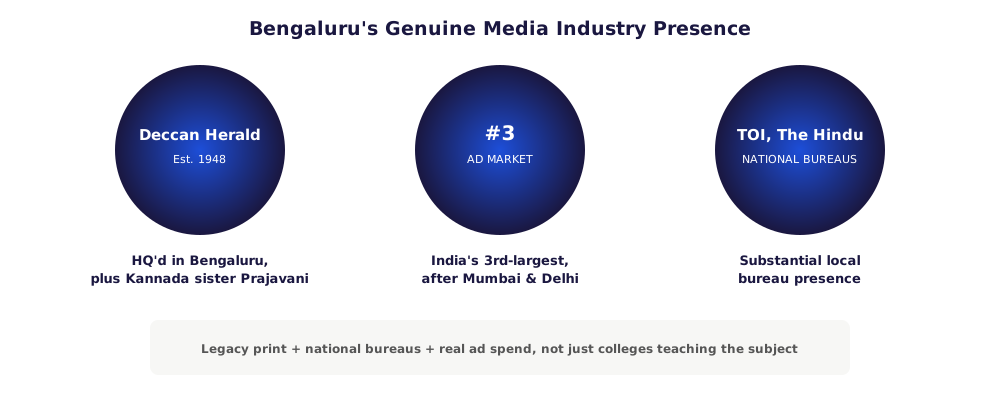
Bengaluru hosts real, long-established media houses, not just colleges teaching about them. Deccan Herald, founded in 1948 and headquartered in Bengaluru, remains one of India's significant English-language dailies, alongside its Kannada sister publication Prajavani. National players including Times of India and The Hindu maintain substantial Bengaluru bureaus given the city's economic and political significance. The city's advertising industry is substantial too – Bengaluru is cited as India's third-largest advertising market by expenditure, trailing only Mumbai and Delhi, reflecting the city's dense concentration of upper-middle-class consumers and corporate advertisers. This combination of legacy print media, national bureau presence, and a large advertising market gives Bengaluru-based journalism and mass communication students realistic local placement access beyond just national metros like Delhi or Mumbai.
Karnataka Colleges Offering Journalism & Mass Communication
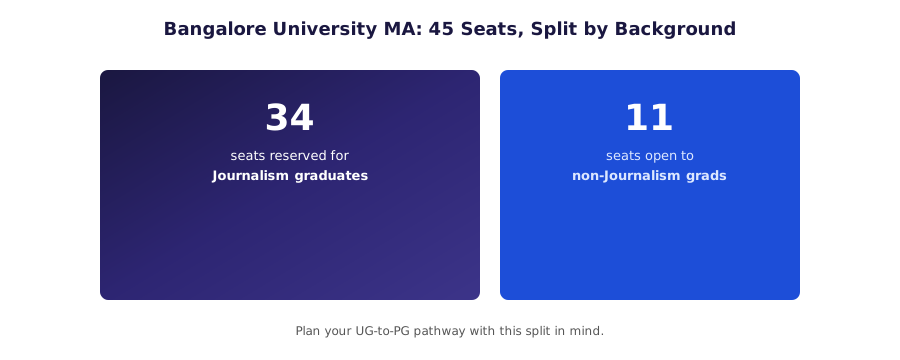
Bangalore University runs a historic programme through its Department of Communication, established in 1973 with direct involvement from figures like eminent journalist Kuldeep Nayar and UNESCO communication consultants in its founding years. Its MA programme specifically reserves 34 of 45 seats for students who studied Journalism as an undergraduate subject, with only 11 seats open to non-Journalism graduates – a specific admission detail worth knowing if you're planning your UG-to-PG pathway in advance. At roughly ₹9,520 per year, it's also one of the most affordable postgraduate options covered on this site. On the private side, IIJNM (Indian Institute of Journalism and New Media) is a well-known, premium specialist institute with fees in the ₹3.75-7.5 lakh range. Christ University offers a more moderately priced route at ₹70,000-1.17 lakh. Commits Institute of Journalism and Mass Communication, established 2001, sits in the ₹1.8-2.3 lakh range specifically for its journalism-focused programme.
Eligibility for Journalism & Mass Communication
- BA route: 10+2 (any stream) from a recognised board, minimum 50% aggregate
- MA route: Bachelor's degree in any discipline, minimum 50% aggregate – Bangalore University specifically gives preference to Journalism graduates for its MA programme, though non-Journalism graduates remain eligible for a smaller set of seats
Admission Process – Varies by College
Karnataka's journalism and mass communication landscape has no single centralised admission process. Some colleges – including several Bangalore University-affiliated options – admit largely on Class 12 or bachelor's degree merit. Others accept CUET or Karnataka PGCET scores. A meaningful number of private institutes, particularly premium specialist options like IIJNM, run their own entrance tests alongside an interview or group discussion assessing communication skills and genuine interest in media. Confirm your specific shortlisted college's exact process directly, since this varies considerably even within Bengaluru's own cluster.
Fee Structure
Fees span an unusually wide range for this field. Bangalore University's MA programme, at roughly ₹9,520 per year, sits at the extreme affordable end. Christ University and similar mid-tier private options run ₹70,000-1.17 lakh. Commits Institute, a journalism-specialist institute, runs ₹1.8-2.3 lakh. IIJNM, a premium specialist institute with strong industry connections, reaches ₹3.75-7.5 lakh. Given this spread, weigh total programme cost against actual internship placements and named media-house partnerships – not just brand reputation or campus facilities alone.
Specialisations Within Journalism & Mass Communication
The field has diversified beyond traditional print and broadcast journalism. Print and Digital Journalism remains the core reporting and writing track. Public Relations and Corporate Communication covers brand messaging and stakeholder management. Advertising covers copywriting, media planning, and creative direction. Broadcast Journalism focuses specifically on television and radio production. Increasingly, Digital and Social Media tracks cover content strategy and platform-specific creation, reflecting how much of the actual employment market has shifted toward digital-first roles.
Career Scope and Salary – An Honest Range
Career destinations span traditional and digital media broadly. Journalism roles include reporter, editor, and correspondent positions at newspapers, magazines, and news channels – named employers across multiple sources include Times of India, The Hindu, and NDTV nationally, alongside Bengaluru's own Deccan Herald and Prajavani locally. Digital roles include content writer, social media manager, and digital marketer positions. PR and corporate communication roles exist at dedicated agencies and in-house corporate teams. Advertising roles include copywriter, media planner, and creative director positions. Given Bengaluru's proximity to the Kannada film industry, some graduates also move into film production, direction, and screenwriting.
Salary reporting varies considerably by specific sector, so treat any single figure cautiously. Entry-level journalism and content roles commonly report ₹2.5-4 lakh per year. PR, advertising, and corporate communication roles, particularly at larger agencies or corporations, often start somewhat higher, in the ₹3.5-6 lakh range. Experienced professionals in senior editorial, PR leadership, or creative director roles can move substantially higher over time, though this varies enormously by specific career trajectory and sector.
Journalistic Ethics and the Press Council of India
Regardless of which Karnataka college you choose, journalism specifically as a career operates within a genuine ethical and regulatory framework worth understanding early. The Press Council of India, a statutory body established under the Press Council Act, 1978, sets out Norms of Journalistic Conduct that working journalists and newspapers are expected to follow, and investigates complaints of ethical violations. Understanding this framework – not just writing and reporting technique – is part of what separates professional journalism training from generic content writing, and most quality programmes cover media law and ethics as a core, not elective, subject for exactly this reason.
NEP 2020 and Journalism Education in Karnataka
Some Karnataka colleges have begun restructuring their BA Journalism and Mass Communication programmes under the National Education Policy 2020's four-year undergraduate framework, offering multiple exit points and a stronger emphasis on skill-based electives in digital and social media specifically. This remains an evolving area rather than fully standardised across all Karnataka colleges, so confirm directly with your shortlisted institution what specific NEP-aligned changes, if any, have been implemented.
Postgraduate and Further Study Options
Beyond a standard MA, some Karnataka institutions offer more specialised postgraduate diplomas in specific tracks – digital journalism, corporate communication, or advertising and brand management specifically. These can be a genuine alternative to a full 2-year MA if you want a faster, more narrowly focused postgraduate credential, particularly if you already have some industry experience and want a targeted skills upgrade rather than a broader academic postgraduate degree.
Women in Karnataka's Journalism Programmes
Journalism and mass communication programmes in Karnataka have seen strong, often majority representation of women students for decades, consistent with broader patterns in Indian media education – Deccan Herald itself was historically noted as one of the early Indian publications to hire women journalists in reporting roles. Most Karnataka colleges in this field report a balanced or women-majority cohort, worth knowing if this factors into your college decision.
Who This Course Suits
- Students interested in storytelling, current affairs, and public communication, not just writing generally
- Those comfortable with a field that has diversified well beyond traditional journalism into PR, advertising, and digital content
- Students specifically drawn to Bengaluru's combination of legacy print media, national bureau presence, and substantial advertising industry
- Anyone weighing this against a more narrowly technical creative field – journalism and mass communication trades depth in one craft for genuine breadth across media, communication, and public-facing roles
Comparing Journalism Against Related Creative Fields
If you're still exploring options broadly, our full courses directory covers the wider range of undergraduate paths available in Karnataka, including the creative and design fields covered in our guides to Fashion Design and Animation & VFX, if you're deciding between a communication-focused path and a more visually-focused creative career.
Funding Your Journalism Education
If you're SC, ST, OBC, or minority-category, our SSP scholarship guide covers Karnataka's post-matric scholarship system. Given Bangalore University's low-cost MA programme specifically, cost-conscious students have a real, high-pedigree affordable option in this field, worth prioritising if budget is your primary constraint.
A Quick Verification Checklist Before You Choose a College
Given how much specialisation and fee variation exists, verify these specifics directly: which specific track (journalism, PR, advertising, digital media) the college emphasises with dedicated faculty and facilities; actual internship and placement partnerships with named media houses or agencies, not a general claim; current UGC/AICTE/NAAC or university affiliation status; and whether the specific admission route (merit, CUET, PGCET, or college test) matches what you're prepared for.
Frequently Asked Questions
Do I need to have studied Journalism in Class 12 to pursue this at degree level?
No – BA admission is open to any Class 12 stream. For MA specifically at Bangalore University, having a Journalism-subject bachelor's degree gives you access to more reserved seats, though non-Journalism graduates remain eligible for a smaller set.
What's the most affordable Journalism & Mass Communication option in Karnataka?
Bangalore University's MA programme, at roughly ₹9,520 per year, is among the most affordable postgraduate options in this field anywhere in Karnataka.
Is this field only about traditional journalism, or does it cover other careers too?
It's broader – most programmes now cover public relations, corporate communication, advertising, and digital media as core tracks alongside traditional journalism.
What is the realistic starting salary in this field?
Entry-level journalism and content roles commonly report Rs 2.5-4 lakh per year, while PR and advertising roles at larger agencies often start somewhat higher, around Rs 3.5-6 lakh.
Are there genuine local media employers in Bengaluru specifically?
Yes – Deccan Herald and its Kannada sister paper Prajavani are both headquartered in Bengaluru, alongside substantial local bureaus of national players like Times of India and The Hindu.
Does Bengaluru's advertising industry matter for this field?
Yes – Bengaluru is cited as India's third-largest advertising market by expenditure, trailing only Mumbai and Delhi, giving advertising and PR-track graduates a substantial local job market.
What role does the Press Council of India play for journalism students?
It sets out Norms of Journalistic Conduct that working journalists and newspapers are expected to follow, and understanding this ethical framework is a core part of professional journalism training, not just a legal footnote.
Is a specialised postgraduate diploma a good alternative to a full MA?
Yes, particularly if you already have some industry experience – diplomas in specific tracks like digital journalism or corporate communication offer a faster, more targeted credential than a full 2-year MA.
Information on this page is compiled from publicly available UGC, university, and college-specific sources, cross-checked across multiple sources given genuine variation in fees and admission process. Always confirm current details directly with your shortlisted college. Published by L K Monu Borkala, founder of OneCity Technologies – publishing Karnataka education directories since 2006.
Last Updated: September 7, 2026
Need help with admission?