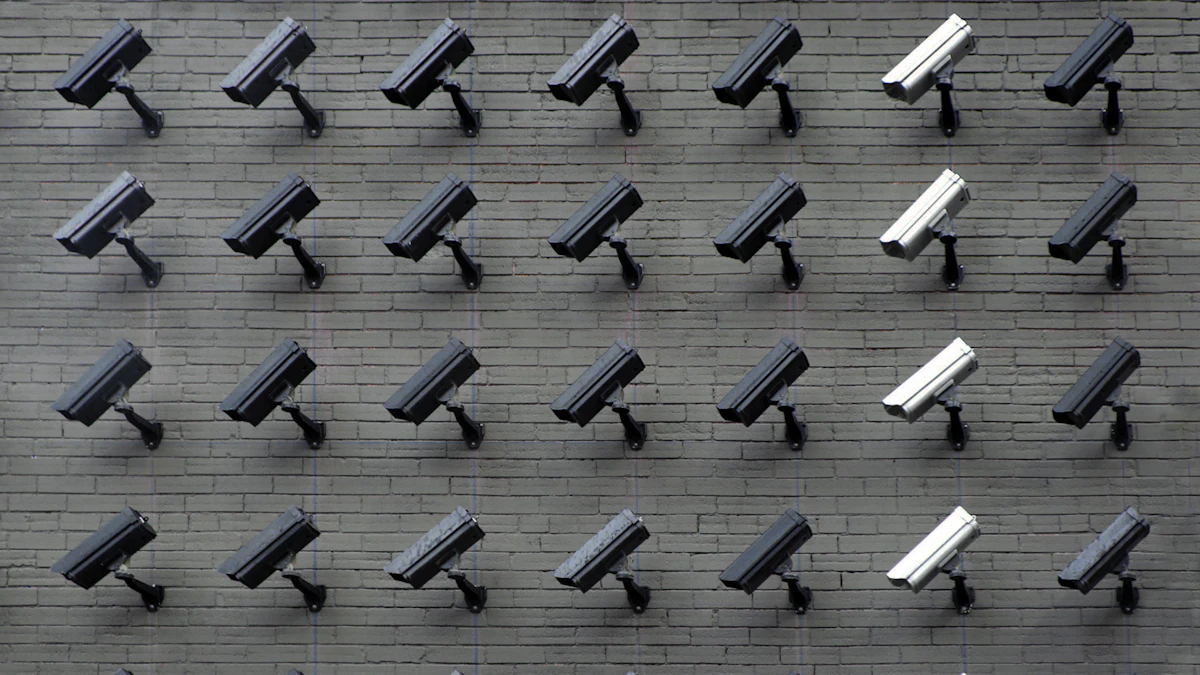
A college campus can function like a small city. Thousands of students, faculty members, visitors, contractors, and delivery personnel move between academic buildings, hostels, libraries, laboratories, sports facilities, and parking areas every day. In the United States alone, postsecondary enrollment increased 1% in fall 2025, while public four-year undergraduate enrollment grew 1.4%, according to the National Student Clearinghouse Research Center.
More people on campus means more areas and activity for security teams to oversee. At the same time, colleges are becoming increasingly dependent on connected technology. In 2025, 251 ransomware attacks were claimed against schools, colleges, universities, and other educational institutions, with confirmed attacks exposing more than 3.96 million records. Physical and digital security are therefore becoming parts of the same broader risk-management challenge.
This is why cloud CCTV is gaining importance in higher education. Instead of leaving hundreds of cameras tied to isolated recorders and control rooms, colleges can centralize video, remotely access footage, scale storage, and use intelligent tools to find important events faster.
Here is how that shift can help colleges build campuses that are both safer and easier to manage in 2026.
Image source
Last Updated: September 7, 2026
1. Creating One Security View Across a Large and Complex Campus
The first problem cloud CCTV addresses is fragmentation.
A university may have cameras at the main entrance, residence halls, parking lots, laboratories, administrative buildings, libraries, sports facilities, and dozens of smaller locations. Older surveillance infrastructure can leave these cameras divided among different recorders or building-specific systems.
That arrangement becomes difficult to manage as the campus expands. If an incident starts outside a library and continues toward a parking structure, for example, the security team may need footage from several cameras or even different recording systems to understand what happened.
Cloud-connected CCTV can bring these feeds into a more centralized environment. Authorized personnel can access live or recorded video without physically visiting the building where the recorder is located.
For campus security teams, this can improve several everyday tasks:
- Monitoring entrances and other high-traffic locations from a central security operation
- Checking activity at a remote building without dispatching an officer simply to investigate visually
- Reviewing cameras across several campus locations during an incident
- Giving authorized administrators appropriate access without maintaining separate viewing stations everywhere
The value becomes greater on institutions with multiple campuses. A university with a main campus, medical campus, research facility, and satellite learning center can establish a more consistent security operation rather than treating each property as a surveillance island.
That does not eliminate the need for security officers. It gives those officers better information about where their attention is actually required.
2. Protecting Hostels and Residence Halls Without Treating Them Like Fortresses
Residence halls present a particularly difficult security problem because they are both living spaces and high-traffic campus facilities.
Students return at different hours. Friends visit. Food and parcel deliveries arrive. Maintenance personnel need temporary access. During the beginning and end of semesters, movement increases further as students move into or out of accommodation.
The objective is therefore not simply to record every entrance. Colleges need to maintain visibility around common areas and access points without creating an unnecessarily intrusive environment.
Cloud CCTV can help security teams monitor residence hall entrances, lobbies, exterior approaches, bicycle areas, and other appropriate common spaces from a central location. If a student reports suspicious activity outside a residence hall late at night, authorized personnel can review the relevant camera quickly rather than waiting until the following morning to retrieve footage.
This is also where storage architecture matters. A damaged or stolen local recorder can make important evidence unavailable precisely when it is needed. Cloud and hybrid storage reduce that single point of failure by keeping footage or backups away from the recording location.
Coram provides a useful example of how cloud CCTV can be deployed without automatically turning a camera upgrade into a complete replacement project. Its hybrid cloud approach can work with IP cameras and combines local and cloud storage. The platform offers retention options ranging from 30 to 365 days, along with AI-powered search that can locate footage involving particular people, objects, or events instead of requiring staff to manually scan hours of recordings.
For colleges with large existing camera estates, compatibility matters. The ability to modernize storage and retrieval while retaining suitable IP cameras can make a phased upgrade considerably more practical.
3. Making Entrances Safer During Peak Student Traffic
Campus entrances have to solve two competing problems: keep people moving and maintain sufficient security awareness.
Consider the first morning of a new semester. Thousands of students may arrive within a narrow window while parents, rideshare drivers, buses, contractors, and visitors approach the campus at the same time. A system that works well during a quiet summer afternoon may face a completely different workload.
U.S. higher education illustrates the scale involved. Spring 2025 postsecondary enrollment reached 18.4 million students, an increase of approximately 562,000 students in a single year. For individual institutions, enrollment changes translate into very practical questions about entrances, residence capacity, parking, staffing, and security coverage.
Cloud-connected cameras give teams a broader view of what is happening around entrances. Security staff can use video to verify reports, assess congestion, check vehicle approaches, or understand why people are gathering in a particular location.
Useful coverage may include:
- Main pedestrian entrances
- Vehicle gates and drop-off zones
- Visitor reception points
- Service and delivery entrances
- Secondary entrances used after normal academic hours
The benefit is not simply more recording. It is the ability to get useful visual information to the right people quickly.
If one entrance becomes unexpectedly congested, staff can assess the situation before sending additional personnel. If an unauthorized vehicle enters a service area, security teams can begin reviewing the relevant cameras immediately. The campus can respond based on what is happening rather than relying solely on phone calls and secondhand descriptions.
4. Securing Laboratories and High-Value Research Areas
A teaching classroom and a research laboratory do not have the same risk profile.
Laboratories can contain expensive instruments, controlled materials, prototypes, research samples, specialized computers, or confidential intellectual property. Some equipment costs tens or hundreds of thousands of dollars, which means even one theft or damage incident can have consequences far beyond the replacement price.
Research can also be time-sensitive. Losing a sample, damaging equipment, or interrupting a controlled experiment may destroy months of work.
For these reasons, colleges should think about surveillance coverage according to risk rather than applying the same camera strategy to every building.
Cloud CCTV can support this approach by allowing appropriate cameras to be grouped, monitored, and reviewed according to location or operational importance. Security administrators can pay closer attention to laboratory entrances, equipment rooms, loading areas, and other critical points without requiring a dedicated surveillance system for every department.
Cloud storage also provides an important resilience advantage. Traditional local storage is physically vulnerable to hard-drive failure, theft, power incidents, or damage to the recorder itself. Cloud storage can provide automated backup, while a hybrid model can preserve local access alongside remote storage.
A sensible laboratory security design still requires access policies, physical controls, cybersecurity, and staff procedures. CCTV is not a substitute for any of these measures. Its value is that it adds a visual record that can support investigation and provide context when another security control reports a problem.
5. Making Libraries Safer Without Disrupting the Student Experience
Libraries illustrate why campus security requires nuance.
They can remain open late, attract heavy traffic during examinations, contain expensive computers and specialist collections, and include quiet spaces where students may work alone for hours. Yet a library also needs to remain welcoming. Turning it into an environment that feels excessively controlled can undermine its purpose.
Cloud CCTV gives colleges a way to concentrate security attention on appropriate areas such as entrances, exits, computer zones, common spaces, and building perimeters while keeping surveillance management centralized.
The real improvement is often seen after an incident.
Suppose a laptop is reported missing from a common study area. With a traditional system, a staff member might need to identify the correct recorder and manually work through a long stretch of footage. Better video management and search tools can reduce the amount of footage that needs to be reviewed.
This matters because the number of cameras on a campus can make manual investigation impractical. If 150 cameras each record continuously, one hour represents 150 camera-hours of video. A security team cannot reasonably watch all of it in real time.
A smarter surveillance strategy therefore focuses on making recorded video searchable and retrievable, not merely collecting more of it.
Colleges should also establish clear rules around who can access footage, how long recordings are retained, and what locations should or should not be monitored. A technologically capable system still needs responsible governance.
6. Improving Visibility in Parking Lots and Campus Perimeters
Parking areas are among the hardest campus spaces to secure effectively.
They are large, often poorly populated after hours, and used by students, faculty, visitors, rideshare drivers, contractors, and delivery vehicles. Multi-level parking structures introduce additional blind spots, while outdoor lots can have distant entrances and pedestrian paths.
The security challenge also changes throughout the day. A lot that is nearly empty at 6 a.m. may be full by 10 a.m. and then gradually empty again after evening classes.
Cloud CCTV allows authorized teams to view cameras covering these areas without being tied to a particular security room. If a student calls campus security because they feel unsafe walking toward a parking area, an operator may be able to check the relevant cameras while an officer responds.
Video can also support investigations involving vehicle damage, theft, suspicious activity, or disputes over when an incident occurred.
A well-designed parking surveillance plan normally prioritizes locations where useful evidence is most likely to be captured, including entrances and exits, pedestrian routes, payment areas, elevators, stairwells, and high-value parking zones.
This is a better approach than simply increasing camera count. Camera placement, image quality, lighting, retention, and retrieval speed can matter more than the raw number of devices installed.
7. Reducing the Risk of Losing Critical Video Evidence
A surveillance system is only valuable if its footage is available when the college needs it.
Local DVRs and NVRs introduce several physical risks. Storage capacity is finite, hard drives eventually fail, and a recorder located inside the building can be damaged or stolen. Expanding retention may also require purchasing and maintaining additional storage hardware.
Cloud storage changes the model by separating footage from a single physical recording device.
For a college, the practical benefits can include:
- Automated backup of important video
- Remote retrieval during an investigation
- Storage that can expand as camera numbers increase
- Retention policies that can be adjusted to operational requirements
The amount of data moving into cloud environments demonstrates how quickly this model has matured. The Coram cloud-storage guide cites a projection that organizations would store 200 zettabytes of data in the cloud by 2025, equivalent to about half of the world's data.
Colleges still need to plan carefully. High-resolution continuous video consumes substantial bandwidth and storage, and cloud services introduce ongoing costs. A reliable network is particularly important for real-time video access.
For some institutions, this makes hybrid architecture attractive. Recent or critical footage can remain available locally while cloud storage provides backup, longer retention, or centralized access.
The smartest system is therefore not necessarily the one that puts every byte of footage in the cloud. It is the one that balances availability, resilience, cost, network capacity, and institutional requirements.
8. Helping Security Teams Investigate Incidents Faster
Recording an incident and finding an incident are two different things.
Imagine that campus security receives a report at 4 p.m. about something that happened sometime between noon and 3 p.m. near a building used by thousands of students. If several cameras cover that area, traditional review could mean manually searching many hours of footage.
Multiply that across a large university and investigation time becomes a serious operational cost.
Cloud-based video platforms can make retrieval easier by centralizing footage and, where supported, adding intelligent search tools. Instead of treating video as an archive that someone must manually watch, the system can make it easier to narrow down the relevant period, camera, person, object, or event.
The improvement is especially useful when an incident crosses locations. Security teams may need to understand how someone moved from an entrance to a library, residence hall, parking area, or laboratory building.
A searchable, centralized video environment helps investigators reconstruct that sequence more efficiently.
That can improve response to incidents such as property theft, vandalism, unauthorized entry, vehicle disputes, and safety complaints. It can also help administrators identify operational patterns rather than treating every event as isolated.
The goal is simple: less time searching for video and more time acting on useful information.
9. Supporting Multi-Campus Growth Without Rebuilding Security From Scratch
Higher education security infrastructure needs to change as institutions change.
Colleges renovate buildings, open research centers, expand residence capacity, lease satellite facilities, and add cameras in response to new risks. A system that requires a major storage or server project every time cameras are added creates long-term operational friction.
Cloud architecture makes scaling more flexible because storage and management are less dependent on the capacity of a single physical recorder.
The enrollment picture reinforces why scalability matters. Final data for fall 2025 showed U.S. postsecondary enrollment growing 1% overall, with community college enrollment rising 3% and public four-year undergraduate enrollment increasing 1.4%. Even modest percentage changes can translate into substantial additional campus activity across a large education system.
For an individual institution, scalable surveillance might mean adding cameras to a new residence hall this year, extending coverage to a research building next year, and bringing a satellite campus into the same management environment later.
That flexibility also supports more consistent policies. Instead of every campus or department deciding independently how footage is stored and accessed, institutions can establish clearer standards for retention, permissions, incident review, and system administration.
10. Turning Campus CCTV Into a Smarter Operational Tool
Perhaps the biggest change in 2026 is conceptual.
Colleges are beginning to expect more from CCTV than a recording that becomes useful only after something goes wrong. A modern system can contribute to situational awareness, investigation, facility management, and security planning.
Video can help teams understand whether a reported entrance is actually congested, whether a parking issue requires immediate intervention, or which cameras are relevant to an incident. When combined with sensible analytics, it can also help operators find important events within large volumes of footage.
However, colleges should avoid assuming that more surveillance automatically means a safer campus. Technology works best when it supports a broader security program that includes trained personnel, access control, emergency procedures, cybersecurity, student communication, and clearly defined privacy policies.
There is also a growing connection between physical and digital resilience. In 2025, ransomware attacks claimed against educational organizations exposed more than 3.96 million records, up 27% from 2024 among confirmed attacks tracked by Comparitech. A cloud CCTV deployment therefore needs cybersecurity controls as much as physical-security planning. Encryption, strong authentication, controlled user permissions, retention policies, and auditability should be considered from the beginning. A college should know not only where its cameras are, but also who can view their footage, where that footage is stored, and how access is protected.
FAQs
What is cloud CCTV?
Cloud CCTV is a surveillance approach in which video footage, system management, or both are connected to remote cloud infrastructure. Depending on the architecture, footage may be stored entirely in the cloud or through a hybrid combination of local and cloud storage.
Why is cloud CCTV useful for colleges?
Colleges typically have cameras spread across many buildings and outdoor spaces. Cloud connectivity can make those cameras easier to manage centrally, provide authorized remote access, simplify storage expansion, and make footage easier to retrieve during investigations.
Can colleges use cloud CCTV with existing IP cameras?
In many cases, yes, although compatibility depends on the platform and existing hardware. This can allow institutions to modernize video management and storage without automatically replacing an entire camera estate.
Is cloud CCTV better than local CCTV storage?
Neither architecture is universally better. Cloud storage offers scalability, remote accessibility, and off-site backup, while local storage can provide direct access without depending entirely on internet connectivity. Hybrid systems combine aspects of both and can be particularly useful for larger organizations.
How long should colleges retain CCTV footage?
There is no single retention period appropriate for every college or every camera. Retention should reflect institutional policy, applicable laws, incident-investigation requirements, storage costs, camera purpose, and privacy considerations. Different camera groups may reasonably require different retention periods.
Does moving CCTV to the cloud automatically make a campus safer?
No. Cloud technology improves how video can be stored, accessed, managed, and searched, but campus safety still depends on camera placement, security staffing, access control, emergency planning, cybersecurity, privacy governance, and effective incident response.
Conclusion
A college campus is too complex for surveillance to remain a collection of isolated cameras and local recorders.
Entrances need visibility during busy periods. Residence halls need appropriate monitoring without compromising student privacy. Laboratories require stronger protection for valuable equipment and research. Libraries need security that does not interfere with the learning environment, while parking areas require reliable coverage even after most of the campus has gone quiet.
In 2026, the smarter campus is not necessarily the one with the most cameras. It is the one that can turn the cameras it already has into timely, secure, and useful information when people actually need it.
Need help with admission?
CollegesInfo.org helps students secure admission to colleges they are eligible for under that college's actual published criteria. Chat with us on WhatsApp or explore admission assistance.