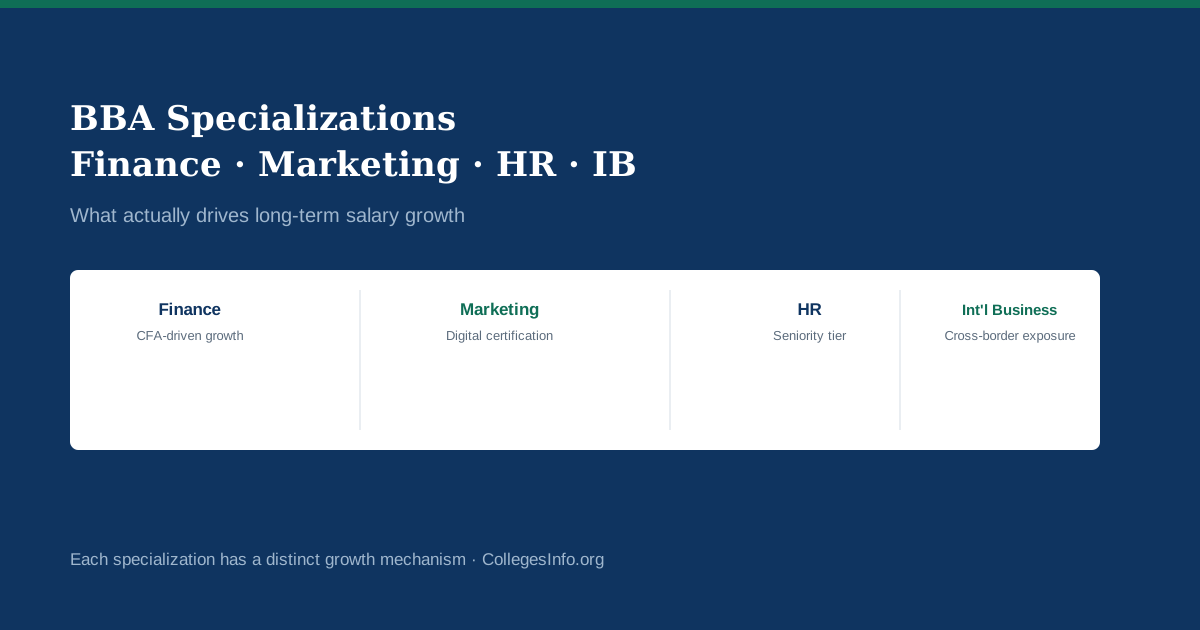
Finance, Marketing, HR and International Business start at broadly similar BBA entry salaries, roughly Rs 3 to 6 lakh per annum, but diverge sharply over the following five to ten years depending on which specific certification or further qualification a graduate pairs with the degree. The specialization that pays best on paper is rarely the one that pays best for a specific student, since fit and follow-through matter more than the headline salary range, a distinction this guide covers in detail below rather than leaving as an afterthought.
Why Comparing Entry Salary Alone Misses the Real Decision
Search for "best BBA specialization" and most results rank Finance, Business Analytics, or International Business at the top purely on entry-level salary figures, which sit close enough together across all four traditional specializations that the ranking barely matters at the point of choosing. What actually separates these paths is how each one's earning trajectory evolves once a graduate has three, five, or ten years of experience, and specifically which certification or further qualification unlocks that growth for each specialization, a distinction most ranked lists skip entirely in favour of a single headline number. This guide focuses on that divergence rather than repeating a ranked list of entry salaries that changes marginally depending on which source is quoted.
Candidates who want their specific BBA specialization fit checked before applying anywhere can start from our MBA admission assistance page.
Finance: The Clearest Path, But CFA Is Increasingly Non-Negotiable
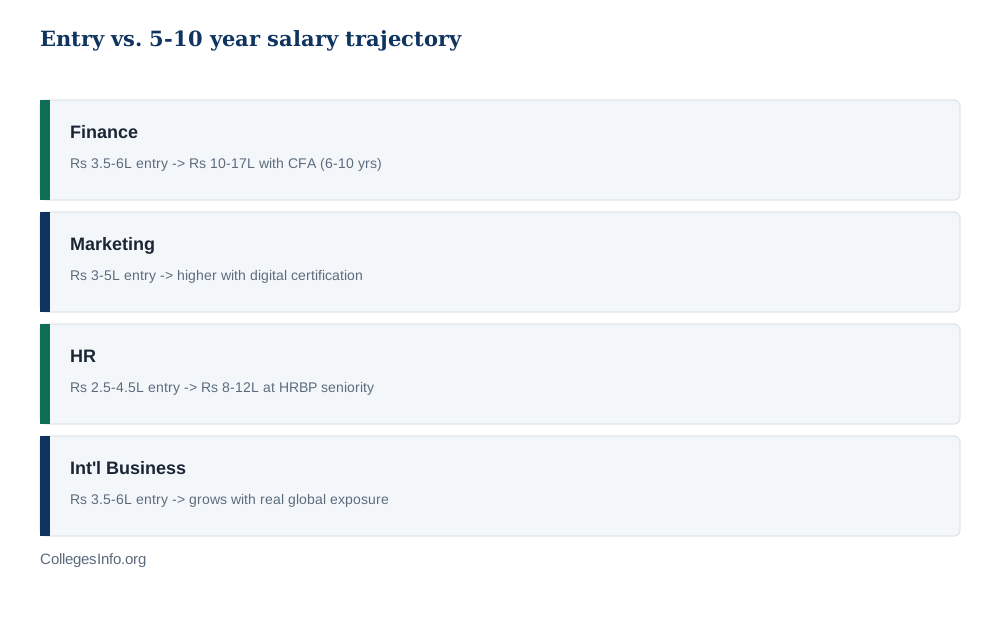
BBA Finance graduates typically start in the Rs 3.5 to 6 lakh range, in roles like financial analyst or junior banking associate, a range broadly similar to Marketing and International Business at entry level. Where Finance actually separates is the five-to-ten-year mark: graduates six to ten years in commonly reach Rs 10 to 17 lakh per annum, but this jump is increasingly tied to pursuing the CFA (Chartered Financial Analyst) qualification alongside or shortly after the BBA, rather than happening automatically with time served in the industry alone. Several sources note that professional bodies overseeing India's banking sector have moved toward treating CFA as a practical requirement for continued progression in financial roles, not an optional add-on.
This means a student choosing Finance specifically for its long-term salary ceiling should mentally budget for the CFA's own significant time and cost investment, typically pursued across the final BBA years or immediately after, rather than assuming the BBA alone delivers the higher-bracket outcome the specialization is known for.
Matching Specialization to Actual Day-to-Day Work, Not Just Subject Interest
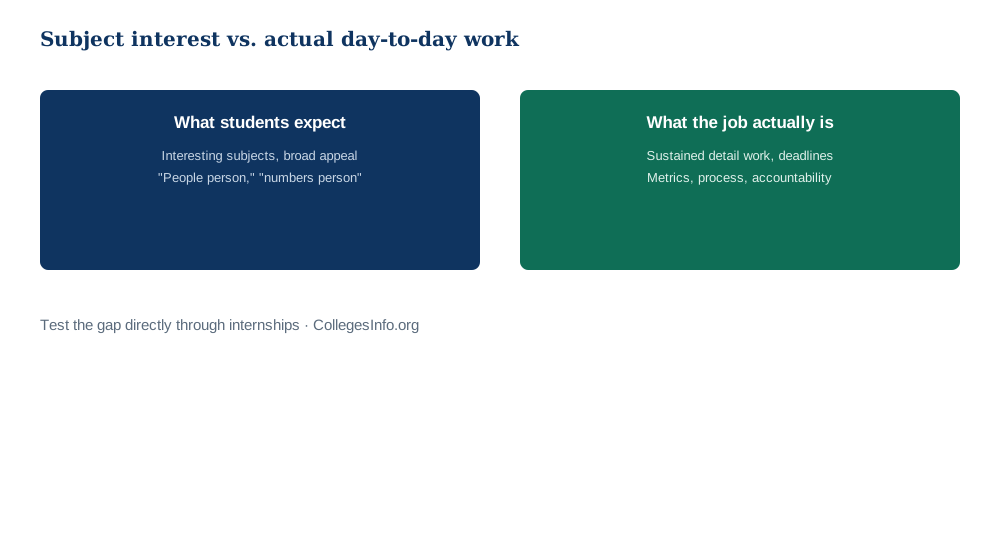
A student who enjoyed accounting or economics in school does not automatically enjoy the actual day-to-day work of a financial analyst, which involves sustained, detail-heavy work with spreadsheets, regulatory reporting, and client communication under deadline pressure. Similarly, a student who enjoys social media personally does not automatically enjoy the day-to-day discipline of campaign performance tracking, budget allocation across channels, and client reporting that professional marketing roles actually involve. This distinction between subject interest and role-fit is worth testing directly through internships during the degree itself, rather than assumed from classroom coursework alone, since the two can diverge meaningfully once a student is in an actual entry-level role with real deadlines and accountability attached.
HR specifically rewards students who truly enjoy sustained interpersonal work, conflict resolution, and organisational process design, distinct from simply being described as a "people person" in a general sense, a distinction that becomes clear only once a student has direct exposure to the actual administrative rhythm of HR work rather than its more visible, relationship-focused public image. International Business rewards students comfortable with ambiguity and cross-cultural communication, since the specific country, regulatory environment, and business culture a graduate ends up working with can vary considerably from one employer to the next within the same broad specialization.
Why an Internship Matters More for Some Specializations Than Others
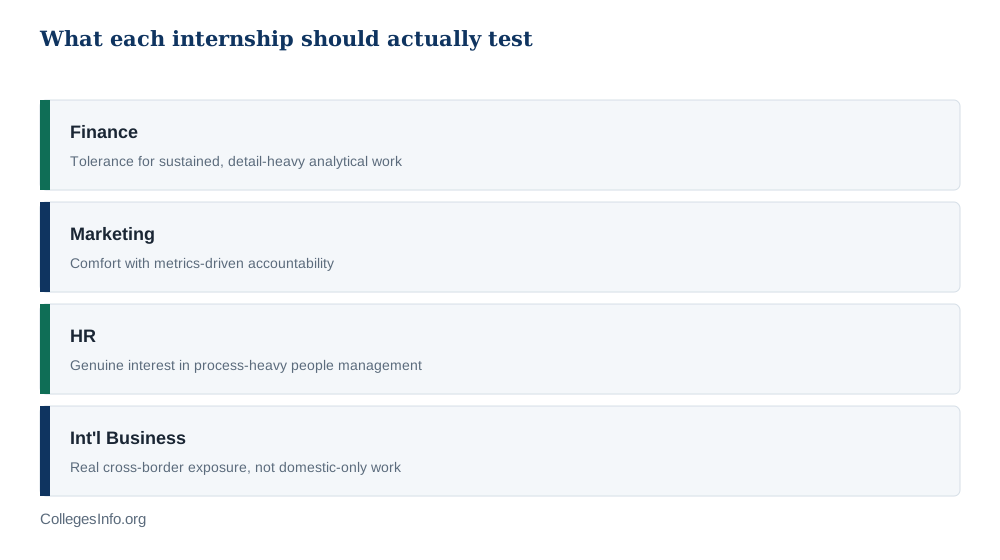
Internship value varies meaningfully across these four specializations, not just in general career-readiness terms but in how directly the internship maps to the specific growth mechanism this guide has identified for each track. A Finance internship at a bank or investment firm gives a student real exposure to whether the sustained, detail-oriented work suits them before committing years to CFA preparation, making it a truly diagnostic experience rather than just a resume line. A Marketing internship, particularly one involving actual campaign execution rather than purely observational shadowing, tests whether a student can handle the accountability and metrics-driven pressure that professional digital marketing roles carry, distinct from the more creative, less measurable image the specialization sometimes carries in student perception.
An HR internship specifically tests a student's tolerance for the administrative and process-heavy side of people management, which differs considerably from the more visible, relationship-focused image the specialization often carries before a student has direct exposure to it in an actual workplace setting. An International Business internship, ideally with genuine export-import or multinational corporate exposure rather than a domestic-only placement, is the single most direct way to test whether a student is truly suited to this specialization's less certification-dependent, more experience-dependent growth path.
| Specialization | What the internship should test |
|---|---|
| Finance | Tolerance for sustained, detail-heavy analytical work |
| Marketing | Comfort with metrics-driven accountability, not just creativity |
| HR | Genuine interest in process-heavy people management |
| International Business | Actual cross-border exposure, not domestic-only placement |
Can You Reasonably Combine Two Specializations?
Several colleges structure BBA programmes to allow a primary specialization with electives drawn from a second track, and this actually widens rather than dilutes career options if approached deliberately rather than as an attempt to avoid choosing. A Finance-primary student who takes Marketing electives builds a real advantage for roles in financial services marketing or investment communications, a specific and growing niche rather than a generic combination. A Marketing-primary student with Finance electives is better positioned for pricing strategy and revenue operations roles than a pure Marketing specialist would be, a practically useful combination when aimed at that specific overlap deliberately.
The caution worth stating clearly here: combining specializations without a specific target role in mind risks producing a generalist profile that struggles to compete against a focused specialist for entry-level roles specifically, since most campus recruitment at the fresher level still hires against a single, clearly labelled specialization track. A student considering this combined approach should identify the specific hybrid role they are targeting before choosing electives, rather than combining tracks simply because they could not decide between two options.
Factoring the Real Cost of Each Specialization's Growth Path
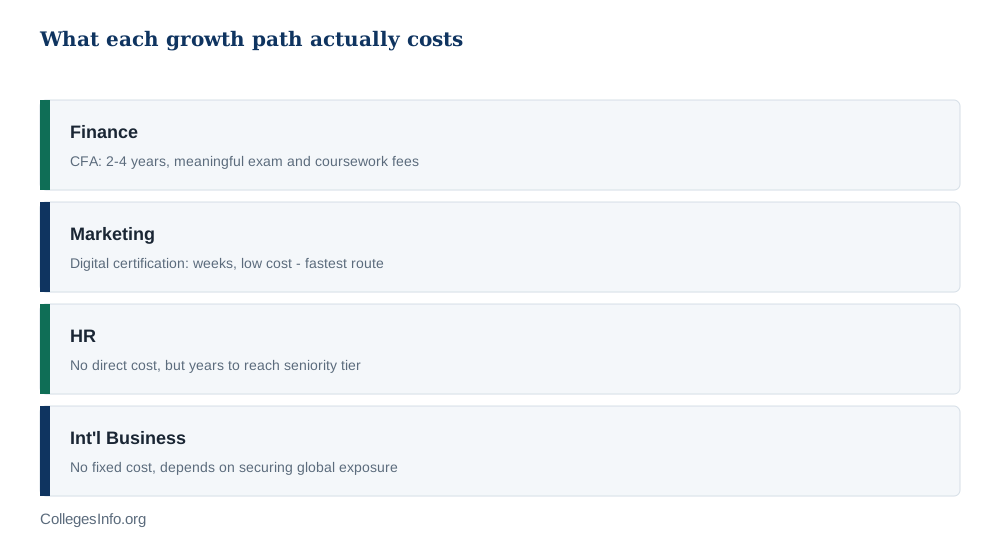
The specific growth mechanism this guide has identified for each specialization carries its own cost, worth factoring into the choice alongside salary potential. CFA, the qualification most tied to Finance's long-term ceiling, involves a multi-level exam process spanning roughly two to four years with meaningful coursework and exam fees at each level, a genuine financial and time commitment beyond the BBA itself. Marketing's digital certifications are comparatively inexpensive and quick, often completable within weeks, making Marketing's growth path the lowest additional-cost route among the four specializations covered here.
HR's growth path, reaching HRBP or Talent Acquisition seniority, carries no direct certification cost but does require several years of accumulated experience before the compensation jump materialises, an opportunity cost in time rather than direct fees. International Business's growth path similarly carries no fixed certification cost but depends on securing actual international-facing roles or assignments, which may not be available to a graduate early in their career regardless of ambition, making this specialization's growth timeline the least within an individual student's direct control among the four.
Marketing: Strong Growth, But Only With a Specific Digital Skill Layered On
BBA Marketing graduates typically start around Rs 3 to 5 lakh, in roles spanning brand management, sales, and increasingly digital marketing execution. The specific, well-documented pattern here: graduates who pair the degree with a recognised digital marketing certification report starting salaries 20 to 30 percent higher than peers without one, Google Analytics or HubSpot are the two most commonly cited, a difference that compounds further with each subsequent salary review. This is a meaningfully different growth mechanism from Finance's CFA pathway; it is a shorter, less expensive certification that can be completed alongside the degree itself rather than requiring a multi-year separate qualification process afterward.
A student drawn to Marketing specifically should treat the digital-skills layer as close to mandatory rather than optional, given how consistently sources point to this exact certification gap as the difference between an average and an above-average starting package in this specialization, a gap that widens further once a candidate has two or three years of experience with demonstrated campaign results to show alongside the certification itself. Certifications through Google's own Skillshop platform are among the most commonly cited entry points for this specific credential.
Candidates researching specific Bangalore BBA colleges and their available specialization tracks can browse our Bangalore BBA colleges guide, or compare institutions directly using the college comparison tool before shortlisting a specific programme.
HR: The Honest Ceiling, and What Actually Raises It
BBA HR graduates typically start in the lowest entry-salary bracket among the four traditional specializations, commonly cited around Rs 2.5 to 4.5 lakh, in roles like HR executive or recruiter. This is worth stating plainly rather than glossing over, since HR is sometimes marketed alongside Finance and Marketing as if the entry economics were identical, and they are not, a gap that surprises students who chose HR expecting parity with the other tracks and only discover the difference after committing to the specialization. The meaningful growth in HR comes specifically from moving into HR Business Partner or Talent Acquisition Lead roles with five-plus years of experience, where compensation commonly reaches Rs 8 to 12 lakh, a genuine and achievable jump, but one that depends on reaching a specific seniority tier rather than simply accumulating years in a junior HR role without a clear progression plan toward that tier.
A student whose primary motivation is starting salary should weigh HR's lower entry bracket directly against the other three specializations. A student truly interested in people management, organisational behaviour, and talent strategy, who is comfortable with a longer runway to the stronger compensation tier, may still find HR the right fit despite the less favourable entry-level comparison.
International Business: Global Roles, Less Certification-Dependent Growth
BBA International Business graduates typically start in the Rs 3.5 to 6 lakh range, in roles spanning export documentation, international trade coordination, and global supply chain functions. Unlike Finance and Marketing, this specialization's growth trajectory is less tied to a single well-defined certification and more directly tied to actual international exposure, whether through employer-based global rotations, export-import firm experience, or multinational corporation placement specifically. This makes International Business a distinctly different kind of bet: a student choosing it should prioritise employers and internship opportunities that offer real cross-border exposure early, since the credential itself carries less independent weight than Finance's CFA or Marketing's digital certification does for their respective tracks and career progression timelines.
| Specialization | Entry salary range | What actually unlocks growth |
|---|---|---|
| Finance | Rs 3.5-6 lakh | CFA qualification, increasingly expected |
| Marketing | Rs 3-5 lakh | Digital certification (Google Analytics, HubSpot) |
| HR | Rs 2.5-4.5 lakh | Reaching HRBP/Talent Acquisition seniority |
| International Business | Rs 3.5-6 lakh | Real cross-border employer exposure |
Where Business Analytics Fits Into This Comparison
Several more recent sources place Business Analytics, a newer specialization not yet offered by every BBA college, ahead of all four traditional tracks on current salary potential, driven by genuine, broad-based industry demand for data-driven decision-making capability rather than a single certification or seniority milestone. This guide treats that claim with some caution, since Business Analytics as a distinct BBA specialization is still a relatively recent addition at many institutions, meaning the salary data behind these claims reflects a smaller, less mature graduate cohort than the decades of outcomes underlying Finance, Marketing, HR, and International Business figures. A student drawn to Business Analytics should still weigh it seriously given the underlying demand signal, while recognising that the specific salary figures cited for it carry less long-run evidence behind them than the four established tracks this guide covers in depth, a distinction worth keeping in mind when comparing a newer specialization's projected numbers against decades of documented outcomes for the older four.
The same verification applies when comparing government-quota and management-quota admission routes, and our admission assistance service page covers that path.
The MBA Question: Does Specialization Choice Even Matter If You Plan to Pursue One?
A recurring theme across nearly every source on this topic is that BBA graduates across all specializations commonly pursue an MBA as the next step, and MBA-level compensation, commonly cited in the Rs 8 to 15 lakh range depending on specialization and institute, tends to dwarf the differences between undergraduate specialization tracks discussed above. This raises a genuine practical question: if a student is confident they will pursue an MBA regardless of undergraduate specialization, does the BBA specialization choice matter as much as this guide suggests?
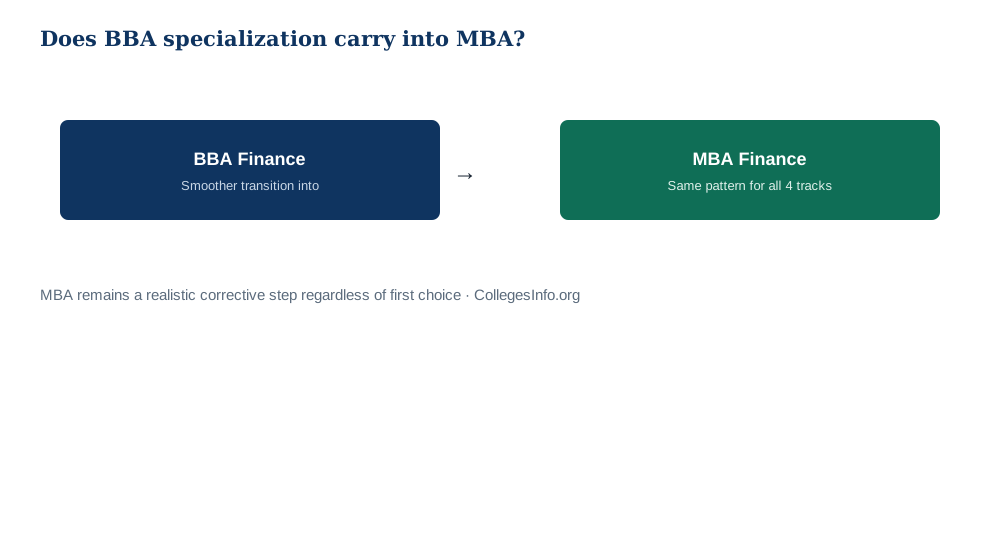
The honest answer is that it matters less for final compensation but still matters for direction. A BBA Finance graduate entering an MBA programme typically continues into an MBA Finance specialization more easily than someone starting fresh, and the same directional continuity applies across Marketing, HR, and International Business. A student who truly does not know their long-term direction yet should weigh the specialization choice as an exploration tool rather than a fixed career sentence, since an MBA remains a realistic corrective step regardless of which undergraduate track they choose first, a safety net worth keeping in mind rather than treating the initial specialization decision as irreversible.
Choosing Based on Genuine Interest, Not Just the Salary Table
Given how closely entry salaries cluster across Finance, Marketing, HR, and International Business, and given that each specialization's long-term growth depends on a specific, identifiable action, CFA for Finance, a digital certification for Marketing, reaching HRBP seniority for HR, and genuine cross-border exposure for International Business, the more useful question for most students is not "which pays most" but "which of these specific growth actions am I actually likely to follow through on." A student with genuine interest in numbers and markets is far more likely to complete the CFA than a student who chose Finance purely because a salary table ranked it favourably. The same logic applies to each of the other three tracks. For help weighing a specific specialization against your own interests and career goals, our admission guidance team can walk through the trade-offs directly.
Frequently Asked Questions
Which BBA specialization has the highest starting salary?
Entry-level salaries across Finance, Marketing, HR, and International Business sit close enough together, roughly Rs 2.5 to 6 lakh depending on specialization and specific role, that the difference is marginal at the point of graduation. Business Analytics is cited by several recent sources as currently offering the highest entry potential, though with less long-run data behind that claim than the four established tracks.
Is HR a bad BBA specialization choice because of lower starting pay?
Not necessarily. HR does start lower than the other three traditional specializations on average, a fact worth stating clearly rather than downplaying, but it offers a genuine, well-documented path to considerably higher compensation once a graduate reaches HR Business Partner or Talent Acquisition Lead seniority with experience.
Do I need CFA if I choose BBA Finance?
Not strictly required to graduate or find an entry-level role, but increasingly expected for continued career progression in India's financial sector specifically, according to industry sources describing current banking-sector norms. A student choosing Finance for its long-term salary ceiling should plan for CFA as part of that path rather than treating it as optional.
Does BBA specialization choice limit which MBA specialization I can pursue later?
No, students can and do switch specializations between BBA and MBA. However, continuing in the same direction, BBA Finance into MBA Finance, for example, is typically a smoother transition than switching tracks entirely, since foundational coursework carries forward more directly.
Which BBA specialization is best for international career opportunities?
International Business is specifically built around global trade, export-import operations, and multinational corporate roles, making it the most directly relevant traditional specialization for that specific goal, though its growth depends more on securing genuine cross-border employer exposure than on a single certification the way Finance and Marketing do.
Should I choose a BBA specialization based on salary data alone?
This guide recommends against it. Since entry salaries cluster closely and each specialization's long-term growth depends on a specific follow-through action, a certification, a seniority milestone, or targeted work experience, genuine interest in that specific action matters more for actual outcomes than the headline salary figure alone.
Can I combine two BBA specializations, like Finance and Marketing?
Some colleges structure programmes to allow a primary specialization with electives from a second track. This works best when aimed at a specific hybrid role, such as financial services marketing, rather than combined simply to avoid choosing, since most entry-level campus recruitment still hires against a single, clearly labelled specialization.
How much does the CFA cost and how long does it take alongside Finance?
CFA is a multi-level exam process typically spanning roughly two to four years, with meaningful coursework and exam fees at each level. This is a real additional time and cost commitment beyond the BBA itself, worth factoring into the decision before committing to Finance specifically for its long-term salary ceiling.
This article is for informational purposes only. Salary figures are broad industry ranges and vary by employer, city and individual profile; confirm current expectations directly with employers or placement cells before making career decisions.
About the author
OneCity Technologies Pvt. Ltd began in 2006 publishing an annual print education directory for Karnataka students and parents. As demand grew, OneCity launched an education portal in 2019 to bring that same directory information online, and in 2025 relaunched as CollegesInfo.org, a comprehensive Karnataka college directory covering 1,500+ institutions across engineering, medical, management, arts, commerce, and more. Founder L K Monu Borkala brings 20+ years of business experience and 19 years of work across various education-sector services. CollegesInfo.org's content is built from publicly available KEA, NMC, AICTE, and university data, cross-checked against official sources wherever possible. CollegesInfo.org's admission assistance service helps students secure admission to colleges they are eligible for under that college's actual published criteria. We help you get the best admission to your preferred colleges without hassle.
Not sure which BBA specialization fits your goals?
We help you get the best admission to your preferred colleges without hassle.
For a wider comparison, see the complete guide to MBA and BBA colleges in Karnataka: MBA / BBA Colleges in Karnataka.
Need help with admission?
CollegesInfo.org helps students secure admission to colleges they are eligible for under that college's actual published criteria. Chat with us on WhatsApp or explore admission assistance.