Last Updated: August 26, 2026
Renal Dialysis Technology (RDT) trains allied health professionals to operate dialysis machines, monitor patients with kidney failure, and assist nephrologists during lifesaving renal replacement therapy. By integrating anatomy, physiology, biomedical equipment, and practical clinical experience, the equips graduates to conduct safe, infection-controlled dialysis treatments and offer emergency assistance.
Demand for trained dialysis technologists is rising in India and abroad due to the growing burden of chronic kidney disease, diabetes, and hypertension, the expansion of standalone dialysis centres, and hospital PPP programs that extend services to tier-2/3 cities. Employers seek job-ready candidates who possess a solid understanding of patient care, equipment maintenance, and documentation.
This guide explains everything you need to know: eligibility (subjects, marks, age), course duration and curriculum, typical fees in government and private colleges, scholarships, and the step-by-step admission process–from applications and entrance tests to counselling and final seat allotment.
What is Renal Dialysis Technology?
Renal Dialysis Technology (RDT) is an allied health field focused on performing hemodialysis, and Patients suffering from acute or chronic renal failure can receive peritoneal dialysis. Dialysis technologists prepare and prime machines, assess water quality, cannulate access sites under supervision, monitor vital signs, manage anticoagulation, and ensure asepsis and equipment safety throughout the session. They coordinate with nephrologists and nurses, educate patients on diet and fluid control, and document procedures, alarms, and outcomes. Programs are offered as a Diploma in Renal Dialysis Technology (RDT), a B.Sc. in Renal Dialysis Technology, and M.Sc./PG programs that enhance clinical skills, provide research exposure, and promote unit management. Graduates support hospital nephrology departments and standalone dialysis centres across urban and semi-urban healthcare networks.
Eligibility Criteria for RDT Course
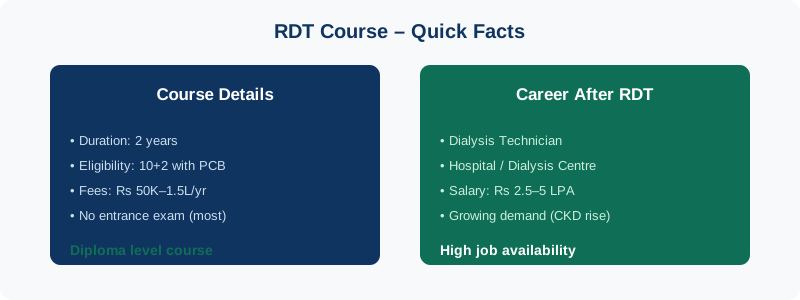
Most Renal Dialysis Technology (RDT) programs require a 10+2 qualification from a recognised board with Physics, Chemistry, and Biology (PCB); some colleges also accept PCM with Biology as an additional/bridge subject. A typical minimum aggregate is 45–50% (lower relaxation may apply for reserved categories as per state norms). English is often a compulsory subject. The usual age requirement is 17 years or above at the time of admission. Applicants should be medically fit to work in clinical environments.
Admissions can be merit-based on Class 12 scores or through institution- or state-level entrance tests (e.g., university paramedical/standard allied health tests). Government/state paramedical boards may run centralised counselling; private universities often conduct their own selection (application + test/interview).
Diploma vs. B.Sc. RDT: Diploma entries emphasise basic science eligibility with merit-based selection for a shorter, skill-focused path. B.Sc. RDT expects stronger science foundations, sometimes prefers PCB, and may include an entrance test/interview. Some universities offer lateral entry to a B.Sc. (RDT) program in the second year for candidates holding a recognised Diploma in Dialysis Technology.
Eligibility Snapshot (Quick Glance)
|
Program |
Min. Qualification |
Mandatory Subjects |
Min. Marks |
Age |
Selection Mode |
|
Diploma (RDT) |
10+2 |
PCB/PCM (English preferred) |
45–50% |
≥17 |
Merit/College test |
|
B.Sc. (RDT) |
10+2 |
PCB (some accept PCM) + English |
50% (relaxation as per norms) |
≥17 |
Merit/Entrance + interview |
|
B.Sc. (Lateral) |
Diploma in Dialysis Tech (recognised) |
Relevant diploma |
As per the university |
≥18 |
Merit/Bridge criteria |
Course Duration and Curriculum Overview
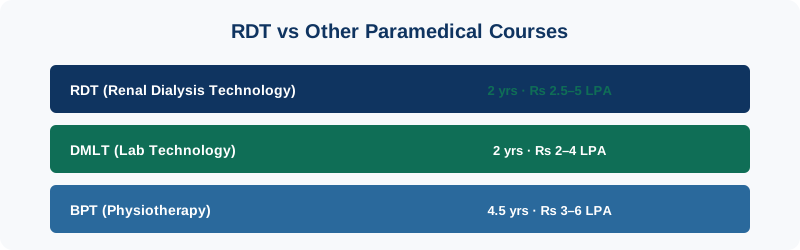
While the B.Sc. in Renal Dialysis Technology lasts for three years (six semesters), the Diploma in Renal Dialysis Technology lasts typically for two years (four semesters). Both programs prepare dialysis technicians for the workforce by combining classroom instruction with closely monitored clinical experience.
Core theory usually covers: Human Anatomy & Physiology, Biochemistry, Pathology basics, Microbiology & Infection Control, Pharmacology essentials, Dialysis Technology (hemodialysis and peritoneal dialysis), Water Treatment & RO systems, Vascular Access care, Biomedical Instrumentation, Medical Ethics & Communication, Emergency/CPR, Quality Assurance, and Health Records.
Practical training is emphasised throughout. Students learn machine setup and priming, dialyser preparation, aseptic cannulation under supervision, anticoagulation protocols, ultrafiltration targets, alarm troubleshooting, patient monitoring (including vital signs and fluid balance), water quality checks, and post-dialysis disinfection. Rotations in hospital dialysis units and standalone centres progressively build competencies and confidence.
Typically, Diploma programs devote a higher proportion to hands-on skills within a shorter timeline, whereas the B.Sc. adds broader science depth, research orientation, and soft-skills development. Many colleges conduct internal assessments, OSCEs, and logbooks to track skill mastery, ensuring graduates meet clinical safety standards and are deployment-ready from day one.
Fee Structure of RDT Course
Tuition varies by institution type and city. Government colleges charge lower, regulated fees, while private universities and teaching hospitals cost more due to the need for infrastructure and clinical tie-ups. Typical ranges are provided below; please confirm the latest prospectus for accuracy.
Indicative Fee Ranges (per year)
|
Program |
Govt. College Tuition |
Private College Tuition |
Hostel & Mess (annual) |
Exam/Lab/Other* |
|
Diploma (RDT) |
₹30,000–₹50,000 |
₹50,000–₹70,000 |
₹40,000–₹90,000 |
₹7,000–₹20,000 |
|
B.Sc. (RDT) |
₹50,000–₹90,000 |
₹70,000–₹1,50,000 |
₹50,000–₹1,00,000 |
₹8,000–₹25,000 |
*Other includes lab consumables, ID/uniforms, library, caution deposit, and clinical insurance. One-time deposits are usually refundable.
Notes and saving tips: Many colleges permit semester-wise instalments. Eligible students can apply for National Scholarship Portal (NSP) schemes, state welfare scholarships, EWS/SC/ST/OBC support, minority scholarships, and institutional merit waivers. Some hospitals offer stipends during clinical postings or bonded placements that offset costs. Public sector banks provide education loans with interest subsidies under government schemes. Please keep your admission letter, fee schedule, and KYC documents ready.
The actual outlay depends on the city, accreditation level, hospital rotations, and hostel choices. Budget for books (₹3,000–₹7,000 per year) and local transport if you live off-campus. Always verify hidden charges (such as re-examination, bus, alumni, and certificate fees) to avoid surprises.
Admission Process Explained Step by Step
Step 1: Check eligibility. Ensure you meet the age, subject combination (PCB/PCM), and minimum percentage; confirm any category relaxations.
Step 2: Track application windows. Visit state paramedical boards, university portals, or college websites for more information. Register online, carefully fill out the forms, upload the required documents (photo, signature, and marksheets), and pay the fees. Some institutes accept offline forms via their admission cell.
Step 3: Entrance exam (if required). States/universities may hold allied health/paramedical tests. Download syllabi, attempt mock papers, and print admit cards. Non-exam colleges shortlist directly from Class 12 marks.
Step 4: Merit list and counselling. After the results are published, authorities release the rank/merit lists. Participate in centralised or institute-level counselling: verify details, lock choices, and track seat allotment rounds.
Step 5: Document verification and fees. Carry originals and photocopies–Class 10/12 marksheets, transfer/migration, caste/EWS certificates (if applicable), domicile, medical fitness, Aadhaar/passport photos. Pay your provisional/first-semester fees by the deadlines to confirm your seat.
Pathway differences:
• Government/state colleges: Often centralised portals, fixed fee structures, domicile rules, and multiple counselling rounds.
• Private colleges/universities: College-specific timelines, institute tests/interviews, and flexible payment plans.
• Deemed universities: National application windows, broader intake from multiple states, and structured scholarship policies.
Tips for applicants: Create a checklist, set calendar reminders, and keep PDFs ready under size limits. Apply to a mix of colleges (govt + private) to balance cost and chances. Read the prospectuses for details on attendance, internship, and refund policies. Track hostel seats separately, as they tend to fill up early. Finally, monitor official notifications; do not rely on third-party posts for updates.
Final step: Report to campus on the assigned date for orientation and clinical briefing; submit medical fitness, sign undertakings, and collect your ID and timetable.
Career Scope and Job Opportunities After RDT
RDT graduates find opportunities as Dialysis Technician, Senior Dialysis Technician, Dialysis Therapist, Clinical Coordinator, Nephrology Assistant, RO Plant Technician, and Home-hemodialysis Assistant. Daily responsibilities include machine priming, water-quality checks, aseptic cannulation under supervision, anticoagulation management, ultrafiltration targeting, troubleshooting alarms, patient monitoring, and documenting sessions.
Workplaces span multispecialty hospitals, nephrology departments, standalone dialysis centres, PPP units in district hospitals, NGOs, home-care providers, and medical device companies (as application specialists), including RO/water-treatment vendors. Shifts are standard; weekend and holiday availability may be required.
Salary & growth: Freshers typically start around ₹2.5–5 LPA depending on city, employer type, and shift allowances. With 2–4 years of experience, technologists can progress to Senior/Lead Technician, Unit In-charge, Clinical Coordinator, Educator/Trainer, Quality Auditor, or Centre Manager. Those pursuing an M.Sc. (RDT/Allied Health) or specialised postgraduate diplomas (infection control, biomedical instrumentation, hospital administration) open doors to supervisory and academic roles.
Upskilling & certifications, including BLS/ACLS, infection control modules, water-treatment and RO plant maintenance, patient communication, and digital EMR skills, enhance employability. Some regions recognise dialysis-specific competency certifications; verify the preferred credential with target employers.
International avenues: The GCC and other regions recruit experienced dialysis technologists. Candidates may need to obtain licensing/credentialing (e.g., Prometric/HAAD/DHA/MOH) and document clinical hours.
Overall, RDT offers stable employment, meaningful patient interaction, and clear pathways into leadership or education, especially as the prevalence of CKD and dialysis capacity continues to expand in India and abroad.
Why Choose the RDT Course?
RDT is a smart choice if you want a clinically hands-on, job-ready allied health career with strong demand and clear growth. Dialysis units are expanding across India due to rising CKD, diabetes, and hypertension, creating steady openings in hospitals and standalone centres. Compared with many allied programs, RDT offers shorter training, affordable fees, and faster entry into paid clinical roles. The work combines patient care, handling of biomedical equipment, infection control, and documentation–skills highly valued by employers in India and the GCC. With experience, graduates can transition into senior technician, coordinator, educator, or centre manager roles, or pursue M.Sc./PG diplomas for academic and leadership opportunities.
Conclusion
To recap, RDT prepares allied health professionals to deliver safe hemodialysis/peritoneal dialysis. Eligibility generally requires a 10+2 (PCB/PCM) qualification, a minimum of 45–50% marks, an age of 17 or above, and medical fitness. Diplomas run for 2 years, while a B.Sc. spans 3 years, offering a deeper understanding of science and wider clinical exposure. Annual fees range from ₹30,000 to ₹70,000 (for the Diploma) and ₹70,000 to ₹1.5 lakh (for the B.Sc.), with scholarships, loans, and stipends available to help reduce costs. Admissions are based on merit, with entrance counselling, document verification, and fee payment. Graduates typically start at around ₹2.5–5 LPA across hospitals and dialysis networks, with opportunities for growth into senior, coordinator, or management roles. Interested in specific colleges, seats, or scholarships? Contact us today for admission guidance or apply now to secure your seat.
To know more post graduation courses click below:
post-graduation options at OneCity
Frequently Asked Questions
What is the full form of RDT course?
RDT stands for Registered Dental Technician. It is a 2-year diploma course that trains students to fabricate dental prostheses, crowns, bridges, and orthodontic appliances.
What is the eligibility for RDT course?
Candidates must have passed 10+2 (PUC) with Physics, Chemistry, and Biology. Some colleges accept candidates with just 10th pass for certain dental technician programs.
What is the salary after RDT course?
Starting salary ranges from Rs 1.5-3 LPA in dental labs and clinics. Experienced dental technicians earn Rs 3-6 LPA. Self-employed technicians running their own labs can earn significantly more.
Is RDT better than BDS?
BDS is a 5-year degree that makes you a dentist. RDT is a 2-year diploma for dental lab technicians. BDS offers higher salary and prestige but requires NEET and higher investment. RDT is a quicker, more affordable path into the dental field.
Need Admission Assistance?
Not sure which college suits your rank, category, or budget? WhatsApp our counsellors at +91 6363 330 233 – we help you get the best admission to your preferred colleges without hassle. We help Karnataka students and families with KCET counselling, NEET seat selection, management quota advice, and college shortlisting.
Chat on WhatsAppNeed help with admission?
CollegesInfo.org helps students secure admission to colleges they are eligible for under that college's actual published criteria. Chat with us on WhatsApp or explore admission assistance.
Official Sources: Information on this page is sourced from All India Council for Technical Education (AICTE) and University Grants Commission (UGC), the primary regulatory bodies governing this subject in India.