Last Updated: August 26, 2026
Last Updated: September 11, 2026
Get complete M.Pharm (Chemistry) admission 2027-28 details: eligibility, entrance exams (GPAT, PGCET, PGECET), top colleges, deadlines, process, careers & FAQs.
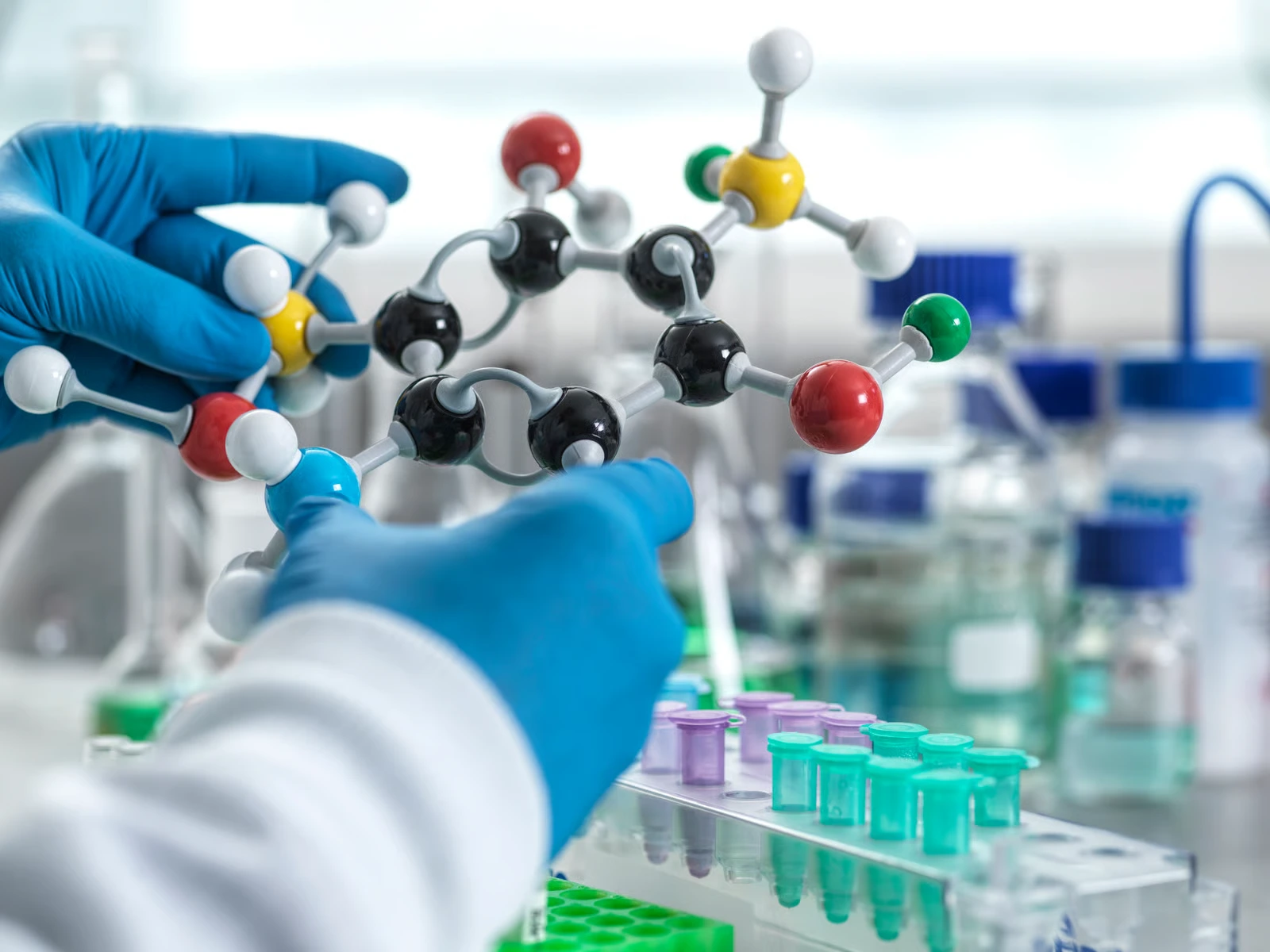
M.Pharm (Chemistry) is a postgraduate program that builds advanced expertise in pharmaceutical and medicinal chemistry, bridging foundational B.Pharm knowledge with research-driven drug design and development. In India, the course equips graduates to work on synthesis, characterisation, and optimisation of active pharmaceutical ingredients (APIs), impurity profiling, analytical method development, and regulatory-aligned quality systems. For the pharma industry, it plays critical roles in R&D pipelines, formulation support, and process chemistry, while academia benefits from trained scholars who can contribute to scholarly research, patents, and teaching. As India strengthens its position as a global pharmaceutical and contract research hub, demand for skilled postgraduate pharmacy professionals is expected to rise in 2025, driven by innovation in small-molecule therapies, generics, and speciality products. M.Pharm (Chemistry) thus offers a high-impact pathway for graduates seeking research-oriented careers with strong industry relevance.
About M.Pharm (Chemistry)
M.Pharm (Chemistry) is a two-year postgraduate pharmacy specialisation focused on the discovery, design, synthesis, and analysis of drug molecules. The program deepens competence in small-molecule chemistry for pharmaceutical applications, combining advanced theory with hands-on laboratory work and research. Students gain exposure to GLP/GMP practices and key instrumentation, including HPLC, GC, LC-MS, and FT-IR.
Academically, most universities operate on a four-semester system, comprising core theory, guided laboratory modules, electives, seminars, and a capstone dissertation. Typical modules include Pharmaceutical Organic Chemistry, Medicinal Chemistry, Advanced Spectral Analysis (UV-Vis, IR, NMR, MS), Computer-Aided Drug Design (CADD), Organic Synthesis Strategies, Green and Process Chemistry, Impurity and Degradation Studies, Analytical Method Development/Validation, Biostatistics, IPR and Regulatory Affairs, and Research Methodology.
Career scope spans R&D in innovator and generic companies, CRAMS/CROs, formulation support, API/process development, quality control/quality assurance, regulatory documentation, and academia. Graduates can pursue PhD programs, patents, and publications, or move into interdisciplinary roles that intersect chemoinformatics, toxicology, and translational research, aligning closely with India's expanding pharmaceutical and life sciences ecosystem.
Eligibility Criteria
Eligibility for M.Pharm (Chemistry) in India typically requires a B.Pharm degree from a PCI-approved institute with a minimum aggregate of 50%–60% (CGPA equivalent as per university norms). Many public universities and top private colleges prefer the GPAT qualification, as GPAT scores are commonly required for AICTE fellowships/stipends. Final-year B.Pharm students may apply provisionally, subject to producing their pass certificate at the time of admission.
University-specific criteria may include a minimum number of subject credits in Pharmaceutical/Medicinal Chemistry, no outstanding backlogs at the time of counselling, and a qualifying score in the institution's entrance test or interview. Some states also consider domicile for government-quota seats, while management/NRI quotas follow separate merit and fee rules.
Relaxation: For SC/ST/OBC (non-creamy layer)/PwD candidates, a 5% relaxation in the qualifying marks is typically permitted, as per state or university rules. Reserved-category seat availability and documents must comply with the latest government notifications.
Age limit: Most universities do not prescribe an upper age limit for postgraduate pharmacy admissions. If an age policy exists, it follows state higher-education norms and is usually flexible for working professionals.
Additional requirements often include completion of internship/practical training as part of the B.Pharm program, medical fitness, character/transfer certificates, and equivalence for foreign or distance-mode qualifications, as per the admitting university's regulations.
Entrance Exams for Admission 2027-28
List of top entrance exams for M.Pharm (Chemistry):
GPAT (Graduate Pharmacy Aptitude Test) – national-level.
The primary national gateway for M.Pharm admissions. MCQ-based, covering core B.Pharm subjects with substantial weightage on Pharmaceutical/Medicinal Chemistry and analysis. GPAT scores are widely accepted by government and private universities and can open up fellowships where applicable. Competitive institutes generally shortlist well above the qualifying cutoff, so target a rank within the upper percentiles for top options.
State-level exams: Karnataka PGCET, AP PGECET, TS PGECET, etc.
States typically use GPAT first and then fill the remaining seats via their own tests. Syllabi reflect B.Pharm fundamentals, with an emphasis on chemistry, analysis, and pharmaceutics. Seat matrices, reservation policies, and fee structures vary by state; domicile benefits may apply for government-quota seats. Monitor official CET portals for counselling schedules, document verification, and round-wise allotments.
University-level tests.
Select institutions (e.g., NIPERs, Jamia Hamdard, BITS, Manipal, and state universities) conduct their own entrance exams and often interviews or written tests in addition. Patterns, weightages, and shortlisting criteria differ; many assess subject depth in medicinal/organic chemistry, spectral interpretation, and research aptitude.
Exam pattern (MCQs, pharmacy core subjects, chemistry).
Mostly single-correct MCQs, 2–3 hours, with negative marking in several exams. Syllabus spans organic/medicinal chemistry, spectroscopy (IR, NMR, MS), analytical techniques, pharmaceutics, pharmacology basics, and regulatory/quality concepts.
Tips for Preparation and Expected Cut-Off Trends
Prioritise concept notes, past papers, and full-length mocks; revise name reactions, SAR, retrosynthesis logic, and analytical calculations. Practice spectral problem-solving weekly. Use standard texts and validated question banks. Expect stable-to-slightly higher cutoffs at top institutes due to sustained demand and limited high-quality seats; track prior-year allotments to set realistic target ranks.
Admission Process
Step 1: Application form submission.
Check timelines on exam portals (GPAT/state CET/university) and target colleges. Register, complete the form, upload documents (photo, signature, B.Pharm marksheets/semester-wise transcripts, category/ domicile/disability proofs if applicable), and pay fees. Final-year students apply provisionally.
Step 2: Entrance exam → result → merit list.
Appear for GPAT/state/university tests. After the results are released, download the scorecard and watch for merit lists/shortlists. For institutes with interviews/WAT, prepare research interests and fundamental knowledge of subjects.
Step 3: Counselling/verification.
Participate in centralised counselling (state CET/NIPER/Jamia/others) or institute rounds. Complete online registration, choice filling, and locking. Document verification may be online or in-person; carry originals and photocopies (ID, marksheets, degree/provisional, transfer/character, category, migration, photos).
Step 4: Seat allotment and reporting.
Allotments are published round-wise. Upon allotment, pay the acceptance fee within the deadline and report to the college (either in person or via the online admission module). Non-reporting leads to cancellation; however, upgradation options may be available in later rounds.
Step 5: Direct/Management Quota (Private Colleges).
If seats remain or for institute-level quotas, apply directly on the college website/admissions desk. Merit, interview, and fee norms apply; please confirm PCI approval and university affiliation before making a payment.
Step 6: Final admission formalities.
Submit anti-ragging affidavits, medical fitness, gap certificate (if needed), and hostel requests. Keep receipts and refund rules handy. Attend orientation; semester registration follows the academic calendar.
Top Colleges Offering M.Pharm (Chemistry) in India
MVM College of Pharmacy, Bengaluru – Positioned first for its strong focus on medicinal and pharmaceutical chemistry, modern analytical labs (HPLC, UV–Vis, FT-IR), and guided research dissertations aligned to API/process chemistry and impurity profiling. Active industry interactions, seminars, and project mentorship help graduates target roles in R&D, QA/QC, and CRAMS.
NIPERs (Mohali, Hyderabad, Ahmedabad, Guwahati, Kolkata, Hajipur, Raebareli) – National institutes with rigorous entrance + interview, faculty-led research groups in drug design, spectroscopy, and process chemistry, and strong linkages with pharma/CROs. Alumni visibility in discovery and generics R&D is consistently high.
Jamia Hamdard (New Delhi) – Known for medicinal chemistry, CADD, and analytical method development; vibrant publication culture and collaborative projects with industry labs support strong placements.
Manipal College of Pharmaceutical Sciences (MAHE) – Thorough instrumentation suites, interdisciplinary electives, and industry-backed projects; steady campus recruitment across formulation and API firms.
BITS Pilani (Pilani/Hyderabad) – Research-intensive curriculum, thesis-driven PG training, and opportunities for cross-department work (chemistry/pharmacy); reputed recruiters from pharma and biotech.
Leading state universities/colleges such as Panjab University (Chandigarh), JSS College of Pharmacy (Mysuru/Ooty), Bombay College of Pharmacy (Mumbai), MSU Baroda, and Government College of Pharmacy (Bengaluru/Amravati) offer solid medicinal/analytical chemistry training, with university hospitals or partner labs enabling translational work.
Across these institutes, placement outcomes are supported by publication exposure, internships, and alumni networks; research opportunities include small-molecule synthesis, SAR, spectral elucidation, QbD/DoE in analysis, and regulatory documentation experience.
Application Guide
How to apply online.
Create accounts on the relevant portals–GPAT (national), state CETs (e.g., PGCET/PGECET), and target university sites. Complete profiles, verify email/phone numbers, and fill in academic details exactly as they appear on the marksheets. Upload documents in the specified format/size, select "M.Pharm (Pharmaceutical/Medicinal/Pharmaceutical Chemistry)” wherever applicable, choose preferred exam centres/colleges, review, and pay fees. Save the final application, fee receipt, and correction window dates. For institute-level admissions, apply separately on each college website and track their merit lists.
Required documents.
B.Pharm semester-wise mark sheets and consolidated transcript; degree/provisional certificate; GPAT/state/university scorecard (when released); Class 10/12 certificates (DOB proof); category/domicile/EWS/PwD/NCL certificates as applicable; photo, signature, ID proof (Aadhaar/passport/driver’s licence); transfer/character/migration certificates at admission; medical fitness and anti-ragging affidavits; work-experience letter (if claimed); passport-size photographs.
Deadlines (tentative timeline).
GPAT notification: Dec 2025–Jan 2026; registration: Jan–Feb; exam: Mar–Apr; result: Apr–May.
State CETs: Notifications, February–April; Exams, April–June; Counselling, June–August.
University exams: institute-specific windows Feb–Jun; interviews/written tests May–Jul; offers Jun–Aug. Always confirm dates from official brochures, as they may shift with regulatory updates.
Common mistakes to avoid.
Entering name/DOB differently from certificates; misreporting CGPA/percentage or backlog status; uploading blurred or oversized files; missing category format or validity; skipping separate institute applications after GPAT/CET; ignoring correction windows; paying via unstable connections without verifying status; not locking choices in counseling; missing reporting/fee deadlines; overlooking PCI approval/university affiliation of private colleges; paying non-refundable "blocking" fees without reading refund rules.
Pro tips.
Maintain a deadline tracker; keep a scanned-documents folder in required sizes; use past-year merit lists to set target ranks and preference orders; draft a concise Statement of Purpose for university interviews highlighting chemistry interests (drug design, spectral analysis, process chemistry).
Career Opportunities after M.Pharm (Chemistry)
Graduates of M.Pharm (Chemistry) enter roles that blend synthetic, analytical, and regulatory skills. Core profiles include Research Scientist/Associate (lead series design, SAR, route scouting, impurity profiling), Process/Scale-up Chemist (optimize yields, safety, cost), Analytical/QA–QC Specialist (method development, validation, stability), Regulatory/CMC Associate (dossiers, specifications), and Lecturer/Assistant Professor (teaching plus guided research). In CRAMS/CRO environments, chemists support global discovery and development mandates, contributing to IP, publications, and tech transfers.
Industries span innovator and generic pharma, speciality/API manufacturers, biotech start-ups, contract research/CRAMS, pharma analytics labs, and regulatory consulting. Domain depth in spectroscopy (IR/NMR/MS), chromatographic techniques (HPLC/GC/LC-MS), CADD basics, and QbD/DoE make candidates competitive across R&D and quality functions.
Future trends are expanding opportunities: AI-assisted drug discovery (molecule generation, property prediction), green/process intensification (flow chemistry, safer reagents), complex generics and 505(b)(2) repositioning, and global compliance (ICH, data integrity). Upskilling in chemoinformatics, Python for data handling, and advanced spectral interpretation is advantageous. Academia remains viable via PhD pathways, while international prospects exist through CROs with overseas clients and graduate research positions. With India’s sustained pharma growth and export focus, M.Pharm (Chemistry) graduates in 2025 can expect strong, research-centric career trajectories.
Conclusion
M.Pharm (Chemistry) in 2026 is a strong, research-centric pathway for graduates who enjoy drug design, synthesis, spectral analysis, and quality systems. With India's pharma ecosystem expanding across innovator, generic, and CRAMS segments, the program builds deep subject expertise and industry-ready skills on instrumentation, CADD basics, and regulatory alignment. Admissions hinge on GPAT/state or university tests, followed by counselling and institute rounds–so early planning, accurate applications, and targeted preparation are essential. Shortlist colleges with proven research output, mentoring, and facilities, and maintain a timeline tracker through exams and counselling. If you seek impactful, science-driven roles in R&D, QA/QC, or academia, M.Pharm (Chemistry) offers compelling long-term prospects.
Also read about : Pharmacy courses in aboard
FAQ
M.Pharm Chemistry – Course Overview
| Parameter | Details |
|---|---|
| Duration | 2 Years |
| Eligibility | B.Pharm with 55% (50% for reserved) |
| Entrance Exams | GPAT, Karnataka PGCET |
| Avg Fee (Govt) | Rs 30,000 - 80,000/year |
| Avg Fee (Private) | Rs 1,00,000 - 3,00,000/year |
| Starting Salary | Rs 4-7 LPA |
| Top Recruiters | Cipla, Sun Pharma, Dr Reddys, Biocon |
| Career Paths | R&D, Quality Control, Regulatory, Academia |
Frequently Asked Questions
What is the eligibility for M.Pharm Chemistry in Karnataka?
Eligibility requires B.Pharm degree with minimum 55% marks. Admission is through GPAT (national) or Karnataka university entrance exams. GPAT qualifiers get AICTE scholarship of Rs 12,400 per month.
What are the career options after M.Pharm Chemistry?
M.Pharm Chemistry graduates find roles in pharmaceutical R&D, drug formulation, quality control, regulatory affairs and academic teaching. Starting salaries range from Rs 4-8 LPA in Karnataka's pharma sector.
Which are the best colleges for M.Pharm in Karnataka?
Top M.Pharm colleges include JSS College of Pharmacy Mysuru, Manipal College of Pharmaceutical Sciences, Al-Ameen College of Pharmacy Bangalore and KLE College of Pharmacy Hubli.
About This Guide
This article is written and maintained by L K Monu Borkala, founder of CollegesInfo.org and OneCity Technologies Pvt Ltd. L K Monu Borkala has been publishing Karnataka education directories since 2006 and covering college admissions data since 2019 through CollegesInfo.org – from KCET counselling to NEET seat selection to MBA programme choices. CollegesInfo.org was built to give Karnataka families the same honest, data-backed guidance that was previously only available through expensive consultants or personal connections.
Information on this page is compiled from official sources including KEA (Karnataka Examinations Authority), RGUHS, VTU, NMC, PCI, INC, and direct feedback from students and families who have gone through the admission process. If you find anything outdated or incorrect, WhatsApp us at +91 6363 330 233 and we will update it.
Need personalised advice for your specific situation – rank, category, budget, or career goal? Our counselling is free. WhatsApp us directly and we will respond within 24 hours.
Official Sources: Information on this page is sourced from Pharmacy Council of India (PCI) and All India Council for Technical Education (AICTE), the primary regulatory bodies governing this subject in India.