Marine Engineering in Karnataka runs through two different routes: a standard 4-year BE/BTech under VTU, admitted via KCET or COMEDK like most engineering branches, or the DGS-approved pathway specifically leading to sea-service certification. Understanding which one you're actually choosing matters more than the branch name alone.
| Detail | Marine Engineering in Karnataka |
|---|---|
| Duration | 4 years (BE/BTech), plus mandatory sea service for DGS-certified routes |
| Admission Routes | KCET, COMEDK UGET, GATE (for PG) |
| Eligibility | 10+2 with PCM, 45-60% aggregate depending on college and quota |
| DGS-Approved Option in Karnataka | Mangalore Marine College and Technology (MMCT), established 2010 |
| Fee Range | Government-aided: Rs 2-4 lakh; Private VTU colleges: Rs 4-7 lakh; DGS-approved premium route: Rs 8-12 lakh |
| Regulatory Bodies | AICTE (academic degree), DGS (sea-service certification specifically) |
🎯 Use the Free KCET Rank Predictor — Enter your rank and category to instantly see which engineering colleges you can get in 2026. No login required. Try KCET Predictor →
Is This the Same as Merchant Navy Preparation?
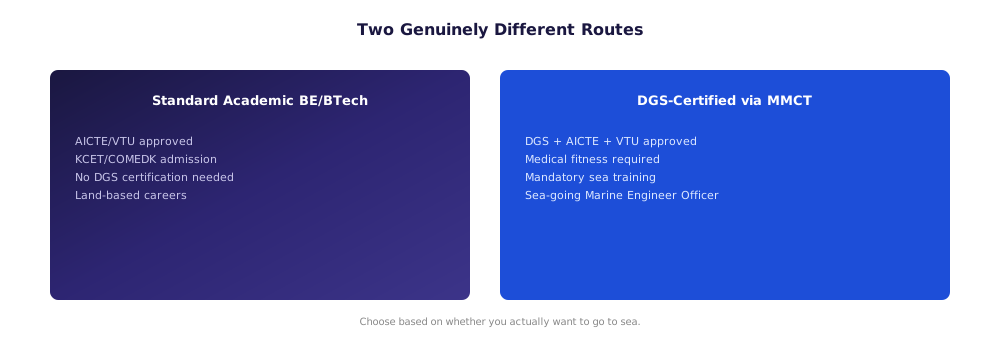
This is worth clarifying before you go further, since the two are related but not identical. Our Merchant Navy Preparatory guide covers the broader sea-career pathway, including Nautical Science and the national IMU system. Marine Engineering specifically refers to the branch of engineering focused on ship machinery, propulsion, and onboard systems — and in Karnataka, you can pursue it as a standard academic BE/BTech degree (like Mechanical or Civil Engineering) without necessarily pursuing DGS sea-service certification, or you can pursue the DGS-approved route specifically if going to sea as a certified Marine Engineer Officer is your actual goal.
Does Karnataka Have a DGS-Approved Option?
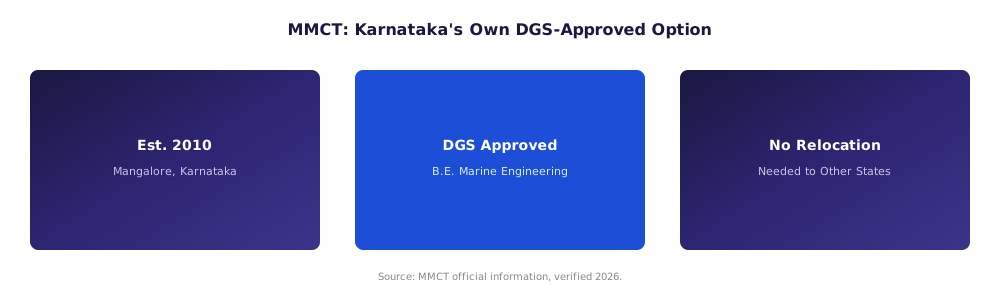
Yes — Mangalore Marine College and Technology (MMCT), established in 2010, holds genuine Directorate General of Shipping approval specifically for its B.E. Marine Engineering programme, alongside AICTE approval and VTU affiliation. This makes MMCT the state's own option for students specifically wanting DGS-certified sea-service eligibility without relocating to Chennai, Mumbai, Kochi, Kolkata, or Visakhapatnam for the Indian Maritime University system. DGS approval matters specifically if your goal is sea service and eventual Marine Engineer Officer certification — if you're pursuing Marine Engineering purely as an academic, land-based engineering career, DGS approval isn't strictly necessary.
What Does the Standard Academic Route Actually Look Like?
Most Karnataka colleges offering Marine Engineering run it as a standard AICTE-approved, VTU-affiliated 4-year BE/BTech, admitted through KCET or COMEDK UGET like any other engineering branch, with eligibility requiring 10+2 with Physics, Chemistry, and Mathematics and typically 45-60% aggregate depending on the specific college and admission quota. This route leads to standard engineering career destinations — shipbuilding companies, marine equipment manufacturers, port authorities, and offshore engineering firms — without requiring sea service specifically.
What Does the DGS-Certified Route Actually Cost and Involve?
This is meaningfully different from the standard academic route, both in cost and structure. DGS-approved premium institutes typically run Rs 8-12 lakh for the full programme, with sea training phases potentially adding another Rs 1-3 lakh. Beyond coursework, this route requires meeting medical fitness standards prescribed by DGS specifically, and completing structured sea training arrangements with partnered shipping companies before actual Marine Engineer Officer certification is granted. This is a more demanding, more expensive, but also more specifically career-defined route than the standard academic degree.
Who Should Consider Each Route Specifically?
- Standard academic BE/BTech: Students interested in marine engineering principles applied to land-based careers — shipbuilding, marine equipment manufacturing, port engineering — without pursuing sea service
- DGS-approved route via MMCT: Students specifically committed to a sea-going Marine Engineer Officer career, comfortable with the additional cost, medical fitness requirements, and sea training commitment this path demands
- Anyone still deciding between these two should assess whether they actually want to go to sea, since this single factor should drive which route you pursue, not just fee or convenience
Frequently Asked Questions
Is Marine Engineering the same as Merchant Navy training?
Related but not identical — Marine Engineering is the specific engineering discipline (ship machinery, propulsion, systems), which can be pursued as a standard academic degree or, separately, via the DGS-approved sea-service certification route.
Does Karnataka have a DGS-approved Marine Engineering institute?
Yes — Mangalore Marine College and Technology (MMCT), established 2010, holds genuine DGS approval for its B.E. Marine Engineering programme, alongside AICTE approval and VTU affiliation.
Do I need DGS approval if I just want a standard engineering degree?
No — if you're pursuing Marine Engineering as an academic, land-based career (shipbuilding, marine equipment, port engineering), a standard AICTE/VTU-approved BE/BTech is sufficient without DGS certification.
What does the DGS-certified route actually cost beyond standard tuition?
Beyond the Rs 8-12 lakh programme fee typical of DGS-approved premium institutes, sea training phases can add another Rs 1-3 lakh, alongside meeting DGS's specific medical fitness standards.
Need help figuring out whether the academic route or the DGS-certified sea-service route fits your actual goals? WhatsApp +91 6363 330 233 and we'll help you think it through. We help you get the best admission to your preferred colleges without hassle.
Information on this page is compiled from publicly available institutional and DGS sources, cross-checked across multiple sources. Always confirm current fees, approval status, and admission details directly with your shortlisted college and DGS. Published by L K Monu Borkala, founder of OneCity Technologies — publishing Karnataka education directories since 2006.