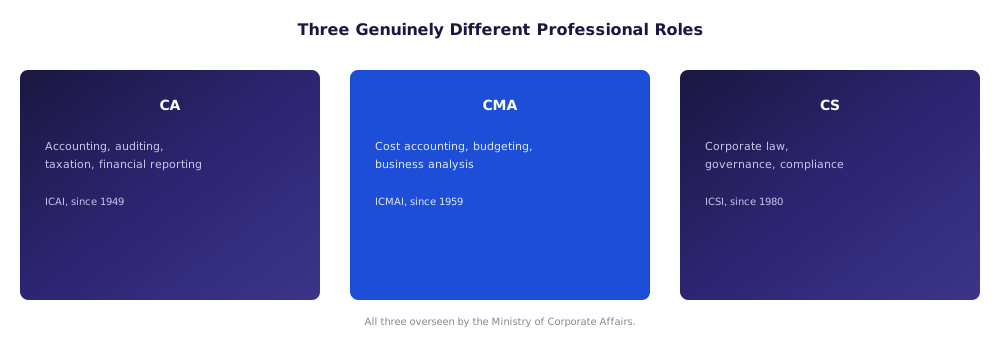
CA, CMA, and CS are three separate professional qualifications — not tiers of the same thing — each regulated by its own statutory body under the Ministry of Corporate Affairs, each leading to a distinct professional role. There's no single "best" among them; the right choice depends on which specific work you actually want to do.
| Aspect | CA | CMA | CS |
|---|---|---|---|
| Governing Body | ICAI | ICMAI | ICSI |
| Core Focus | Accounting, auditing, taxation | Cost accounting, budgeting, business analysis | Corporate law, governance, compliance |
| Stages | Foundation → Intermediate → Final | Foundation → Intermediate → Final | CSEET → Executive → Professional |
| Mandatory Training | 2-3 years Articleship | 15 months Practical Training | 21 months Management Training |
| Total Duration | 4.5-5 years typically | Roughly 3 years | 3-5 years |
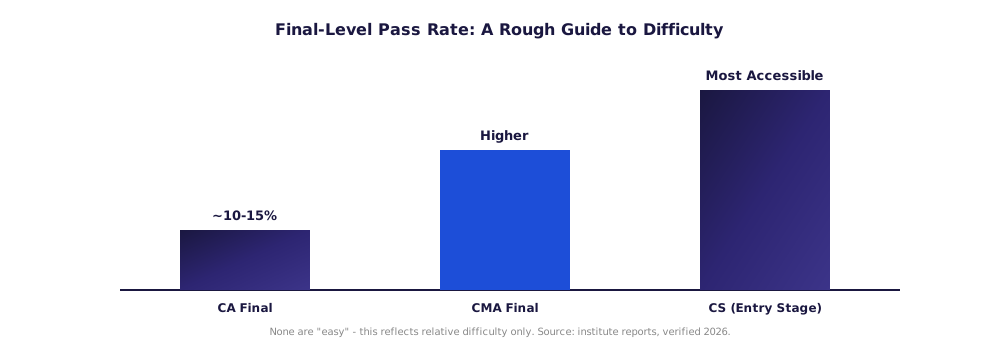
| Final-Level Pass Rate | Roughly 10-15% (toughest) | Somewhat higher, more structured | Comparatively most accessible at entry |
🎯 Use the Free KCET Rank Predictor — Enter your rank and category to instantly see which commerce colleges you can get in 2026. No login required. Try KCET Predictor →
Are These Actually Different Levels of the Same Course?
No, and this is worth clarifying immediately since it's a common misconception. CA, CMA, and CS are three separate, independent professional qualifications — you don't progress from one to another as if climbing a ladder. Each has its own registration process, its own examinations, and its own governing body: ICAI for CA, ICMAI for CMA, and ICSI for CS — all three ultimately overseen by the Ministry of Corporate Affairs. Some students do pursue two of these simultaneously — CA and CS together is a common combination given some subject overlap — but that's a deliberate choice to hold two distinct credentials, not a natural progression from one to the next.
Which One Focuses on What, Specifically?
CA centres on accounting, auditing, taxation, and financial reporting — the qualification for statutory audits specifically, and the closest thing India has to a universal finance credential. Our CMA Course Guide covers cost accounting, budgeting, and business analysis specifically — including the genuine legal reason CMAs are required for certain cost audits under Section 148 of the Companies Act, a role CAs are explicitly barred from filling. Our CS Course Guide covers corporate law and governance specifically — including the parallel legal mandate under Section 203 requiring companies above a certain size to appoint a whole-time CS, a role only an ICSI member can legally hold.
Which One Is the Most Difficult?
CA is widely, consistently regarded as the most demanding of the three. CA Final's pass rate typically runs just 10-15% — among the lowest of any professional qualification in India — and its 2-3 year Articleship runs concurrently with continued study, creating genuine time pressure most CMA and CS candidates don't face in quite the same way. CMA is generally considered more structured with somewhat higher pass rates, while CS is comparatively the most accessible at the entry (CSEET) stage specifically, though its Executive and Professional stages still demand serious legal and corporate knowledge. None of the three are "easy" — this is a matter of degree, not a claim that CMA or CS lack rigor.
Which One Actually Pays More?
CAs generally command somewhat higher starting salaries — freshers typically see roughly Rs 6-9 lakh per year, rising to around Rs 12 lakh at Big 4 firms specifically. CMA and CS professionals see strong compensation too, particularly in niche contexts: CMAs specifically in manufacturing, infrastructure, and large-scale operations where cost-audit requirements create genuine, structural demand; CS professionals specifically at companies legally required to appoint one under Section 203. Treat any specific salary figure cautiously, since compensation varies enormously by company size, sector, and individual performance — the honest takeaway is that all three offer strong earning potential, with CA typically edging ahead on average.
Which One Offers Broader International Mobility?
CA and CMA generally offer somewhat broader international mobility than CS specifically, since accounting and cost-management principles translate more directly across jurisdictions. CS is comparatively more India-specific, since company law differs meaningfully by country — though CS professionals can still find roles as corporate compliance consultants at India-based subsidiaries of foreign companies. If building an international career specifically matters to you, this is a genuine, worth-weighing factor.
How Should You Actually Decide?
Your genuine day-to-day interest matters more than any ranking or salary comparison here. If you're drawn to numbers, financial statements, and audit work specifically, CA fits naturally. If you're interested in cost structures, manufacturing economics, and business analysis specifically, CMA fits better. If you're drawn to corporate law, governance, and compliance work specifically — reading and applying legal provisions rather than crunching numbers — CS is the natural fit. Choosing based on which subject matter holds your attention over years of study is a far better predictor of success than choosing based on perceived prestige or difficulty alone.
Who Should Consider Each Path Specifically?
- CA: Students who want the broadest, most globally-recognised finance credential and are prepared for the most demanding study-plus-articleship combination of the three
- CMA: Students drawn to cost and management accounting specifically, particularly those interested in manufacturing, infrastructure, or large-scale operational contexts
- CS: Students interested in corporate law and governance rather than pure accounting, comfortable with a more legally-oriented, less numbers-heavy course of study
Frequently Asked Questions
Can I pursue CA, CMA, and CS at the same time?
Some students do pursue CA and CS simultaneously given subject overlap, though this requires significant commitment. Pursuing all three together is uncommon and not generally recommended given the substantial time and effort each demands individually.
Which of the three is the hardest to qualify for?
CA is widely considered the most demanding, with a CA Final pass rate typically around 10-15% and a 2-3 year Articleship running concurrently with study.
Do CAs, CMAs, and CS professionals earn similar salaries?
Not exactly — CAs generally command somewhat higher average starting salaries, though CMA and CS professionals see strong compensation in their own specific niches, particularly where legal mandates create structural demand.
Is there a legal reason companies specifically need a CMA or CS, not just a CA?
Yes — Section 148 of the Companies Act requires certain companies' cost audits to be conducted specifically by a CMA, explicitly barring the company's own CA from that role. Section 203 separately requires certain companies to appoint a whole-time CS as Key Managerial Personnel, a role only an ICSI member can legally hold.
Need help figuring out which of these three fits your interests and goals? WhatsApp +91 6363 330 233 and we'll help you think it through. We help you get the best admission to your preferred colleges without hassle.
Information on this page is compiled from publicly available ICAI, ICMAI, and ICSI sources, cross-checked across multiple sources given genuine variation in salary and pass-rate figures across reporting sites. Always confirm current details directly with the respective institute. Published by L K Monu Borkala, founder of OneCity Technologies — publishing Karnataka education directories since 2006.