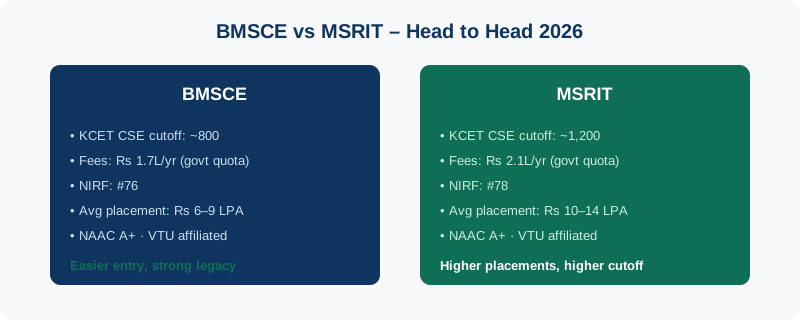
BMS College of Engineering (BMSCE, NAAC A++) has marginally higher average placements (₹8.0 vs ₹7.8 LPA), a higher NAAC grade, and is Karnataka's oldest private engineering college (founded 1946). MS Ramaiah Institute of Technology (MSRIT, NAAC A+) offers slightly lower management quota fees, a larger campus, and particularly strong core engineering departments. Both are VTU-affiliated, and the practical difference in outcomes is small – your branch preference and campus comfort should guide the choice.
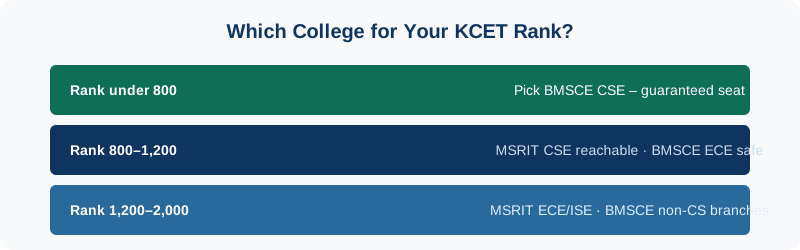
BMSCE vs MSRIT is the classic comparison for students with KCET ranks between 1,500 and 3,000 – the sweet spot where both colleges are within reach for popular branches. Having covered both colleges in our directories since 2006, I find this one of the easier comparisons to resolve because the strengths complement different student profiles clearly.
BMSCE vs MSRIT – Complete Comparison Table (2027)
| Parameter | BMS College of Engineering | MS Ramaiah IT |
|---|---|---|
| Founded | 1946 (oldest private engineering in KA) | 1962 |
| NAAC Grade | A++ (higher) | A+ |
| Affiliation | VTU, Belagavi | VTU, Belagavi |
| Campus | ~15 acres, Bull Temple Road (city centre) | ~45 acres, MSR Nagar |
| Total UG Intake | ~900 | ~1,080 |
| KCET Cutoff – CSE (GM, 2025) | 1,000 – 1,500 | 1,500 – 2,500 |
| COMEDK Cutoff – CSE (2025) | 900 – 1,300 | 1,200 – 2,000 |
| Govt. Quota Fee (Annual) | ₹65K – ₹1.2L | ₹65K – ₹1.0L |
| Management Quota Fee (Annual) | ₹3.5 – 5.0L | ₹3.0 – 5.0L |
| Avg. Placement (2025) | ₹8.0 LPA | ₹7.8 LPA |
| Highest Placement (2025) | ₹48 LPA | ₹45 LPA |
| Placement Rate | ~88% | ~85% |
| Location | Central Bangalore, metro accessible | MSR Nagar, north-central Bangalore |
| Hostel | Limited on-campus – PGs nearby | Better hostel facilities, larger campus |
| Alumni Network (years) | 80 years – among India's widest | 64 years – very strong |
| Core Engineering Strength | Very Strong (ME, Civil) | Very Strong (ME, Auto, Civil) |
Branch-Wise Placement Comparison
| Branch | BMSCE Avg. (LPA) | MSRIT Avg. (LPA) | Verdict |
|---|---|---|---|
| CSE | ₹11 – 13 | ₹10 – 12 | BMSCE marginally ahead |
| ISE | ₹10 – 12 | ₹9 – 11 | BMSCE marginally ahead |
| ECE | ₹7 – 9 | ₹7 – 9 | Even |
| Mechanical | ₹5.5 – 7.5 | ₹5.5 – 7.5 | Even – both very strong |
| Civil | ₹4.5 – 6.5 | ₹4.5 – 6 | Even |
| AI&ML | ₹10 – 12 | ₹9 – 11 | BMSCE marginally ahead |
The placement gap between BMSCE and MSRIT is narrow across all branches – typically ₹0.5–1 LPA. This is small enough that individual student effort, internship experience, and coding skills matter more than the college name in determining your specific outcome.
Fee Comparison – Total 4-Year Cost (2027 Entry)
| Admission Category | BMSCE (4-Year Total) | MSRIT (4-Year Total) | Difference |
|---|---|---|---|
| KCET Government Quota – CSE | ₹2.6 – 4.8 Lakh | ₹2.6 – 4.0 Lakh | Similar (MSRIT marginally cheaper) |
| COMEDK Consortium Quota – CSE | ₹10 – 14 Lakh | ₹8 – 14 Lakh | MSRIT ₹0–2L cheaper |
| Management Quota – CSE | ₹14 – 20 Lakh | ₹12 – 20 Lakh | MSRIT ₹0–2L cheaper |
MSRIT is marginally more affordable under COMEDK and management quota – approximately ₹1–2 lakh less over 4 years. Under KCET government quota, both are extremely affordable and the difference is negligible. Fees should not be the deciding factor between these two colleges.
Campus Experience – Central vs Spacious
BMSCE at Bull Temple Road puts you in the heart of Bangalore. The 15-acre campus is compact but well-maintained. The city-centre location means easy access to tech events, company offices for internship interviews, and the general buzz of Bangalore's IT ecosystem. The downside: limited campus space means fewer on-campus sports facilities and tighter hostel capacity.
MSRIT at MSR Nagar has three times the campus area (45 acres), with more breathing room, better sports infrastructure, dedicated workshop areas, and more comfortable hostel facilities. The Ramaiah trust operates an entire educational ecosystem on the campus – engineering, medical, management, and law colleges share resources. The location in north-central Bangalore is well-connected but slightly less central than BMSCE.
For day scholars commuting from central or south Bangalore, BMSCE is more convenient. For students needing hostel accommodation, MSRIT's larger campus and better facilities are a clear advantage.
The Alumni Factor
BMSCE's 80-year history gives it one of the oldest and widest alumni networks among Indian engineering colleges. BMSCE alumni occupy senior positions across manufacturing, IT, government, and defence sectors. This breadth is unmatched in Karnataka. MSRIT's 64-year alumni network is also excellent – particularly strong in Bangalore's IT and automotive sectors, with Bosch, Toyota, and similar companies having strong MSRIT alumni representation.
For a current student, the practical alumni advantage shows in: referral hiring (BMSCE alumni actively refer from their companies), mentorship availability, and industry connections through alumni chapters. Both colleges benefit from this, but BMSCE's additional 16 years of graduates translates into a wider net, especially in traditional industries.
Which College Should You Choose?
Choose BMSCE if: you secured a KCET rank under 1,500 (BMSCE CSE cutoff), you want Karnataka's highest NAAC grade (A++) with the most established alumni network, central Bangalore location matters for your commute, or you're targeting CSE/ISE and want the marginally stronger placement outcomes.
Choose MSRIT if: you need good hostel facilities on a spacious campus, your KCET rank is in the 1,500–2,500 range (MSRIT CSE is within reach), management quota fees slightly lower than BMSCE, you want the Ramaiah trust's multi-disciplinary campus ecosystem, or core engineering branches (Mechanical, Automotive) are your target.
The honest truth: the outcome difference between BMSCE and MSRIT is smaller than the outcome difference between a motivated student and an unmotivated one at either college. Both will give you an excellent VTU degree, access to top recruiters, and a strong alumni network. Pick the one where you'll thrive personally.
Official Sources: KEA – Karnataka Examinations Authority | NAAC – National Assessment and Accreditation Council
Frequently Asked Questions – BMSCE vs MSRIT
Which is better for placements – BMSCE or MSRIT?
BMSCE has a marginal edge with average placements of ₹8.0 LPA compared to MSRIT's ₹7.8 LPA. For CSE specifically, BMSCE averages ₹11–13 LPA vs MSRIT's ₹10–12 LPA. However, the difference is small enough (~₹1 LPA) that your individual skills, projects, and interview preparation matter more than the college name. Both attract similar quality recruiters – Amazon, Microsoft, TCS, Infosys, Wipro, and Cisco recruit actively from both colleges.
Is BMSCE worth the harder cutoff compared to MSRIT?
For the same branch, BMSCE's tighter cutoff (CSE: 1,000–1,500 vs MSRIT's 1,500–2,500) reflects its slightly higher demand and outcomes. But the practical difference is marginal. If your rank falls between the two cutoffs – say around 1,500–2,000 – you face the classic branch-vs-college dilemma. In that case, securing CSE at MSRIT is likely a better move than taking a non-CS branch at BMSCE, given CSE's overwhelming placement advantage across all colleges.
Which has better hostel facilities – BMSCE or MSRIT?
MSRIT has clearly better hostel facilities. Its 45-acre campus provides more on-campus hostel capacity with better infrastructure. BMSCE's compact 15-acre campus at Bull Temple Road has limited hostel space, and many outstation students rely on nearby PGs and rented rooms. If on-campus hostel living is important to you, MSRIT is the better choice.
Are BMSCE and MSRIT fees similar?
Very similar. Government quota fees at both colleges range from ₹65,000–₹1.2 lakh per year. Management quota fees are ₹3.5–5.0 lakh at BMSCE and ₹3.0–5.0 lakh at MSRIT – making MSRIT marginally more affordable under management quota. Over 4 years, the total fee difference is typically under ₹2 lakh for the same admission category, making fees a non-factor in this particular comparison.
Which college has the older and stronger alumni network?
BMSCE, founded in 1946, has one of the oldest engineering alumni networks in India – 80 years of graduates across every major industry. MSRIT's network (64 years, founded 1962) is also very strong, particularly in Bangalore's IT and automotive sectors. Both offer excellent alumni-driven referral hiring and mentorship. BMSCE's additional breadth across traditional industries gives it a marginal edge in alumni network width.
Related Comparisons and Resources
Comparing other top Bangalore engineering colleges? RVCE vs BMSCE | PES vs MSRIT | RVCE vs PES University | DSCE vs NHCE (mid-tier)
Also useful: COMEDK vs KCET 2026 exam guide | Parent's 10-point college checklist | Direct admission guide 2026
Full profiles: BMSCE | MSRIT | Compare any colleges
Browse colleges by city: Bangalore | Mysuru | Mangalore | Hubli-Dharwad
Need help choosing between BMSCE and MSRIT based on your KCET or COMEDK rank? WhatsApp us at +91 6363 330 233.
KCET Rank Guide – Which College at What Rank
The practical question every KCET student with a rank in the BMSCE-MSRIT range asks is: what rank gets me into which college for which branch? Here is the realistic picture based on historical KEA counselling data. BMSCE CSE closes around 1,500-2,500 GM in round 1 – students with ranks above 3,000 rarely get CSE at BMSCE through KCET. MSRIT CSE closes around 3,000-5,000 GM – more accessible for students in the 3,000-8,000 rank range. For ECE: BMSCE ECE closes around 3,500-5,500 GM, MSRIT ECE around 5,000-8,000 GM. Mechanical Engineering: BMSCE Mechanical around 8,000-12,000 GM, MSRIT Mechanical around 10,000-15,000 GM. Civil Engineering: both colleges have Civil closing ranks above 15,000 GM – accessible for students who miss CSE and ECE cutoffs. These are approximate ranges from historical patterns – exact closing ranks change every year based on applicant pool. Always verify current year closing ranks at kea.kar.nic.in during choice filling. Students who miss BMSCE and MSRIT for CSE through KCET should consider COMEDK as a second route – COMEDK CSE cutoffs at both colleges are different from KCET and sometimes more or less accessible depending on the year.
COMEDK Route – Accessing BMSCE and MSRIT
COMEDK UGET is a separate entrance exam conducted by the Consortium of Medical, Engineering and Dental Colleges of Karnataka. Both BMSCE and MSRIT accept COMEDK scores for their management quota seats. COMEDK CSE cutoff at BMSCE is typically in the 2,000-4,000 COMEDK rank range. MSRIT CSE through COMEDK typically closes around 4,000-7,000 COMEDK rank. The key distinction: KCET government quota seats have lower fees (Rs 1.1-1.5 lakh per year), while COMEDK seats at the same college have higher fees (Rs 1.5-2.5 lakh per year). A student who qualifies both KCET and COMEDK and gets allotted at the same college should always choose the KCET government quota allotment for the fee advantage – the degree, placement and college name are identical regardless of which quota seat you hold. COMEDK makes sense when you don't get your preferred college through KCET but get it through COMEDK, or when you get a better branch at a preferred college through COMEDK than KCET offered.
Branch Selection at BMSCE and MSRIT – What Actually Matters
Students sometimes make the mistake of choosing a less preferred branch at BMSCE over a preferred branch at MSRIT (or vice versa) without thinking through career implications. The reality: for IT sector employment (which most Bangalore engineering graduates target), the difference between CSE, ISE (Information Science Engineering) and ECE at BMSCE or MSRIT is smaller than students expect. All three branches at both colleges produce software engineers for the Bangalore IT market. The company tier matters far more than branch at placement time – TCS, Infosys and Wipro recruit across all branches, while product companies like Google, Microsoft and Amazon recruit specifically from CSE and ISE. If your KCET rank gets you ECE at BMSCE or CSE at MSRIT, the CSE at MSRIT produces stronger outcomes for software engineering careers. If your rank gets you CSE at BMSCE or Mechanical at MSRIT, CSE at BMSCE is the clear choice for IT employment. Branch within the same college matters; the BMSCE-MSRIT difference matters less than branch when both colleges are this close in ranking.
Hostel, Location and Campus Life
BMSCE is located in Basavanagudi – central South Bangalore, dense residential area, excellent connectivity to Bangalore's commercial districts and public transport. The campus is compact – all buildings within a tight footprint. Hostel facilities are available but limited – most students live in PG accommodations in the surrounding Basavanagudi, Jayanagar and JP Nagar neighbourhoods at Rs 6,000-12,000 per month. The central location gives BMSCE students immediate access to Bangalore's tech corridor, libraries and networking events.
MSRIT is located in Mathikere, North Bangalore – less central than BMSCE but well-connected via Hebbal flyover and Outer Ring Road. The campus is significantly larger than BMSCE – more open space, larger sports facilities and a more traditional residential campus feel. MSRIT has substantial on-campus hostel capacity with several hostels for both boys and girls at Rs 4,000-8,000 per month – lower cost than BMSCE-area PGs. Students who prefer a more contained campus life with most facilities on-site tend to prefer MSRIT. Students who prefer central city access and off-campus networking prefer BMSCE's Basavanagudi location.
Research, Labs and Academic Culture
Both BMSCE and MSRIT hold NAAC A+ grade and NBA accreditation across most branches – indicating equivalent regulatory quality assessment. BMSCE has a strong tradition in core engineering research, particularly in Electronics, Electrical and Civil departments with several funded research projects and PhD scholars. MSRIT has invested significantly in CSE and AI/ML research infrastructure in recent years – dedicated AI/ML labs, data science centres and industry-sponsored research chairs from Bangalore IT companies. For students interested in pursuing M.Tech or PhD after B.E, both colleges have postgraduate programmes – MSRIT's PG infrastructure in CSE and related streams has expanded more recently. For students planning to directly enter employment after B.E without postgraduate education, the research culture difference is less relevant to career outcomes.
Industry Connections and Internship Culture
Both BMSCE and MSRIT benefit from Bangalore's IT ecosystem, but their industry connection profiles differ slightly. BMSCE's alumni network is particularly strong in established large IT companies (Infosys, Wipro, IBM, Accenture) and in Karnataka government engineering services – reflecting the college's 75-year history. MSRIT has strong connections with mid-size and newer Bangalore tech companies, and its Mathikere location (near the Outer Ring Road tech belt) facilitates industry collaboration. Both colleges have active placement cells that invite 100-plus companies annually. The practical difference in internship access is minimal – Bangalore's employer density means students from either college can access similar internship pools through online platforms, alumni referrals and direct applications regardless of which campus they're on.
The Honest Verdict – BMSCE vs MSRIT in 2027
For students choosing between BMSCE and MSRIT in 2026, the decision framework is simple. Same branch at both: choose BMSCE – the slightly stronger KCET cutoff reflects genuine demand and the alumni network in established companies is marginally deeper for most branches. Better branch at MSRIT vs worse branch at BMSCE: choose the better branch – CSE at MSRIT over ECE at BMSCE if IT employment is your goal. Hostel preference: MSRIT for on-campus hostel convenience, BMSCE for central city access. Cost sensitivity: both are similar through KCET quota – COMEDK or management quota fees differ more significantly. Both colleges are strong options and the employment outcomes for motivated students at either institution are comparable. The difference between BMSCE and MSRIT is far smaller than the difference between getting CSE vs Mechanical at the same college. Focus on branch first, then college name.
KCET Rank Guide – Which College at What Rank
The practical question every KCET student with a rank in the BMSCE-MSRIT range asks is: what rank gets me into which college for which branch? Here is the realistic picture based on historical KEA counselling data. BMSCE CSE closes around 1,500-2,500 GM in round 1 – students with ranks above 3,000 rarely get CSE at BMSCE through KCET. MSRIT CSE closes around 3,000-5,000 GM – more accessible for students in the 3,000-8,000 rank range. For ECE: BMSCE ECE closes around 3,500-5,500 GM, MSRIT ECE around 5,000-8,000 GM. Mechanical Engineering: BMSCE Mechanical around 8,000-12,000 GM, MSRIT Mechanical around 10,000-15,000 GM. Civil Engineering: both colleges have Civil closing ranks above 15,000 GM – accessible for students who miss CSE and ECE cutoffs. These are approximate ranges from historical patterns – exact closing ranks change every year based on applicant pool. Always verify current year closing ranks at kea.kar.nic.in during choice filling. Students who miss BMSCE and MSRIT for CSE through KCET should consider COMEDK as a second route – COMEDK CSE cutoffs at both colleges are different from KCET and sometimes more or less accessible depending on the year.
COMEDK Route – Accessing BMSCE and MSRIT
COMEDK UGET is a separate entrance exam conducted by the Consortium of Medical, Engineering and Dental Colleges of Karnataka. Both BMSCE and MSRIT accept COMEDK scores for their management quota seats. COMEDK CSE cutoff at BMSCE is typically in the 2,000-4,000 COMEDK rank range. MSRIT CSE through COMEDK typically closes around 4,000-7,000 COMEDK rank. The key distinction: KCET government quota seats have lower fees (Rs 1.1-1.5 lakh per year), while COMEDK seats at the same college have higher fees (Rs 1.5-2.5 lakh per year). A student who qualifies both KCET and COMEDK and gets allotted at the same college should always choose the KCET government quota allotment for the fee advantage – the degree, placement and college name are identical regardless of which quota seat you hold. COMEDK makes sense when you don't get your preferred college through KCET but get it through COMEDK, or when you get a better branch at a preferred college through COMEDK than KCET offered.
Branch Selection at BMSCE and MSRIT – What Actually Matters
Students sometimes make the mistake of choosing a less preferred branch at BMSCE over a preferred branch at MSRIT (or vice versa) without thinking through career implications. The reality: for IT sector employment (which most Bangalore engineering graduates target), the difference between CSE, ISE (Information Science Engineering) and ECE at BMSCE or MSRIT is smaller than students expect. All three branches at both colleges produce software engineers for the Bangalore IT market. The company tier matters far more than branch at placement time – TCS, Infosys and Wipro recruit across all branches, while product companies like Google, Microsoft and Amazon recruit specifically from CSE and ISE. If your KCET rank gets you ECE at BMSCE or CSE at MSRIT, the CSE at MSRIT produces stronger outcomes for software engineering careers. If your rank gets you CSE at BMSCE or Mechanical at MSRIT, CSE at BMSCE is the clear choice for IT employment. Branch within the same college matters; the BMSCE-MSRIT difference matters less than branch when both colleges are this close in ranking.
Hostel, Location and Campus Life
BMSCE is located in Basavanagudi – central South Bangalore, dense residential area, excellent connectivity to Bangalore's commercial districts and public transport. The campus is compact – all buildings within a tight footprint. Hostel facilities are available but limited – most students live in PG accommodations in the surrounding Basavanagudi, Jayanagar and JP Nagar neighbourhoods at Rs 6,000-12,000 per month. The central location gives BMSCE students immediate access to Bangalore's tech corridor, libraries and networking events.
MSRIT is located in Mathikere, North Bangalore – less central than BMSCE but well-connected via Hebbal flyover and Outer Ring Road. The campus is significantly larger than BMSCE – more open space, larger sports facilities and a more traditional residential campus feel. MSRIT has substantial on-campus hostel capacity with several hostels for both boys and girls at Rs 4,000-8,000 per month – lower cost than BMSCE-area PGs. Students who prefer a more contained campus life with most facilities on-site tend to prefer MSRIT. Students who prefer central city access and off-campus networking prefer BMSCE's Basavanagudi location.
Research, Labs and Academic Culture
Both BMSCE and MSRIT hold NAAC A+ grade and NBA accreditation across most branches – indicating equivalent regulatory quality assessment. BMSCE has a strong tradition in core engineering research, particularly in Electronics, Electrical and Civil departments with several funded research projects and PhD scholars. MSRIT has invested significantly in CSE and AI/ML research infrastructure in recent years – dedicated AI/ML labs, data science centres and industry-sponsored research chairs from Bangalore IT companies. For students interested in pursuing M.Tech or PhD after B.E, both colleges have postgraduate programmes – MSRIT's PG infrastructure in CSE and related streams has expanded more recently. For students planning to directly enter employment after B.E without postgraduate education, the research culture difference is less relevant to career outcomes.
Industry Connections and Internship Culture
Both BMSCE and MSRIT benefit from Bangalore's IT ecosystem, but their industry connection profiles differ slightly. BMSCE's alumni network is particularly strong in established large IT companies (Infosys, Wipro, IBM, Accenture) and in Karnataka government engineering services – reflecting the college's 75-year history. MSRIT has strong connections with mid-size and newer Bangalore tech companies, and its Mathikere location (near the Outer Ring Road tech belt) facilitates industry collaboration. Both colleges have active placement cells that invite 100-plus companies annually. The practical difference in internship access is minimal – Bangalore's employer density means students from either college can access similar internship pools through online platforms, alumni referrals and direct applications regardless of which campus they're on.
The Honest Verdict – BMSCE vs MSRIT in 2027
For students choosing between BMSCE and MSRIT in 2026, the decision framework is simple. Same branch at both: choose BMSCE – the slightly stronger KCET cutoff reflects genuine demand and the alumni network in established companies is marginally deeper for most branches. Better branch at MSRIT vs worse branch at BMSCE: choose the better branch – CSE at MSRIT over ECE at BMSCE if IT employment is your goal. Hostel preference: MSRIT for on-campus hostel convenience, BMSCE for central city access. Cost sensitivity: both are similar through KCET quota – COMEDK or management quota fees differ more significantly. Both colleges are strong options and the employment outcomes for motivated students at either institution are comparable. The difference between BMSCE and MSRIT is far smaller than the difference between getting CSE vs Mechanical at the same college. Focus on branch first, then college name.
Need help with admission?
CollegesInfo.org helps students secure admission to colleges they are eligible for under that college's actual published criteria. Chat with us on WhatsApp or explore admission assistance.