Diploma vs Degree in Science Fields Karnataka 2026 — The Real Picture
Is there a genuine diploma alternative to Biotechnology, Microbiology, Food Technology, Genetics or Environmental Science degrees in Karnataka? The honest, verified answer.
If you're searching for a "diploma versus degree" comparison for Biotechnology, Microbiology, Food Technology, Genetics, or Environmental Science in Karnataka the way you'd find one for paramedical fields (DMLT versus BSc MLT, for instance) or engineering (polytechnic diploma versus B.E.), it's worth knowing upfront: that specific choice doesn't genuinely exist for these five fields in Karnataka. Government polytechnics in the state — verified directly against institutions like Karnataka Government Polytechnic, Mangalore — offer diploma branches in Mechanical, Civil, Electrical, Chemical, Automobile, and Polymer Engineering, not Biotechnology, Food Technology, Microbiology, Genetics, or Environmental Science. This page explains what the real structural choices are instead, rather than inventing a diploma-versus-degree comparison that isn't actually there.
| Field | Is there a genuine entry-level diploma alternative? | What actually exists instead |
|---|---|---|
| Biotechnology | No standard Karnataka polytechnic diploma track | Post-degree industry diplomas exist (see below) |
| Microbiology | No standard Karnataka polytechnic diploma track | Standalone BSc is the only real entry route |
| Food Technology | No diploma, but a genuine B.Sc vs B.Tech naming split | UAS Dharwad's B.Sc. versus UAS Bengaluru's B.Tech structure |
| Genetics | No diploma alternative | Combination-degree structure is the real decision point, not diploma vs degree |
| Environmental Science | No diploma alternative | Standalone BSc across multiple universities is the only real route |
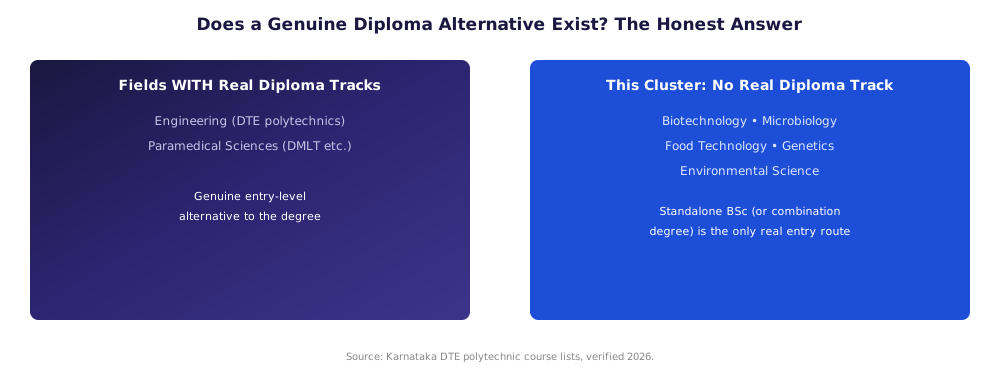
Why This "Diploma vs Degree" Question Doesn't Apply the Same Way Here
Fields like paramedical sciences and engineering in Karnataka have a genuine, parallel diploma pathway built into the state's technical education system — the Department of Technical Education runs an entire polytechnic network specifically for this. Verified directly against Karnataka Government Polytechnic, Mangalore's own course list, that network's diploma branches are Civil, Mechanical, Electrical, Automobile, Chemical, and Polymer Engineering — a genuinely different set of subjects from the five covered on this site. None of Biotechnology, Microbiology, Food Technology, Genetics, or Environmental Science appears as a standard Karnataka polytechnic diploma branch. If you've seen "Diploma in Biotechnology" or "Diploma in Food Technology" advertised online, these tend to be offered by individual private polytechnics in other states, or as postgraduate-level add-on diplomas rather than a genuine, widely-available Karnataka undergraduate entry pathway parallel to the BSc route.
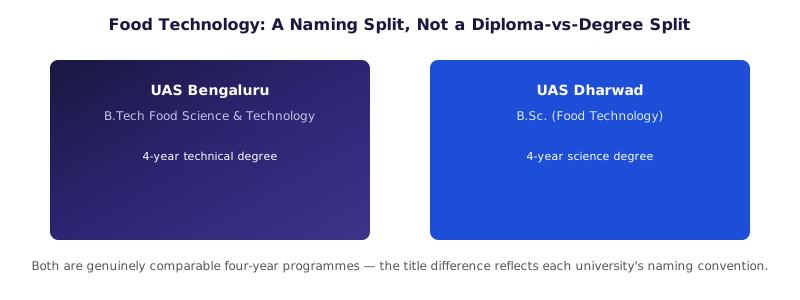
Food Technology's Real Structural Choice: B.Sc vs B.Tech
The one genuine naming and structural distinction within this cluster sits in Food Technology specifically. UAS Bengaluru offers the degree as a B.Tech in Food Science and Technology, a four-year technical degree, while UAS Dharwad offers it as a B.Sc. (Food Technology). Despite the different degree titles, both are genuinely four-year, broadly similar programmes covering food processing, engineering, and quality control — the naming difference reflects each university's own internal degree-classification conventions rather than a meaningfully different depth of study. If you're comparing these two specific options, don't assume "B.Tech" is automatically more rigorous or more valuable than "B.Sc." here — check the actual credit structure and curriculum directly with each university for the year you're applying, since this is genuinely a naming quirk rather than the kind of diploma-versus-degree distinction that exists in fields like engineering. See the full Food Technology guide for the complete comparison.
Post-Degree Industry Diplomas: A Genuinely Different Kind of "Diploma"
What does genuinely exist across this cluster is a different category entirely: post-degree, industry-oriented diploma programmes that supplement a completed BSc rather than substituting for it. The clearest example is St Aloysius (Deemed to be University) in Mangaluru's Biotechnology Finishing School (BTFS), a one-year diploma combining six months of classroom study with six months of paid industry internship, funded by the Department of Biotechnology. This isn't an alternative to a Biotechnology degree — it's specifically designed for students who've already completed one, adding industry-ready skills training on top of academic qualification. If you're weighing whether a "diploma route" makes sense for you in any of these five fields, this post-degree add-on structure is the genuine version of that choice available in Karnataka, not an entry-level diploma instead of the BSc.
Genetics' Real Decision Point: Which Combination, Not Diploma vs Degree
For Genetics specifically, the meaningful decision Karnataka students actually face isn't diploma versus degree — it's which combination-degree pairing to choose, since Genetics is bundled with Biotechnology, Microbiology, or Biochemistry at Bengaluru's four autonomous colleges rather than offered standalone at any level, diploma or degree. See the full Genetics guide for how to choose between these combinations.
NEP 2020's Multiple Exit Points: The Closest Real Equivalent
If what you're actually looking for is a shorter, faster qualification option within these fields rather than a genuinely separate diploma track, the National Education Policy 2020's four-year undergraduate framework offers the closest real equivalent: students can typically exit after one year with a UG Certificate, after two years with a Diploma, or continue to the full three-year degree or four-year Honours degree, depending on credits completed. This NEP-era "diploma" exit point is a genuine, government-mandated option built into the standard degree programme itself — a meaningfully different structure from a separate polytechnic diploma track, but the closest thing to a shorter qualification pathway that actually exists across Biotechnology, Microbiology, Genetics-combination, and Environmental Science degrees specifically. Confirm with your shortlisted college whether they've implemented this exit-point structure yet, since NEP rollout timing varies by institution.
What This Means for Your Decision
If you were hoping to save time or money with a diploma route into one of these five fields the way you might for engineering or paramedical sciences, that specific shortcut doesn't exist here — a standalone BSc (or bundled combination degree, for Genetics) is genuinely the only realistic entry path across all five fields in Karnataka. The closest things to a "shorter" option are the NEP exit-point structure within the standard degree itself, or considering whether a related field with a genuine diploma track (like the general engineering diploma system, or paramedical diplomas) might actually serve your underlying career goal better if time or cost is your real constraint.
Why This Confusion Happens in the First Place
Search around online for "diploma in biotechnology" or "diploma in food technology" and you'll find plenty of results — the confusion is genuine and understandable. Most of what surfaces falls into a few categories: postgraduate-level diplomas offered by individual polytechnics in other states (not Karnataka-specific, and not comparable to an undergraduate entry route), short-term certificate or skill-development courses that aren't recognised degree-equivalent qualifications, or generic aggregator listings that don't distinguish between a genuine, DTE-recognised Karnataka polytechnic diploma and a private institute's own certificate programme elsewhere in India. If you're specifically looking for a Karnataka-recognised, DTE-affiliated diploma pathway into one of these five fields comparable to the engineering polytechnic system, it's worth being skeptical of any listing that doesn't clearly name a specific, verifiable Karnataka institution and confirm DTE recognition directly.
Career Outcomes: Degree Path vs the NEP Exit-Point Alternative
Since the NEP exit-point structure (certificate after one year, diploma after two years) is the closest genuine "shorter path" within these five fields, it's worth being honest about what that actually gets you career-wise. A one-year certificate or two-year diploma exit under NEP is not equivalent to a completed BSc for most employer expectations in these fields — lab-based industry roles, research positions, and postgraduate admission all generally expect the full degree. The exit-point structure exists primarily as a safety net for students who can't complete the full programme for personal or financial reasons, or as a stepping stone if you later resume study, rather than as a genuinely competitive standalone qualification for career entry. If your goal is a real career in any of these five fields, plan for the full BSc (or combination degree, for Genetics) rather than treating the NEP exit points as a deliberate shortcut strategy.
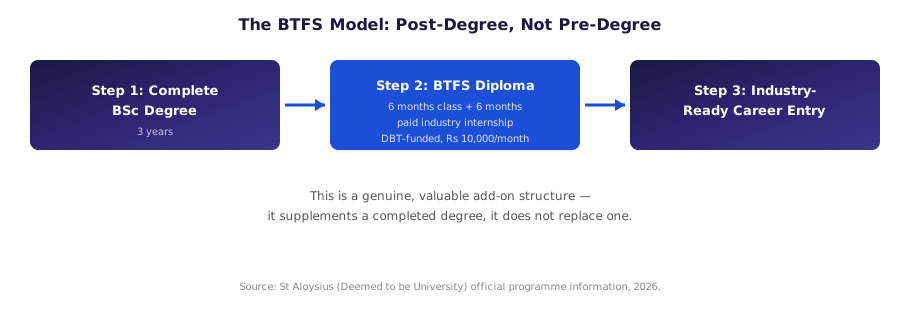
The BTFS Model: Why It Works as an Add-On, Not a Substitute
St Aloysius's Biotechnology Finishing School is worth understanding in a bit more depth because it illustrates why post-degree industry diplomas make sense as a genuine value-add rather than a shortcut. The programme runs six months of classroom instruction followed by six months of paid industry internship (Rs 10,000/month, funded by the Department of Biotechnology), specifically targeting the gap between academic biotechnology knowledge and industry-ready practical skills — a gap that a three-year BSc alone doesn't always close. This model has since expanded into the Biotechnology Skill Enhancement Programme (BiSEP), with an even stronger industry-skills focus. The key structural point: students enter this programme after already holding a relevant degree, using the year to build specifically industry-facing skills and, in many cases, a direct employment pathway through the internship placement — genuinely different from a diploma meant to substitute for the degree itself.
Cost Considerations: Full Degree vs Shorter Alternatives
Since a genuine diploma alternative doesn't exist for entry into these five fields, cost comparison here looks different from, say, engineering, where a polytechnic diploma can be a meaningfully cheaper and faster route to a similar career outcome. For Biotechnology, Microbiology, Genetics-combination, and Environmental Science, your realistic cost comparison is between institution types rather than qualification types — government university programmes (Environmental Science at Bangalore University or University of Mysore, for instance) run meaningfully cheaper than private autonomous colleges (most Biotechnology, Microbiology, and Genetics-combination options), regardless of the degree structure itself. Post-degree add-on diplomas like BTFS, funded partly through Department of Biotechnology stipends, actually pay participants during the programme rather than charging substantial additional fees, making them a genuinely low-cost way to build industry skills after your degree rather than an added financial burden.
How Other States Handle This Differently
It's worth knowing that Karnataka's approach here isn't universal — some other Indian states do offer genuine polytechnic-level diplomas in Food Technology or Biotechnology as part of their state technical education systems, which is likely where much of the online confusion about "diploma" options originates. If you're open to studying outside Karnataka specifically to access a genuine diploma pathway into one of these fields, it's worth researching individual state technical education boards directly rather than assuming a diploma advertised for "India" broadly applies to Karnataka's own system. That said, for students committed to studying within Karnataka specifically, the honest picture remains: a standalone BSc or combination degree is your realistic entry route across all five of these fields, and no meaningful shortcut exists within the state's own polytechnic network for any of them currently.
How to Verify Any "Diploma" Claim Before Enrolling
Given how much confusion exists around this topic, if you do come across a specific institute in Karnataka advertising a diploma in any of these five fields, it's worth running a quick verification check before enrolling anywhere. Confirm which regulatory body actually recognises the programme — DTE Karnataka governs genuine state polytechnic diplomas, while UGC governs degree-granting universities and colleges, and these are not interchangeable recognitions. Ask directly whether the "diploma" is a standalone qualification or an add-on requiring a prior degree, since this distinction matters enormously for how employers and further education institutions will treat it. Check whether the institute appears in any official DTE Karnataka polytechnic list if it's claiming government-recognised diploma status, since a program that isn't on that list despite claiming such recognition is a genuine red flag. And be specifically cautious of any programme charging substantial fees for a "diploma" in these fields without a clearly documented curriculum, faculty, and accreditation history — the genuine post-degree diploma programmes that do exist, like BTFS, are transparent about their funding, structure, and institutional backing.
What the Full Degree Route Actually Gets You, Career-Wise
Since the honest picture is that a full degree is genuinely your only realistic route into these five fields in Karnataka, it's worth being clear about what that investment actually returns. Across Biotechnology, Microbiology, Food Technology, and Environmental Science, entry-level roles after a completed BSc typically start in the Rs 2.5-4.5 lakh per year range, moving into the Rs 4-7 lakh range with a few years of experience, and Rs 6-15+ lakh for experienced, specialised, or leadership roles — figures covered in more depth in each field's own full guide. Genetics-combination graduates see broadly similar entry-level ranges, with career progression depending heavily on which specific combination and postgraduate path they pursue. None of these outcomes are available to someone holding only a short-term certificate or an unrecognised "diploma" claiming to cover the same subject matter — employers in these fields, particularly the more established biotech, pharma, and food-processing companies, generally expect a completed, recognised degree as a baseline qualification, making the three-to-four-year time investment a genuine requirement rather than a formality you can shortcut around.
A Note on Terminology: B.Voc and Other Qualification Types
One more source of genuine confusion worth flagging: Bachelor of Vocation (B.Voc) programmes are a distinct qualification type from both the standard BSc route and any diploma, blending academic study with skill-based vocational training, and some institutions nationally have begun offering B.Voc programmes touching food processing or related applied sciences. B.Voc is neither a diploma nor a standard BSc — it's its own UGC-recognised category with its own credit and exit-point structure, generally distinct from what's covered on this page. If you encounter a B.Voc option in food technology or a related field during your college search, treat it as a genuinely separate category worth researching on its own terms rather than assuming it's simply another name for either the diploma or degree paths discussed here.
Frequently Asked Questions
Is there a Diploma in Biotechnology or Microbiology available in Karnataka?
Not as a standard, widely-available Karnataka polytechnic diploma track. Some private institutes elsewhere in India offer such diplomas, but they aren't a common or verified entry pathway within Karnataka's own technical education system.
Is UAS Bengaluru's B.Tech in Food Technology better than UAS Dharwad's B.Sc?
Not necessarily — the naming difference reflects each university's own degree classification conventions rather than a meaningfully different depth of study. Compare the actual curriculum and credit structure directly rather than assuming the B.Tech title implies superiority.
What is the Biotechnology Finishing School (BTFS) programme?
A one-year, DBT-funded post-degree diploma at St Aloysius (Deemed to be University), Mangaluru, combining classroom study with paid industry internship — designed for students who've already completed a Biotechnology-related degree, not as an alternative entry route.
Can I get a certificate or diploma partway through one of these degrees if I don't finish?
Under NEP 2020's four-year structure, several Karnataka colleges now offer exit points: a certificate after one year, a diploma after two years, and the full degree after three or four years, depending on credits completed. Confirm with your specific college whether this structure has been implemented.
Should I choose an engineering diploma instead if I want a shorter, faster path?
If time or cost is your primary constraint and Biotechnology, Microbiology, Food Technology, Genetics, or Environmental Science themselves aren't strict requirements for your career goal, a genuine engineering diploma or a paramedical diploma track might serve that underlying goal better, since those fields do have real, established diploma pathways in Karnataka.
Are online listings advertising "Diploma in Biotechnology Karnataka" reliable?
Treat these with caution unless they name a specific, verifiable Karnataka institution with confirmed DTE or university recognition — many such listings are generic aggregator pages referencing programmes from other states or unrecognised short-term certificate courses.
Does completing a post-degree diploma like BTFS improve job prospects meaningfully?
Generally yes, particularly for the specific employer relationships built through the funded internship component, though outcomes depend on individual performance during the programme just as with any additional qualification.
For admission guidance on any of these science degrees in Karnataka, WhatsApp +91 6363 330 233. We help you get the best admission to your preferred colleges without hassle.