About Kittur Rani Channamma College of Horticulture, Arabhavi
Written by L K Monu Borkala, Founder & Chief Strategist
Last Updated: August 4, 2026 · Verified with ICAR and University of Horticultural Sciences Bagalkot data for 2025–26
Kittur Rani Channamma College of Horticulture (KRCCH), Arabhavi was established in 1994 under the University of Agricultural Sciences, Dharwad, and transferred to the University of Horticultural Sciences, Bagalkot in 2008. Recognised by ICAR, it offers B.Sc Horticulture (Hons), Diploma, M.Sc and PhD programs across horticulture and vegetable science, with around 350 students and 30 faculty on a 131-acre campus.
| Established | 1994 |
| Current Affiliation | University of Horticultural Sciences, Bagalkot (since 2008) |
| Approval | ICAR (Indian Council of Agricultural Research) |
| Campus | 131 acres, Arabhavi, Gokak Taluk, Belagavi |
| Students | Approximately 350 |
| Faculty | Approximately 30 teaching staff |
| Programs | B.Sc Horticulture (Hons), Diploma, M.Sc, PhD |
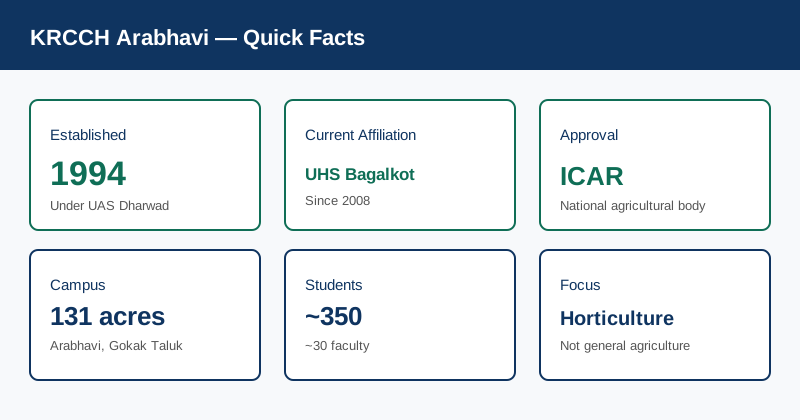
A specialised horticulture college, not a general agriculture college -- the two are related but distinct fields with separate admission tracks.
Horticulture, Not General Agriculture -- A Real Distinction
KRCCH trains students specifically in horticulture and vegetable science: fruit, vegetable, flower and plantation crop production, rather than the broader field crops and general agricultural science a standard agriculture college covers. This distinction matters practically for applicants: horticulture admission in Karnataka runs through a separate track from general agriculture seats, and the specific ICAR-recognised horticulture universities, University of Horticultural Sciences Bagalkot among them, operate independently from the general agricultural university system centred on UAS Bangalore, UAS Dharwad and similar institutions covering field-crop agriculture.
The college's own history reflects this specialisation developing over time rather than existing from day one: it opened in 1994 under the general agricultural university system at Dharwad, and only in 2008 did the state formally recognise horticulture as warranting its own dedicated university structure, transferring KRCCH and its sister institutions to the newly-organised University of Horticultural Sciences, Bagalkot. Applicants researching this college under "agriculture" search terms should specifically confirm they want horticulture, not general crop science, before applying.
Programs and Seats
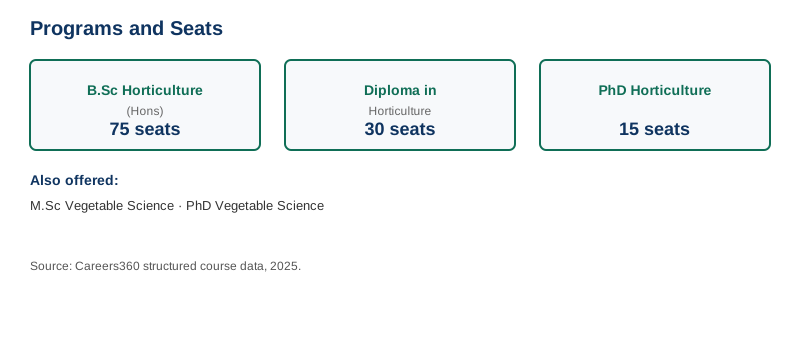
Per Careers360's structured course data, the college runs four degree programs across roughly nine to ten specific courses: B.Sc Horticulture (Hons) with 75 seats, Diploma in Horticulture with 30 seats, and PhD Horticulture with 15 seats, alongside M.Sc and PhD tracks in Vegetable Science specifically. This span from diploma through doctoral level is unusual for a college this size, reflecting its role as a specialised research and training centre rather than a purely undergraduate teaching college.
Admission Process
Undergraduate admission to B.Sc Horticulture (Hons) requires 10+2 with science subjects, processed through the college's own online application rather than KCET counselling, which does not cover specialised horticulture-university seats. Postgraduate and doctoral programs require the relevant prior degree plus, in most cases, a qualifying entrance assessment specific to the discipline. The ICAR's recognition covers the college's core programs, and applicants should verify course-specific approval status directly with the university before applying, since not every program at an ICAR-affiliated institution necessarily carries identical accreditation status.
Placements and Outcomes
Third-party placement tracking puts the median salary for KRCCH graduates at approximately Rs 5.2 lakh per annum, a figure that should be read as directional rather than officially confirmed, since the college itself does not appear to publish a detailed placement disclosure the way NIRF-participating institutions do. Horticulture graduates from ICAR-system colleges typically move into roles spanning government horticulture departments, agri-business and food-processing companies, research institutions, and increasingly, private commercial horticulture and floriculture operations, a distinct career path from general agriculture graduates.
A Note on This Listing's History
This college previously appeared on this site under an inaccurate name suggesting a general agriculture focus rather than its actual horticulture specialisation, alongside a separate, now-retired duplicate listing carrying different and unverified founding-year and enrolment figures. This page reflects the corrected, verified name and facts as confirmed against the college's own institutional history and government records. Readers who bookmarked or linked to the earlier listing are automatically redirected here.
Campus and Research Infrastructure
The 131-acre Arabhavi campus supports the college's dual teaching-and-research mandate, with dedicated plots for fruit orchards, vegetable trial fields and floriculture research alongside standard classroom and laboratory facilities. This scale of land-based research infrastructure is a genuine differentiator from a standard science college on this site: horticultural research inherently requires field space that a purely classroom-based institution does not need, and 131 acres supporting roughly 350 students represents considerably more land per student than a typical general-degree college in this size range.
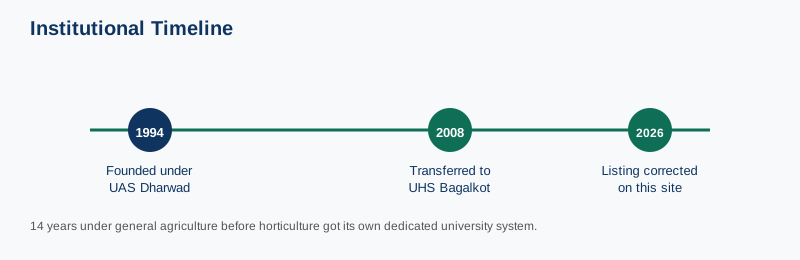
The University of Horticultural Sciences, Bagalkot oversees several constituent horticulture colleges across Karnataka, of which KRCCH is one of the longer-established, having predated the university's own 2008 formal organisation by 14 years as a UAS Dharwad-affiliated institution. Students specifically comparing horticulture-focused study against broader agribusiness management programs elsewhere should note the difference: this college trains production and research scientists, not business or management graduates.
Who This Fits
KRCCH suits students specifically committed to horticulture, vegetable science, or floriculture as a career path, not students seeking a general agriculture degree who should instead look at UAS-system colleges covering field crops and general agricultural science. Its diploma-through-PhD program span also makes it a viable option for students planning an academic or research career in horticultural science specifically. For admission guidance or comparison against general agriculture colleges, the site's comparison tool covers both categories together.
Prospective applicants often confuse horticulture and general agriculture admission tracks precisely because both fall under India's broader agricultural education system overseen nationally by ICAR, even though Karnataka organises them into separate state universities. Confirming which specific university and program you're applying to, rather than assuming "agriculture" and "horticulture" are interchangeable search terms, avoids a common and avoidable application mistake.
Frequently Asked Questions
Is this a horticulture college or a general agriculture college?
Horticulture specifically. KRCCH trains students in fruit, vegetable, flower and plantation crop science, distinct from the general field-crop agriculture covered at UAS-system colleges elsewhere in Karnataka.
What is the current university affiliation?
University of Horticultural Sciences, Bagalkot, since 2008. The college was originally established in 1994 under the University of Agricultural Sciences, Dharwad, before horticulture was organised into its own dedicated university system.
Does KCET matter for admission here?
No. Admission to B.Sc Horticulture (Hons) runs through the college's own application process based on 10+2 science marks, not KCET counselling, which does not cover specialised horticulture-university seats.
What programs and seat counts are available?
B.Sc Horticulture (Hons) with 75 seats, Diploma in Horticulture with 30 seats, and PhD Horticulture with 15 seats, alongside M.Sc and PhD tracks specifically in Vegetable Science.
What career paths do horticulture graduates typically follow?
Government horticulture departments, agri-business and food-processing companies, research institutions, and commercial horticulture or floriculture operations, distinct from the career paths typical of general agriculture graduates.
About the Author
L K Monu Borkala, Founder & Chief Strategist of OneCity Technologies, brings 20+ years of business experience and 19 years of work across various education-sector services. CollegesInfo.org's content is built from publicly available KEA, NMC, AICTE, and university data, cross-checked against official sources wherever possible.