About PES University School of Architecture
Written by L K Monu Borkala, Founder & Chief Strategist
Last Updated: August 4, 2026 · Verified with COA, UGC and PES University data for 2025–26
PES University School of Architecture, Bangalore is housed at the Ring Road campus, part of a university that traces back to 1972 and gained deemed-university status in 2013. Approved by the Council of Architecture, the parent university holds NAAC A+ accreditation (CGPA 3.34), and B.Arch admission combines NATA scores with 12th standard or PU marks, with the university's own entrance test reportedly being phased out from AY 2026-27.
| University Founded | 1972 (as PESIT; university status 2013) |
| Approval | Council of Architecture (COA) |
| Parent NAAC | A+ Grade (CGPA 3.34) |
| Campus | Ring Road (RR) Campus, BSK III Stage |
| Program | B.Arch |
| Admission | NATA + 12th/PU marks |
| Entrance Test Status | PESSAT reportedly discontinued from AY 2026-27 |
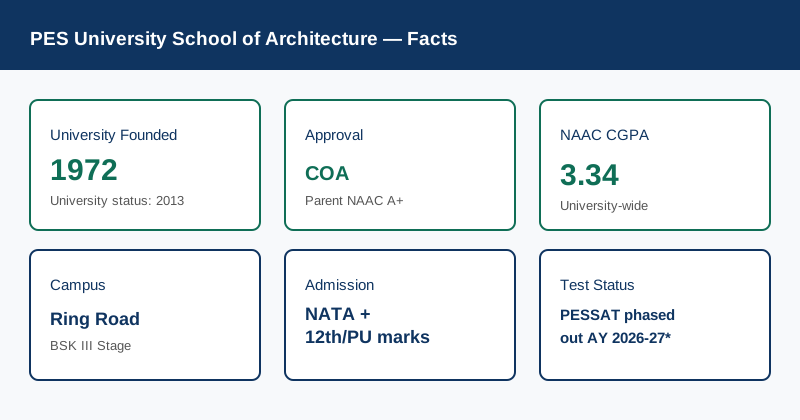
One of four disciplines at the Ring Road campus specifically -- PES University spreads its other schools across separate campuses.
Which PES Campus Actually Matters Here
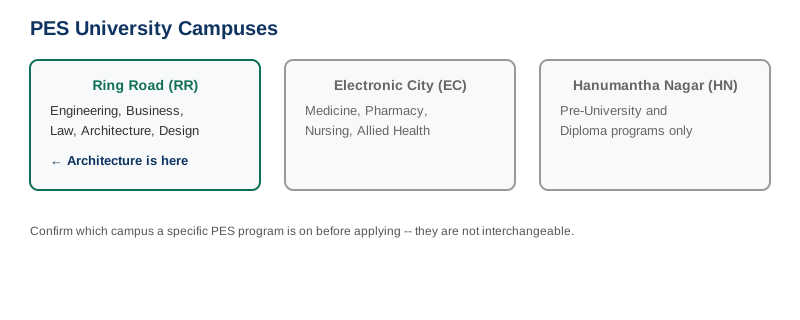
PES University runs distinctly separate campuses for different disciplines: the Ring Road (RR) campus at BSK III Stage houses Engineering, Business, Law, Architecture and Design together; the Electronic City (EC) campus runs Medicine, Pharmacy, Nursing and Allied Health Sciences, including its own 1,000-bed general and 300-bed super-specialty hospital; and the Hanumantha Nagar (HN) campus handles only Pre-University and Diploma programs. Architecture students specifically attend the RR campus, not EC or HN, a distinction worth confirming directly since university-wide marketing sometimes blends all three campuses into one general description without specifying which discipline sits where.
The university itself grew from a trust running Pre-University and pharmacy programs, becoming PES Institute of Technology (PESIT) in 1988, before the UGC granted deemed-university status in 2013. The Council of Architecture approved the B.Arch program specifically, distinct from the university's broader UGC, AICTE, PCI, INC and Bar Council recognitions covering its other schools across all three campuses.
Admission Process, Including a Recent Change
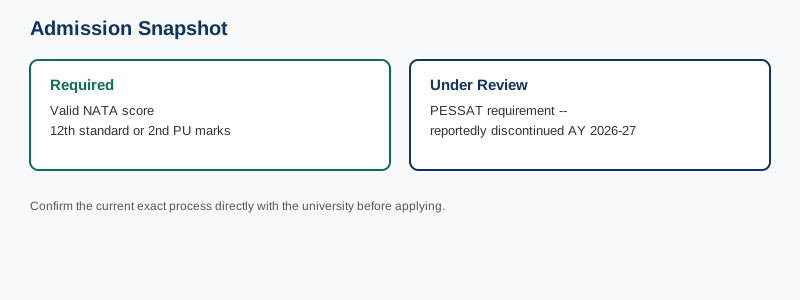
B.Arch admission has historically combined a NATA score with 12th standard or second-PU marks, following Council of Architecture norms, with candidates registering through the university's own portal for a subsequent counselling round. One current source indicates PESSAT, the university's own scholastic aptitude test previously used for cross-checking eligibility, was discontinued starting AY 2026-27, though this specific change was not confirmed across multiple independent sources at the time of writing. Applicants should verify the exact current admission process directly with the university rather than assuming either the older PESSAT-inclusive process or a newer PESSAT-free process without confirmation.
This runs independently of KCET-based admission, which does not cover architecture seats at PES or elsewhere. Reported B.Arch fees from an older data point put the figure around Rs 3.2 lakh per year, though given this figure's age, applicants should treat it as historical context rather than a current quote and confirm the actual present-day fee directly with the university.
University-Wide Context
PES University holds NIRF rank bands of 151-200 under the University category and 101-150 under Engineering specifically, per 2025 data, reflecting the institution's overall standing rather than an architecture-specific ranking, since NIRF's architecture category ranks schools separately from general university rankings. The university's broader placement figures, drawing recruiters like Microsoft, Google, Amazon and Goldman Sachs, apply primarily to its larger Engineering and Business schools rather than representing typical architecture placement outcomes specifically.
What "Multi-Campus" Means Practically for Architecture Students
Because architecture shares the Ring Road campus with Engineering, Business and Law rather than Medicine or Allied Health at the separate Electronic City campus, students benefit from proximity to disciplines that architecture education often draws on directly, structural engineering coursework and business fundamentals for practice management among them, without needing to travel between campuses. This is a genuine practical advantage over an architecture school isolated on its own single-purpose campus, though applicants should weigh it against schools offering architecture-specific facilities built without needing to share space with unrelated disciplines.
The AICTE and NAAC recognitions covering PES University apply university-wide, though the specific accreditation status of the architecture program on its own has not been independently confirmed separate from the parent institution's overall A+ grade; applicants placing significant weight on program-specific rather than university-wide accreditation should verify this distinction directly.
Who This Fits
This program suits NATA-qualified applicants who want a COA-approved architecture degree within a large, multi-campus deemed university with substantial engineering and business school infrastructure nearby, even though architecture itself operates as one of several disciplines sharing the Ring Road campus rather than a dedicated standalone architecture school. For admission guidance specifically confirming the current entrance process, or comparing this against other Karnataka architecture programs, direct verification with the university remains essential given the admission-process transition currently underway.
Applicants comparing PES University's architecture program against other Bangalore-area institutions should weigh the multi-campus, multi-discipline structure directly against standalone architecture schools, since campus culture and cross-disciplinary exposure differ meaningfully between the two models. Neither approach is objectively better across every applicant's priorities.
For students specifically weighing architecture against management programs also offered on the same Ring Road campus, PES University's shared-campus structure means both disciplines draw on overlapping business-adjacent coursework and facilities, a genuine cross-pollination advantage for students interested in eventually combining architectural practice with business or real-estate development skills.
The transition away from PESSAT, if confirmed for AY 2026-27, would bring PES University's architecture admission process closer in line with schools that rely purely on NATA and academic marks without an additional university-specific test layer, potentially simplifying the application process for applicants who would otherwise need to prepare for and register separately for PESSAT alongside NATA. This kind of admission-process simplification, when it happens, is generally welcomed by applicants, though the practical impact depends on exactly how the university structures its replacement selection criteria.
Frequently Asked Questions
Which PES campus houses the architecture program?
The Ring Road (RR) campus at BSK III Stage, alongside Engineering, Business and Law. This is distinct from the Electronic City campus (Medicine, Pharmacy, Nursing) and the Hanumantha Nagar campus (Pre-University and Diploma only).
Is PESSAT still required for B.Arch admission?
This is unclear as of current reporting: one source indicates PESSAT was discontinued from AY 2026-27, while the standard admission process historically combined NATA scores with 12th/PU marks directly. Confirm the current exact process with the university before applying.
What is the parent university's NAAC grade?
A+ with a CGPA of 3.34. The B.Arch program itself carries separate Council of Architecture approval.
Does KCET matter for admission here?
No. B.Arch admission requires NATA scores combined with 12th/PU marks, independent of KCET's rank-based system.
When was PES University founded?
The institution traces back to 1972, became PES Institute of Technology (PESIT) in 1988, and was granted deemed-university status by the UGC in 2013.
About the Author
L K Monu Borkala, Founder & Chief Strategist of OneCity Technologies, brings 20+ years of business experience and 19 years of work across various education-sector services. CollegesInfo.org's content is built from publicly available KEA, NMC, AICTE, and university data, cross-checked against official sources wherever possible.