About Kannada University Hampi
Written by L K Monu Borkala, Founder & Chief Strategist
Last Updated: August 4, 2026 · Verified with UGC, NAAC and Government of Karnataka data for 2025–26
Kannada University, Hampi was established in 1991 by the Government of Karnataka through the Kannada University Act, specifically to research and teach Kannada language, literature, folklore and regional culture. Unlike a general-degree college, it offers narrowly-focused programs including BA and MA in Kannada, Bachelor and Master of Fine Arts, and integrated MA-PhD tracks, on a 680-acre campus near the UNESCO World Heritage site of Hampi.
| Established | 1991 |
| Type | State university, direct-teaching |
| Accreditation | NAAC B Grade |
| Approvals | UGC |
| Campus | 680 acres, Vidyaranya, near Hampi |
| Focus | Kannada language, literature, folklore, fine arts |
| Library | 200,000+ books, 1,400+ rare texts |
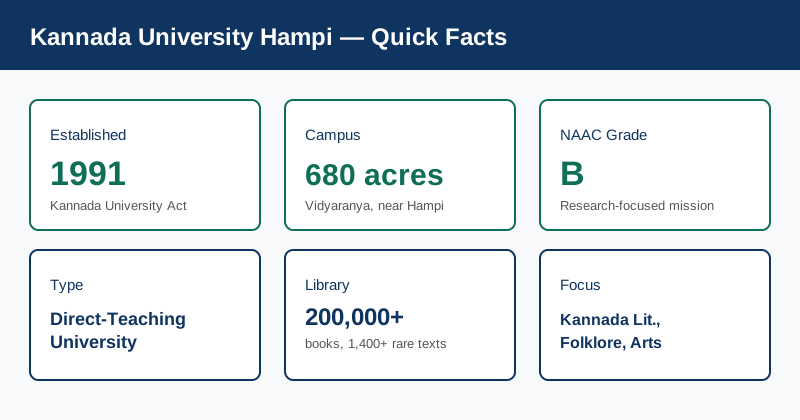
A specialised research university, not a general-degree arts college -- the program list reflects that narrow focus.
A Research University, Not a General-Degree College
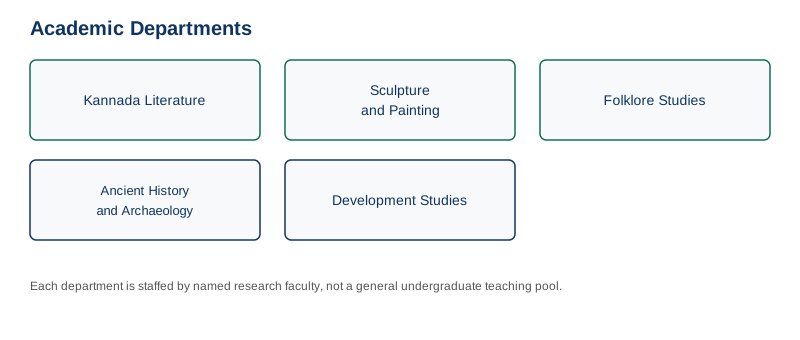
The Karnataka Legislature passed the Kannada University Act in 1991 specifically to create an institution dedicated to Kannada language, literature, folklore, archaeology and regional culture, distinct from the general-purpose arts colleges most students encounter through Karnataka's broader college directory. Academic departments include Kannada Literature, Sculpture and Painting, Folklore Studies, Ancient History and Archaeology, and Development Studies, each staffed by named professors conducting original research rather than delivering a standard undergraduate syllabus alone.
This distinguishes Kannada University sharply from an institution like VTU Belagavi, which primarily administers affiliated colleges rather than directly teaching students. Kannada University enrols its own students, runs its own departments, and awards its own degrees start to finish, making it a genuine teaching university despite its narrow subject focus.
Programs on Offer
Undergraduate options are limited but specific: BA in Sangeetha (Music), Bachelor of Fine Arts (BFA) requiring a prior Diploma in Sculpture, and related integrated tracks. At postgraduate and doctoral level, the university offers MA and an Integrated MA-PhD program in Kannada Literature and Folklore, admitted through an entrance test rather than KCET counselling, which does not cover this university's specialised admission process. A Directorate of Distance Education also runs select courses for students who cannot relocate to the Hampi campus.
Campus at a Historic Site
The 680-acre campus sits in Vidyaranya, adjoining Hampi, the ruined capital of the Vijayanagara Empire and a UNESCO World Heritage Site. That proximity is not incidental to the university's mission: departments in archaeology and ancient history draw directly on Hampi's ruins for fieldwork that a Bangalore or Mangalore-based college simply cannot replicate. The library holds more than 200,000 books alongside 1,400-plus rare texts, a specialised research collection scaled for the university's narrow academic focus rather than a general-purpose student body.
Fine Arts Without the Portfolio Requirements of a Design School
The Bachelor of Fine Arts program requires a prior Diploma in Sculpture rather than a portfolio review, an admission path unusual among Karnataka's design and fine-arts institutions, most of which require submitted creative work at the application stage. This makes Kannada University a specific option for students who have already completed sculpture training through a diploma program and want to progress into a degree-level fine arts track focused on traditional and regional artistic practice rather than contemporary design.
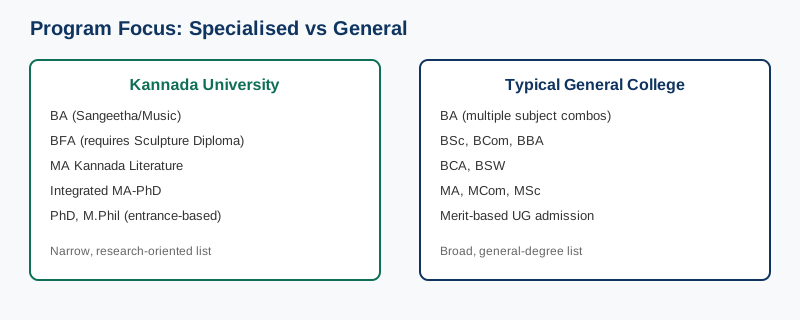
A narrow, specialised program list -- the opposite approach from a broad general-degree college.
The university also maintains a health centre with dedicated facilities for male and female students and runs extension activities connecting departments directly with surrounding rural communities, part of its founding mandate to preserve and study regional culture rather than function as a standard residential campus. Applicants comparing this against management-focused institutions elsewhere in Karnataka should recognise that Kannada University's mission and student experience differ fundamentally from a business or general-arts campus.
Placement outcomes here look different from a general-degree college too: graduates typically move into academic research, museum and archive work, cultural administration, publishing, and teaching Kannada language and literature, rather than the corporate or IT-sector placements a commerce or science college would advertise. This is a specialised outcome profile worth weighing seriously against career goals before enrolling, not a shortcoming of the university but a direct consequence of its narrow founding mission.
Who This Fits
Kannada University suits students specifically pursuing Kannada language, literature, folklore, fine arts or regional archaeology at a research level, not students seeking a general BA, BCom or BSc degree. Students weighing this against broader admission-guidance options in Karnataka should confirm their specific program interest matches the university's specialised offerings before applying, since the standard undergraduate streams most Karnataka students expect are not available here. For comparing narrowly-focused institutions like this against general-degree colleges, the site's comparison tool is a useful starting point.
Faculty publications and departmental research feed into NAAC's periodic assessment cycles, and the university's B grade reflects its accreditation history to date rather than a permanent ceiling; institutions in this specialised, research-heavy category are assessed on different criteria than general-degree colleges with much larger enrolment. Prospective doctoral students specifically should note that entrance test-based PhD admission here draws candidates nationally, not just from Karnataka, given the university's status as one of the few institutions in India dedicated specifically to Kannada-language doctoral research.
The Directorate of Distance Education handles administration separately from the on-campus departments, mailing self-learning materials and coordinating remote coursework for students who cannot relocate to Vidyaranya. This distance option covers a subset of the university's full program list rather than every specialisation, so applicants specifically interested in a distance-learning route should confirm which programs are actually available remotely before assuming full parity with the on-campus offering.
Frequently Asked Questions
Is Kannada University Hampi a general arts college?
No. It is a specialised state university focused specifically on Kannada language, literature, folklore, fine arts and regional archaeology, not a general-degree institution offering standard BA, BCom or BSc programs.
Does KCET matter for admission here?
No. Undergraduate admission runs on merit in the qualifying examination through the university's own process. Postgraduate admission requires an entrance examination specific to Kannada University, not KCET.
What is the NAAC grade?
NAAC B Grade. This sits below several general-degree colleges in this region, reflecting the university's specialised, research-oriented mission rather than broad undergraduate teaching capacity.
How is this different from a college affiliated to Kannada University?
Kannada University Hampi directly teaches its own students on its own campus rather than functioning primarily as an affiliating body for other colleges, distinguishing it from institutions like VTU that mainly administer a network of affiliated colleges.
What research facilities does the campus offer?
A library holding more than 200,000 books and 1,400-plus rare texts, plus direct access to the Hampi archaeological site for fieldwork in the university's ancient history and archaeology departments.
About the Author
L K Monu Borkala, Founder & Chief Strategist of OneCity Technologies, brings 20+ years of business experience and 19 years of work across various education-sector services. CollegesInfo.org's content is built from publicly available KEA, NMC, AICTE, and university data, cross-checked against official sources wherever possible.