About Govinda Dasa College Surathkal
Written by L K Monu Borkala, Founder & Chief Strategist
Last Updated: August 4, 2026 · Verified with UGC, NAAC and Mangalore University data for 2025–26
Govinda Dasa College, Surathkal was established in 1967 and is managed by the Hindu Vidyadayinee Sangha, a local educational trust founded in 1916. It holds NAAC A grade accreditation with a 3.14 CGPA in its fourth cycle, affiliated to Mangalore University, offering BA, BSc, BCom, BBA and BCA at undergraduate level plus MCom and MSc in Chemistry at postgraduate level.
| Established | 1967 |
| Managed By | Hindu Vidyadayinee Sangha (founded 1916) |
| Accreditation | NAAC A Grade (CGPA 3.14, IV Cycle) |
| Affiliation | Mangalore University |
| Location | Surathkal, near Iddya Mahalingeshwara Temple, NH66 |
| Programs | BA, BSc, BCom, BBA, BCA (UG); MCom, MSc Chemistry (PG) |
| Also Serves As | KSOU study centre |
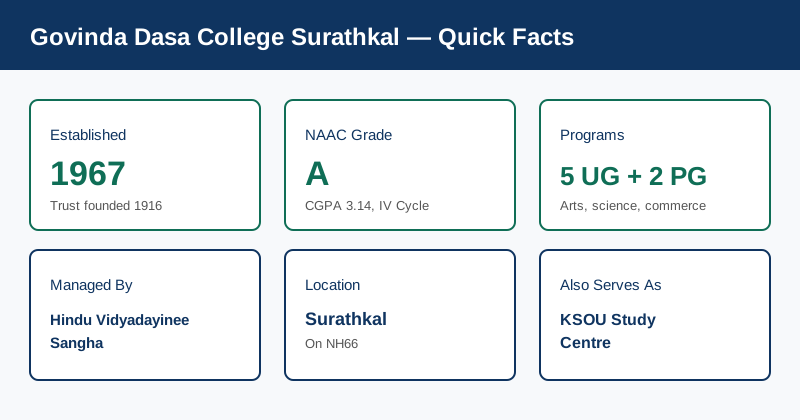
A 58-year-old institution with a documented NAAC grade improvement across four accreditation cycles.
Roots in an Even Older School Trust
The Hindu Vidyadayinee Sangha, which manages Govinda Dasa College, traces back to 1916, when it began as the Iddya Vidyadayinee School near the Sri Iddya Mahalingeshwara Temple in Surathkal. The trust ran a high school from 1944 before establishing Govinda Dasa College itself in 1967, more than five decades into its own institutional history. That sequencing matters: this is a trust that built up primary and secondary education infrastructure locally for over 20 years before expanding into degree-level education, a different founding pattern than a college launched directly by a large statewide network like SDM or Alva's elsewhere in this region.
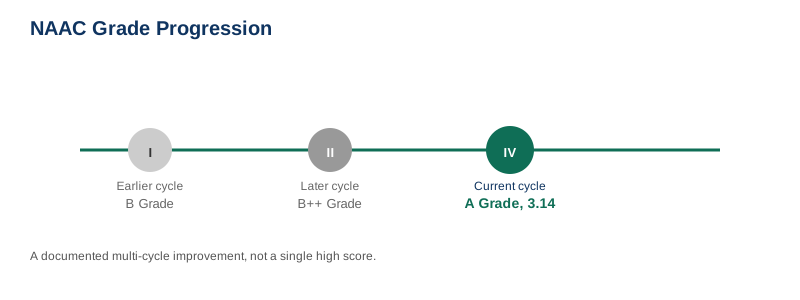
The UGC granted recognition the same year the college opened, in 1967, an unusually fast approval for the era. NAAC's accreditation history shows genuine progression: the college moved from an earlier B and B++ grade in previous cycles to A grade with a 3.14 CGPA in its fourth cycle, one of the clearer documented improvement trajectories among the smaller Dakshina Kannada colleges on this site.
Programs and Admission
Undergraduate options span BA, BSc, BCom, BBA and BCA, with MCom and MSc in Chemistry at postgraduate level. Admission runs on merit through Mangalore University's process, not KCET counselling, which governs engineering and professional-course seats rather than general-degree programs like these. The college also serves as an official study centre for Karnataka State Open University, meaning distance-education students in the Surathkal area can access KSOU coursework support through Govinda Dasa's own campus rather than travelling to Mysore.
Location and Community Role
The trust's founders envisioned the school-then-college progression specifically as a ladder for local families: primary education in 1916, secondary schooling by 1944, and finally degree-level access in 1967, each stage building on the credibility and community trust the previous one established. Few educational trusts in this region can point to a documented, half-century-long progression of this kind, and it partly explains why UGC recognition arrived the same year the college itself opened rather than years later, as happened at several comparable institutions.
Situated directly on National Highway 66, adjoining the Iddya Mahalingeshwara Temple, the college occupies a site chosen for accessibility to the surrounding rural and semi-rural population rather than a coastal-city location. The institution's own stated mission emphasises bringing higher education to students from rural areas specifically, a founding purpose consistent with the trust's century-long local presence rather than a citywide draw. Recent Mangalore University degree examination results show the college's students earning individual ranks, including 2nd, 3rd and 9th rank holders across BA, BSc and BCom in the 2025 university examinations.
What "Rural-Focused" Actually Means Here
The college's stated mission to serve rural students isn't marketing language; it shows up in practical program design. Fee levels at Govinda Dasa run below what a coastal-city general-degree college typically charges, and the college has historically prioritised broad accessibility over the kind of selective, high-fee professional programs that draw students from across the state. Applicants comparing this against management-focused institutions elsewhere should recognise that Govinda Dasa's institutional purpose is different: access and affordability for the immediate Surathkal community, not competing for the widest possible applicant pool.
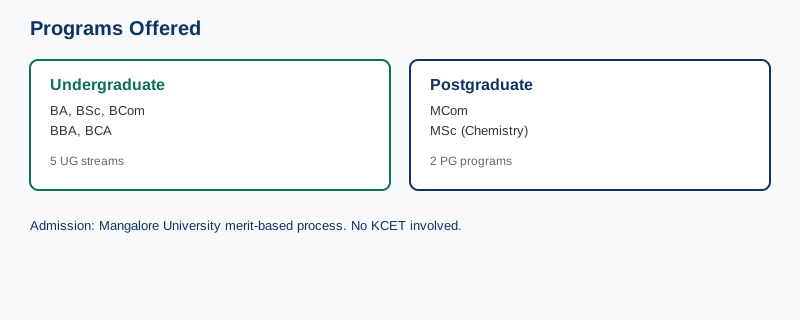
Five UG streams and two PG programs, reflecting a general-access mission rather than specialised professional training.
The AICTE-approved BCA program is one exception to this general-access pattern, giving students a technical computing credential without needing to relocate to a dedicated engineering-focused campus. Combined with the college's role as a KSOU study centre, this positions Govinda Dasa as a multi-purpose local institution rather than a single-track degree college.
Who This Fits
Govinda Dasa College suits students in and around Surathkal who want a locally-rooted, multi-generational trust-managed institution with a documented accreditation improvement history, rather than a large multi-campus network. Its role as a KSOU study centre also makes it a practical option for students combining regular coursework with distance-education support. For admission guidance or side-by-side comparison against nearby options, the site's comparison tool covers fees and courses together.
The temple-adjacent campus location also carries genuine community significance beyond convenience: the Iddya Mahalingeshwara Temple has served as a cultural anchor point for the surrounding area long before the college existed, and the trust's founders deliberately located their earliest school in its vicinity to draw on that existing community gathering point. Applicants unfamiliar with Surathkal's layout should note the campus sits directly on NH66, making it easy to reach from both Mangalore city and surrounding coastal towns despite its rural-focused mission. See NAAC's database to verify the college's current accreditation status directly.
Placement outcomes for a general-access college of this size tend toward regional employers, local businesses, banking and government-sector roles rather than large multinational recruiters, a realistic expectation worth setting alongside the college's affordable fee structure. Students specifically targeting large corporate placements may find better outcomes at a bigger, more selectively-admitting institution, while those prioritising cost and community connection often find Govinda Dasa a better practical fit.
Frequently Asked Questions
Who manages Govinda Dasa College?
The Hindu Vidyadayinee Sangha, an educational trust founded in 1916 that ran schools in the Surathkal area for over five decades before establishing the college itself in 1967.
What is the current NAAC grade?
A grade with a 3.14 CGPA in the fourth accreditation cycle, an improvement from earlier B and B++ grades in previous cycles.
Does KCET matter for admission here?
No. Admission runs on merit through Mangalore University's process. KCET governs engineering and professional-course seats, not general-degree programs like BA, BSc, BCom, BBA or BCA offered here.
Is this college connected to Karnataka State Open University?
Govinda Dasa College serves as an official KSOU study centre, supporting distance-education students in the Surathkal area, though it is a separate institution with its own regular degree programs and NAAC accreditation.
What programs does the college offer?
BA, BSc, BCom, BBA and BCA at undergraduate level, plus MCom and MSc in Chemistry at postgraduate level.
About the Author
L K Monu Borkala, Founder & Chief Strategist of OneCity Technologies, brings 20+ years of business experience and 19 years of work across various education-sector services. CollegesInfo.org's content is built from publicly available KEA, NMC, AICTE, and university data, cross-checked against official sources wherever possible.