Last Updated: September 7, 2026
Compare top M.Pharm (Analysis) colleges in India–rankings, fees, eligibility, GPAT, labs & placements. See packages, recruiters, and how to choose.
M.Pharm (Pharmaceutical Analysis) is a lab-intensive postgraduate specialisation focused on developing, validating, and applying analytical methods to ensure the identity, purity, potency, and stability of drugs. Students master chromatographic techniques (HPLC, UPLC, GC), spectroscopic methods (UV-Vis, IR, NMR), dissolution testing, impurity profiling, and ICH-aligned method validation–skills that power quality assurance and regulatory submissions throughout the pharmaceutical lifecycle.
Choosing the right college is important because outcomes hinge on faculty expertise, instrument uptime, GLP-compliant labs, and structured industry exposure. Institutions with strong pharmaceutical and analytical chemistry departments, well-equipped central instrumentation facilities, and active MoUs with leading manufacturers/CRAMS players deliver better internships, dissertations, and placements.
This blog provides a practical, decision-ready view: we'll outline where M.Pharm (Analysis) fits within the broader pharmaceutical ecosystem, explain why the specialisation is in demand, and describe the admissions process. Then we'll present the top colleges in India offering the program, with at-a-glance data on rankings/recognitions, approximate fees, placement records, major recruiters, and unique lab or research highlights. You'll also get a fee comparison table, a snapshot of career outcomes, and a checklist to choose the right college–ending with a concise conclusion and SGE-friendly FAQs for quick reference.
Why Choose M.Pharm in Pharmaceutical Analysis?
Pharmaceutical Analysis sits at the heart of drug quality, safety, and compliance–making it one of the most resilient M.Pharm pathways. Graduates become specialists in method development and validation for APIs, formulations, and biologics, utilising HPLC/UPLC, GC, LC–MS/MS, ICP–MS, UV–Vis, FT-IR, NMR, dissolution, and stability testing, all aligned with ICH, USP, and WHO guidelines. These competencies map directly to high-demand functions in Quality Control, Quality Assurance, R&D Analytics, Tech Transfer, and Regulatory Affairs support.
Global expansion of generics, biosimilars, and complex injectables drives continuous hiring for analytical scientists across Indian pharma hubs and multinational CRAMS/CDMOs. The role is cross-functional: analysts interface with formulation, production, and regulatory teams to generate defensible data for submissions, audits, and market releases. Compared with other M.Pharm tracks, Analysis offers faster skill portability because instrumentation, validation statistics, and documentation standards are universally recognised.
Career trajectories include Analyst → Senior/Lead Scientist → Lab Manager; or pivots into data integrity, cleaning validation, medical devices, cosmetics, and nutraceuticals. The specialisation also builds a competitive edge for roles in pharmacopoeial labs, notified bodies, and global graduate programs. If you're detail-oriented, enjoy problem-solving with instruments and statistics, and want to make an impact that scales worldwide, an M.Pharm (Analysis) is a compelling choice for highly motivated graduates.
Eligibility & Admission Process
Eligibility: A B.Pharm from a PCI-approved institute with a minimum aggregate of 55% (50% for reserved categories) is typically required. Final-year students may apply provisionally, provided they meet the admission criteria.
Entrance: GPAT is widely accepted for scholarships and preference; many universities conduct institution-level tests and interviews (e.g., JSS, Manipal, Jamia Hamdard, BITS Pilani).
Application: Register on the university or counselling portal, upload transcripts, GPAT scorecard, photo ID, address proof, category certificate (if applicable), and an SOP/CV. Pay the fee and submit by the stated deadline.
Evaluation: Shortlisted candidates may face written tests and/or interviews covering analytical chemistry fundamentals, instrumentation exposure, statistics, and research intent.
Selection & Seats: Merit lists generally weigh GPAT, UG performance, and interview scores. Sponsored and industry-management quota seats exist within regulations.
Timeline & Fees: Forms typically open from January to June for entry from July to August. GPAT qualifiers may receive stipends from AICTE/the Institute. Upon selection, pay the confirmation fees, complete the verification process, and enrol.
MVM College of Pharmacy, Bengaluru – M.Pharm (Pharmaceutical Analysis)
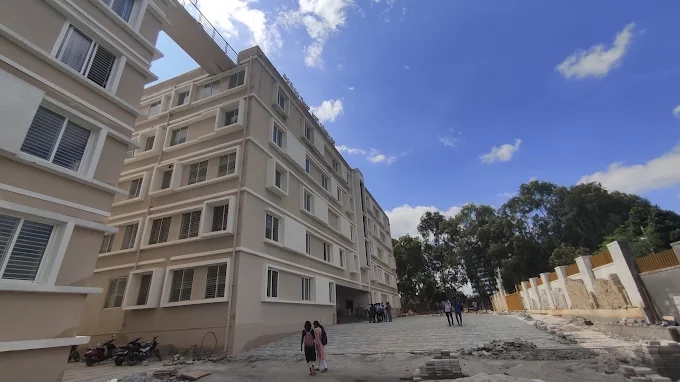
Location: No. 1336/72/2, Behind Trident Hyundai Showroom, Vikas Layout, Palanahalli, Maruthi Nagar, Yelahanka, Bengaluru, Karnataka - 560064.
MVM College of Pharmacy (under MVM Educational Trust) offers M.Pharm with specialisations that include Pharmaceutical Analysis, alongside Pharmaceutics, Pharmacology, Pharmacognosy, Regulatory Affairs, Pharmacy Practice, and Pharmaceutical Chemistry. The programme duration is two years with department-guided dissertation work.
Recognition & ecosystem: The college runs a dedicated Department of Pharmaceutical Analysis (faculty listed publicly), indicating structured teaching and lab guidance for analytical subjects. Recent hiring posts also reference an Assistant Professor position in Pharmaceutical Analysis, indicating the department's active operations.
Fees: Public fee trackers and comparison pages place MVM's M.Pharm tuition around ₹90,000–₹1,00,000 per year (specialisation/annual heads vary). Always confirm with the current admission notice before payment.
Placements & outcomes: Student-reported summaries show offers typically in the ₹3.9–5.5 LPA range, with ~70% placements and intense internship exposure; roles span QC/QA, analytical documentation, and hospital/industry functions depending on the stream. Verify the latest cycle with the placement office.
Why it is notable: The Bengaluru location, with access to the pharma/CRO ecosystem, an operational Analysis department, and value-for-money fees, makes MVM a practical option for students seeking method-driven roles in QC/QA and analytical development, while building audit-ready documentation skills.
Manipal College of Pharmaceutical Sciences (MCOPS), Manipal – M.Pharm (Pharmaceutical Analysis)
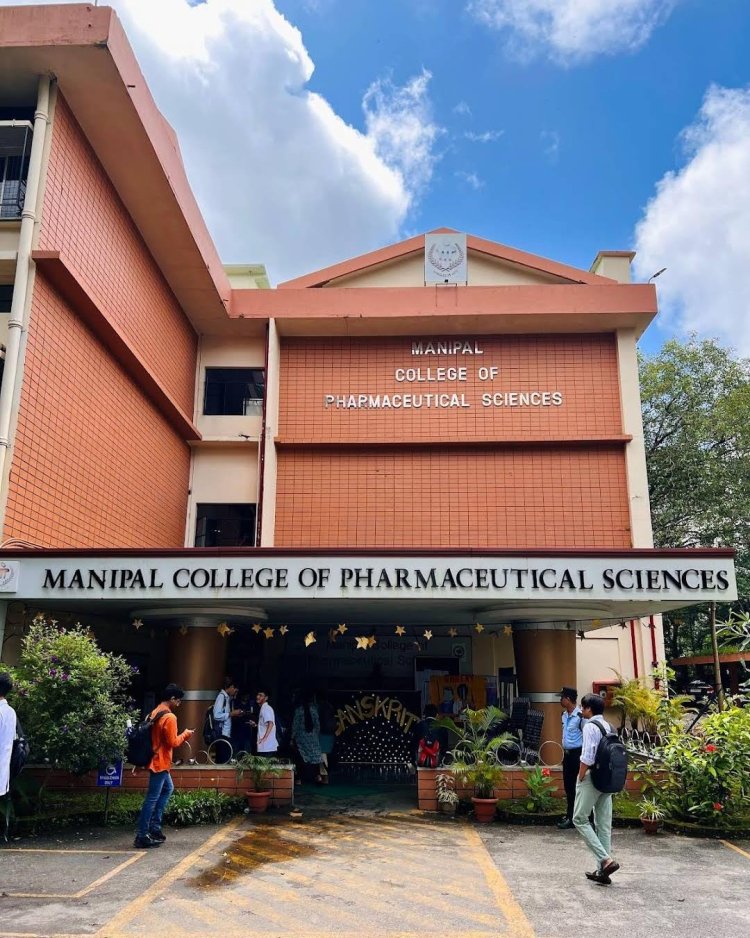
Location: College of Pharmaceutical Sciences, Manipal Dr, Madhav Nagar, Manipal, Karnataka 576104
MCOPS (MAHE) offers M.Pharm in Pharmaceutical Analysis with dedicated stream labs and access to central instrumentation (HPLC/UPLC, GC, LC–MS, spectroscopy) and an active placement cell. The program is listed under MCOPS’s M.Pharm streams and details the career path analysis (QA/QC analyst, drug testing labs, and industry instrumentation roles).
Recognition & Ranking: MCOPS consistently ranks among India's top pharmacy schools–NIRF Pharmacy 2024: Rank #8; it also appears in the 2025 top-10 lists reported by national media.
Fees (approx.): The total program fees typically fall in the ₹8.6–9.9 lakh range for M.Pharm at MCOPS (indicative, subject to variation by specialisation and year). Applicants should confirm the latest schedule on MAHE's "Fees & Refunds" page.
Placements & Recruiters: MCOPS highlights strong campus placements through its placement cell. Recent recruiter lists include GSK, Danone, Himalaya, Parexel, Dr Reddy's, Novo Nordisk, Nestlé, Eris, and others, reflecting opportunities across QC/QA, R&D analytics, and CRAMS/CDMO roles.
Program Highlights: GLP-oriented training, workshops, adjunct industry faculty, and research/dissertation work in Semesters III–IV build audit-ready documentation and validation skills highly valued by regulators and multinational pharmaceutical companies.
Jamia Hamdard – School of Pharmaceutical Education & Research (SPER), New Delhi – M.Pharm in Pharmaceutical Analysis
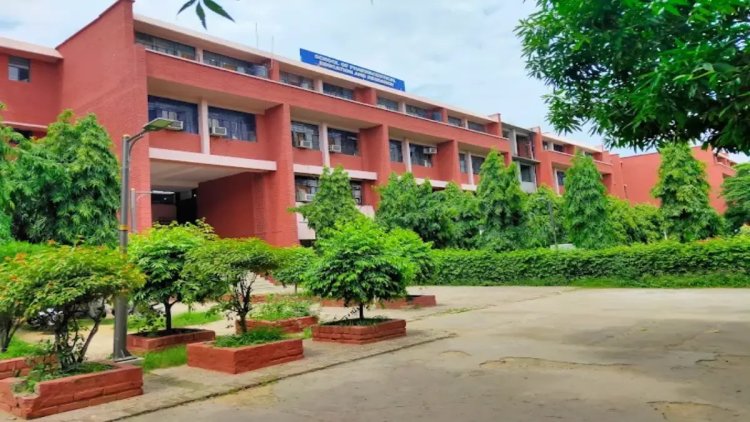
Location: Jamia Hamdard, Hamdard Nagar, New Delhi - 110 062
SPER at Jamia Hamdard offers an M.Pharm in Pharmaceutical Analysis as part of its postgraduate programmes, supported by syllabi on analytical techniques and instrumentation.
Recognition & Ranking: Jamia Hamdard is ranked #1 in India under the NIRF Pharmacy 2024 rankings and maintains this position in 2025, reflecting its strength in teaching, research, and outcomes.
Fees: Official circulars list one-time and annual fees; public course listings indicate a total Tuition for the two-year Analysis programme of around ₹4.0 lakh. Verify the latest figure on the university fee notice.
Placements: The university placement cell facilitates internships and hiring; public summaries report diverse recruiters and programme-dependent packages. Review the newest report when applying.
Highlights: Access to central instrumentation for HPLC/UPLC, GC, spectroscopy; method development and validation aligned with pharmacopeial and ICH expectations; dissertation work builds audit-ready records.
Why it is notable: A dedicated analysis stream, laboratory depth, Delhi location, and sustained top national ranking make SPER a strong option for QC/QA, R&D analytics, regulatory support, and CRAMS/CDMO roles for serious aspirants.
JSS Academy of Higher Education & Research (JSSAHER) – JSS College of Pharmacy, Mysuru & Ooty – M.Pharm (Pharmaceutical Analysis)
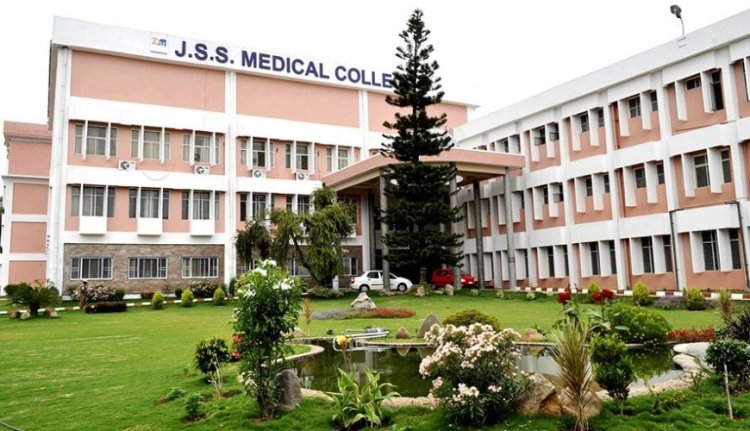
Location: JSS Academy of Higher Education and Research, Sri Shivarathreeswara Nagara, Mysuru – 570015, & Ooty, Tamil Nadu, India.
JSS Academy of Higher Education & Research offers M.Pharm (Pharmaceutical Analysis) at its JSS Colleges of Pharmacy, Mysuru and Ooty. The Mysuru course follows CBCS over four semesters with an approved intake (~15) and hands-on training on HPLC/UPLC, GC, spectroscopy, with LC–MS access via central facilities. The Ooty department has offered Pharmaceutical Analysis since 1994, focusing on industry-ready QC/QA skills and ICH-aligned documentation.
Recognition & ranking: JSSAHER figures prominently in NIRF; its pharmacy colleges at Ooty and Mysuru are consistently top-tier (institution pages cite 2024 positions of #4 Ooty and #7 Mysuru).
Fees: Public course portals list the total two-year tuition for the Analysis program at Mysuru as ₹6.0–₹6.3 lakh; applicants should verify the current schedule on JSS notices.
Placements & Recruiters: The placement cell coordinates internships and hiring. Listed recruiters across M.Pharm specialisations include Eli Lilly, Baxter, Sitero, Freyr, Aurobindo, ITC, Novo Nordisk, and Dr Reddy's. Roles span QC/QA analyst, analytical development, stability and method validation.
Program highlights: one-year research/dissertation, GLP orientation, structured industry visits, and central instrumentation access supporting method development, impurity profiling, practical and stability studies.
SRM Institute of Science and Technology (SRMIST) – College of Pharmacy, Kattankulathur – M.Pharm (Pharmaceutical Analysis)
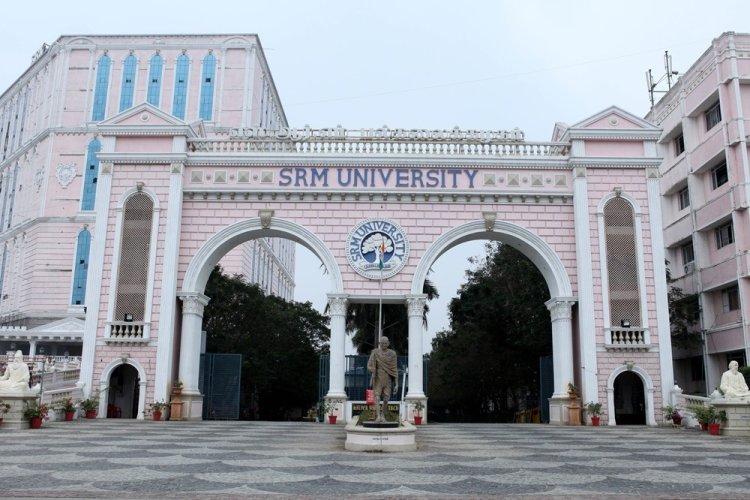
Location: Kattankulathur – 603203, Tamil Nadu
SRMIST offers a dedicated M.Pharm in Pharmaceutical Analysis, with a curriculum that spans instrumental methods, impurity profiling, stability studies, and ICH-aligned validation and documentation. Teaching is anchored by the Department of Pharmaceutical Analysis, which trains postgraduates in qualitative and quantitative Analysis, providing them with intense exposure to instrumentation. Facilities include access to HPLC/UPLC, GC, LC-MS and spectroscopy suites through departmental and college labs. Seats are typically 15, with total Tuition around ₹3.5 lakh for two years; confirm current intake and fee on the official pages.
Recognition: SRMIST features in the NIRF Pharmacy tables; applicants can review its position in the official ranking lists for 2024–25.
Placements: The College of Pharmacy operates an active placement cell that facilitates internships and hiring. Recent lists show that students have been placed at Alembic and Himalaya Wellness, among others. Public summaries report PG median salaries of approximately ₹6.5–7.5 LPA in recent cycles.
Why it is notable: industry-oriented analytics training, Tamil Nadu pharma-corridor proximity, structured project/dissertation work, and allied departments like Pharmaceutical Quality Assurance and Pharmaceutics that broaden electives and cross-lab exposure–useful for QC/QA, Analytical Development, stability, and regulatory documentation roles. Campus infrastructure supports seminars, workshops, and audit-readiness drills.
Andhra University – College of Pharmaceutical Sciences, Visakhapatnam – M.Pharm (Pharmaceutical Analysis)
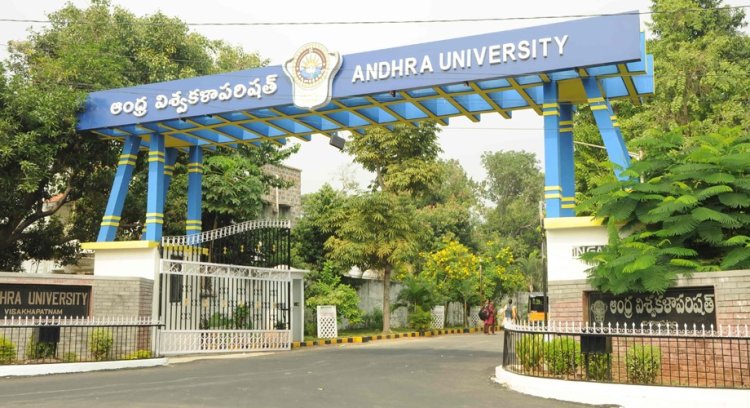
Location: College Of Pharmacy, Andhra University South Campus, Andhra University, Visakhapatnam, Andhra Pradesh 530003
Andhra University's College of Pharmaceutical Sciences offers a two-year M.Pharm program in Pharmaceutical Analysis, featuring semester-wise coursework and a dissertation, which covers modern analytical techniques, impurity/stability studies as per the ICH guidelines, and instrument training (HPLC/GC/UV-Vis, etc.). The program is explicitly listed among AU's PG offerings, with detailed analysis syllabi available online.
Recognition & intake: The college features regularly in national pharmacy rankings (e.g., NIRF Pharmacy tables) and offers defined seats for M.Pharm specialisations; the University publishes the Analysis curriculum and regulations.
Fees (approx.): Public university notices and portals indicate that the total Tuition typically falls in the ₹1.0–2.9 lakh range for AU M.Pharm programmes (with specialisation-wise variations; confirm the latest official schedule before applying).
Placements & outcomes: External summaries for AU Pharmacy report average packages of around ₹4–4.5 LPA, with sector hiring across pharma and healthcare; the University's placement wing conducts campus drives and provides resume support. Roles span QC/QA, analytical development, stability, and documentation.
Program highlights: The government university setup, published analysis syllabus with a strong focus on ICH-aligned validation, and value-for-money fees make AU a solid choice for students targeting QC/QA and R&D analytics roles in Indian pharmaceutical hubs.
KLE Academy of Higher Education & Research (KAHER) – KLE College of Pharmacy, Belagavi & Bengaluru – M.Pharm (Pharmaceutical Analysis)
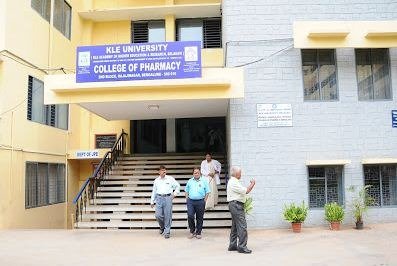
Location: P.B.No.1062, II Block, Rajajinagar, Bengaluru – 560010
KLE runs M.Pharm (Pharmaceutical Analysis) at its Belagavi and Bengaluru campuses, with syllabi covering modern instrumental methods, validation, impurity/stability studies, and bio-analytical techniques. Department pages and admissions outlines list Pharmaceutical Analysis explicitly among M.Pharm specialisations.
Recognition & ecosystem: Established in 1968, Belagavi College is a KAHER constituent with long-standing PG and PhD programs, offering central access to HPLC/UPLC, GC, and spectroscopy suites for method development and ICH-aligned documentation.
Fees: Public aggregators charge a total of ₹2.5–4.0 lakh for the two-year M.Pharm tuition, depending on the campus/specialisation; applicants should confirm the official fee schedule in the current KAHER admission notice.
Placements & Recruiters: The Bengaluru placement page lists visiting industries such as Novo Nordisk, Pfizer, Quintiles/IQVIA, Abbott, Himalaya, Centaur, Apotex, AstraZeneca, GSK, Natco, and more. Student reviews also cite Sun Pharma, Cipla, and Zydus in recent cycles. Dedicated placement cells operate on both campuses.
Why it is notable: Multiple campuses offering the Analysis track, established labs, industry-facing training, and recruiters spanning QC/QA, Analytical Development, pharmacovigilance, and clinical research make KLE a strong value option for students targeting Indian pharma hubs.
PSG College of Pharmacy (PSGCP), Coimbatore – M.Pharm (Pharmaceutical Analysis)
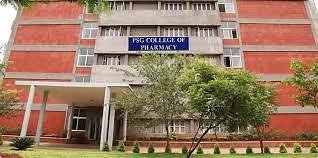
Location: 2295+PCJ, Peelamedu, Avinashi Rd, Coimbatore, Tamil Nadu 641004
PSGCP offers a dedicated M.Pharm program in Pharmaceutical Analysis within its Department of Pharmaceutical Analysis, established in 2011. The department trains postgraduates in modern instrumental techniques and pharmacopeial/ICH-aligned method validation, providing exposure to HPLC/UPLC, GC, and spectroscopy through departmental and college labs.
Recognition & ranking: PSGCP figures in the national league tables–NIRF Pharmacy 2024 Rank: 58; the official list shows PSG College of Pharmacy with detailed TLR/RPC/GO metrics.
Fees: Public notices/portals indicate that the first-year fees for M.Pharm are approximately ₹1.35 lakh, with variations by specialisation; applicants should confirm the latest schedule on PSG's website.
Placements & recruiters: The college has an active placement cell that coordinates campus drives and industry outreach. Recent public summaries list recruiters such as Sun Pharma, Alembic, Biocon, and Apex Laboratories, among others, with PG median salaries reported in the ₹3.7–4.0 LPA band by external trackers. Always verify the current cycle’s report with the placement office.
Program highlights: Analysis-focused coursework, dissertation in Sem III–IV, and institute–industry initiatives that enhance QC/QA, analytical development, stability and documentation skills relevant to CRAMS/CDMOs and regulated-market manufacturers.
Delhi Pharmaceutical Sciences and Research University (DPSRU), New Delhi – M.Pharm (Pharmaceutical Analysis)
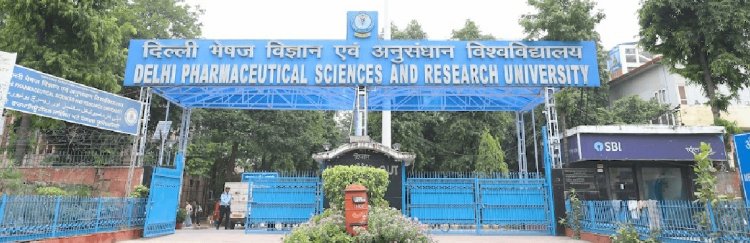
Location: MB Road, Sector 3, Pushp Vihar, New Delhi 110017
DPSRU offers a two-year M.Pharm in Pharmaceutical Analysis, which includes coursework and a dissertation covering instrumental methods, impurity profiling, stability studies, and ICH-aligned method validation. The specialisation is explicitly listed by the School of Pharmaceutical Sciences and in the University's syllabus repository.
Recognition & ranking: DPSRU is ranked #16 in the NIRF Pharmacy 2024 rankings, as per public summaries, reflecting its teaching and graduation outcomes.
Fees & intake: The independent programme overviews list the total Tuition of ₹1,60,000 for two years, plus a ₹5,000 admission fee, with an intake of 9 seats. Always confirm with the latest university notice before payment.
Placements & roles: The University facilitates internships and campus drives, with graduates entering QC/QA, Analytical Development, Stability, and documentation roles across Indian pharma hubs and CRAMS/CDMOs. Recent cohorts report intense lab exposure and documentation rigour.
Why it is notable: The clear availability of the Analysis specialisation, a Delhi location close to noted regulators and testing labs, and value-for-money fees make DPSRU attractive for students targeting analytical scientist paths and audit-ready documentation skills.
Fee Structure Comparison Table
Below are indicative two-year tuition figures to help you benchmark costs across leading colleges offering M.Pharm (Pharmaceutical Analysis). Amounts are compiled from the latest publicly available sources and rounded for easy comparison. Always verify the current official fee notice before applying, as category/hostel/exam and other charges vary by institute and year.
|
College |
Indicative 2-Year Tuition (₹) |
Notes |
|
MVM College of Pharmacy, Bengaluru |
1.8–2.0 lakh |
Value-for-money; Bengaluru ecosystem |
|
MCOPS (MAHE), Manipal |
8.6–9.9 lakh |
Private deemed; higher capex labs |
|
Jamia Hamdard, New Delhi |
~4.0 lakh |
Public-aided; top NIRF rank |
|
JSS College of Pharmacy (Mysuru) |
6.0–6.3 lakh |
CBCS; strong placements |
|
SRMIST, Kattankulathur |
~3.5 lakh |
Dept. of Pharma Analysis |
|
Andhra University, Vizag |
1.0–2.9 lakh |
Public University |
|
KLE (Belagavi/Bengaluru) |
2.5–4.0 lakh |
Multi-campus option |
|
PSG College of Pharmacy, Coimbatore |
~2.7 lakh* |
*Est. from ~₹1.35L/yr |
|
DPSRU, New Delhi |
~1.6 lakh |
Govt. state university |
Placement Records & Career Outcomes
Placement outcomes for M.Pharm (Pharmaceutical Analysis) graduates are consistently strong across leading Indian colleges. Typical roles include QC/QA Analyst, Analytical Development Scientist, Stability/Method Validation Associate, Data Integrity Specialist, and Regulatory Affairs support. Recruiters span Indian majors and CDMOs–Sun Pharma, Cipla, Dr Reddy's, Biocon, Zydus, Aurobindo, Lupin–plus global CRAMS, CROs, and pharma services firms. Average entry packages typically fall within the ₹3.5–7.5 LPA range, depending on the institute's pedigree, internships, GPAT status, and instrumentation skills (HPLC/UPLC, GC, LC–MS, dissolution, and impurity profiling). Fast-track growth is common: Analyst → Senior Analyst (18–24 months) → Team Lead/Lab Manager (4–6 years), or lateral movement into tech transfer, validation, pharmacovigilance, or medical devices. Research-oriented students progress to PhD or pharmacopoeial labs; industry-focused graduates build audit-ready documentation portfolios that perform well in inspections. Strong alumni networks, GLP exposure, and dissertation publications correlate with better campus conversions and higher offers in regulated-market programs. Location affects compensation and role breadth.
How to Choose the Right College for M.Pharm (Analysis)?
Factors: accreditation, faculty, labs, industry tie-ups, and internships.
Verify PCI/AICTE approval and the institution's recent NIRF ranking. Examine faculty profiles for peer-reviewed publications, funded projects, and industry consulting. Inspect laboratories for HPLC/UPLC, GC, LC–MS, dissolution, and stability chambers; ask about instrument uptime logs, SOPs, GLP, and data-integrity practices. Compare curriculum depth in validation statistics, ICH guidelines, and documentation to ensure consistency. Map MoUs with CRAMS/CDMOs and regulatory labs. Ensure structured internships, seminars, audit drills, and dissertation guidance–balance fees against assistantships and scholarships.
Importance of alumni network.
Reconnect with alumni to validate placements, lab culture, mentorship, and career progression. Scan LinkedIn for role trajectories and recruiter diversity. Favour programmes with alumni talks, referral pipelines, and capstone reviews.
Conclusion
An M.Pharm in Pharmaceutical Analysis positions you at the core of drug quality, compliance, and evidence for regulatory approvals. The specialisation builds mastery across chromatographic and spectroscopic techniques, validation statistics, impurity profiling, dissolution, stability studies, and audit-ready documentation aligned with ICH and pharmacopeial standards. Choosing the right college determines the depth of lab exposure, mentorship, internships, and access to recruiters, ultimately shaping roles in QC/QA, Analytical Development, Tech Transfer, and Regulatory Support. Compare accreditation, faculty research, central instrumentation, MoUs, placement median CTCs, and dissertation outcomes before committing. If you're detail-oriented and motivated by high-impact science with apparent industry demand, this pathway offers resilience and growth. Explore our M.Pharm (Analysis) program and apply now for 2025–26 admissions.
FAQ
What is M.Pharm (Pharmaceutical Analysis)?
A 2-year PG program training in method development/validation, impurity profiling, stability, and ICH/USP-aligned documentation.
Who is it for?
B.Pharm grads who enjoy instrumentation, statistics, GLP/SOPs, and audit-ready documentation.
Is GPAT mandatory?
No. It offers stipends; many colleges also conduct their own tests/interviews.
Key instruments I’ll learn?
HPLC/UPLC, GC, LC–MS/MS (where available), UV-Vis, FT-IR, dissolution testers, stability chambers.
Entry-level roles?
QC/QA Analyst, Analytical Development, Stability/Method Validation, Documentation/Data Integrity.
Typical packages?
~₹3.5–7.5 LPA, varying by college pedigree, internships, and instrument exposure.
Why are labs/MoUs important?
They drive real instrument time, internships, dissertation quality, and recruiter access.
Global prospects?
Strong. Validation and documentation skills are portable; pursue roles/higher studies in accordance with local regulations.
How to boost placements?
Hands-on projects, validated methods, strong SOP/statistics, internships, and faculty/alumni referrals.
Do I need a PhD?
Not typically applicable for most industry roles; however, it is helpful for academia/advanced R&D leadership.
Frequently Asked Questions
What is M.Pharm in Pharmaceutical Analysis?
M.Pharm Pharmaceutical Analysis is a 2-year postgraduate pharmacy specialisation focusing on drug analysis, quality control, analytical method development, instrumental analysis and regulatory compliance in pharmaceutical manufacturing.
Which are the top colleges for M.Pharm Analysis in India?
Top colleges include JSS College of Pharmacy Mysuru, Manipal College of Pharmaceutical Sciences, NIPER (multiple campuses), Bombay College of Pharmacy and Al-Ameen College of Pharmacy Bangalore.
What is the salary after M.Pharm Analysis?
M.Pharm Analysis graduates earn Rs 4-8 LPA in pharmaceutical QC/QA, analytical R&D and regulatory affairs roles. Senior analysts with 5+ years experience earn Rs 10-15 LPA. Bangalore and Hyderabad are the top job markets.
Need help with admission?
CollegesInfo.org helps students secure admission to colleges they are eligible for under that college's actual published criteria. Chat with us on WhatsApp or explore admission assistance.
About This Guide
This article is written and maintained by L K Monu Borkala, founder of CollegesInfo.org and OneCity Technologies Pvt Ltd. L K Monu Borkala has been publishing Karnataka education directories since 2006 and covering college admissions data since 2019 through CollegesInfo.org – from KCET counselling to NEET seat selection to MBA programme choices. CollegesInfo.org was built to give Karnataka families the same honest, data-backed guidance that was previously only available through expensive consultants or personal connections.
Information on this page is compiled from official sources including KEA (Karnataka Examinations Authority), RGUHS, VTU, NMC, PCI, INC, and direct feedback from students and families who have gone through the admission process. If you find anything outdated or incorrect, WhatsApp us at +91 6363 330 233 and we will update it.
Need personalised advice for your specific situation – rank, category, budget, or career goal? Our counselling is free. WhatsApp us directly and we will respond within 24 hours.
Also useful: After 12th Karnataka Career Guide | Best Degree Colleges Bangalore | Best Engineering Colleges Karnataka | Free KCET Predictor | Free NEET Predictor
Official Sources: Information on this page is sourced from Pharmacy Council of India (PCI) and All India Council for Technical Education (AICTE), the primary regulatory bodies governing this subject in India.