Updated: May 2, 2026 · Cutoff data based on KEA official 2024–2025 counselling records
Here's the direct answer on KCET 2026 cutoffs: for CSE at RVCE you need a rank under ~500 GM, BMSCE under ~800, MSRIT under ~1,200, UVCE under ~2,500. For Tier 2 colleges like DSCE and JSS Mysuru, CSE closes between 3,000–15,000 GM. These are trend-based estimates from 2024–2025 KEA data — actual 2026 cutoffs publish after each counselling round. This guide covers how cutoffs are calculated, stream-wise trends, category-wise patterns, safe score targets and the counselling strategy that gets you the best seat at your rank.
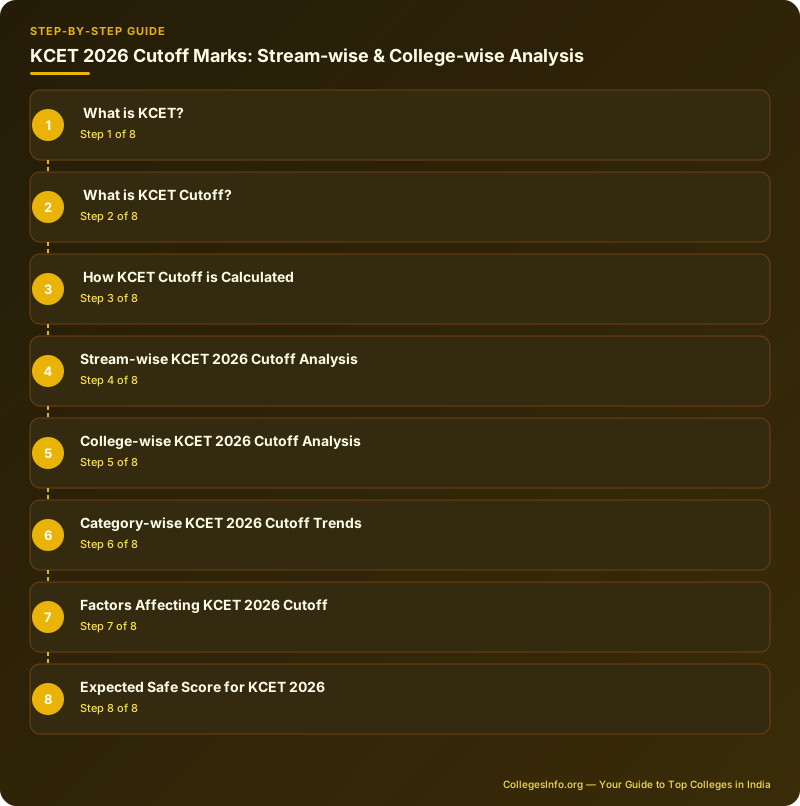
What is KCET and Why Do Cutoffs Matter?
KCET (Karnataka Common Entrance Test) is conducted by the Karnataka Examinations Authority (KEA) for admission to BE/BTech, B.Pharm, Pharm.D, BSc Agriculture, Veterinary and allied courses in government, aided and private colleges across Karnataka.
For most Karnataka families, KCET is the most affordable route to quality professional education in the state. The cutoff — officially called the closing rank — is the last rank that got a seat in a particular college, course and category in a given counselling round. Understanding where those closing ranks land tells you what rank you need to target and which options are realistic at your score.
How KCET 2026 Rank is Calculated
For engineering, KCET rank is calculated using 50% of your KCET score + 50% of your PUC Class 12 PCM marks. Both components carry equal weight — your PUC marks matter as much as the exam itself.
For pharmacy, agriculture and allied courses, PCMB or PCB combinations along with relevant KCET subject scores are used per KEA rules.
KEA prepares a merit list from these combined marks, then applies category-wise reservation rules during seat allotment. After each counselling round, KEA publishes the closing rank for every course and college — those closing ranks are the official cutoffs for that round.
Stream-wise KCET 2026 Cutoff Analysis
Engineering (BE/BTech) Cutoffs
Engineering cutoffs vary significantly by branch and college tier. Based on 2024–2025 trends:
High-demand branches — CSE, AI/ML, ISE, Data Science and ECE in top colleges close in the first few thousand GM ranks in Round 1. At elite Bangalore colleges, CSE closing ranks have typically been within 500–2,500 GM in recent years.
Medium-demand branches — Mechanical, Civil, Electrical and allied specialisations often close between 10,000 and 60,000 GM depending on college and location. The same college that closes at 800 for CSE might close at 25,000 for Mechanical.
For KCET 2026, if paper difficulty and seats stay similar to 2024–2025, engineering cutoffs'll follow similar patterns with slight shifts based on competition levels.
Pharmacy (B.Pharm and Pharm.D) Cutoffs
Pharmacy cutoffs are published separately by KEA after each counselling round.
Top B.Pharm and Pharm.D colleges in Bangalore and major cities like Mysuru, Mangaluru and Belagavi fill earlier than smaller-town colleges. In most years, pharmacy cutoffs extend to higher KCET ranks than core engineering branches like CSE — so students with middle-range ranks still have strong options in pharmacy.
If you're a pharmacy aspirant targeting Bangalore-based colleges, still aim for a competitive rank — urban pharmacy colleges see real demand, especially for Pharm.D.
Agriculture and Allied Courses Cutoffs
Agriculture, horticulture, forestry and allied programmes have seen steady demand growth, especially among students from rural and semi-urban backgrounds. Seats are limited, so closing ranks can be competitive in popular universities. For GM, good agriculture colleges often close within 15,000–40,000 ranks — tighter than many mid-tier engineering options.
Don't just chase cutoffs for agriculture — focus on colleges with strong labs, farms and field work infrastructure. That practical component matters far more in agriculture careers than it does in engineering.
Veterinary and Allied Health Sciences Cutoffs
Veterinary and allied health science seats are very limited, making them among KCET's most competitive options. GM closing ranks for top veterinary colleges sit in a tight, high-rank band. If you're targeting veterinary, treat it as a high-competition option and aim for a better rank than you'd need for most engineering or B.Pharm seats.
College-wise KCET 2026 Cutoff Ranges
Tier 1 — Elite Engineering Colleges
| College | CSE GM Cutoff (2024–25) | OBC Cutoff | Govt. Fee/Year | NAAC |
|---|---|---|---|---|
| RV College of Engineering (RVCE) | 234 – 500 | 514 – 800 | ₹65K – 1.2L | A++ |
| BMS College of Engineering (BMSCE) | ~800 | ~1,200 | ₹65K – 1.2L | A++ |
| PES University | ~934 | ~3,067 | ₹1.0 – 1.5L | A+ |
| MS Ramaiah IT (MSRIT) | 1,100 – 1,200 | 2,000 – 3,437 | ₹65K – 1.0L | A+ |
| University Visvesvaraya CE (UVCE) | ~2,500 | ~4,000 | ₹25K – 50K | A |
| Sri Jayachamarajendra CE (SJCE) Mysuru | ~2,704 | ~4,683 | ₹35K – 60K | A |
Tier 2 — Strong Mid-Tier Colleges
| College | CSE GM Cutoff Range | Location |
|---|---|---|
| Dayananda Sagar CE (DSCE) | ~3,000 – 5,000 | Bangalore |
| JSS Science & Technology University | 3,500 – 4,707 | Mysuru |
| BMS Institute of Technology (BMSIT) | ~5,000 – 8,000 | Bangalore |
| RNS Institute of Technology (RNSIT) | ~5,000 – 10,000 | Bangalore |
| KLE Technological University | ~4,000 – 7,000 | Hubli |
| New Horizon College of Engineering | ~8,000 – 15,000 | Bangalore |
Tier 3 — Growing and Rural Colleges
Tier 3 colleges usually have closing ranks beyond 15,000–40,000 for CSE, and some go well beyond 50,000 for core branches. Don't dismiss these automatically. A top rank at a rural college can mean more individual attention, leadership roles and strong local industry ties. Research faculty, labs and placement records before ruling them out.
Quick Cutoff Tier Summary
| College Tier | Example Colleges | CSE GM Closing Rank (Approx) | Safe KCET Score Target |
|---|---|---|---|
| Tier 1 — Elite | RVCE, BMSCE, MSRIT, PES, UVCE | ~500 – 3,000 | 85–95+ out of 100 |
| Tier 2 — Strong | DSCE, JSS, BMSIT, RNSIT, KLE | ~3,000 – 15,000 | 70–85 |
| Tier 3 — Growing | Newer Bangalore, top district colleges | ~15,000 – 40,000 | 50–70 |
These are indicative ranges based on 2024–2025 KEA data. Actual 2026 cutoffs depend on exam difficulty, total applicants and seat availability.
Category-wise KCET 2026 Cutoff Patterns
Reserved category students get significantly better access at the same rank. Here's how the categories typically stack up:
| College | GM Cutoff (CSE) | OBC Cutoff | SC Cutoff | ST Cutoff |
|---|---|---|---|---|
| RVCE | 234 – 500 | 514 – 800 | 5,000 – 5,091 | 5,593 – 8,000 |
| BMSCE | ~800 | 1,200 – 3,500 | 7,000 – 12,000 | 10,000 – 15,000 |
| MSRIT | 1,100 – 1,200 | 2,000 – 3,437 | 10,000 – 10,220 | 11,687 – 15,000 |
| PES University | ~934 | 3,067 – 3,500 | 14,822 – 15,000 | 15,240 – 20,000 |
| UVCE | ~2,500 | ~4,000 | ~18,000 | ~25,000 |
An SC student with rank 10,000 can get MSRIT — which a GM student needs rank ~1,200 for. Always check your category-specific cutoff before planning your option list. You might be significantly underestimating your options.
Factors That'll Shift KCET 2026 Cutoffs
Exam difficulty: A tougher paper shifts the score distribution and can push cutoffs in unexpected directions. A paper similar to 2024–2025 difficulty'll produce similar rank bands.
Number of qualified candidates: More serious, well-prepared aspirants means tighter competition at the top. Karnataka's engineering aspirant base has been growing steadily.
Seat availability: New colleges, new branches or changes in intake numbers all shift cutoffs. Wait for the official 2026 seat matrix before finalising your strategy.
Course demand: CSE, AI/ML, Data Science and ECE continue to see the highest demand. Core branches like Mechanical and Civil see softer competition at the same colleges.
Location factor: Bangalore colleges consistently see tougher cutoffs than equivalent colleges in Mysuru, Tumakuru or Mangaluru. If you're open to studying outside Bangalore, your options expand significantly at the same rank.
KCET 2026 Counselling Strategy — How to Get the Best Seat at Your Rank
Step 1 — Know your realistic band: Compare your rank with the previous year's cutoffs for your target colleges and branches. Be honest about which tier you're in — stretch options, realistic options and safe backups.
Step 2 — Build a layered option list: 3–4 Tier 1 dream options, 5–6 Tier 2 realistic options, 5–6 Tier 3 safe backups across Karnataka. Don't fill only your top 3 and hope.
Step 3 — Fill maximum choices: KEA allows many preference combinations. Use them. Fill 15–20 combinations across branches and colleges. Students who fill more options consistently get better allotments than those who fill fewer.
Step 4 — Include multiple cities: Add Bangalore options plus good colleges in Mysuru, Tumakuru, Mangaluru and Hubli. City access matters for internships, but the placement gap between Bangalore and Mysuru has narrowed.
Step 5 — Participate in all rounds: Many seats open in later rounds when higher-ranked students move to better options. Never skip a round assuming nothing good'll come up.
Mistakes That Cost Students Good Seats
I've seen these same errors across hundreds of counselling sessions. Don't make them.
Missing deadlines for registration, option entry or choice locking. KEA doesn't make exceptions — one missed deadline can knock you out of a round entirely.
Ignoring eligibility rules for specific courses or categories. Verify before you apply, not after allotment.
Filling only 3–4 top colleges. Running out of options in Round 2 or Round 3 is avoidable and costly.
Choosing college brand over branch. ECE at RVCE sounds better on paper, but CSE at MSRIT'll get you higher software placements if a tech career is your goal. Branch beats brand name for most students.
Skipping later rounds assuming no better options'll appear. They often do — and students who stay in the process get better seats.
Frequently Asked Questions — KCET 2026 Cutoffs
What are the KCET 2026 cutoff marks for top engineering colleges?
Based on 2024–2025 KEA data: RVCE CSE closes ~234–500 GM, BMSCE ~800, PES University ~934, MSRIT ~1,100–1,200, UVCE ~2,500, SJCE Mysuru ~2,704. Actual 2026 cutoffs publish after each counselling round — these are trend-based estimates.
How is KCET 2026 rank calculated for engineering?
50% of your KCET exam score + 50% of your PUC PCM marks. Both halves carry equal weight. Your category (GM, OBC, SC, ST) then determines which cutoff band applies during counselling.
What KCET rank do I need for government engineering colleges?
UVCE Bangalore needs under ~2,500 GM for CSE. Other government colleges typically fill between 5,000–25,000 GM. Government colleges offer the best fee value in Karnataka — as low as ₹15K–60K per year.
Which branch has the highest KCET cutoff?
CSE, CSE (AI/ML), ISE and Data Science consistently have the lowest closing ranks (toughest competition) at every tier. Mechanical, Civil and Electrical have much higher (more relaxed) closing ranks at the same colleges.
What's a safe KCET score for Tier 1 colleges?
Aim for 85–95+ on the KCET paper combined with strong PUC marks to target a rank within 3,000 GM. For Tier 2 colleges, 70–85 on KCET puts you in the 3,000–15,000 range.
Should I fill only top colleges in KCET option entry?
No — filling only 3–4 options is one of the most common counselling mistakes. Always fill 15–20 combinations across tiers, branches and cities. More options = better final allotment at the same rank.
Use our KCET College Predictor to get personalised college-branch combinations based on your exact rank and category. Also see: KCET Rank 1–5,000 Colleges | COMEDK vs KCET 2026 | KCET Counselling Process
About This Guide
Written and maintained by L K Monu Borkala, founder of CollegesInfo.org and OneCity Technologies Pvt Ltd. Monu has spent 20+ years helping Karnataka students navigate KCET cutoffs, counselling strategy and college selection. Cutoff data is sourced from KEA official counselling records for 2024–2025. If anything's outdated, WhatsApp us at +91 6363 330 233 and we'll update within 24 hours. Free personalised counselling available — WhatsApp with your rank, category and branch preference.